

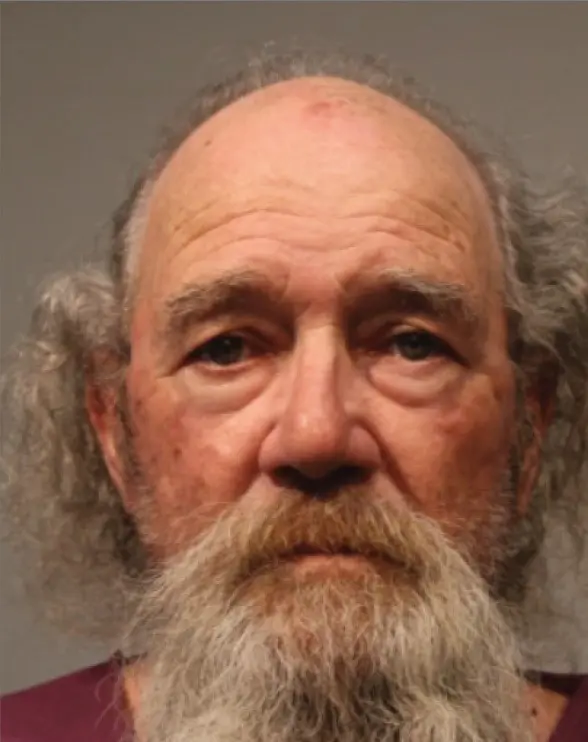
COTTONWOOD, Arizona — In a milestone for forensic science and multi-jurisdictional law enforcement, a 68-year-old Arizona man is facing extradition to Texas in connection with a capital murder and sexual assault that occurred nearly 45 years ago.
Kelly Lee Brower of Cottonwood, Arizona, was arrested on August 19, 2026, following a breakthrough involving forensic investigative genetic genealogy (FIGG) and a discarded beer can. The Texas Department of Public Safety (DPS) announced the arrest on August 28, 2026, marking what authorities hope will be the final chapter in the pursuit of justice for 23-year-old Yolanda Herrera, who was slain in the spring of 1981.
Main Facts: The Arrest of Kelly Lee Brower
The arrest of Kelly Lee Brower is the culmination of a collaborative effort spanning multiple decades, state lines, and law enforcement agencies. Brower, who had been living quietly in the high-desert community of Cottonwood, Arizona, was taken into custody by Texas Rangers working in tandem with the Cottonwood Police Department.
He is currently held in Arizona pending extradition proceedings to Bexar County, Texas, where he faces formal charges of capital murder.
+-------------------------------------------------------------------------+
|                          CASE PROFILE AT A GLANCE                       |
+-------------------------------------------------------------------------+
| Victim: Yolanda Herrera (23)        | Suspect: Kelly Lee Brower (68)    |
| Crime Date: Early April 1981        | Arrest Date: August 19, 2026      |
| Location: Universal City, Texas     | Arrest Location: Cottonwood, AZ   |
| Primary Charges: Capital Murder     | Key Evidence: Autopsy DNA Match   |
+-------------------------------------------------------------------------+
The breakthrough came after decades of dead ends. Investigators ultimately linked Brower to the crime scene using advanced DNA extraction and analysis techniques that did not exist when the homicide occurred. The definitive link was established through a DNA profile obtained from a discarded Coors Light beer can collected from Brower’s trash in late 2025.
According to Texas authorities, the DNA profile on the can matched genetic material recovered from under the victim’s fingernails during her 1981 autopsy. The statistical probability of the DNA belonging to another unrelated individual is calculated at approximately 1 in 31 billion.
Chronology of the Case: 1981 to 2026
To understand the scope of the investigation, it is necessary to examine the timeline of events, beginning with a fateful night in April 1981 and concluding with the August 2026 arrest.
April 1981: The Disappearance and Discovery
Yolanda Herrera, a 23-year-old resident of Universal City, Texas, was last seen alive in the early morning hours of April 1981. She had been walking home from a local bar shortly after closing time when she vanished.
On the morning of April 13, 1981, two children walking to school made a grim discovery. In a vacant field near the 500 block of East Aviation Drive in Universal City—an area partially shielded from the view of passing motorists—lay Herrera’s nude body.
Medical examiners determined that Herrera had been sexually assaulted and severely beaten to death. Despite a vigorous initial investigation by local detectives, who interviewed dozens of associates and patrons of the establishment where Herrera was last seen, no viable suspects were identified. The case eventually went cold.
2020–2021: The SAKI Intervention and Initial DNA Testing
For nearly 40 years, Herrera’s file remained archived in the cold case units of Universal City and the Texas DPS. The turning point occurred in late 2020 when the Texas DPS selected Herrera’s case for inclusion in the Sexual Assault Kit Initiative (SAKI).
SAKI is a federally funded program administered by the U.S. Department of Justice’s Bureau of Justice Assistance (BJA), designed to provide funding and technical assistance to clear unresolved sexual assaults and sexually related homicides.
   [ April 1981 ] ------------------> Yolanda Herrera murdered in Universal City, TX.
          |
   [ 1981 - 2020 ] -----------------> Case remains cold; initial suspects cleared.
          |
   [ Late 2020 ] -------------------> Case selected for federal SAKI funding.
          |
   [ 2021 ] ------------------------> Bode Technologies extracts limited DNA; surname lead generated.
          |
   [ 2025 ] ------------------------> Othram Laboratories uses FIGG to identify Kelly Lee Brower.
          |
   [ October 2025 ] ----------------> Cottonwood PD retrieves discarded beer can from Brower's trash.
          |
   [ August 19, 2026 ] -------------> Brower arrested in Cottonwood, AZ; confesses during interviews.
In 2021, the Texas Rangers and the Universal City Police Department submitted biological evidence preserved from Herrera’s 1981 autopsy to private laboratories. Bode Technologies conducted a surname search after successfully extracting a minute quantity of DNA from the decades-old evidence. While this search generated an investigative lead, the volume of DNA extracted was initially deemed insufficient for more comprehensive genetic genealogy testing.
2025–2026: The Genetic Genealogy Breakthrough and Surveillance
In 2025, investigators turned to Othram Laboratories, a facility specializing in solving cold cases through forensic investigative genetic genealogy (FIGG). Othram’s scientists reanalyzed the highly degraded sample, utilizing advanced sequencing techniques to build a comprehensive genealogical profile. This profile pointed directly to Kelly Lee Brower, then residing in Cottonwood, Arizona.
With Brower identified as a prime suspect, Texas Rangers traveled to Arizona to collaborate with local authorities. In October 2025, officers with the Cottonwood Police Department conducted a targeted trash run outside Brower’s residence, recovering a discarded Coors Light beer can.
The can was submitted to the Texas DPS Crime Laboratory Division for analysis. The resulting DNA match confirmed Brower’s presence at the 1981 crime scene. Armed with this forensic evidence, investigators conducted multiple interviews with Brower, during which he reportedly confessed to the murder. He was arrested on August 19, 2026.
Supporting Data: The Science of the Match
The resolution of this 45-year-old case illustrates the rapid evolution of forensic DNA technologies. In 1981, forensic DNA profiling did not exist; blood typing and basic serology were the only biological tools available to investigators, which were rarely sufficient to identify an unknown perpetrator with certainty.
The modern analysis of Herrera’s case relied on two distinct forensic methodologies:
Forensic Investigative Genetic Genealogy (FIGG)
Unlike traditional CODIS (Combined DNA Index System) database searches, which require a suspect’s DNA to already be in a law enforcement database, FIGG compares unidentified crime scene DNA against public, opt-in genealogical databases (such as GEDmatch and FamilyTreeDNA).
By identifying distant relatives of the unknown contributor, forensic genealogists can construct family trees that converge on a single suspect. Othram Laboratories utilized this method to narrow a pool of millions down to Kelly Lee Brower.
Short Tandem Repeat (STR) Analysis and Statistical Probability
Once Brower was identified through genealogy, investigators required a direct comparison sample to meet the evidentiary standards for criminal prosecution. This was obtained via the discarded beer can.
The Texas DPS Crime Laboratory conducted an STR analysis to compare the DNA from the saliva on the beer can’t rim to the DNA recovered from fingernail clippings collected during Herrera’s 1981 autopsy.
+-----------------------------------------------------------------------------+
|                          DNA COMPARISON METRICS                             |
+-----------------------------------------------------------------------------+
| Source Sample A: 1981 Autopsy Fingernail Clippings (Yolanda Herrera)        |
| Source Sample B: 2025 Discarded Coors Light Beer Can (Kelly Lee Brower)     |
| Match Status: Positive STR Profile Match                                    |
| Random Match Probability: At least 1 in 31,000,000,000 (31 Billion)         |
| Significance: Exceeds the total population of the Earth (~8 Billion)        |
+-----------------------------------------------------------------------------+
The statistical significance of this match—1 in 31 billion—effectively eliminates any reasonable doubt regarding the source of the DNA found on the victim, providing the prosecution with a foundation for the capital murder charge.
Official Responses and Collaborative Efforts
The resolution of this cold case drew statements of relief and praise from the various law enforcement agencies involved. The multi-jurisdictional nature of the operation required seamless coordination between local, county, and state agencies in both Texas and Arizona.
A spokesperson for the Texas Department of Public Safety emphasized the determination of the investigators:
"Time does not erase the commitment of our Texas Rangers and local partners to bring closure to victims and their families. This arrest is a testament to the fact that no matter how many years pass, we will use every tool at our disposal—including the latest advancements in forensic science—to hold violent offenders accountable."
The Cottonwood Police Department, which assisted with the surveillance, trash collection, and ultimate arrest of Brower, noted the importance of inter-agency trust:
"Our officers were proud to assist the Texas Rangers and the Universal City Police Department in this operation. Cases like this demonstrate that boundaries do not limit our collective pursuit of justice. We hope this arrest brings some measure of peace to the family of Yolanda Herrera."
The Maricopa County Attorney’s Office SAKI Program also played a supportive role in facilitating the legal coordination and interstate warrants necessary to secure Brower’s arrest and initiate the extradition process.
Implications: Legal Precedents and the Future of Cold Cases
The arrest of Kelly Lee Brower highlights several ongoing debates and trends in modern criminal justice, particularly concerning privacy, municipal budgets, and the viability of decades-old evidence.
The Legal Status of "Abandoned DNA"
The collection of the Coors Light beer can from Brower’s trash is an example of a "trash pull," a standard law enforcement technique used to obtain a suspect’s DNA without their knowledge or a warrant.
Under the Fourth Amendment of the U.S. Constitution, courts have generally held that individuals have no reasonable expectation of privacy regarding items discarded in trash receptacles placed at the curb for collection (established in the landmark Supreme Court case California v. Greenwood, 1988).
As genetic genealogy identifies more suspects in cold cases, the reliance on abandoned DNA from items like cups, straws, and beer cans continues to serve as a critical tool for confirming investigative leads before an arrest warrant is secured.
The Success of the SAKI Program
The Sexual Assault Kit Initiative (SAKI) has proven to be one of the most effective federal programs for clearing backlogs of unsubmitted sexual assault kits and cold case homicides. By providing jurisdictions with the funding necessary to employ high-end private labs like Bode Technologies and Othram, SAKI bypasses the backlogs and budget constraints that often plague state-run forensic facilities.
The arrest of Brower underscores the value of maintaining physical evidence repositories, even when a case has been inactive for nearly half a century. The foresight of the 1981 investigators and medical examiners in preserving Herrera’s fingernail clippings allowed modern technology to solve a crime that was once considered permanently cold.
