


Main Facts
China’s solar photovoltaic (PV) industry, long accustomed to explosive, record-breaking expansion, is entering a complex and more challenging transitional phase. While cumulative capacity continues to climb—reaching a staggering 1.27 terawatts by mid-2026—the fundamental mechanics of the domestic and international markets are undergoing a seismic shift.
The sector is currently grappling with a triad of pressures: a pronounced cooling in domestic installation rates, a transition away from guaranteed subsidies toward market-based electricity pricing, severe domestic manufacturing overcapacity, and a rapid, necessary pivot toward higher-efficiency solar cell and module technologies.
According to data released by China’s National Energy Administration (NEA), the country added 72.07 gigawatts (GW) of solar capacity in the first half of 2026, a notable deceleration compared to the astronomical additions of 2025, which exceeded 315 GW for the entire year. Despite this slowdown, solar generation remained robust, producing 655.5 billion kilowatt-hours (kWh) with an impressive average grid utilization rate of 91.4%.
However, the days of unbridled, volume-driven growth are giving way to a market increasingly dictated by grid economics, energy storage integration, and geographical constraints. With wind and solar power combined accounting for nearly half of China’s total installed generating capacity by mid-2026—bolstered by 679 GW of wind capacity—grid operators and project developers are being forced to adapt to high volumes of variable generation.
Simultaneously, international trade dynamics have shifted dramatically. Following years of aggressive module exports, Beijing’s April 2026 removal of the value-added tax (VAT) export rebate for PV products has altered global supply chains, dampening overall module shipments while accelerating a strategic pivot toward exporting intermediate components like solar cells.
Chronology of the 2025–2026 Transition
To understand the current state of China’s solar landscape, it is necessary to examine the rapid succession of policy shifts, market reactions, and regulatory interventions that have taken place over the past eighteen months.
The 2025 Build-Out Frenzy
Throughout 2025, China’s solar sector operated at a blistering pace. Developers rushed to commission utility-scale projects to lock in favorable feed-in tariffs before the expiration of legacy support regimes. This rush culminated in a historic milestone, with the country installing more than 315 GW of solar capacity in a single year—a figure that outpaced the total cumulative solar capacity of many developed nations combined.
Early 2026: The Slump and Policy Interventions
The hangover from the 2025 rush became immediately apparent in early 2026. Industry data from TaiyangNews revealed that installations in January and February 2026 plummeted by more than 17% year-on-year.
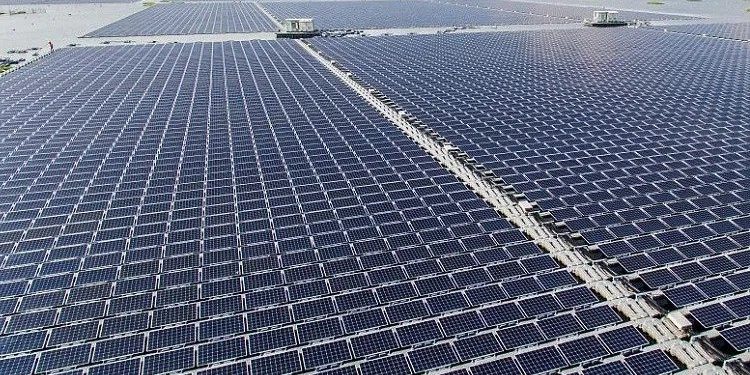
Concurrently, recognizing the severe domestic overcapacity and mounting international trade frictions, the Chinese government announced a major policy correction in January 2026: the complete removal of the value-added tax (VAT) export rebate for photovoltaic products, effective April 1, 2026. Prior to this deadline, Chinese manufacturers rushed to clear inventories, driving exports to a record-breaking 68 gigawatts in March across modules, cells, and wafers.
Post-April 2026: The Market-Pricing Era
The elimination of the VAT rebate on April 1 fundamentally altered export economics. May and June 2026 witnessed a visible contraction in total outbound shipments of finished modules.
Domestically, the calendar flipped to a new regulatory reality in 2026. Newly commissioned renewable energy projects were increasingly subjected to market-based electricity pricing rather than fixed tariffs. Developers could no longer rely on guaranteed revenue streams, forcing an immediate reckoning with real-time wholesale electricity prices and regional grid congestion.
Supporting Data and Market Metrics
A granular look at the numbers underscores the scale of China’s renewable transformation, highlighting both the hurdles and the bright spots within the ecosystem.
Installation and Generation Metrics
- Total PV Capacity: Reached 1.27 terawatts (TW) by the end of June 2026.
- H1 2026 Additions: 72.07 GW, representing a sharp cooling trend compared to 2025’s historic rates.
- First-Half Generation: 655.5 billion kilowatt-hours (kWh).
- Grid Utilization Rate: Maintained a healthy 91.4% through the first six months of 2026.
- Wind Capacity Context: Stood at 679 GW by June 2026, meaning combined wind and solar account for nearly 50% of China’s total power generation capacity.
Energy Storage and Market Trading
As variable renewables saturate the grid, energy storage has transformed from an auxiliary feature into an absolute necessity:
- New Energy Storage Capacity: Reached 153 GW (or 396 gigawatt-hours [GWh]) by the end of June 2026, marking a staggering 61% increase year-on-year.
- Electricity Market Trading: Surged to 3.85 trillion kWh traded in H1 2026—a 24.2% increase compared to the same period in 2025—demonstrating a rapidly maturing power market.
Export Trends and Manufacturing Realities
While domestic installation growth has cooled, China remains the undisputed heavyweight of global solar manufacturing:
- H1 Export Shifts: Solar module exports exceeded 35 GW in January and February alone (down 9% year-on-year), while solar-cell exports surged by 44% as foreign assembly plants sought intermediate components.
- Geographical Diversification: Although shipments to traditional Western markets faced headwinds, exports to Southeast Asia, South Asia, and Africa experienced steady growth.
- Domestic Energy Demand: Total national electricity consumption rose 5.3% in H1 2026. High-technology and equipment manufacturing saw a 9.8% surge, while internet data services consumption skyrocketed by 44%, heavily driven by the nationwide expansion of data centers.
Official Responses and Industry Perspectives
The structural transition facing the industry has prompted varied responses from policymakers, developers, and manufacturing executives.
Industry analysts note that China’s solar sector is being pulled in divergent directions. Grid operators are forced to manage unprecedented volumes of variable generation; manufacturers are wrestling with chronic overcapacity, razor-thin margins, and depressed selling prices; and project developers must navigate a complex, market-oriented power trading system.

According to energy experts, the overarching consensus is that China’s solar industry has officially graduated from its "infancy" phase of pure volume accumulation. The dialogue among policy architects at the National Energy Administration has decisively pivoted toward system integration, grid resilience, and technological efficiency.
Rather than chasing arbitrary gigawatt milestones, government policy is increasingly focused on eliminating inefficient, outdated manufacturing lines through market discipline and tax reforms. The removal of the VAT rebate was widely interpreted by industry groups as a deliberate regulatory signal: Beijing wants to purge low-end overcapacity, reduce anti-dumping complaints from international trading partners, and steer Chinese enterprises toward high-value technological competition.
Implications for the Future
The maturation of China’s solar sector carries profound implications not only for the domestic economy but for the global energy transition as a whole.
1. The Rise of Efficiency as the Ultimate Competitive Lever
In a market constrained by pricing mechanisms rather than guaranteed subsidies, raw volume is no longer enough to guarantee profitability. Consequently, manufacturers are doubling down on technological efficiency. By mid-2026, commercial module efficiencies reached impressive benchmarks:
- Back-Contact Products: Reached up to 25% efficiency.
- TOPCon (Tunnel Oxide Passivated Contact): Reached 24.1% efficiency.
- Heterojunction (HJT) Technology: Reached 23.8% efficiency.
For large-scale utility projects, these incremental efficiency gains are critical for lowering balance-of-system (BOS) costs, optimizing land use, and ensuring project profitability in a competitive wholesale electricity market.
2. Strategic Relocation of the Supply Chain
The elimination of the VAT export rebate, combined with stringent foreign trade barriers and local-content requirements (such as those in the US, Europe, and India), is permanently altering how Chinese companies globalize. Instead of exporting finished, low-cost modules that trigger immediate trade defenses, Chinese firms are increasingly supplying intermediate solar cells and wafers to factories established in Southeast Asia and other developing regions. This decentralization creates a more geographically distributed global supply chain, even if ultimate intellectual property and technological dominance remain rooted in China.
3. The Centrality of Storage and Grid Flexibility
As variable renewables approach 50% of total capacity, the stability of China’s electrical grid depends almost entirely on the rapid deployment of energy storage and flexible transmission infrastructure. The 61% year-on-year growth in energy storage is just the beginning. Moving forward, the value of a solar project will not be measured merely by its peak gigawatt output, but by its ability to store and dispatch electricity precisely when and where the market demands it.
Conclusion
China’s solar industry is shedding its adolescent growing pains and stepping into a rigorous adulthood. By replacing brute-force expansion with market-driven economics, technological sophistication, and advanced storage integration, the Middle Kingdom is laying the groundwork for a more resilient, albeit more turbulent, clean energy future.
