

By James Gritz
Originally published in the Substack newsletter Ordinary Mind
Introduction: A Landscape Shattered
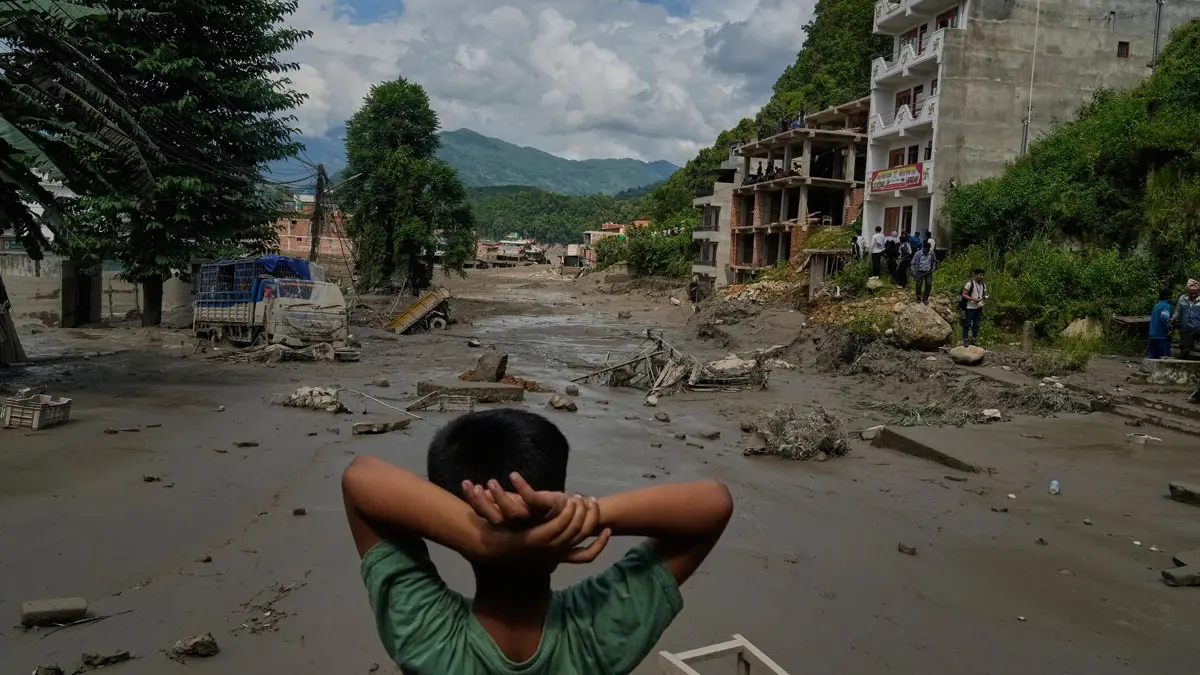
On the morning of August 26, a catastrophic natural disaster unfolded high in the Himalayas, forever altering the geography and the lives of those inhabiting the rugged terrain along the border between Tibet and Nepal. A massive glacial collapse above Kyirong on the Tibetan plateau sent an unprecedented torrent of water, mud, and debris cascading down the mountainside.
The ensuing wall of destruction tore relentlessly through Nepal’s Rasuwa district, continuing its devastating path into Nuwakot. Entire villages were swept away in a matter of minutes, while critical infrastructure—including vital bridges and multiple hydropower stations—was obliterated. The surging mass of water violently pounded down the Bhote Koshi River before spilling into the Trishuli River system, leaving a trail of unimaginable ruin in its wake.
For anyone with a deep connection to the Himalayas, these events are not merely distant news headlines or abstract points on a map. Having traveled to Nepal numerous times over the decades, and having met and studied under many of my primary Buddhist teachers there, the region represents a spiritual homeland. Nepal has long served as a vital center of Tibetan Buddhism in exile, a sanctuary of practice, community, and resilience. To witness Rasuwa and Nuwakot—names laden with personal history and sacred resonance—engulfed by catastrophe is a deeply heartbreaking experience.
Chronology of the Disaster
Understanding the swift and overwhelming nature of the August 26 catastrophe requires examining the sequence of events as they unfolded across the Himalayan frontier.
Pre-Dawn Instability on the Tibetan Plateau
In the days leading up to August 26, the high-altitude regions surrounding Kyirong experienced compounding environmental pressures. High summer temperatures accelerated the melting of glacial ice and destabilized surrounding moraines. Sometime in the early morning hours, an unstable section of the glacier structurally failed, detaching from the mountain face and instantly transforming into an enormous glacial lake outburst flood (GLOF).
The Breach and Downslope Rush
The sudden release of millions of cubic meters of water, mixed with massive boulders, ice, and displaced earth, breached natural containment barriers and surged southward. Crossing the international border into Nepal, the flash flood struck the upper reaches of the Rasuwa district with terrifying speed. Because the disaster struck in the early morning hours, many residents and travelers had little to no warning before the torrent engulfed their homes and campsites.
Destruction of the Valleys
As the floodwaters raced down the Bhote Koshi valley, they overwhelmed local geography that had stood for centuries. Infrastructure was pulverized. Hydroelectric facilities that power local communities were instantly knocked offline, plunging valleys into darkness and cutting off communication lines. The debris flow continued unabated into Nuwakot, swelling riverbanks and inundating low-lying settlements before merging with the Trishuli River, sending shockwaves of high water further downstream toward the densely populated plains.
Supporting Data and Human Toll
As rescue operations continue under extremely hazardous conditions, the human and structural costs of the disaster are coming into clearer, more agonizing focus.
According to official figures released by Nepal’s National Disaster Risk Reduction and Management Authority (NDRRMA):
- Confirmed Fatalities in Nepal: Over 350 people have been confirmed dead.
- Missing Persons in Nepal: More than 800 individuals remain unaccounted for, with rescue workers racing against time in deep mud and unstable terrain.
- Casualties in Tibet: Authorities on the Tibetan side of the border have confirmed at least three deaths, with hundreds more still missing.
Among the missing are a significant number of pilgrims. Many of these individuals were journeying toward Mount Kailash and Lake Mansarovar—locations held to be profoundly sacred by Hindus, Buddhists, Jains, and Bönpo alike. The pilgrimage routes, which traverse these high-altitude border regions during the late summer months, proved tragically vulnerable to the sudden surge of glacial melt and debris.
International media outlets and humanitarian organizations have documented the scale of the destruction. Dramatic video footage captured by the Nepal Red Cross Society in the Rasuwa valley—subsequently broadcast internationally by networks such as Euronews—shows entire hillsides stripped bare, roads carved away, and rescue teams navigating treacherous expanses of gray sludge and shattered timber.
Official Responses and Spiritual Reflections
As governments and humanitarian agencies mobilize in response to the disaster, spiritual leaders from across the Himalayan traditions have offered their condolences, prayers, and insights into the root causes of the tragedy.
The Dalai Lama’s Statement
On Thursday following the disaster, the Dalai Lama released a formal condolence message addressing the catastrophe:
"I am saddened to learn of the devastating floods in the Rasuwa region of Nepal and Kyirong in Tibet, resulting in loss of life and heavy structural damage. I pray for all those who have lost their lives, and offer my sympathy and heartfelt condolences to the bereaved and to all those affected by this tragedy."
Significantly, the Tibetan spiritual leader also pointed toward broader environmental shifts as a contributing factor, drawing attention to climate change as a possible underlying cause of the glacial collapse.
Prayers from the Bön Tradition
Tenzin Wangyal Rinpoche, a prominent teacher of the ancient Bön tradition, shared a message of solace and guidance with his students worldwide:
"May those who have passed rest in peace. May the injured recover swiftly. May grieving families find strength and comfort, and may all those offering help be guided by compassion and wisdom."
These expressions of spiritual solidarity underscore the deep interconnectedness of communities across the Tibetan plateau and the Himalayan foothills, providing an anchor of emotional resilience amid profound grief.
Broader Implications: Climate Change and the Third Pole
While flash floods and seasonal monsoon deluges are not unprecedented in Nepal and Tibet, the nature of the August 26 event points to a more alarming, systemic phenomenon: the destabilization of the Himalayan cryosphere, often referred to as the Earth’s "Third Pole."
The Accelerating Crisis of Glacial Lake Outburst Floods (GLOFs)
Global temperature increases are hitting high-altitude mountain ranges at rates significantly higher than the global average. As glaciers recede, they leave behind unstable moraine dams filled with massive volumes of meltwater. When these natural dams fail—whether triggered by seismic activity, excessive summer warmth, or internal hydrostatic pressure—the result is a catastrophic GLOF.
The disaster at Kyirong and Rasuwa serves as a stark warning for governments and scientists monitoring the Himalayas. Thousands of similar glacial lakes now speckle the roof of the world, posing a persistent, latent threat to millions of downstream inhabitants living in river valleys across Nepal, India, China, and Bhutan.
Infrastructure and Vulnerability
The destruction of hydropower stations and vital transportation links in Rasuwa and Nuwakot highlights the extreme vulnerability of modern development in high-risk mountain zones. As energy demands grow, nations across the Himalayas have increasingly turned to run-of-the-river hydroelectric projects situated in steep, narrow gorges. The August 26 disaster demonstrates that traditional risk assessments must be radically updated to account for accelerating climate-induced glacial hazards.
How to Help: Relief Efforts on the Ground
If Nepal has touched your life, or if you have ever benefited from the profound cultural and spiritual wealth the region has shared with the world over the decades, this moment calls for a tangible response.
Relief organizations are currently working under immensely difficult conditions to provide search-and-rescue support, emergency medical care, clean water, and temporary shelter to displaced families. Several established organizations are active on the ground:
- Nepal Red Cross Society: Operating in coordination with the International Federation of Red Cross and Red Crescent Societies (IFRC), which has already released emergency disaster relief funds to support ongoing response operations. Learn more at ifrc.org.
- GlobalGiving’s Nepal Flood Relief Fund: Channels financial resources directly to trusted local grassroots organizations specializing in search, rescue, medical aid, and shelter provision. Learn more at globalgiving.org.
- Direct Relief: Actively coordinating medical assistance in partnership with Nepal’s Ministry of Health, building on a long-standing commitment to supporting Nepal’s healthcare infrastructure that dates back to 2009. Learn more at directrelief.org.
A Crucial Warning Regarding Donations
In the wake of major disasters, fraudulent actors and opportunistic scams frequently exploit public goodwill. Nepali authorities have repeatedly issued cautions to the public: always contribute through officially registered, verified organizations. Avoid donating to unverified personal accounts, crowdfunding campaigns, or informal fundraising drives circulating across social media platforms.
Conclusion
The disaster that struck Kyirong, Rasuwa, and Nuwakot is a tragedy of immense proportions, leaving scars on the landscape and breaking the hearts of communities worldwide. Yet, in the face of such overwhelming devastation, the enduring resilience of the Nepali and Tibetan people—supported by an outpouring of global compassion, prayer, and humanitarian action—remains a beacon of hope.
May those who have died find peace. May the missing be found. May the rescue workers and medical personnel stay safe as they navigate the dangerous terrain ahead.
For official, up-to-date emergency information and government updates, please visit the National Disaster Risk Reduction and Management Authority at ndrrma.gov.np.
About the Author
James Gritz is a longtime Tibetan Buddhist practitioner and artist whose life and creative work are deeply rooted in the Dharma. A student of Chögyam Trungpa Rinpoche since 1973, he has continued his spiritual path under the guidance of Dzongsar Khyentse Rinpoche, Jigme Khyentse Rinpoche, and other esteemed teachers.
His extensive Buddhist-inspired projects include documenting the Nangchen Nuns in eastern Tibet over a five-month period alongside Tsoknyi Rinpoche, serving as still photographer for the documentary Blessings: The Tsoknyi Nangchen Nuns of Tibet (directed by Victress Hitchcock). His five months in Tibet culminated in a limited-edition photo book and public exhibitions. He also co-directed Never Give Up, a documentary on the 17th Karmapa filmed during the Kagyu Monlam in India, and served as the official photographer for the Karmapa’s inaugural U.S. and European tours.
James is the author of Pith Instructions from My Teachers (Sumeru Press, 2024), a rich collection of teachings received over decades of dedicated practice. To learn more about his ongoing artistic and cultural projects, or to find information regarding upcoming educational tours, visit jamesgritz.com and jamesgritz.com/future-tours.
