

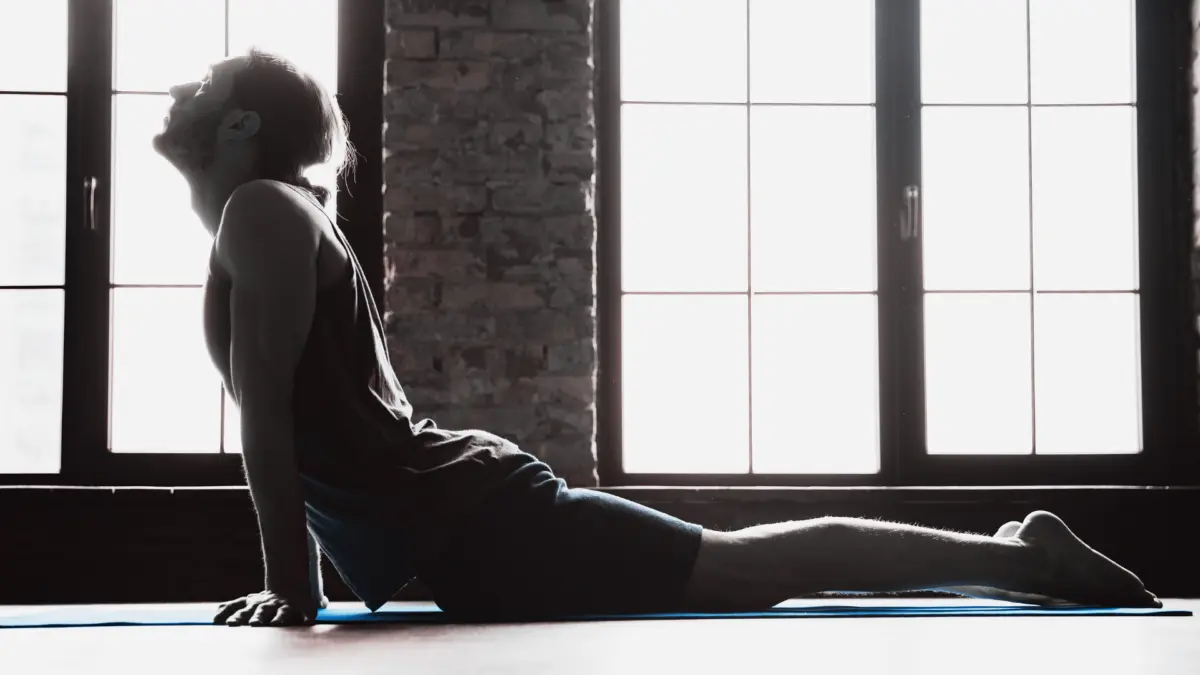
Published September 7, 2026
Main Facts
For a quarter of a century, a physical education teacher and former high school soccer player maintained a steady, self-guided yoga practice across living rooms, hotel resorts, and school gymnasiums. Yet, despite decades of stretching, breathing, and incorporating poses into youth athletics, he harbored a persistent barrier to entry: the commercial yoga studio.
Plagued by self-doubt regarding his lifelong lack of flexibility, the intimidation of perceived hyper-fit practitioners, and the dread of being assigned a front-row mat, he avoided formal studio classes for nearly 30 years. That streak ended this summer. Propelled by the encouragement of peers, a desire to embrace behavioral novelty, and mounting scientific literature linking exercise variety to long-term health outcomes, he finally stepped through the doors of a local chain yoga studio.
His experience mirrors a common societal hesitation: millions of potential fitness participants bypass specialized group classes due to preconceived notions about demographic exclusivity, skill level, and performance anxiety. However, his baptism by fire into a heated "yoga sculpt" class revealed that studio spaces are far more inclusive—and far more rigorous—than imagined.
Chronology
The Origins: High School PE and Solo Persistence (2001)
The subject’s relationship with yoga began in high school as a physical education elective. Selected initially for its reputation as an easy way out—specifically the promise of restorative relaxation at the end of class—it quickly revealed practical utility for a soccer player trying to maintain lower-body mobility.
Over the next 25 years, the practice evolved. It moved from high school gymnasiums to televised home routines, vacation resort schedules, and eventually into the curriculum of the PK-8 physical education programs he now leads. He routinely invited external yoga instructors to teach his students while he practiced alongside them. However, every iteration shared a common thread: a controlled, low-stakes environment where he controlled the parameters, away from the watchful eyes of a dedicated studio public.
The Decades-Long Hesitation (2001–2026)
Despite a deep-seated affinity for the discipline, an internal narrative built roadblocks. Imagined studio classes were populated entirely by advanced, spandex-clad professionals executing flawless inversions while instructors hovered nearby to correct structural failures. Most terrifying of all was the spatial nightmare: arriving late, finding only a spot in the absolute front row, and broadcasting a lifetime of tight hamstrings to the room.
The Catalyst: Friend Encouragement and Scientific Motivation (Summer 2026)
The paradigm shifted in the summer of 2026. Constant reports from friends regarding high-intensity workouts at a local studio chain chipped away at decades of avoidance.
Simultaneously, a personal commitment to embracing novelty grew stronger with age. This mindset shift was reinforced by a landmark study published by Harvard researchers, which analyzed 30 years of health data and concluded that exercise variety—rather than mere volume—plays a vital role in reducing the risk of premature death. Solo home practices inevitably plateaued after 15 minutes of repeating familiar movements, signaling an urgent need to diversify physical routines.
The Leap: Entering the Studio (Summer 2026)
To mitigate pre-class anxiety, the author deployed a classic psychological coping mechanism: the buddy system. Enlisting an experienced studio-going friend ensured moral support during awkward pre-class lulls. To ease the transition from "gym bro" to "om bro," they selected a high-energy "yoga sculpt" class, blending traditional postures with resistance training.
Upon arrival, initial anxieties flared regarding demographic fit—worrying about not wearing spandex, not belonging to Generation Z, and identifying as male. Yet, as the room filled with a diverse cross-section of attendees, those fears dissipated.
Led by an instructor named Paige, the heated class proved intensely demanding. Far from an exclusive sanctuary of flawless elites, the room was a collective crucible of sweat, heavy breathing, and shared struggle. Participants of all ages and attire adjustments wobbled, stumbled, and reset their postures. The session concluded with a hard-earned Savasana, leaving the author physically spent, mentally refreshed, and eager to return.
Supporting Data and Scientific Context
The decision to step outside a comfort zone was not merely emotional; it aligned with emerging trends in preventative medicine and behavioral health science.
- The Harvard Exercise Variety Study: Published in BMJ Medicine, a major study led by Harvard researchers examined three decades of health data to evaluate long-term mortality risks associated with physical activity patterns. The findings indicated that individuals who incorporated a diverse array of physical activities—ranging from cardiovascular training to flexibility work, strength conditioning, and balance exercises—experienced a substantially lower risk of premature death compared to those who adhered strictly to a single, repetitive exercise modality.
- The Limitations of Solo Practice: Solo practitioners frequently encounter a physiological and psychological plateau. Without structured pacing, external cues, or programmatic progression, home-based yoga routines typically drop off in duration and complexity. Home practitioners often default to familiar, comfortable movements, starving stabilizing muscles of novel stimuli.
- Demographic Shifts in Group Fitness: Studio fitness spaces are increasingly shedding their homogenous reputations. While boutique fitness historically catered to narrow demographic slices, modern athletic yoga classes (such as yoga sculpt) are attracting diverse cohorts—including male athletes, older adults, and individuals seeking functional cross-training rather than purely meditative spaces.
Official Responses and Expert Perspectives
While no corporate representatives from the specific studio chain were formally interviewed for this narrative, the structural philosophies of modern group fitness and mind-body instruction offer clear context for why first-time participants often misjudge the studio environment.
Fitness Industry Insights on Studio Culture
Group fitness coordinators and studio owners frequently emphasize that inclusivity is central to modern class design. According to wellness industry advocates, the historical perception of yoga studios as intimidating, perfection-driven enclaves is a primary deterrent for new demographics, particularly men and older adults.
"The misconception that you need to be flexible before walking into a yoga class is the single biggest hurdle we face," notes a regional fitness director based in the Pacific Northwest. "Studio instruction is designed to scale across abilities. The person struggling in the back row is just as valid a practitioner as the instructor on the elevated platform."
Furthermore, sports medicine professionals praise the integration of heated, high-intensity yoga modalities (like sculpt classes) as effective cross-training tools. By combining eccentric loading, isometric holds, and cardiovascular endurance in high-ambient-temperature environments, participants improve not only flexibility, but also thermoregulatory efficiency and muscular stamina.
Implications
The author’s successful transition from a home mat to a commercial studio highlights several broader implications for personal wellness, fitness marketing, and psychological growth over the lifespan.
1. The Psychology of Novelty in Aging
As individuals age, behavioral patterns solidify. Breaking established routines requires conscious friction. By leaning into discomfort—whether it is entering a yoga studio, trying a new sport, or altering a workout regimen—adults can stimulate neuroplasticity and build psychological resilience. The Harvard study underscores that this mental friction yields tangible physical dividends, lowering mortality risks through biological adaptation to varied mechanical stressors.
2. Redefining Masculinity and Flexibility in Athletic Spaces
For decades, traditional sports culture—particularly football, soccer, and weightlifting—prized brute strength and rigidity over mobility. The integration of men into studio yoga environments signals a broader cultural shift. Athletes increasingly recognize that longevity in physical performance requires restorative practices. Yoga is no longer viewed merely as a supplementary or gender-specific discipline, but as a foundational pillar of athletic health.
3. Actionable Takeaways for First-Time Studio Attendees
For those inspired to bridge the gap between casual practice and studio attendance, the author outlines a practical framework to neutralize intimidation:
- Leverage the Buddy System: Enlisting a companion removes the isolation of entering an unfamiliar space and provides built-in accountability and shared humor.
- Establish Routine Over Randomness: Treating studio classes as non-negotiable calendar appointments prevents procrastination and eliminates the search for the "perfect" psychological moment to begin.
- Prioritize Vibe and Instructor Alignment: If a specific class, studio, or teacher fails to resonate, the failure lies in the mismatch, not in the participant’s capability. Exploring alternative styles and instructors is essential to finding a sustainable fitness home.
Ultimately, breaking the mat barrier demonstrates that the most formidable obstacles in fitness are rarely physical. They are the psychological constructs built by an overactive imagination—constructs that dissolve the moment you roll out your mat, step into the heat, and begin.
