

By Investigative and Wellness Desk
Published in collaboration with In5D Consciousness Studies
Main Facts
In the realm of personal development, mental health, and spiritual evolution, a prevailing school of thought suggests that time heals all wounds. We are often led to believe that surviving a traumatic event, aging out of a difficult environment, and successfully avoiding the repetition of past harms in our own adult lives constitutes complete recovery. However, a profound shift in modern psychological and inner-work paradigms challenges this assumption.
Recent disclosures by holistic researchers and mindfulness advocates—most notably articulated by In5D founder Gregg Prescott—bring to light a critical distinction: ending a destructive behavioral cycle is not synonymous with emotional healing.
Key takeaways from this paradigm-shifting introspection include:
- The Illusion of Linear Healing: Passage of time merely creates physical distance from a wound; it does not automatically mend the psychological impact experienced by a younger self.
- The "Stuck" Inner Adolescent: Traumatic memories, particularly those sustained during formative adolescent years, can remain frozen in the psyche, leaving an internal version of the individual indefinitely suspended in a state of fear and embarrassment.
- The Power and Limit of Generational Interruption: Successfully breaking a cycle of abuse (such as committing never to strike one’s own children) is a monumental triumph, yet it often leaves the unresolved, original trauma unaddressed at the core.
- The Necessity of Retroactive Compassion: True inner work requires individuals to consciously return to past versions of themselves, offering the validation, safety, and permission to feel that were absent during the initial event.
Chronology
To understand the mechanics of unaddressed psychological burdens, it is necessary to examine how formative events echo across decades. The lifecycle of unresolved trauma typically follows a distinct, multi-stage timeline:
1. The Imprint (Formative Years)
The trajectory often begins in early adolescence—a volatile period of neurological development and identity formation. Around the age of 14, an individual experiences a profound breach of safety, often perpetrated or sanctioned by authority figures intended to protect them. In Prescott’s documented account, a minor infraction prompted a severe physical reprimand involving a belt, leaving a visible diagonal mark across the adolescent’s back.
2. Immediate Avoidance and Coping Mechanisms
Faced with physical pain and intense psychological distress—such as the acute embarrassment of changing for a school gym class with visible welts—the adolescent develops immediate defense mechanisms. These include avoidance (skipping class) and the internal formation of rigid behavioral contracts (e.g., vowing never to inflict similar harm on future offspring).
3. Decades of Functional Adulthood
Years pass. The individual navigates the complex milestones of adult life: completing education, establishing careers, entering marriages, raising children, and weathering major life crises. From an external perspective, the individual is resilient, high-functioning, and fully adapted to society. The event from decades prior is cataloged as a closed chapter, especially because the individual successfully honored their vow to protect the next generation from physical punishment.
4. The Revelation of the Unhealed Self
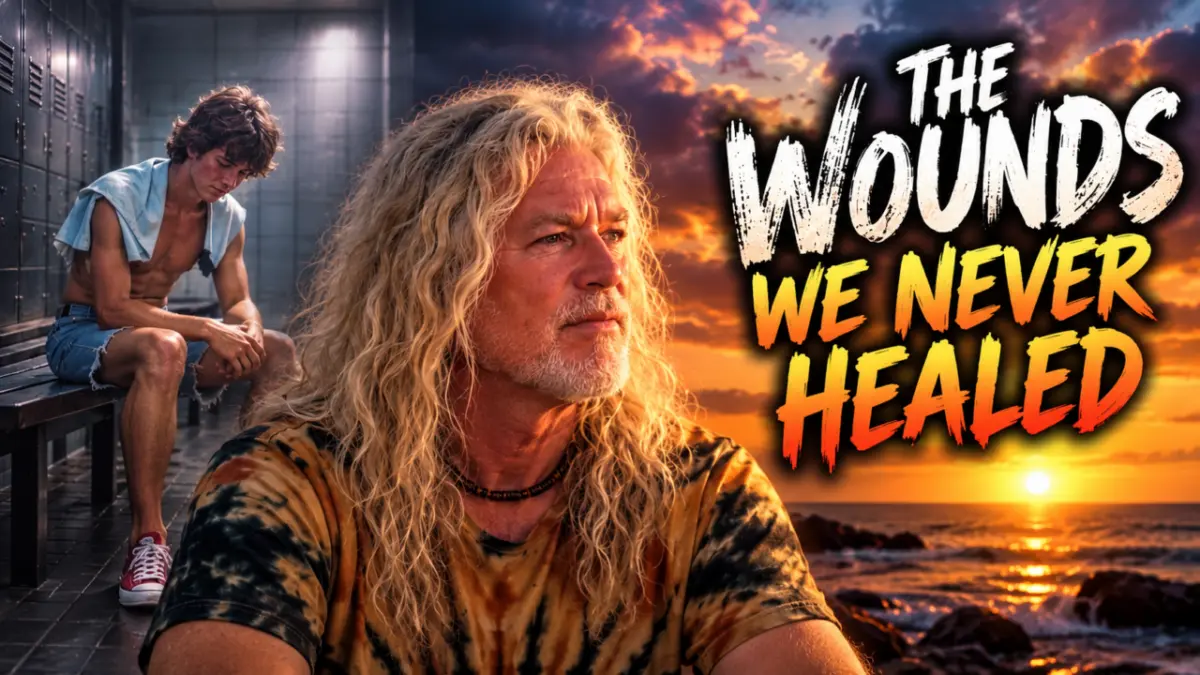
Decades later—often catalyzed by deliberate meditative practices, spiritual awakenings, or quiet introspection—the illusion of total recovery shatters. The adult realizes that while they forgave their parents and stopped the generational cycle, a mental snapshot of their 14-year-old self remains trapped in a school restroom, staring in quiet humiliation at a bruised back.

Supporting Data & Psychological Insights
While spiritual frameworks often interpret these phenomena through the lenses of karma, soul contracts, and generational patterns, mainstream psychological research heavily supports the concept of the "inner child" and compartmentalized trauma responses.
- Compartmentalization and Dissociation: According to developmental psychology, when children or adolescents experience trauma in environments where they cannot fight back or flee, they frequently dissociate. A portion of the psyche remains emotionally arrested at the exact age and circumstance of the trauma to protect the developing ego from immediate overload.
- The Generational Burden: Studies in epigenetics and family systems therapy show that behavioral patterns—ranging from corporal punishment to emotional neglect—are transmitted down familial lines. Interrupters of these cycles (often called "scapegoats" or "cycle breakers") face immense psychological loads because they must process and terminate patterns without a familial blueprint.
- Forgiveness vs. Integration: Psychological literature frequently differentiates between cognitive forgiveness (releasing anger toward a perpetrator) and emotional integration (retrieving and comforting the wounded aspect of the self). While Prescott and many mental health practitioners emphasize that forgiving parents is essential for peace of mind, it does not substitute for self-soothing the younger ego state that absorbed the blow.
Official Responses and Expert Perspectives
Mental health professionals, trauma-informed therapists, and spiritual guides increasingly emphasize the integration of inner-child work into standard wellness regimens.
Dr. Nicole LePera, a holistic psychologist widely known for her work on breaking generational cycles, frequently notes that awareness alone is insufficient for healing. "Knowing why you do what you do, or understanding where a wound originated, is merely the first step," psychological literature suggests. "True somatic and emotional release requires going back into the body’s memory banks and assuring the younger parts of us that they are finally safe."
Spiritual leaders echo this sentiment from a metaphysical perspective. By reframing inner work not as an endless excavation of misery, but as a rescue mission for forgotten aspects of the soul, practitioners find that revisiting past pain liberates vital emotional energy. As Prescott highlights in his teachings on shadow work and deprogramming, the goal is never to wallow in historical grievances, but rather to reclaim the pieces of oneself left behind in moments of crisis.
Implications
The realization that time alone does not heal deep-seated emotional wounds carries profound implications for individuals, families, and society at large.
1. Redefining Personal Accountability and Healing
Society often views aging as a natural cure for emotional pain, assuming that mature adults have naturally outgrown their childhood insecurities. This perspective places an undue burden on individuals who feel defective because old triggers still surface despite decades of personal growth. Recognizing that an inner adolescent may still require comfort removes shame from the healing process, validating that lingering triggers are normal remnants of unaddressed history.
2. Transforming Parenting and Generational Dynamics
While stopping a cycle of physical or emotional abuse is an extraordinary achievement, recognizing that the inner child remains unhealed encourages a deeper level of self-compassion. Parents who break generational cycles often realize that healing themselves prevents them from unconsciously projecting their historical anxieties onto their own children.
3. A New Paradigm for Inner Work
Ultimately, the evolving philosophy surrounding inner-child integration offers a liberating roadmap for humanity. It suggests that personal evolution is not about erasing our scars or pretending we were never hurt. Instead, it is about becoming the ultimate protector, mentor, and parent to every past version of ourselves that once stood alone, waiting for rescue.
As individuals ask themselves how many younger versions of their consciousness are still waiting in the corridors of memory, the path forward becomes clear: true wholeness arrives the moment we turn around, face our history, and finally offer our younger selves the grace, validation, and unconditional love they deserved all along.
