

By In5D Editorial Team
Special Feature & Cultural Analysis
Main Facts
When contemporary society conceptualizes a "lightworker," the image that typically emerges is one steeped in esoteric tradition. Mainstream perceptions frequently picture an individual immersed in meditative practices, energy healing, tarot card interpretation, or the dissemination of spiritual ascension philosophies from a stage or digital platform. However, a profound shift in perspective is challenging this conventional archetype.
Recent observations from the field suggest that true lightwork is not exclusively tied to metaphysical study or public spiritual leadership. Instead, it manifests in the quiet, uncelebrated fabric of daily life through radical empathy, intentional kindness, and the transformation of collective energy in mundane spaces.
This re-evaluation of the lightworker phenomenon is anchored by two distinct real-world accounts documented during a recent visit to an independent living facility in Fort Myers, Florida. These events highlight how ordinary individuals—often unaware of esoteric terminology—embody the essence of spiritual service through simple acts of human validation and deep, transformative subconscious experiences.
Key elements of this evolving narrative include:
- Redefining Service: Lightwork can exist as a micro-interaction, such as stopping to make a chronically overlooked individual feel seen and valued.
- Ordinary Roles, Extraordinary Impact: Frontline workers, servers, and administrative staff frequently act as energetic anchors in high-stress environments.
- The Metaphor of Metamorphosis: Unsettling spiritual phenomena, such as vivid out-of-body dreams and precise synchronistic awakenings (e.g., waking at 3:33 AM), are often indicators of personal evolution rather than portents of crisis.
- Community Connectivity: The necessity for modern spiritual seekers to find kindred souls who can validate anomalous experiences in real-time.
Chronology
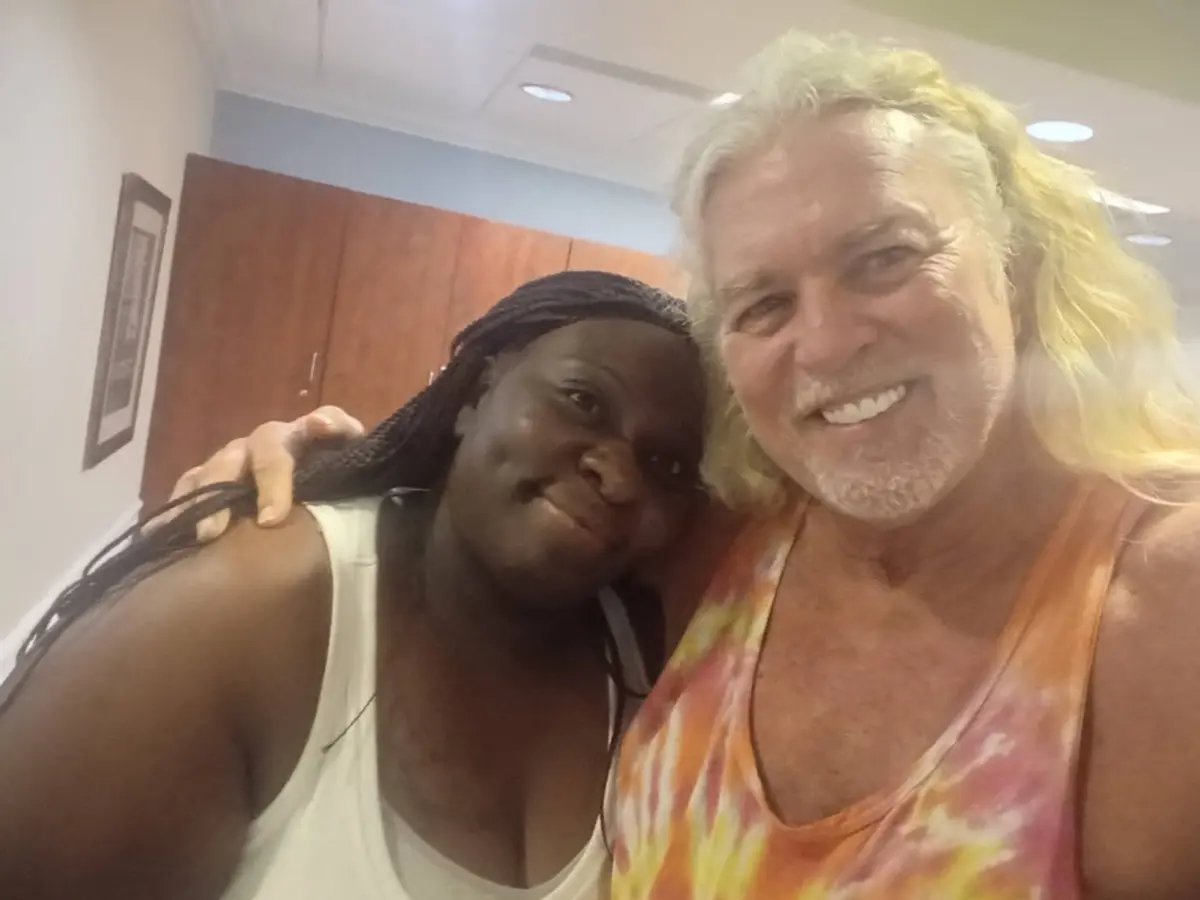
The observations framing this paradigm shift unfolded over a concentrated period during a family support trip to Fort Myers, where writer and researcher Gregg Prescott encountered two distinct individuals whose daily routines and personal experiences challenge conventional boundaries of spiritual work.
Phase One: The Daily Routine of Andrew
The first encounter took place within the dining room of the independent living facility. Andrew, employed as a dining room server, consciously chose a role that offers lower financial compensation compared to high-end culinary establishments. His daily routine involves a deliberate pause at the tables of isolated residents.

Rather than executing a purely transactional service, Andrew routinely drops to one knee beside lonely elderly residents—individuals who might otherwise endure meals in complete silence—to offer personalized compliments and genuine inquiries about their emotional well-being. This practice is not reserved for special occasions; it is systematically integrated into his daily interactions, fundamentally altering the energetic atmosphere of the communal dining hall.
Phase Two: Kentisha’s Frontline Resilience
The second encounter occurred at the facility’s primary reception desk, managed by Kentisha. Operational challenges, specifically an elevator undergoing maintenance, had concentrated foot traffic and logistical bottlenecks around a single operational lift.
Managing resident transit under these conditions represents a notoriously high-friction administrative task. Despite the inherent frustrations of managing an impatient populace, Kentisha maintained a calm, positive disposition, transforming a potential flashpoint of administrative stress into a space of grace.
Phase Three: The Night of the Triad Dreams
During the same operational timeframe, Kentisha experienced an intense metaphysical event. Over the course of a single night, she experienced three distinct out-of-body occurrences:
- Location One: A projection of consciousness from her physical body while stationed at her workplace front desk.
- Location Two: An out-of-body state experienced while working at an alternate, unfamiliar location.
- Location Three: A projection while in the presence of her five-year-old son.
Culminating this sequence of altered states, Kentisha woke up spontaneously at precisely 3:33 AM. Naturally unsettled by the vividness and frequency of these projections, she initially feared the episodes might signal an impending crisis or negative premonition. Subsequent discussion reframed the sequence not as an omen of doom, but as a biological and spiritual metamorphosis akin to the restructuring of a caterpillar within a cocoon.
Supporting Data & Contextual Analysis
To contextualize these accounts, researchers point to the broader psychological and sociological dynamics surrounding isolation, institutional care, and the mechanics of synchronicity.
The Epidemic of Invisible Populations
Sociological data consistently demonstrates the severe psychological toll of isolation on aging populations within independent and assisted living environments. According to wellness studies, micro-interactions—defined as brief, positive exchanges with service workers or acquaintances—statistically lower cortisol levels and combat feelings of depersonalization among seniors.

When Andrew kneels to speak to a resident, he is engaging in a medically and psychologically documented intervention against geriatric loneliness. From a holistic perspective, this elevates his role from a hospitality worker to an energetic stabilizer.
Decoding the 3:33 AM Phenomenon and Out-of-Body States
Chronobiology and esoteric numerology frequently intersect around the 3:00 AM to 4:00 AM window. Often referred to in metaphysical circles as the "witching hour" or the veil-thinning period, waking consistently at times like 3:33 AM serves as a classic numerical synchronicity (repeating numbers).
Psychologically, sudden out-of-body experiences (OBEs) can be triggered by stress, fatigue, or shifts in consciousness. However, within esoteric frameworks, they are frequently interpreted as indicators of "DNA upgrades," shifts in vibrational frequency, or the integration of higher-self awareness into the waking ego.
Just as the biological transformation from caterpillar to butterfly involves the total dissolution of larval structures (imaginal cells) within the chrysalis—a process that would logically appear catastrophic to the caterpillar itself—metaphysical awakenings often manifest as frightening disruptions to normal waking consciousness.
Official Responses & Expert Perspectives
While institutional or corporate bodies rarely comment on metaphysical occurrences or the esoteric classification of hospitality workers, human resources, organizational psychology, and holistic health frameworks offer relevant commentary on these dynamics.
Workplace Psychology on Frontline Empathy
Organizational behaviorists emphasize that customer-facing and hospitality roles hold disproportionate sway over institutional culture. Front desk personnel and dining servers act as the "limbic system" of an organization.
- "Employees who introduce high levels of authentic empathy into routine environments perform emotional labor that fundamentally shifts group dynamics," notes workplace culture analyst Dr. Elena Vance. "They absorb collective stress and transmute it, though this labor is rarely quantified on traditional balance sheets."
Holistic Integration of Anomalous Dreams
Holistic practitioners specializing in dream analysis and transpersonal psychology view nocturnal out-of-body clusters as integration periods for the subconscious mind.

- "When a client reports multiple astral projections or etheric relocations in a single night, coupled with precise angelic number awakenings like 3:33, it typically signals that the psyche is processing multidimensional data faster than the waking mind can comfortably synthesize," explains metaphysical researcher and author Gregg Prescott. "The fear response is simply the ego reacting to the dissolution of its perceived boundaries. Once reframed as growth rather than decay, the individual moves from terror to empowerment."
Implications
The documentation of Andrew and Kentisha’s experiences carries wide-ranging implications for how modern society understands spirituality, community care, and personal validation.
1. Democratization of Spiritual Service
The primary implication is the democratization of the lightworker title. For decades, the spiritual community has inadvertently fostered an elitist hierarchy where true "spiritual work" was reserved for those with platforms, books, or specialized esoteric certifications.
Stories from Fort Myers dismantle this barrier. They suggest that a person stocking shelves, serving meals, or managing an elevator can generate a more profound spiritual impact through simple kindness than a public-facing teacher reaching thousands through a screen. True lightwork requires no title; it leaves an empirical footprint of warmth in spaces that were cold moments prior.
2. Normalizing Anomalous Human Experiences
Instances involving repeated out-of-body dreams and synchronous awakenings highlight a systemic gap in how society handles anomalous psychological events. When individuals experience profound shifts in perception, they frequently lack a safe, non-judgmental framework for interpretation, often fearing mental instability due to cultural stigma.
The integration of digital community tools—such as dedicated application networks designed to record dreams and synchronicities (e.g., the In5D Infinite platform)—points toward a technological solution for an ancient human problem: the need for peer validation. By connecting individuals experiencing similar shifts in consciousness, society can move away from pathologizing awakening symptoms and toward collective sense-making.
3. Cultivating Micro-Altruism in an Automated World
As automation and digital interfaces increasingly replace human-to-human contact in service industries, the value of intentional, embodied human presence appreciates exponentially. The actions of workers like Andrew and Kentisha demonstrate that personal agency remains the most potent tool for shifting collective reality.
Ultimately, these narratives challenge every individual to evaluate their immediate sphere of influence. Whether transforming a chaotic administrative bottleneck into a moment of grace or ensuring that a marginalized neighbor feels seen, the fundamental measure of spiritual awakening is remarkably uncomplicated: Is the room a little brighter because you were in it?
