

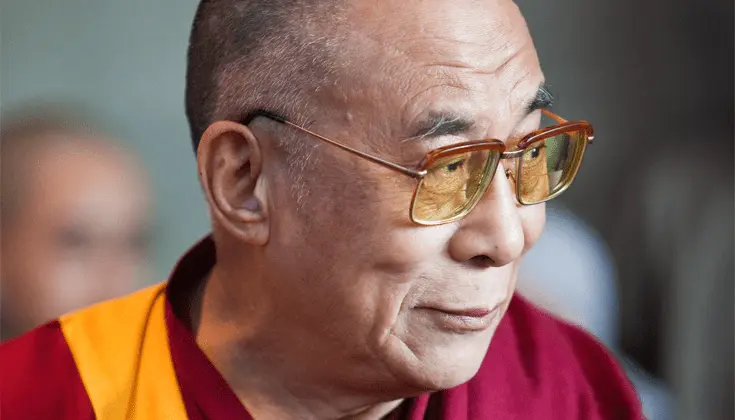
In an era defined by rapid technological connectivity yet marked by profound personal isolation, the fundamental human quests for love, peace, and meaning often feel increasingly elusive. Modern society bombards individuals with superficial metrics of connection—digital validation, transactional relationships, and fleeting emotional highs. Yet, beneath this veneer of constant communication lies a pervasive undercurrent of self-centredness, anxiety, and emotional burnout.
To address these modern maladies, spiritual leaders and philosophers frequently point toward age-old contemplative traditions. Among them, Tenzin Gyatso, the Fourteenth Dalai Lama, offers a profound framework for redefining how humanity approaches interpersonal connection. Adapted from his seminal work, The Compassionate Life, the Tibetan spiritual leader’s teachings challenge contemporary assumptions about love and compassion, urging a radical departure from attachment-driven emotions toward a reasoned, universal ethic of care.
This article examines the core tenets of the Dalai Lama’s philosophy on compassion and attachment, tracing the philosophical chronology of these teachings, evaluating the psychological data supporting mindful altruism, exploring global responses to these paradigms, and analysing the profound societal implications of cultivating a "religion of human kindness" in the twenty-first century.
Main Facts: Defining Compassion, Love, and the Trap of Attachment
At the heart of the Dalai Lama’s teachings is a precise taxonomy of human emotion. Before humanity can effectively generate compassion and love, he argues, society must establish a clear, unambiguous understanding of what these terms actually entail.
In their simplest definitions, love and compassion are positive thoughts and feelings that serve as the generative bedrock for essential human qualities: hope, courage, determination, and inner resilience. Within the rich philosophical framework of the Buddhist tradition, love and compassion are viewed as two complementary facets of the same overarching state of mind:
- Compassion is defined as the active, heartfelt wish for another living being to be completely free from suffering.
- Love is defined as the sincere desire for another being to experience genuine happiness and well-being.
However, the Dalai Lama issues a critical caveat: it is entirely insufficient merely to intellectualise the importance of these virtues. Believing that compassion is a "nice" concept or passively admiring kind-hearted individuals does nothing to dismantle the deeply ingrained self-absorption that plagues the human condition. Self-centredness acts as an invisible barrier, inhibiting the natural expansion of love toward others. Achieving true, lasting peace of mind requires a calm psychological state, which can only be forged through the deliberate cultivation of a compassionate attitude.
The Illusion of Attachment
A major contribution of the Dalai Lama’s discourse is his sharp distinction between genuine compassion and emotional attachment. Much of what modern society labels as "love" or "compassion" is, upon closer inspection, deeply intertwined with personal desire, emotional dependency, and ego gratification.
Consider the following common relational dynamics:
- Parental Love: While universally celebrated as the pinnacle of selflessness, the love parents feel for their children is frequently shadowed by their own emotional needs, unfulfilled ambitions, and anxieties, preventing it from being entirely pure or unconditional.
- Friendships: When individuals express deep concern for a close friend, that sentiment is often driven by a subtle demand for reciprocity, validation, or the fear of loneliness—manifestations of attachment rather than altruism.
- Romantic Relationships and Marriage: Particularly in their nascent stages, romantic partnerships are heavily weighted toward emotional attachment. Partners frequently project their idealized fantasies onto one another, overlooking deep-seated character flaws because their strong desires make the other person appear flawless. When these projections inevitably shatter, the attachment dissolves, frequently explaining the brevity of many modern marriages.
When love is motivated primarily by personal need rather than an objective recognition of another person’s humanity, it ceases to be genuine compassion. Instead, it becomes a transactional emotional state vulnerable to shifting circumstances and expectations.
Chronology: The Evolution of the Dalai Lama’s Global Message
To fully understand the weight of these teachings, it is helpful to trace the chronological trajectory of the Fourteenth Dalai Lama’s public life and philosophical output, which bridges ancient Himalayan monastic traditions with contemporary global discourse.
- 1935–1950 (Early Life and Formation): Born Lhamo Thondup in rural Tibet, he was recognized at age two as the reincarnation of the 13th Dalai Lama. His formative years were steeped in rigorous classical Tibetan Buddhist monastic education, where he memorized and debated foundational texts concerning compassion (Karuna) and loving-kindness (Metta/Maitri).
- 1959 (Exile and Broadened Perspective): Following the Chinese military intervention in Tibet, the young Dalai Lama fled into exile in Dharamshala, India. This pivotal historical rupture forced him out of an isolated monastic environment onto the global stage, compelling him to translate ancient Tibetan philosophies into a universal language accessible to people of all faiths and none.
- 1980s–1990s (Engagement with Western Science): Recognizing the convergence between ancient contemplative practices and modern empirical science, the Dalai Lama initiated groundbreaking dialogues with Western neuroscientists, psychologists, and philosophers. This era marked a shift in his teachings toward secular ethics, emphasizing that compassion is a biological and psychological necessity rather than a dogmatic religious requirement.
- 2001 (Publication of The Compassionate Life): This milestone year saw the publication of The Compassionate Life, capturing his core teachings on transforming daily interactions into exercises in genuine altruism. It cemented his reputation not merely as a political figurehead in exile, but as a preeminent global ethicist.
- Present Day (The Universal Advocate): Today, at over 80 years of age, the Nobel Peace Prize laureate continues to advocate tirelessly for a "religion of human kindness." His message has evolved to directly address modern crises—such as political polarization, climate anxiety, and digital alienation—positioning compassion as an urgent survival strategy for the human race.
Supporting Data: The Science of Altruism Versus Attachment
While the Dalai Lama approaches the human mind through centuries-old contemplative introspection, modern scientific research increasingly validates his assertions regarding the distinct neurological and psychological profiles of compassion versus attachment.
Neuroplasticity and Compassion Training
Pioneering neuroscientific studies conducted in collaboration with Western institutions—many facilitated through organizations like the Mind & Life Institute, which the Dalai Lama co-founded—have demonstrated that the human brain is remarkably plastic. Regular mental training focused on generating unconditional compassion physically alters neural architecture.
Functional Magnetic Resonance Imaging (fMRI) scans of long-term meditators practicing compassion-focused meditation reveal significant activation in the brain’s neural networks associated with empathy, positive affect, and reward processing (such as the insula and the striatum). Crucially, unlike empathetic distress—which mirrors the exhaustion and anxiety of witnessing someone else’s suffering—genuine compassion activates areas linked to resilience, caregiving, and the motivation to act.
The Psychology of Attachment vs. Altruism
Psychological data distinguishes between anxious attachment in relationships and altruistic motivation:
- Attachment-Driven Interactions: Research in attachment theory indicates that relationships founded heavily on emotional projection and unmet dependency frequently result in higher rates of interpersonal conflict, chronic stress, and emotional volatility. When personal needs are not met by the attachment figure, the brain triggers a threat response, mirroring the neurochemistry of fear and anger.
- Reasoned Compassion: Conversely, studies on altruism show that individuals who cultivate a steady, reason-based commitment to the well-being of others—regardless of whether those individuals are friends or perceived enemies—exhibit lower baseline cortisol levels, reduced systemic inflammation, and enhanced psychological longevity.
By grounding compassion in reason rather than fleeting emotional impulse, individuals bypass the emotional burnout characteristic of attachment-based relationships.
Official Responses and Global Reception
The Dalai Lama’s philosophical frameworks regarding compassion and the critique of modern attachment have elicited profound responses from global leaders, theologians, psychologists, and institutional bodies over the decades.
Endorsement from the Scientific Community
The scientific community has largely embraced the Dalai Lama’s insistence that mental states can be systematically trained, much like physical fitness. Leading neuroscientists have praised his openness to empirical inquiry, noting that his traditional teachings on overcoming self-centredness align closely with modern psychological insights into cognitive reframing and emotional regulation.
Interfaith and Secular Praise
Religious leaders worldwide have lauded his advocacy for a "religion of human kindness." By arguing that true compassion is based on the universal human desire to escape suffering and find peace—irrespective of dogmatic boundaries—he has built bridges between diverse faith traditions. Secular humanists similarly champion his work, recognizing that his teachings provide a robust ethical foundation for societies navigating post-religious or multi-cultural landscapes.
Critical Perspectives and Challenges
Despite widespread admiration, critics and pragmatic philosophers occasionally raise questions regarding the real-world application of such lofty ideals. Some contemporary thinkers argue that urging individuals to extend universal compassion to everyone—including enemies—runs counter to deep-seated evolutionary instincts geared toward tribalism and kin selection.
In response, proponents of the Dalai Lama’s teachings emphasize that he does not advocate for an immediate, effortless saintliness. Rather, he outlines a deliberate, step-by-step discipline. As highlighted in The Compassionate Life, achieving genuine compassion requires recognizing that self-centredness is a universal affliction, and combating it demands conscious, daily effort embedded within the ordinary events of everyday life.
Implications: Building a Culture of Genuine Compassion
The implications of the Dalai Lama’s teachings extend far beyond individual self-help or monastic philosophy; they offer a vital roadmap for addressing systemic global crises.
Transforming Personal Relationships
At the micro-level, adopting the distinction between attachment and genuine compassion revolutionizes how human beings relate to one another. By moving away from relationships driven by projection, expectation, and emotional consumption, individuals can foster deeper, more resilient bonds. Recognizing that true care is anchored in the objective needs of others—rather than what they can provide for our ego—allows marriages, friendships, and families to weather inevitable interpersonal storms.
Reforming Societal and Political Structures
At the macro-level, a society grounded in reasoned compassion would look radically different from the hyper-competitive, polarized landscape of the twenty-first century. Political discourse, currently dominated by tribalism and "us versus them" mentalities, could be fundamentally transformed if leaders evaluated policies through the universal lens of reducing suffering and promoting shared well-being.
Furthermore, educational systems could incorporate emotional hygiene and compassion training alongside traditional academic subjects. Teaching young people how to recognize and dismantle their own self-centredness would cultivate a generation better equipped to handle global challenges such as economic inequality, environmental degradation, and international conflict.
Conclusion
Ultimately, the Dalai Lama’s message reminds humanity that compassion is not a passive emotion reserved for the morally elite, nor is it synonymous with the fragile ties of emotional attachment. It is a rigorous, rational, and transformative commitment. By making a concerted effort to weave this genuine wish for the well-being of all living beings into the fabric of daily life, individuals can dismantle the walls of self-centredness and contribute to a more peaceful, compassionate world.
