

Long celebrated as the undisputed crown jewel of global scuba diving and underwater photography, Raja Ampat remains a dream destination for image-makers worldwide. Situated off the northwest tip of the Bird’s Head Peninsula in Indonesia’s West Papua province, this remote archipelago offers a kaleidoscopic spectacle of emerald, jungle-clad karst islands, thriving reef ecosystems, and a density of marine life that defies imagination.
Often heralded as "The Last Paradise," Raja Ampat is far more than a vacation spot; it is a vital ecological sanctuary sitting right at the heart of the global Coral Triangle. For professional and amateur photographers alike, planning an expedition here requires a meticulous blend of logistical endurance, technical readiness, and deep reverence for one of the planet’s most dynamic marine environments.
Main Facts: The Biodiversity Epicenter of the Planet
Spanning over 1,500 small islands, cays, and shoals surrounding the four major landmasses of Waigeo, Batanta, Salawati, and Misool, Raja Ampat commands premier real estate within the Coral Triangle. Marine biologists estimate that this single region harbors roughly 75% of all known coral species on Earth.
The statistics underscore its status as an unmatched haven for marine biodiversity:

- Corals: Over 540 distinct species of hard and soft corals.
- Fish: An astounding inventory exceeding 1,000 reef and pelagic fish species.
- Mollusks: Approximately 700 unique types of mollusks.
- Megafauna and Critters: Frequent sightings of schooling manta rays, dugongs, saltwater crocodiles, sea turtles, wobbegong sharks, and a breathtaking array of macro subjects including pygmy seahorses, flamboyant cuttlefish, and blue-ringed octopuses.
Unlike many heavily impacted marine environments across the globe, certain protected pockets of Raja Ampat—particularly around Misool in the south—are experiencing an active increase in overall biodiversity, largely thanks to stringent local conservation frameworks and community-led marine parks.
Chronology and Logistics: Reaching the Edge of the World
Pristine natural wonders rarely come easily, and Raja Ampat is no exception. For international travelers embarking from hubs like Australia, Europe, or the Americas, reaching the launching point demands patience and stamina.

The Journey to Waisai
The typical transit involves a multi-leg itinerary: at least two long-haul international and domestic flights (frequently accompanied by extended layovers in Jakarta, Makassar, or Sorong), followed by a warm, two-hour ferry ride from Sorong to Waisai on Waigeo Island. From Waisai, travelers face pothole-peppered vehicle transfers to regional jetties before boarding speedboats or liveaboards bound for the outer islands.
On-Water Itineraries vs. Land-Based Homestays
Photographers generally choose between two primary modes of exploration:

- Liveaboards: Highly recommended by seasoned expedition leaders, liveaboards allow photographers to traverse vast expanses of the archipelago. Securing a vessel with an itinerary that features Misool ensures access to the healthiest and most vibrant reef systems available.
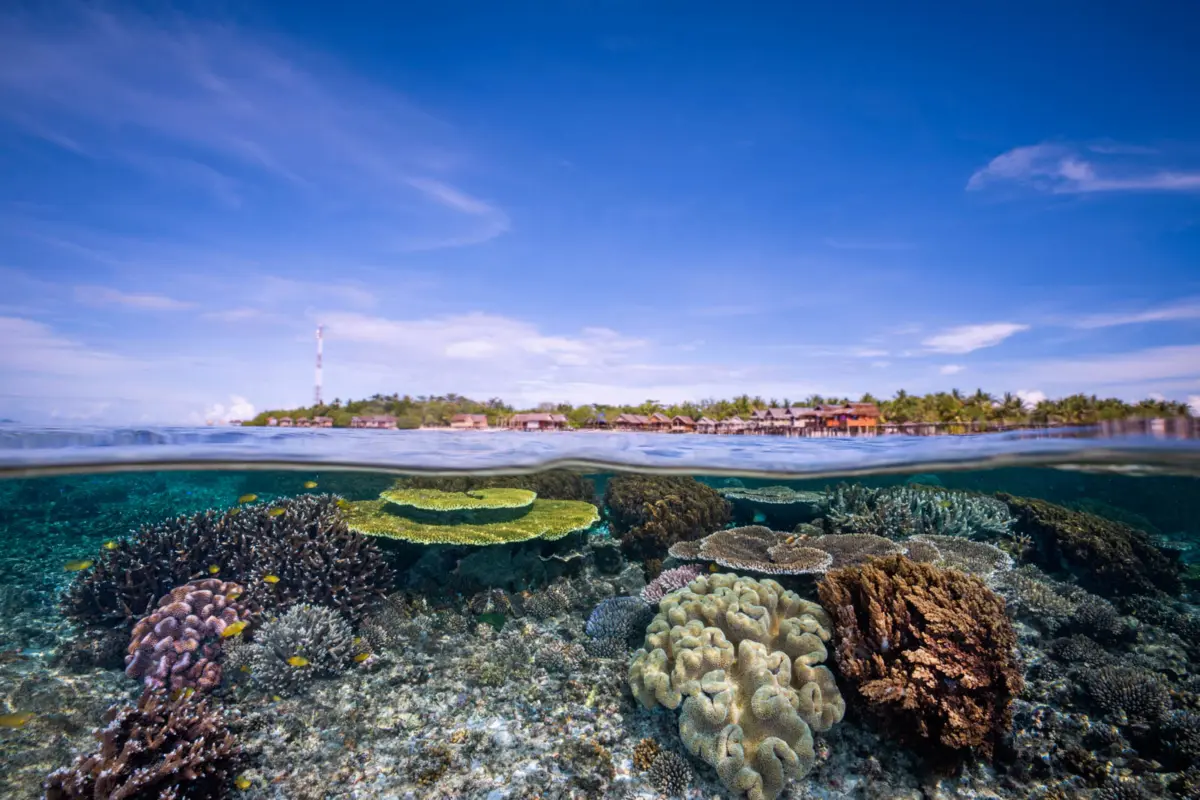
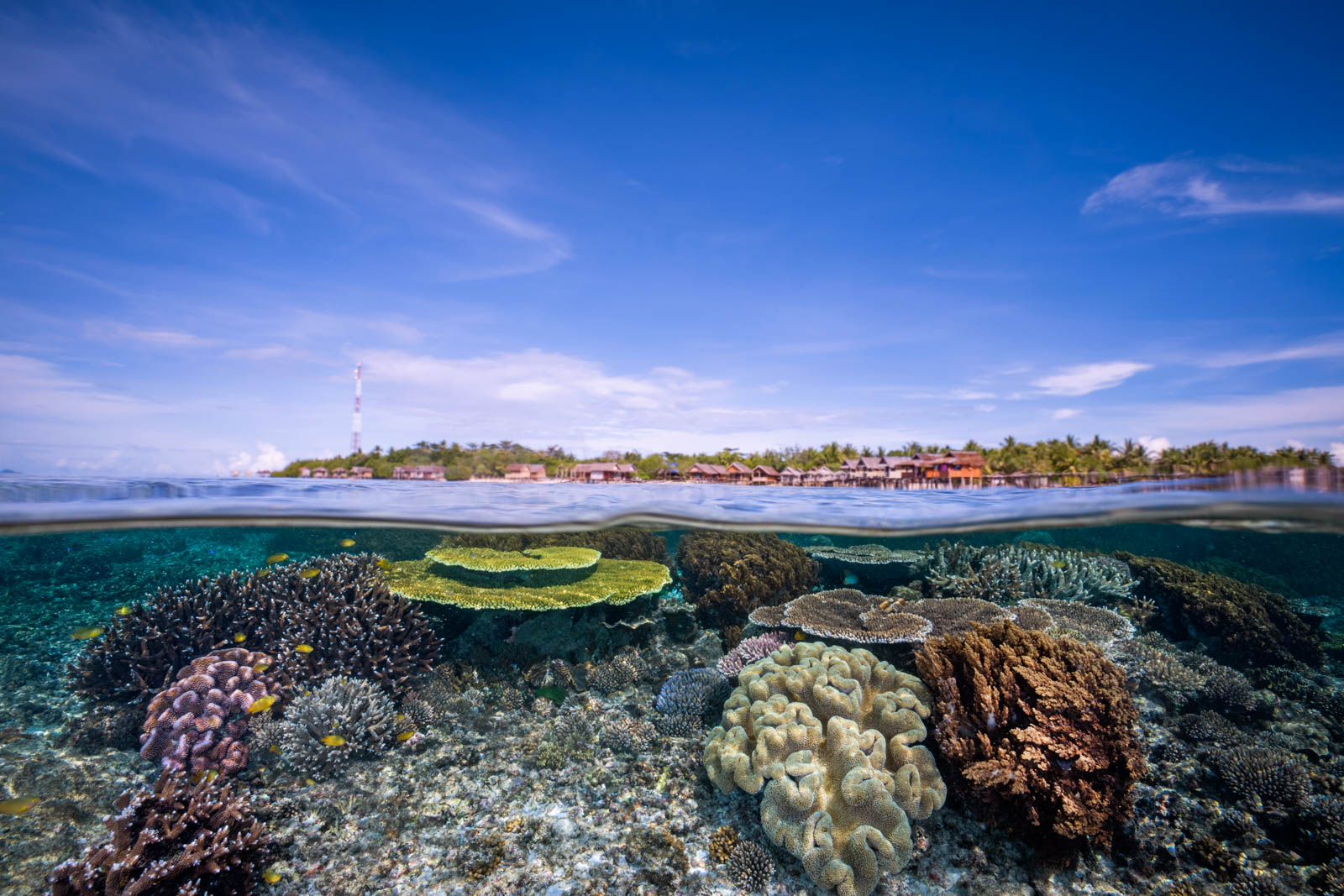
- Island Homestays: For those looking to decompress after days at sea, staying in a local eco-homestay offers immediate access to thriving "house reefs." Photographers should meticulously research homestays with pristine, undisturbed shallow waters to maximize opportunities for split-shots and macro dives right off the shore.
Supporting Data: Technical Gear and Photographic Strategies
Raja Ampat is a dual-threat destination: it offers monumental, cathedral-like reefscapes ideal for ultra-wide-angle experimentation, alongside hyper-diverse muck and macro environments tucked into coral crevices. Deciding which setup to prioritize can dictate the success of your entire expedition.
Wide-Angle Photography and Split-Shots
The region’s vast, flourishing reef systems—bursting with color and structural complexity—set a majestic stage for wide-angle compositions.

- Lens Selection: A 16–35mm zoom lens (or equivalent) is the gold standard for capturing schooling fish, manta rays, reef sharks, and dramatic coral vistas.
- Over-Under (Split) Shots: The crystalline shallows surrounding island house reefs provide pristine conditions for split-shots. To maximize these frames, photographers should target periods surrounding the region’s dramatic sunrises and sunsets, ensuring their accommodation features a calm, unobstructed shoreline.
Macro Photography and Critter Hunting
Beneath the sweeping vistas lies a microscopic universe of weird and wonderful creatures.
- Lens Selection: While a mid-range macro lens like a 60mm has its place, packing a longer focal length such as a 90mm or 120mm is essential for working shy subjects without disturbing them.
- Accessories: External diopters are non-negotiable tools for capturing ultra-small subjects like pygmy pipehorses, ghost pipefish, and minute nudibranchs.
- Target Species: Divers can expect multiple encounters with frogfish, leaf scorpionfish, mantis shrimps, porcelain crabs, and elusive cephalopods. Always consult local dive guides prior to descending to align your camera housing setup with the specific topography of the dive site.
Official Responses and Environmental Challenges: Currents and Visibility
The very mechanisms that fuel Raja Ampat’s legendary biodiversity also introduce unique hurdles for underwater image-makers.

Nutrient-Rich Waters and Visibility
The explosion of marine life is driven by an intricate system of deep, nutrient-rich currents sweeping through passages like the Dampier Strait. While these nutrients create an underwater paradise, they can periodically result in less-than-desirable water clarity. Wide-angle shooters must master precise strobe positioning and use backscatter-reduction techniques to cut through particulate matter.
Managing Strong Currents
The currents in Raja Ampat can transform from gentle drifts to raging torrents with little warning. Photographers must be prepared for dives where controlling heavy camera rigs requires anchoring oneself behind a coral boulder and holding on for dear life.

- Expedition Advisory: If dive guides flag a site as experiencing "strong down-currents," experienced photographers often advise leaving the camera behind or securing it with a fail-safe tether system and robust marine insurance. Maneuvering a rig in a high-velocity current with only one free hand is a recipe for equipment damage or missed opportunities.
Implications: Iconic Dive Sites of Raja Ampat
To truly understand the photographic potential of the archipelago, one must examine its premier dive locations.
1. Melissa’s Garden
A sanctuary for coral enthusiasts, this wide-angle site plunges divers into endless plateaus of interconnected hard coral formations stretching toward the horizon. Photographers here regularly encounter schooling batfish, barracuda, fusiliers, and hunting lionfish against an impeccably manicured benthic backdrop.

2. Batu Rufus
Located near the Fam Islands, Batu Rufus features a crystal-clear emerald lagoon enclosed by dramatic limestone karst formations. The dive begins on sloping outer walls where pelagics roam, but the true highlight is the shallow interior lagoon accessed via a coral-encrusted swim-through. This 5-meter-deep natural pool offers phenomenal natural light, making it an ideal location for freediving photography and over-under split shots.
3. Cape Kri
Holding historic renown for yielding the highest number of recorded species on a single scuba dive, Cape Kri is a microcosm of Raja Ampat’s ecological wealth. With sloping reefs dropping to 40 meters and intersecting currents, it rewards multiple visits. Photographers can alternate between wide-angle setups for pelagics, sharks, and turtles, and macro setups focused on the dense Muricella gorgonian sea fans that serve as home to colonies of pygmy seahorses.

4. Manta Ridge
Positioned between Mansuar and Arborek Islands, Manta Ridge is a legendary cleaning station. Though conditions fluctuate and currents can be fierce, days aligning with favorable tides offer up-close, cinematic encounters with swirling squadrons of reef mantas. Photographers must maintain strict buoyancy control and respect the animals’ space while managing heavy rigs in surging water.
5. Citrus Ridge
True to its name, Citrus Ridge near the Gam Islands bursts with vibrant yellow, orange, and green soft corals. While its staggering color palette invites sweeping wide-angle experimentation, it is equally celebrated as a macro hotspot. Photographers can spend entire dives inspecting small bommies and crevices for hidden bottom-dwellers, all framed by an intensely colorful coral canvas.

Conclusion
Raja Ampat offers an infinite array of visual narratives for dedicated ocean explorers and marine photographers. From the towering karst islands greeting you during surface intervals to the manicured coral gardens and bustling macro communities below, the region stands as a benchmark for marine conservation and natural beauty.
Ultimately, expedition success in Raja Ampat hinges on decisive preparation—choosing between wide-angle and macro lenses before descending—and maintaining unwavering respect for delicate ecosystems and powerful ocean currents. By combining technical discipline with environmental mindfulness, photographers can capture the true essence of the world’s last remaining marine paradise.
