

Main Facts
The evolution of automated driving software has reached a critical milestone with the deployment of Tesla’s Full Self-Driving (FSD) V14. Operating on a base 2026 Tesla Model Y, veteran driver Fritz Hasler—an 86-year-old resident of northern Wisconsin—has spent the last three months rigorously evaluating the capabilities and limitations of FSD V14.
The software represents a generational leap over previous iterations like V12, bringing near-autonomous door-to-door capability. However, real-world testing reveals persistent infrastructural and software hurdles that prevent the system from achieving true Level 5 autonomy.
Key takeaways from the three-month evaluation include:
- End-to-End Automation: FSD V14 successfully manages complex trip initiations, including backing out of a garage, executing multi-point turns, navigating gravel driveways, and handling automated parking upon arrival.
- Refined Behavioral Profiles: The updated UI replaces granular speed settings with customizable driving modes—ranging from "Sloth" and "Chill" to "Hurry" and "Mad Max"—tailoring vehicle aggression to local traffic expectations.
- Infrastructural Bottlenecks: Outdated mapping data, missing turn-lane indicators, and unmapped commercial locations continue to cause navigation errors, highlighting a heavy reliance on high-definition map accuracy.
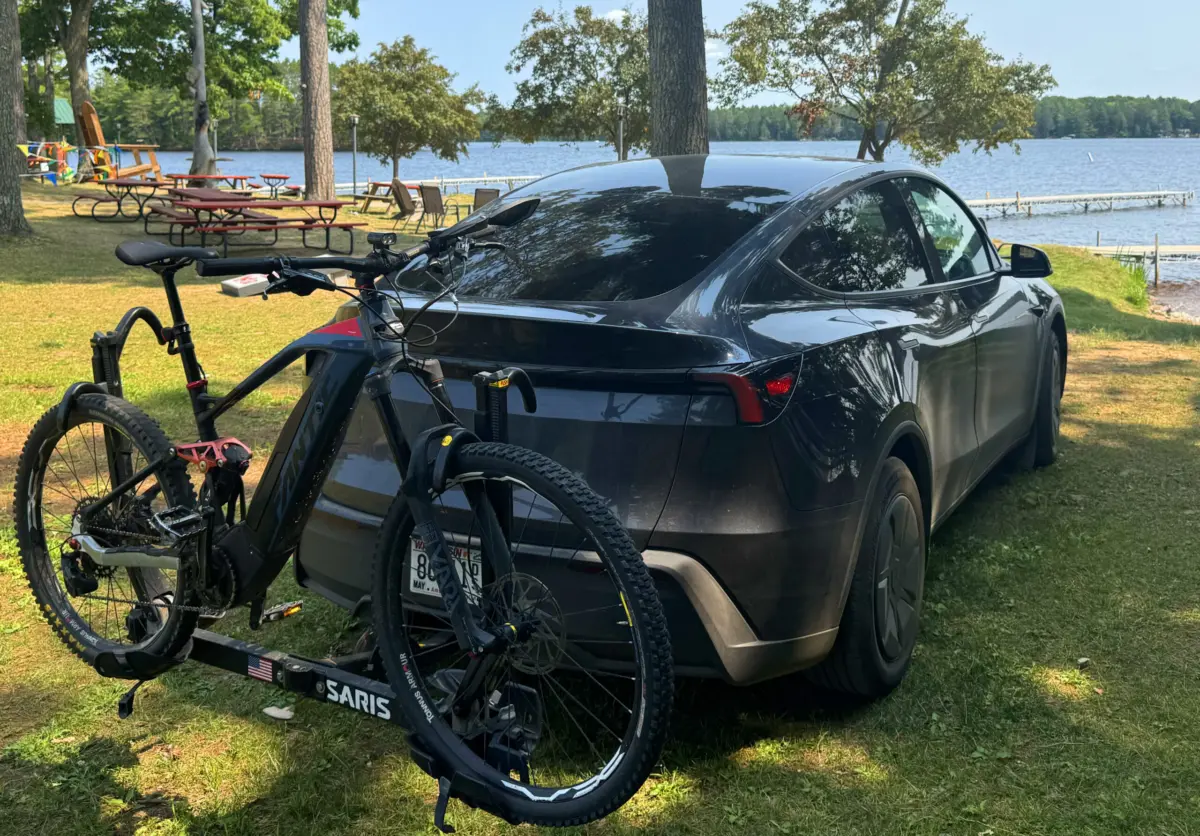
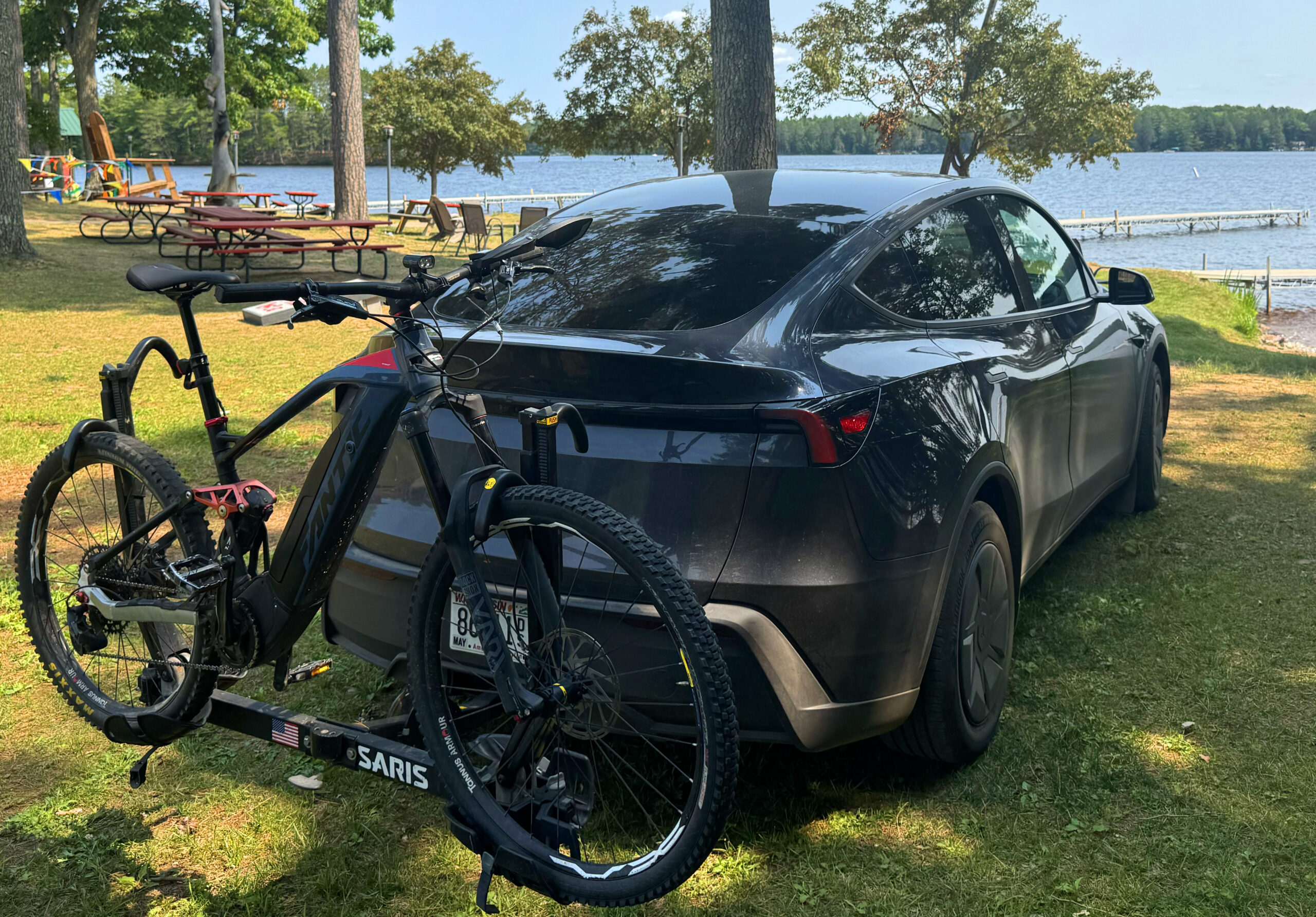
- Hardware Limitations: Rear-mounted bike racks obscure lower license-plate cameras, completely disabling FSD’s reversing functionality due to blind spots.
Chronology
June 9, 2026: The Catalyst for an Unexpected Upgrade
For years, Fritz Hasler intended his 2019 Tesla Model 3 to be his final vehicle. Having logged over six years with earlier iterations of FSD, Hasler was deeply familiar with the platform’s quirks and trajectory. However, an unexpected automobile accident on June 9, 2026, totaled the Model 3.
The collision forced an abrupt transition. Because the older Model 3 relied on obsolete Hardware 3 computing architecture—which is incapable of running the computationally intensive FSD V14 software—Hasler was pushed into the new car market.
May 26 to August 2026: Three Months of Northern Wisconsin Real-World Testing
Having taken delivery of a base 2026 Tesla Model Y, Hasler immediately began testing FSD V14 starting on May 26. Operating predominantly across rural northern Wisconsin, punctuated by interstate travel and cross-border trips into Michigan’s Upper Peninsula, the testing ground provided a mix of unpaved gravel roads, complex construction zones, rural wildlife hazards, and small-town intersections.
Unlike controlled test tracks, Hasler’s daily routes exposed FSD V14 to unpredictable local environments, yielding a comprehensive view of how consumer-grade autonomous software handles the unpredictable nature of rural and semi-urban American infrastructure.
Supporting Data and Performance Analysis
Operational Capabilities: What FSD V14 Does Exceptionally Well
Compared directly to the late-stage V12 software running on his previous Model 3, Hasler characterizes V14 as "amazing," likening its baseline execution to handing the steering wheel over to a seasoned, cautious professional driver.
- Lane Discipline and Object Avoidance: The vehicle consistently tracks dead-center in its lane. When encountering vulnerable road users—such as pedestrians, cyclists, parked vehicles, or large construction machinery—the Model Y executes smooth, calculated lateral adjustments.
- Complex Hazard Management: The system handles traffic circles, roundabouts, and construction barrel mazes with precision. Furthermore, it demonstrates heightened reactivity to wildlife, braking proactively for deer near or crossing rural roadways, and anticipating crosswalk pedestrians.
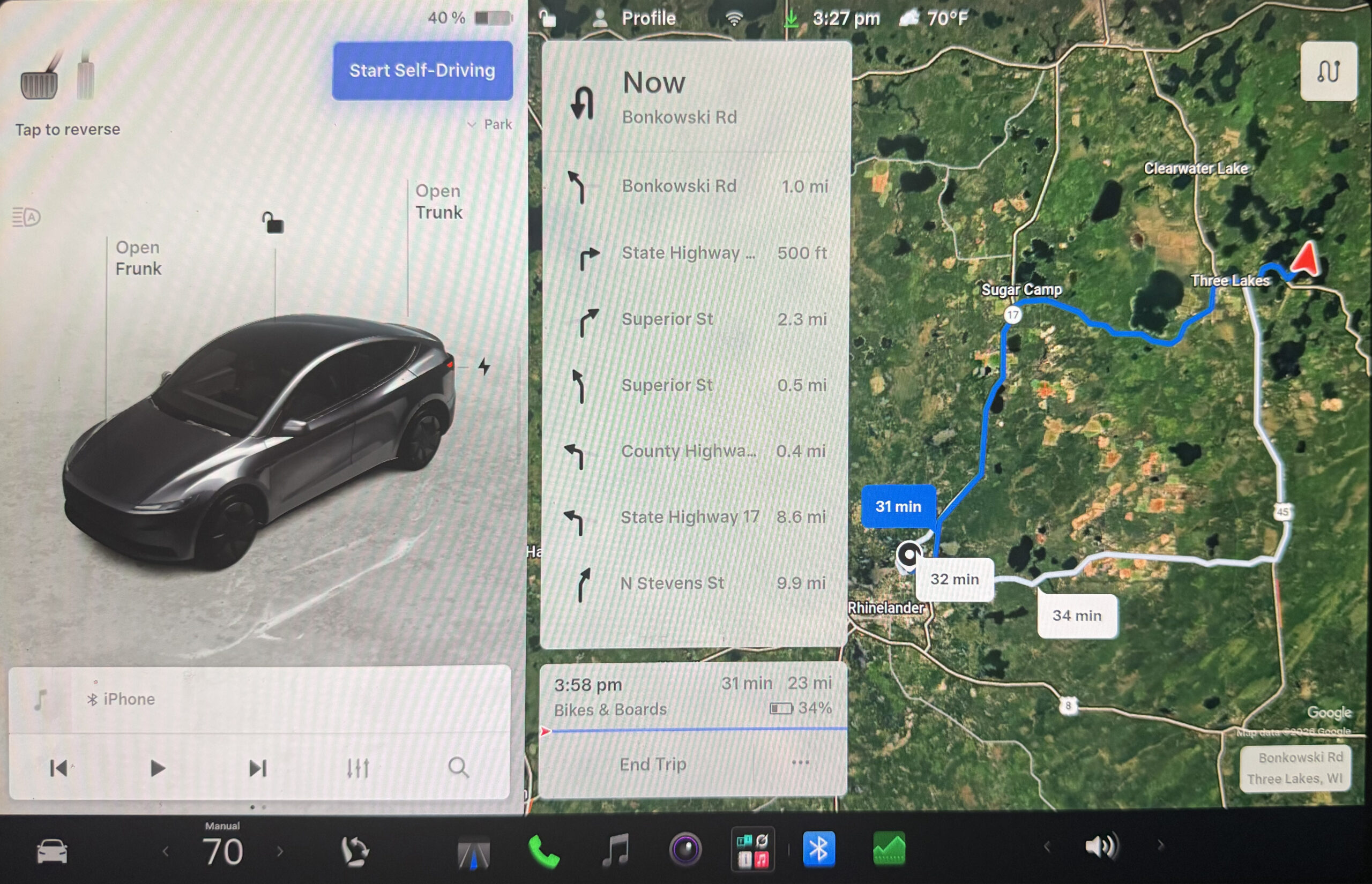
- Trip Initiation and Arrival: For the first time, FSD handles the bookends of a journey. By verbally setting a destination (e.g., a 30-mile trek to a regional retail center), engaging the right scroll wheel, and tapping the brake, the vehicle initiates autonomous control from a garage, negotiates a gravel driveway, and navigates out onto public roads. Upon arrival, it scans and reverses into available parking stalls.
Granular Customization: The New Speed Profiles
Earlier software iterations required drivers to tediously toggle exact speed offsets using the steering wheel’s right scroll wheel. FSD V14 introduces categorical behavior profiles that streamline driver-vehicle communication:
- Mad Max: Permits speeds up to 20 mph over the posted speed limit.
- Hurry: Pushes speeds roughly 7 to 10 mph over the limit.
- Standard: Maintains a steady 5 mph over the limit, generally considered safe from minor ticketing.
- Chill: Sticks strictly to the legal speed limit.
- Sloth: Prioritizes ultra-smooth, conservative acceleration and cautious observation for wildlife or scenic anomalies.
Persistent Frustrations and Edge Cases
Despite its impressive capabilities, FSD V14 is not without operational friction points:
- The 1.5-Second Stop Sign Pause: When approaching an empty intersection regulated by a stop sign, the vehicle executes a complete stop but routinely lingers for roughly 1.5 seconds before moving forward, even when cross-traffic is entirely absent. Drivers accustomed to immediate acceleration must apply slight pressure to the accelerator to override the hesitation.
- Parking Precision Deficits: While the car can locate a parking lot, it lacks contextual awareness. It cannot identify the closest entrance for preferred access, disregards designated handicapped parking placards, and struggles to identify private residential driveways or garages upon a return trip.
- Hardware Obstructions: Mounting a mountain e-bike on a rear hitch rack partially obscures the license-plate-mounted rear camera. While forward-facing and quarter-panel cameras allow FSD to drive forward seamlessly, the obstructed rear view entirely disables autonomous reversing functions.
Official Responses and Industry Context
Tesla continues to market Full Self-Driving under a supervised framework, requiring drivers to remain alert and ready to intervene at a moment’s notice. While Elon Musk’s public persona and management style draw frequent public criticism from a wide cross-section of consumers, market analysis consistently shows that consumer adoption often hinges purely on product utility rather than corporate leadership politics.
Industry observers note that Tesla’s aggressive pivot toward pure vision-based neural networks has eliminated the need for radar and ultrasonic sensors, forcing the vehicle’s onboard AI to interpret depth, speed, and spatial awareness exclusively through optical camera arrays. This architectural philosophy faces its stiffest test not from hardware constraints, but from the quality of underlying mapping data.

Implications for the Future of Autonomous Driving
Hasler’s real-world findings underscore a fundamental truth regarding the path to Level 5 (completely unsupervised) autonomy: software is only as reliable as the map data feeding it.
During his travels through Iron Mountain, Michigan, Hasler observed that his Model Y ignored a clearly painted right-turn-only arrow on the pavement, sailing straight through an intersection while remaining in the turning lane. Similarly, upon visiting a newly established commercial center in Eau Claire, Wisconsin, the vehicle’s onboard navigation system mapped the location as an empty field—despite the commercial establishment having operated on the site for three years.
The Mapping Bottleneck
These anomalies highlight a critical structural flaw in current autonomous development. For FSD to transition safely into true Level 5 automation—where occupants could legally sleep, read, or text—onboard AI must instantly correlate real-time visual inputs with hyper-accurate, dynamic infrastructure maps.
If commercial developments take years to update in standard map databases, and if micro-details such as turning-lane pavement markers remain unmapped, unsupervised autonomy will remain restricted. However, for highway-only applications or structured long-distance interstate transit, current software iterations are remarkably close to solving the long-haul fatigue problem. Until mapping infrastructure matches the rapid evolution of neural network software, human supervision remains an indispensable safety net.
