

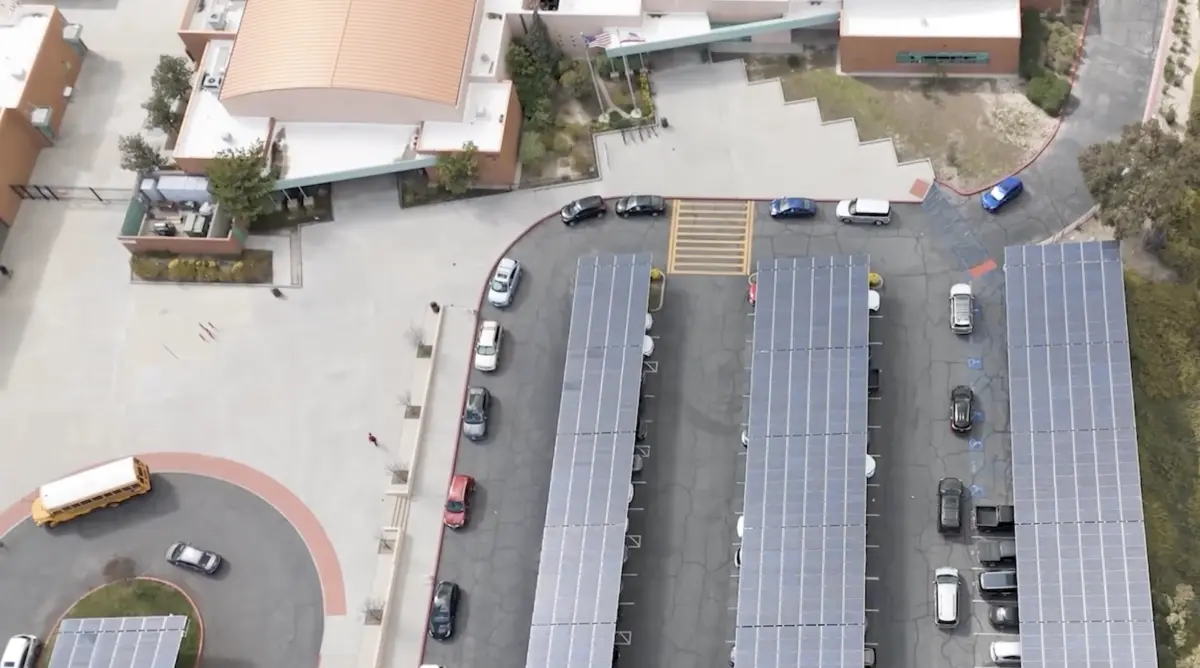
As the 2026–2027 academic year begins, millions of students returning to classrooms across the country will encounter more than just freshly waxed floors and updated textbooks. They will also bear witness to a quiet, gleaming revolution happening right above their heads—and across their parking lots. From rural elementary campuses to sprawling flagship state universities, educational institutions are increasingly turning to solar energy to stabilize volatile utility budgets, fortify local power grids, and provide real-world laboratories for clean-tech education.
According to recent data from the clean energy advocacy group Generation 180, more than 7 million K-12 students—roughly one in every seven children in the American public school system—now attend a solar-powered school. Far from being driven solely by environmental idealism, this sweeping transition is rooted in pragmatic fiscal management. School districts nationwide face perpetual budget pressures, and solar installations offer a reliable way to lock in predictable, long-term energy costs while redirecting millions of dollars back into classrooms, teacher salaries, and student resources.
To mark the start of the new school year, the Solar Energy Industries Association (SEIA) has highlighted six standout educational institutions—ranging from primary schools to major universities—that are reaping the economic, operational, and educational rewards of solar power and energy storage.
Main Facts: The Scope of School Solar Adoption
The integration of photovoltaic (PV) systems into educational infrastructure has evolved from a niche architectural experiment into a mainstream capital improvement strategy. Across the United States, school boards and university regents are recognizing that rooftops and parking lots are vastly underutilized assets.
The numbers are staggering. A comprehensive study on Pennsylvania schools revealed that the commonwealth’s K-12 facilities could save up to $342 million statewide simply by utilizing their expansive roof space for solar generation. Meanwhile, in North Carolina, a parallel analysis demonstrated that school rooftops possess the capacity to produce enough annual electricity to power 150,000 average homes.
When scaled up to individual districts and higher-education systems, these savings translate into transformative windfalls. By pairing solar arrays with advanced battery storage systems, schools are not only shrinking their carbon footprints but also insulating themselves against blackouts, securing emergency shelter capabilities for their broader communities, and creating tangible educational curriculums rooted in STEM (Science, Technology, Engineering, and Math) fields.
Chronology of a Movement: From Early Adopters to Statewide Fleets
The journey of educational solar adoption has accelerated dramatically over the past decade, shifting from isolated pilot programs funded by federal grants to massive, utility-scale public-private partnerships.
- Early Phase (Mid-2010s): Early adopters primarily relied on municipal bonds or direct capital outlays to install small rooftop arrays, often limited to single middle or high schools as showcase projects.
- The PPA Revolution (Late 2010s–Early 2020s): The proliferation of Power Purchase Agreements (PPAs) and third-party leasing models eliminated the barrier of high upfront costs. Schools could suddenly host solar arrays installed and maintained by developers without spending a dime of taxpayer capital upfront.
- The Storage Integration Era (2024–Present): With grid instability rising due to extreme weather events, schools began routinely integrating lithium-ion battery storage systems. This allowed institutions to achieve grid independence during outages, protect sensitive IT infrastructure, and participate in demand-response programs.
- System-Wide Rollouts (2026): Today, projects have expanded from single buildings to multi-campus districts and statewide university systems, culminating in historic multi-million-dollar savings agreements like those seen in Arkansas and Illinois.
Supporting Data: Regional Case Studies in Savings and Scale
To understand the tangible impact of this movement, one need only look at the diverse array of institutions leading the charge this academic year. SEIA’s spotlight features six distinct case studies illustrating how solar power adapts to campuses of every size:

1. Andover Elementary School (Connecticut)
In Andover, Connecticut, district leaders sought a way to modernize their facilities without straining local taxpayers. Through a strategic collaboration with two renewable energy partner companies, Andover Elementary successfully installed a rooftop solar system. Utilizing a deployment model that avoided high upfront capital expenditures, the school is already enjoying stabilized energy costs. Town and school officials view the project as a cornerstone for municipal environmental stewardship, proving that fiscal conservatism and green infrastructure can walk hand in hand.
2. Benjamin A. Friedman Middle School (Massachusetts)
In Taunton, Massachusetts, Benjamin A. Friedman Middle School has become the second facility in its district—following Chamberlain Elementary—to embrace rooftop solar. The financial results are immediate and profound: the school anticipates approximately $35,000 in annual energy savings and local incentives. Over the projected lifecycle of the solar array, the savings are expected to top $1 million. Beyond the budget sheet, educators have integrated the physical installation into the science curriculum, allowing students to monitor live energy generation data in real time.
3. McHenry High School (Illinois)
Both campuses of McHenry High School in Illinois are undergoing a massive energy overhaul, with solar installations slated for completion by December 2026. Spearheaded by Superintendent Ryan McTague, the project features over 2,000 panels mounted across the high school rooftops. The district projects a staggering 30% reduction in overall energy costs, proving that large-scale infrastructure investments can directly benefit taxpayers while modernizing aging facilities.
4. Harlem Consolidated School District (Illinois)
Taking a slightly different commercial approach, the Harlem Consolidated School District in Machesney Park, Illinois, chose to monetize its surplus land. The district entered a long-term land lease with developer New Energy Equity for a sprawling 5.5-megawatt community solar project. In addition to clean energy benefits, the partnership includes a unique philanthropic agreement: New Energy Equity is funding $10,000 in dedicated student scholarships every year for the next 25 years.
5. Sonoma State University (California)
Moving into higher education, Sonoma State University in California has tackled both energy resilience and student comfort through a comprehensive parking lot solar canopy initiative. Five campus parking lots are now shaded by solar arrays. While the canopies keep vehicles cool during punishing midday heat waves, they simultaneously provide the university with predictable utility pricing. Crucially, the integration of on-site battery storage ensures that the campus maintains critical power access even during regional grid curtailments or wildfire-season blackouts.
6. University of Arkansas (Arkansas)
At the pinnacle of current higher-education solar deployment, the University of Arkansas completed a massive new array at its flagship Fayetteville campus this spring. This project represents a major milestone in a state-wide initiative spanning multiple U.S. of A. system campuses. Once remaining sites come online later this year, the system-wide fleet is projected to save the university over $100 million over 25 years, making it the largest solar project in the state of Arkansas.
Official Responses and Perspectives
The momentum behind educational solar is championed not just by environmental advocates, but by the practical-minded leaders tasked with balancing school ledgers and fostering academic excellence.
Reflecting on the McHenry High School project, Superintendent Ryan McTague emphasized the dual benefit to the community:

"We are setting a great example to students and to taxpayers while also saving money. The return on the investment will go back into the school community."
Echoing this sentiment from a higher education perspective, Eric Boles, the University of Arkansas’s director of sustainability, highlighted how operational savings directly empower academic missions:
"It saves the university money, and that frees up resources for our core mission."
Industry analysts point out that these testimonials reflect a broader cultural shift. School boards are increasingly viewing renewable energy not as an elective ideological statement, but as an essential budgetary shield against inflation, fossil fuel price volatility, and aging infrastructure repair bills.
Broader Implications: Classrooms of the Future
The integration of solar arrays and energy storage into K-12 and university campuses carries profound long-term implications for society, the economy, and education:
- Fiscal Relief for Public Education: At a time when school districts nationwide struggle with inflationary pressures, teacher retention budgets, and deferred maintenance, redirecting hundreds of thousands—or millions—of dollars from utility bills back into educational programming is a game-changer.
- Grid Resilience and Community Safety: Schools frequently serve as emergency shelters during natural disasters, winter storms, or heat waves. Pairing solar arrays with resilient battery storage ensures that these facilities can keep the lights on, refrigerate medications, and power emergency communications when the wider grid fails.
- Living Laboratories for STEM Education: When a school generates its own electricity, the campus transforms into an interactive textbook. Students can study photovoltaic physics, analyze real-time data analytics regarding energy consumption, and explore viable career pathways in the rapidly expanding clean energy workforce.
- Catalyzing Broader Community Adoption: As children see solar panels on their elementary and high schools—and as districts partner with local developers for community solar farms—clean energy concepts are normalized. This visibility often sparks municipal and residential solar adoption throughout the surrounding neighborhoods.
As the 2026–2027 school year gets underway, the sight of solar panels gleaming atop gymnasium roofs and parking lot canopies is becoming a defining architectural feature of modern education. By turning to the sun, schools are not only lowering their overhead and safeguarding their communities—they are actively building a brighter, more sustainable future for the students sitting in the desks below.
