By James D. Balestrieri | Adapted for Southwest Art Magazine October 2–3 | The Legacy at the Stock Yards, Denver, CO
Main Facts
Sixty years after its founding in a smoky Sedona tavern, the prestigious Cowboy Artists of America (CAA) is embarking on a monumental new chapter. On October 2 and 3, the organization will host its milestone 60th annual exhibition and sale at its brand-new home: The Legacy at the Stock Yards in Denver, Colorado.
This high-profile event marks the official launch of a transformative five-year partnership with the National Western, uniting two stalwart champions of Western heritage under one roof. Collectors, fine art aficionados, and creators from across the globe will gather for a two-day ticketed extravaganza featuring an exclusive black-toe gala, intimate artist meet-and-greets, and exhibitions showcasing the absolute pinnacle of contemporary Western realism.
The organization currently comprises 17 active members and 13 emeritus members, all of whom must pass a rigorous evaluation process that prioritizes technical mastery, devotion to historical accuracy, and profound visual storytelling. For the 2026 exhibition, the roster is further bolstered by invited guest artists Shawn Cameron and Thomas Blackshear II, ensuring that the diamond jubilee balances time-honored traditions with fresh, dynamic perspectives.
Chronology: From a Sedona Tavern to the Mile High City
1965: The Sedona Genesis
The story of the Cowboy Artists of America is firmly etched into the folklore of American art history. Six decades ago, four visionary cowboy artists—Joe Beeler, Charlie Dye, John Wade Hampton, and George Phippen—sat down in a tavern in Sedona, Arizona. Frustrated by a commercial art world that often marginalized traditional Western subjects as mere illustration, they set out to establish an organization that would elevate cowboy art to the highest echelons of fine art. Drafted on napkins and finalized over drinks, their foundational bylaws established a strict code of authenticity, craftsmanship, and peer-reviewed excellence that would guide the group for the next sixty years.
Decades of Cultural Stewardship
Through the late 20th century, the CAA grew from a regional collective into the gold standard for Western art. Its annual exhibitions became cultural touchstones, drawing major collectors, museum curators, and enthusiasts. Memberships were—and remain—among the most coveted and fiercely guarded honors in the artistic community. Over the decades, the roster has read like a "who’s who" of Western masters, dedicated not only to painting and sculpting the physical landscape of the frontier, but to preserving the dignity, labor, and mythology of the American West.
2026: A New Era in Denver
Now, entering its seventh decade, the CAA is making its most radical geographical and institutional pivot yet. By partnering with the National Western and moving its flagship exhibition to The Legacy at the Stock Yards in Denver, the organization is planting its flag firmly in the heart of the Rocky Mountain West. This strategic alliance bridges the gap between historical agricultural heritage and high-end contemporary fine art, setting the stage for the next half-century of cultural preservation.
Supporting Data & Exhibition Highlights
Membership Dynamics and Guest Artists
Admission into the Cowboy Artists of America is notoriously selective. According to National Western President and CEO Wes Allison, artists are chosen specifically for their unyielding devotion to "authenticity, craftsmanship, and storytelling."
Active and Emeritus Roster: The core of the 2026 show features works from the 17 active members and 13 emeritus members, the latter of whom retain the privilege of submitting new pieces annually.
Guest Artists (2026): This year’s hand-selected invitees bring distinct visual languages to the floor.
Shawn Cameron is celebrated for her exquisite depictions of cowboys and horses, blending razor-sharp draftsmanship with atmospheric control of light and color.
Thomas Blackshear II pushes Western figurative work past traditional portraiture, digging deep into the psychological and inner lives of his subjects to forge an immediate, emotional connection with the viewer.
Narrative Works on Display
The 2026 exhibition reads like a visual epic, with each piece telling a distinct story about the past, present, and soul of the West:
Still Waters by Dave Santillanes (Oil, 36 x 60): Santillanes delivers a breathtaking landscape where a rider and packhorse seemingly stumble upon a secluded high mountain lake. The shadowed jewel serves as a potent metaphor for the American West itself—pristine, mysterious, and awe-inspiring, much as it first appeared to indigenous peoples, early European explorers, and pioneers.
How the West Was Won by Albin Veselka (Oil): In stark contrast to the quiet serenity of Santillanes’ landscape, Veselka’s powerful canvas confronts the harrowing sacrifices and human costs of westward expansion. A fragile wooden raft battles turbulent, roiling waters, pitching two of its occupants into a treacherous, unforgiving current.
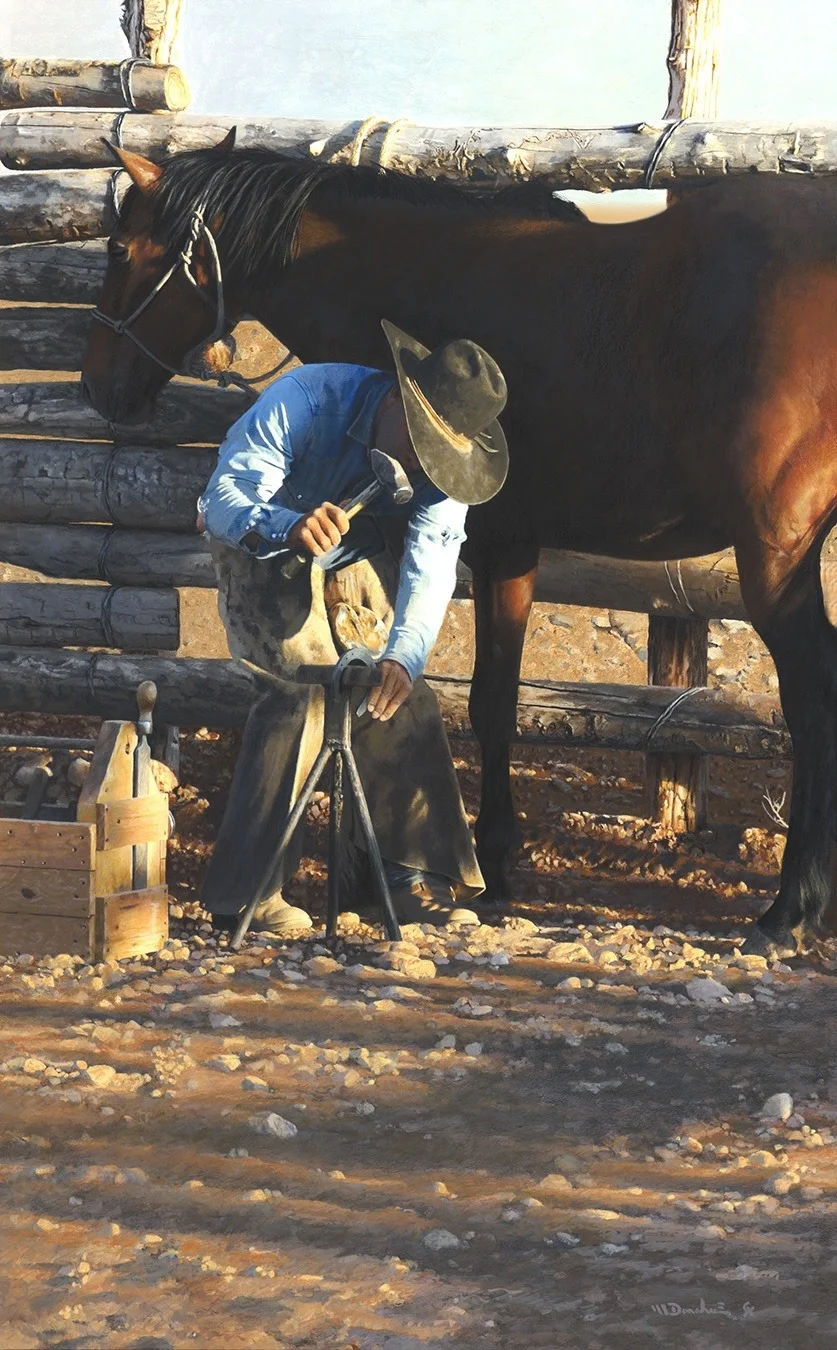
A Day in the Life by Mikel Donahue (Acrylic on board, 20 x 32) & A Change of Seasons by Grant Redden: These works, paired with Dustin Payne’s monumental bronze Trail Dust, honor the relentless day-to-day labor of the working West. They capture cattle-herding, long hours on the trail, and the crucial, unglamorous maintenance of keeping working horses healthy and properly shod.
Trail Dust by Dustin Payne (Bronze): Payne’s sculpture elevates one of the ultimate icons of the American frontier—the longhorn steer—pushing the animal past mere realism into the realm of heroic, mythic status.
Blending Cultures by Martin Grelle (Emeritus Member): Grelle’s thoughtful composition looks toward the future, suggesting that the historic blood, sweat, and strife of the frontier might ultimately yield a vibrant, hybrid culture—a harmonious blending of the diverse peoples who now call the American West home.
Official Responses
The transition to Denver and the celebration of the 60th anniversary have drawn enthusiastic responses from leadership across the cultural and institutional spectrum.
Wes Allison, President and CEO of the National Western:
"Artists have long coveted an invitation to join the CAA because the organization maintains an uncompromising standard. They are selected for their devotion to authenticity, craftsmanship, and storytelling. Bringing the 60th anniversary and our new five-year partnership to The Legacy at the Stock Yards is a monumental step in uniting the historic roots of the West with the highest tier of contemporary fine art."
James D. Balestrieri, Art Historian and Critic:
"One wonders what [founders] Beeler, Dye, Hampton, and Phippen would make of their idea sixty years on. Given the strength of the institution they founded and its ability to seek out and find new sources of excellence even as the West itself changes and changes again, they would surely smile—not only at the endurance of the CAA, but at its capacity to adapt without compromising its mission or principles."
Implications: The Future of Western Art
The move of the Cowboy Artists of America to Denver’s The Legacy at the Stock Yards carries profound implications for the art market, cultural tourism, and the broader definition of Western identity.
Institutional Synergy: By tying its fortunes to the National Western, the CAA secures long-term stability and exposure to a broader demographic of agriculture enthusiasts, tourists, and high-net-worth collectors. This partnership proves that traditional Western institutions can successfully modernize their logistical foundations without watering down their artistic integrity.
Re-defining Western Narratives: As seen in works by artists like Albin Veselka and Martin Grelle, contemporary Western art is evolving past simplistic, romanticized tropes of manifest destiny. By acknowledging the trials, losses, and multicultural fabric of the frontier, the CAA ensures that Western art remains a vital, relevant, and intellectually honest conversation rather than a nostalgic echo.
Market Resilience: The diamond jubilee signals robust health for the Western art market. In an era where digital mediums often dominate the contemporary art conversation, the CAA’s steadfast dedication to physical craftsmanship—oil painting, traditional drafting, and lost-wax bronze casting—proves that collectors continue to place a premium on tangible mastery and deeply rooted storytelling.
Event Details & Contact
What: Cowboy Artists of America 60th Annual Exhibition and Sale
This story originally appeared in the October/November 2026 issue of Southwest Art magazine. To read every issue in its entirety, consider subscribing today.