

Main Facts
At just 28 years old, Arizona-based painter Clarissa Kear is rapidly establishing herself as a formidable talent in the contemporary art world. Recognized as one of the standout talents in Southwest Art magazine’s prestigious "21 Under 31 | Young Artists to Watch, 2026" feature, Kear creates evocative works that bridge the gap between traditional realism and contemporary liminality. Working primarily in oil on panel, her art commands prices ranging from $300 to $8,000, reflecting both her accessibility to emerging collectors and the rising value of her meticulously crafted pieces.
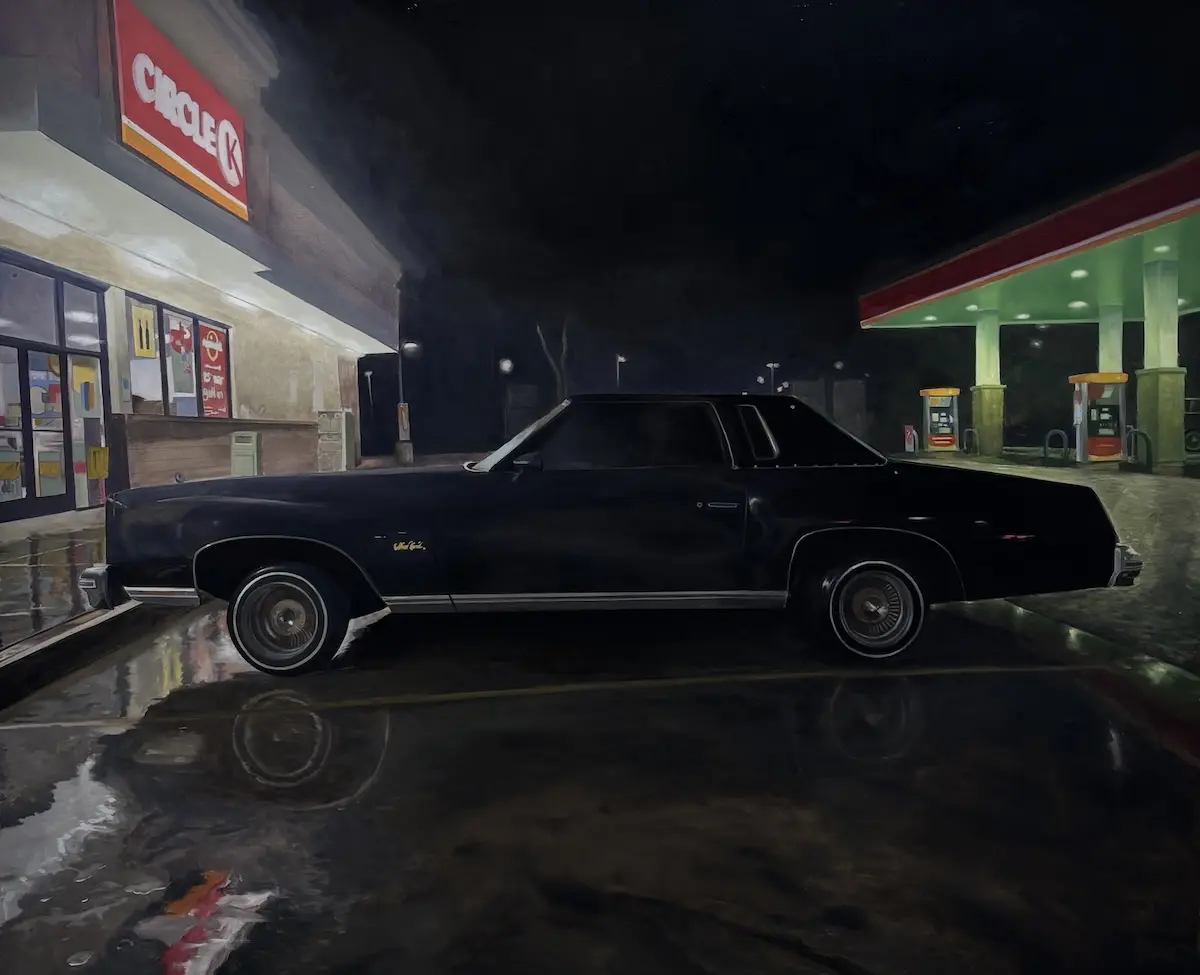
Kear’s artistic identity is deeply rooted in the American Southwest, specifically the stark, luminous landscapes of Arizona, where she lives, studies, and finds endless inspiration. Her featured oil-on-panel painting, Night Call (measuring 30 by 36 inches), exemplifies her ability to manipulate light and shadow to evoke a profound sense of atmosphere and psychological depth.
While her academic foundation is firmly established through a Bachelor of Fine Arts (BFA) from the historic Pennsylvania Academy of the Fine Arts (PAFA), she continues to hone her craft as an MFA candidate at the University of Arizona, with an anticipated graduation and thesis exhibition slated for 2028. Beyond the studio, Kear is an avid outdoorswoman, guitarist, and plein-air painter, drawing direct energy from the Sonoran Desert terrain that surrounds her.
Chronology: The Evolution of an Artist
Clarissa Kear’s journey toward becoming a nationally recognized young artist is defined by a steady, deliberate dedication to craft, education, and geographic transition.
Formative Years and PAFA Training (2018–2022)
Kear’s formal training began at the Pennsylvania Academy of the Fine Arts, America’s first art school and museum. During her time at PAFA from 2018 to 2022, she immersed herself in rigorous classical techniques, structural drawing, and traditional oil painting. It was here that she encountered mentors who would profoundly shape her philosophy, most notably her painting teacher, Scott Noel. Noel imparted a mantra that has since become a cornerstone of Kear’s studio practice: "No matter what happens, paint through it." This advice has guided her through the frustrating ambiguities of the creative process, teaching her resilience and problem-solving on the canvas.
Transition to the Southwest and Academic Expansion (Current–2028)
Following her graduation from PAFA, Kear relocated to Arizona, a geographic shift that dramatically influenced her artistic palette and thematic focus. Seeking to deepen her conceptual framework and technical range, she enrolled in the Master of Fine Arts program at the University of Arizona. Her academic timeline is currently anchored by her progression toward a 2028 MFA thesis exhibition. This upcoming body of work is anticipated to be a defining milestone in her career, synthesizing her classical training with the distinct atmospheric qualities of the American Southwest.
Supporting Data and Creative Influences
Understanding Kear’s work requires a close examination of the diverse array of historical, contemporary, and auditory influences that fuel her creative engine.
Inspirations and Aesthetic Philosophy
Kear’s paintings sit at a fascinating intersection of historical reverence and contemporary observation. She draws heavy inspiration from the atmospheric color palettes and haunting nocturnes of Frederic Remington, known for his romantic yet gritty depictions of the American West. Simultaneously, her work flirts with contemporary psychological states, heavily influenced by the liminal, hyper-real spatial qualities found in the paintings of Daniel Sprick.
Furthermore, Kear cites Zoey Frank’s painting Apartment in Rome as a benchmark for her own artistic aspirations. She admires Frank’s work for its delicate balance between pattern and form, complex spatial perspectives, and the subtle, luminous reflections moving across flat passages of color—qualities that Kear frequently experiments with in her own domestic and nocturnal scenes.

The Soundtrack of the Studio
Music plays a crucial role in Kear’s creative process, helping her navigate the long, solitary hours of oil painting. Her studio playlist is eclectic, shifting according to the phase of production she is in:
- For general painting and inspiration: She leans heavily into contemporary indie folk bands, including Wednesday, Friendship, and Greg Freeman.
- For intense focus: When technical precision and unbroken concentration are required, Kear turns to the pioneering electronic rhythms of Kraftwerk or steady, hypnotic techno beats that mirror the repetitive, meditative motions of laying down brushstrokes.
Official Perspectives and Artistic Goals
Kear’s artistic trajectory is governed by clear, ambitious goals that balance academic achievement with commercial viability and gallery presence.
In statements regarding her current trajectory, Kear emphasizes that her primary focus is successfully completing her MFA at the University of Arizona. Rather than treating her graduate studies as an isolated academic exercise, she views the program as a crucible for building toward her 2028 thesis exhibition. Her vision for this milestone is clear: she aims to produce a body of work that feels both deeply personal and ambitious, rooted intimately in her lived experience as a painter navigating the American landscape.
Concurrently, she continues to aggressively pursue new exhibition opportunities, ensuring that her work transitions smoothly from the academic studio into commercial galleries and public view. With a pricing structure currently bracketed between $300 and $8,000, Kear’s work remains an attractive acquisition target for both seasoned collectors of Western art and young investors looking to back the next generation of contemporary realists.
Implications for the Contemporary Art Market
Clarissa Kear’s inclusion in the conversation of young, rising artists carries several broader implications for the art market, particularly within the genre of contemporary Western and regional American art.
The Evolution of Western Art
For decades, traditional Western art has often been pigeonholed into romanticized, highly literal depictions of cowboys, horses, and classic landscapes. Artists of Kear’s generation—informed by rigorous classical academies like PAFA yet deeply attuned to contemporary art discourse—are redefining the genre. By incorporating elements of liminality, nocturnal atmosphere, and psychological ambiguity, Kear and her peers are breathing new life into traditional mediums, making the American landscape relevant to younger, urban, and internationally minded collectors.
The Value of Academic Rigor in the Digital Age
In an era dominated by digital art, AI-generated imagery, and rapid-fire social media content, Kear’s dedication to the slow, methodical medium of oil on panel stands as a testament to the enduring value of physical craftsmanship. Her background at PAFA and her ongoing refinement at the University of Arizona highlight the continuing necessity of formal academic training for artists who wish to break the mold thoughtfully.
An Artist to Watch
As Kear moves closer to her 2028 MFA thesis exhibition, the art world will undoubtedly be watching to see how her visual vocabulary evolves. Balancing plein-air excursions in the Sonoran Desert with the rigorous demands of graduate-level critique, Clarissa Kear is carving out a distinct, enduring space for herself in the annals of contemporary American art. For collectors and enthusiasts alike, her work represents a rare fusion of historical reverence, technical mastery, and fresh, contemporary vision.
