

Executive Summary of Main Facts
On the evening of July 22, the Butterfly Enthusiasts of Northern Arizona (BENA) hosted a specialized "mothing" event at Riverfront Park in Cottonwood, Arizona, designed to document local nocturnal insect populations. Held in alignment with National Moth Week—an international citizen-science initiative celebrating the biodiversity of moths—the event drew local conservationists, amateur entomologists, and curious community members.
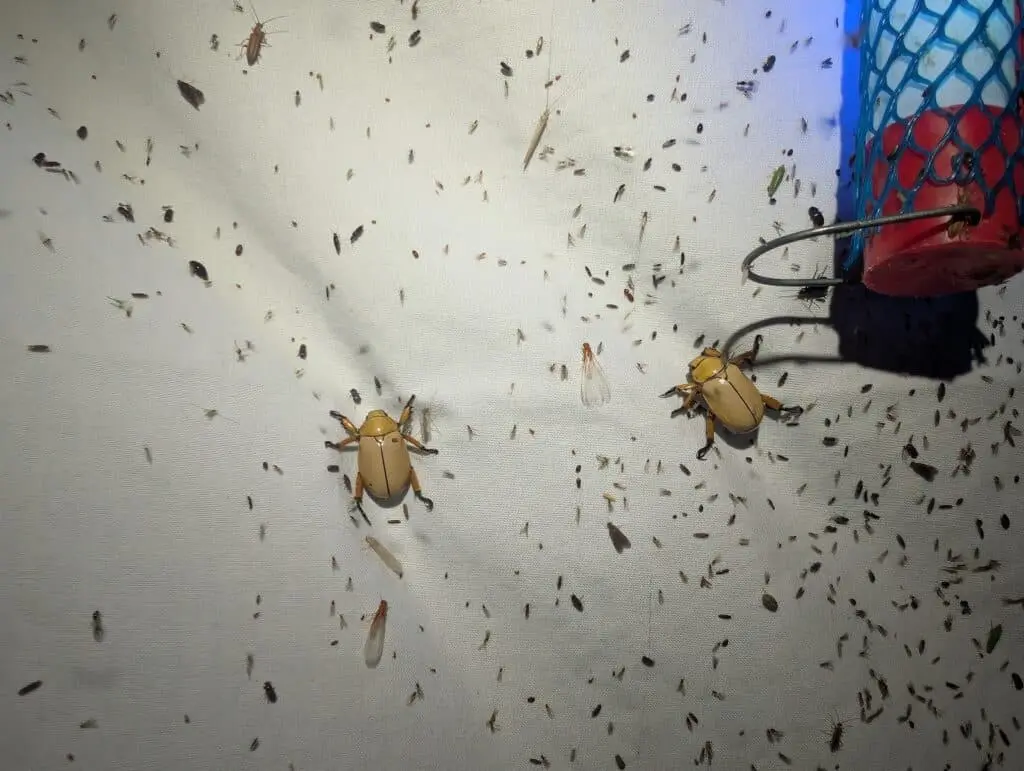
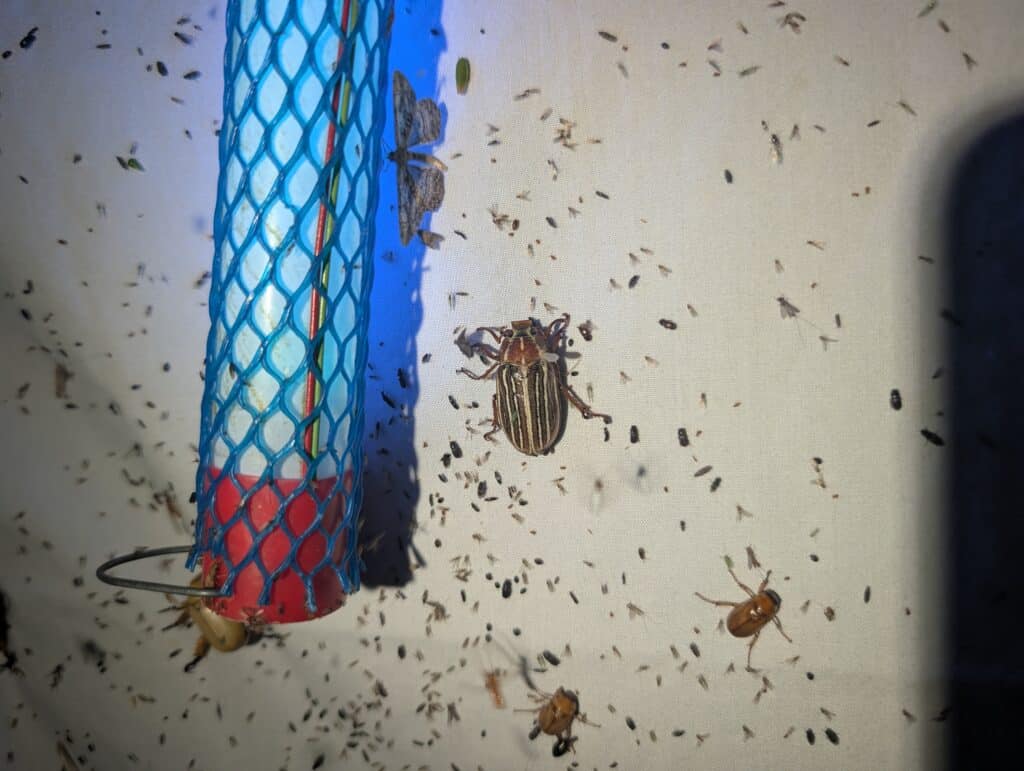
Led by retired U.S. Forest Service wildlife biologist Janie Agyagos and BENA co-founder Becky Hardy, participants utilized specialized black-light setups and white sheets to attract, observe, and catalog a diverse array of nocturnal organisms. The biological inventory recorded during the session included multiple species of Sphinx moths (family Sphingidae), various beetles—including the Goldsmith beetle (Cotalpa consobrina), June bugs (Cotinis mutabilis), and click beetles (family Elateridae)—as well as numerous arachnids detected along the riparian banks of the Verde River.
Beyond immediate field observations, the event highlighted the growing intersection of community science and advanced tracking technology. Representatives from BENA discussed the organization’s recent integration of automated radio telemetry (the Motus wildlife tracking system) to monitor butterfly and moth migration corridors across Northern Arizona. This technology represents a significant leap forward from traditional adhesive-based insect tagging, allowing researchers to gather precise spatial and temporal data on fragile migratory species within the Verde Valley and surrounding highlands.
Chronological Overview: From Conception to the Midnight Sheet
The Genesis of the Mothing Initiative
The event was conceived as a collaborative effort to bridge the gap between diurnal butterfly conservation and nocturnal insect appreciation. While BENA, a local chapter of the North American Butterfly Association (NABA), primarily focuses on daytime Lepidoptera, founders Becky Hardy and Denise Gibbs recognized the ecological parity between butterflies and moths. Both belong to the order Lepidoptera, characterized by their scale-covered wings.
As National Moth Week approached, Janie Agyagos reached out to Hardy with a proposal to leverage her professional ecological background for a public night-monitoring session.
"I texted Becky and I said, ‘I know a moth expert. Let’s do moth appreciation,’" Agyagos recalled, reflecting on the rapid organization of the field trip.
Phase I: The Twilight Eye-Shine Survey (8:00 PM – 8:45 PM)
The event commenced just after sunset at Riverfront Park, a critical ecological zone adjacent to the Verde River. Before the nocturnal insects began actively swarming the artificial light traps, Agyagos led approximately ten participants on a brief pedestrian survey along the riverbank.
Equipped with specialized headlamps and flashlights, the group searched the dense riparian undergrowth for "eye shine"—the distinct retroreflection of light from the eyes of nocturnal animals.
During the walk, Agyagos demonstrated how to locate hidden fauna by aligning a light source directly with the observer’s line of sight. Within minutes, the group identified dozens of glowing points of light within the brush.
"Oh, I’m seeing all kinds of spiders just right in here," Agyagos noted, instructing the group to temporarily dim their primary lights. "Everybody, one at a time, look at all the blue glittery eyes in there."
The exercise revealed an abundant, hidden population of arachnids and nocturnal insects utilizing the riparian corridor.
[Sunset: 8:00 PM] ───> [Eye-Shine Survey along Riverbank] ───> [Light-Trap Activation: 8:45 PM] ───> [Species Documentation: 9:00 PM - Late]Phase II: The Black-Light Convergence (8:45 PM – Late)
As darkness fell, the group converged on a clearing where organizers had suspended a large, white canvas sheet between two trees, illuminated by two high-intensity ultraviolet (black) lights. Because ultraviolet light falls within the visual spectrum of most nocturnal insects, the setup acted as a powerful attractant.
Within an hour, hundreds of insects had settled on the sheet. The group spent the remainder of the night cataloging the species:
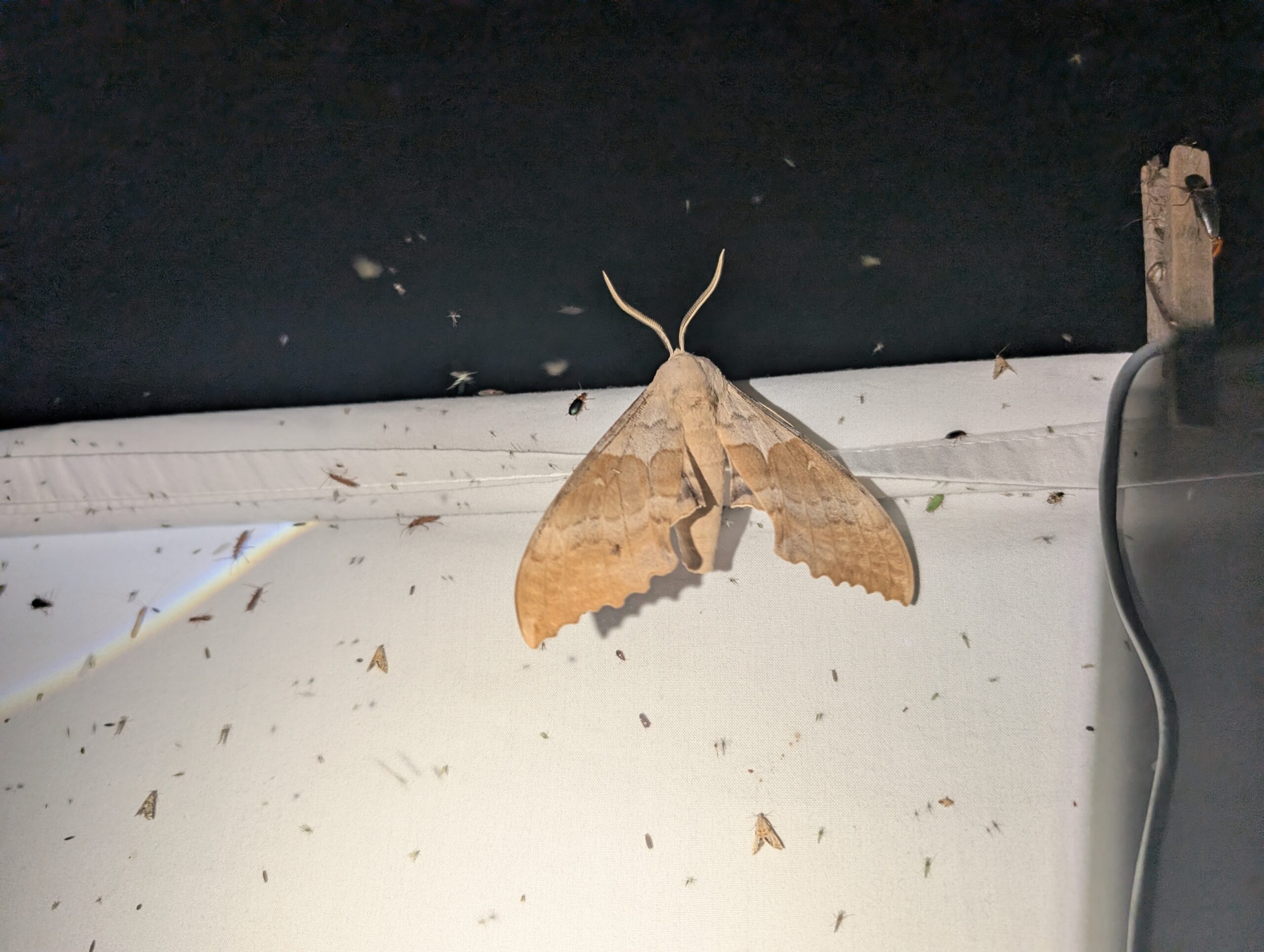
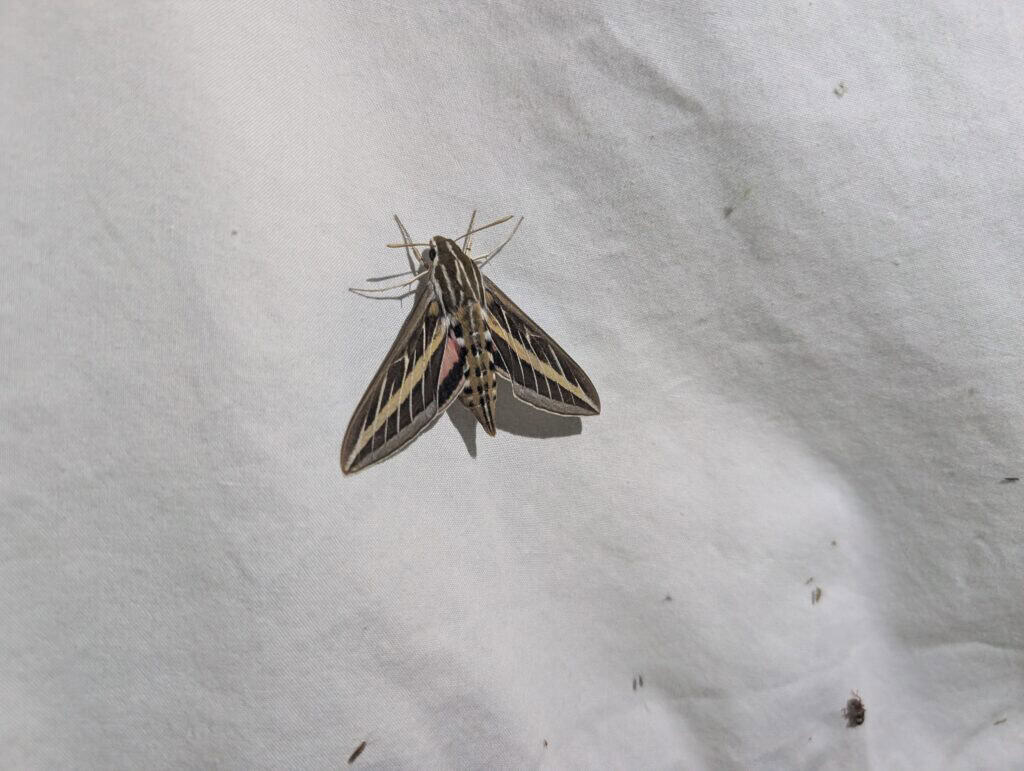
- Lepidoptera: Prominent specimens included the White-lined Sphinx Moth (Hyles lineata) and the massive Poplar Sphinx Moth (Pachysphinx occidentalis), the latter measuring nearly the size of a human hand.
- Coleoptera: Large beetles swarmed the sheet, including the metallic-sheened Goldsmith beetle and several June bugs. Agyagos also demonstrated the unique defense mechanism of click beetles, which use a thoracic hinge to snap and flip themselves when inverted.
Scientific and Technological Framework: Tapetum Lucidum and Motus Telemetry
The Physiology of Nocturnal Vision
A central educational focus of the field trip was the physiological adaptations that enable nocturnal survival. Agyagos explained the science behind the "eye shine" observed along the riverbank, pointing to the presence of the tapetum lucidum.
Incoming Light ──> Retina (First Pass) ──> Tapetum Lucidum (Reflection) ──> Retina (Second Pass) = Enhanced Night VisionThe tapetum lucidum is a biologic retroreflector situated immediately behind or within the retina of many vertebrates and select invertebrates. By reflecting visible light back through the photoreceptor cells, it gives the retina a second opportunity to absorb photons, significantly enhancing visual sensitivity in low-light environments.
While common in nocturnal mammals, similar reflective mechanisms and eye structures are highly developed in moths and spiders, resulting in the distinct "blue glitter" observed by the group.
Advancements in Lepidoptera Tracking: The Motus Network
While traditional community entomology relies on physical observation and manual adhesive tagging—a method historically used by co-founder Denise Gibbs to track monarch butterflies from Maryland to Mexico—BENA has embraced cutting-edge telemetry.
+-------------------------------------------------------------------------+
|                          BENA Telemetry System                          |
+-------------------------------------------------------------------------+
|                                                                         |
|  [ Radio-Tagged Butterfly ]                                             |
|             │                                                           |
|             ▼ (Broadcasting VHF signal)                                 |
|                                                                         |
|  [ Motus Receiving Station ] <─── (1.25-Mile Detection Radius)          |
|             │                                                           |
|             ▼ (Data Uploaded to Central Database)                       |
|                                                                         |
|  [ Regional Migratory Mapping & Conservation Analysis ]                 |
|                                                                         |
+-------------------------------------------------------------------------+
The organization recently raised funds to purchase and install specialized "blue receivers" to integrate with the Northern Arizona Audubon Society’s (NAAS) existing Motus wildlife tracking stations. The Motus network is an international collaborative research network that uses automated radio telemetry arrays to track the movements of small organisms, including birds, bats, and large insects.
Two primary stations now monitor insect movement in critical Northern Arizona corridors:
- Anderson Mesa Station: Located in the high-elevation grasslands south of Flagstaff.
- Verde River Station: Positioned on a private ranch in Camp Verde to monitor the riparian valley.
"If a butterfly is radio-tagged and flies within one-and-a-quarter miles of this receiver, it can pick them up," Hardy explained.
This tracking system allows researchers to determine precisely when migratory insects pass through the region, their flight speeds, and how long they utilize local stopover habitats.
Perspectives from the Field: Expert Insights and Community Leadership
Professional Stewardship: Janie Agyagos
The event benefited from the leadership of Janie Agyagos, whose 31-year tenure as a wildlife biologist for the U.S. Forest Service in the Red Rock Ranger District of the Coconino National Forest provided deep regional expertise. Now retired, Agyagos continues to lead educational outreach initiatives.
Her upcoming work includes a specialized six-week curriculum focusing on local wildlife physiology and conservation, hosted through the Osher Lifelong Learning Institute (OLLI) at Yavapai College’s Sedona Center.
"Spending time in neighboring public lands, like the Prescott National Forest and municipal parks like Riverfront, is a vital part of fostering broader regional conservation networks," Agyagos noted.
Grassroots Organization: Becky Hardy and Denise Gibbs
BENA’s rapid expansion reflects a growing public interest in ecological preservation. Founded just last year by Hardy and Gibbs, the group has quickly scaled up its operations from bi-monthly meetings to regional conservation censuses.
"I can remember being in my front yard and seeing butterflies and trying to capture them," Hardy shared, tracing her lifelong fascination with Lepidoptera. "It just became an obsession as I got older, learning about them, identifying them, and all that stuff."
Gibbs, renowned for her historical work with monarch conservation on the Eastern Seaboard, has organized annual butterfly counts in the Cottonwood area since 2016. The establishment of BENA has allowed these counts to expand into Sedona, mobilizing a larger pool of volunteers and standardizing data collection for national databases.
Ecological Implications and the Road Ahead
The Role of Moths in Riparian Ecosystems
Events like the Riverfront Park survey serve a broader ecological purpose than simple recreation. Moths are vital bioindicators; their population density and species diversity offer direct insights into the health of local plant communities and water quality.
In riparian corridors like the Verde Valley, moth larvae serve as a foundational food source for migratory birds, while adult moths act as primary nocturnal pollinators for native flora that remain closed during daytime hours.
| Insect Group / Taxon | Ecological Role | Monitoring Method |
|---|---|---|
| Sphinx Moths (Sphingidae) | Nocturnal pollination of deep-tubed desert flora | UV Light Sheet / Visual ID |
| Goldsmith & June Beetles | Soil nutrient cycling, decomposition of organic matter | UV Light Sheet / Ground Search |
| Riparian Spiders (Araneae) | Apex micro-predators, controlling insect populations | Eye-Shine / Flashlight Surveys |
| Monarch Butterflies (Danaus plexippus) | Long-distance pollination, migratory indicators | Motus Telemetry / Adhesive Tags |
By documenting these species, BENA contributes to a long-term dataset that helps conservationists track how climate change, habitat fragmentation, and urbanization affect insect distribution across the Southwest.
Upcoming Conservation and Community Events
BENA’s leadership emphasized that participation in their programs is free and open to the public, with annual memberships ($35) helping to fund conservation technology like the Motus receivers.
The organization’s upcoming late-summer and autumn schedule includes several high-impact community science events:
- The Butterfly Big Sit (Page Springs): A stationary observation event at the Monarch Waystation Pollinator Garden designed to record localized species interactions.
- Annual Cottonwood Butterfly Count (August 28): A coordinated, multi-volunteer census mapping regional butterfly populations.
- Inaugural Butterfly Festival (September 12): Scheduled from 9:00 AM to noon at the Sedona Wetlands Preserve, featuring educational exhibits, family activities, and live tagging demonstrations.
