

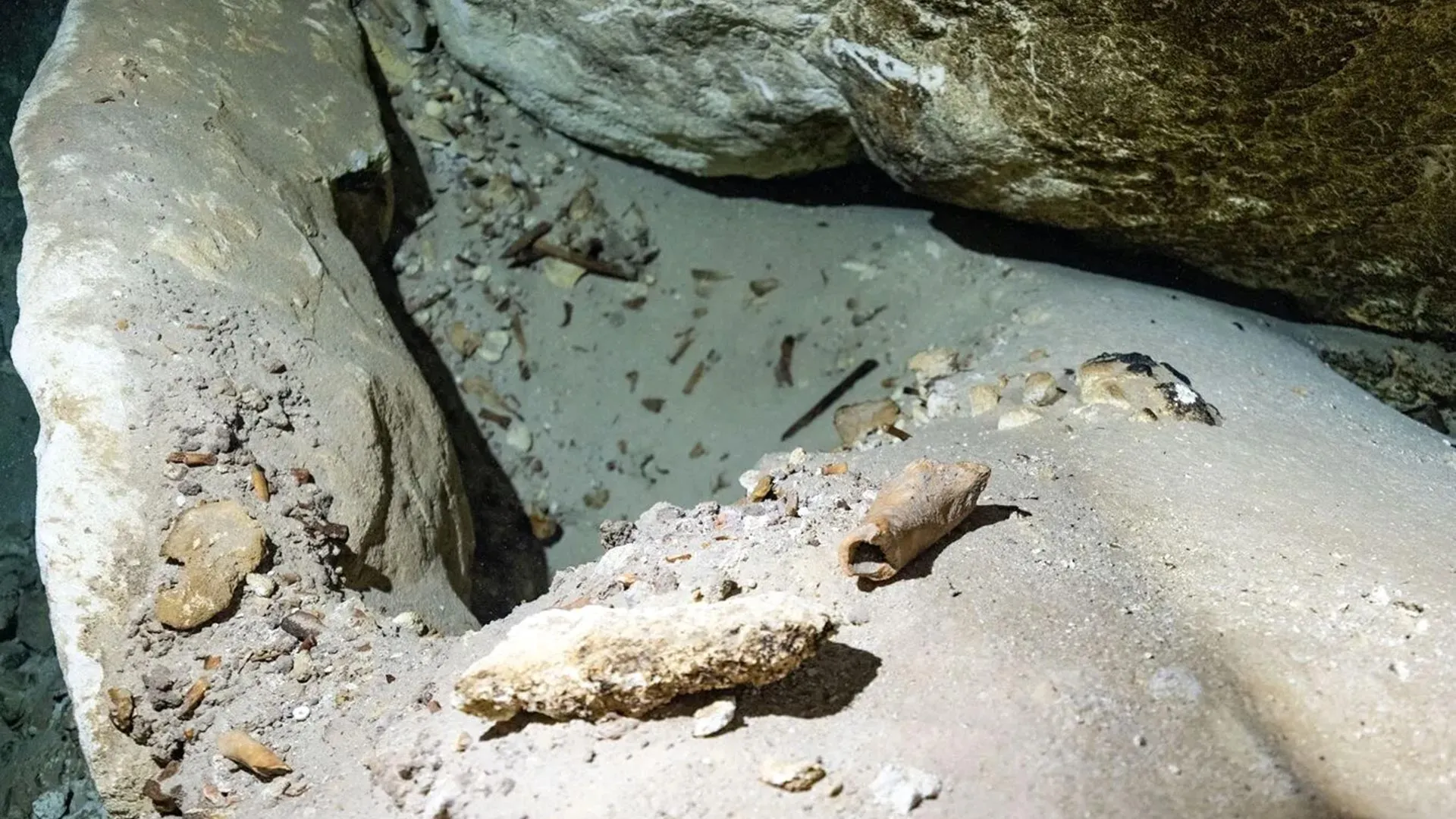
MOUNT GAMBIER, SOUTH AUSTRALIA — For decades, submerged caves have offered paleontologists and archaeologists breathtaking glimpses into Earth’s prehistoric past. These water-filled caverns act as natural traps, preserving the skeletal remains of ancient creatures that roamed the landscape long before human history was recorded. However, unlocking the stories locked within these underwater graveyards has long challenged researchers.
Until now, science lacked a reliable, standardized framework to determine how the remains of extinct megafauna and other animals accumulated, survived, and fundamentally changed within these subterranean aquatic environments. The physical and chemical processes acting upon bones submerged in total darkness, bathed in mineral-rich waters, or subjected to subterranean currents remained poorly understood—leaving a critical gap in our understanding of prehistoric ecosystems.
That analytical blind spot is now beginning to clear. A landmark study led by researchers at Griffith University has introduced the world’s first comprehensive framework for reading the complex environmental evidence preserved on bones recovered from underwater caves. Published in the peer-reviewed journal PLOS One under the title "Neotaphonomic characteristics of vertebrate site formation in underwater caves," this research promises to revolutionize how scientists reconstruct past environments, track historical biodiversity, and interpret the fossil records of extinct megafauna across the globe.
Main Facts: Decoding Nature’s Submerged Archives
At the heart of this research is a collaborative effort spearheaded by Meg Walker, a PhD candidate at the Australian Research Centre for Human Evolution (ARCHE), working under the supervision of Professor Julien Louys, Director of ARCHE.
By conducting a multi-tiered analysis of animal remains retrieved from two distinct underwater cave systems in South Australia—Green Waterhole and Gouldens Sinkhole near Mount Gambier—the research team successfully demonstrated that different cave micro-environments leave distinct preservation "fingerprints" on skeletal remains.
To build this analytical framework, the researchers combined macro- and micro-level investigations. They analyzed everything from the spatial distribution of bones on cave floors and the physical modifications on bone surfaces to elemental compositions and the persistence of fragile organic molecules, such as proteins trapped deep within ancient cellular structures.
The findings reveal a fascinating dichotomy. While underwater caves can occasionally destroy bones through chemical leaching or mechanical damage, they are frequently exceptional preservation chambers. In many instances, submerged bones retained their original structural integrity and microscopic surface details far better than their terrestrial counterparts.
However, this preservation comes with a catch: submerged environments leave unique chemical and biological signatures. The specific alterations found on any given bone depend heavily on localized variables, most notably the penetration of sunlight, water chemistry, and the biological communities living within that specific zone of the cave system.
Chronology: How the Research Unfolded
The genesis of this study lies in the intersection of advanced laboratory science and extreme exploration. Reaching the fossil-bearing deposits of deep underwater caves is no small feat. It requires specialized skills, heavy technical diving equipment, and meticulous precision to avoid disturbing fragile prehistoric layers.
Fieldwork and Exploration
The project began with the targeted collection of historical and modern animal bones from the Green Waterhole and Gouldens Sinkhole cave systems. To safely retrieve these specimens, Walker and her academic colleagues partnered with elite specialist cave divers from the Cave Divers Association of Australia (CDAA). These seasoned divers navigated the complex, flooded corridors of the South Australian limestone aquifers to map bone deposits and recover samples without compromising their stratigraphic context.
Radiocarbon Dating and Selection
Once the bones were safely brought to the surface, the research team curated a diverse assemblage of remains. The collection featured a broad spectrum of native and introduced vertebrate species, including kangaroos, dingoes, koalas, possums, quolls, swamp rats, emus, cows, sheep, pigs, and rabbits.
Crucially, many of these specimens date back to the 1840s, aligning with the arrival of the first European settlers and the establishment of local towns in the region. By examining how these relatively recent, well-documented historical bones were deposited, transported, and altered by natural processes over the last 180 to 200 years, the researchers established a chronological baseline.
Multi-Scale Laboratory Analysis
With the timeline established, the team subjected the bones to an array of cutting-edge analytical techniques. Ranging from high-resolution surface microscopy to elemental spectroscopy and biomolecular assays, the scientists tracked how the skeletons accumulated and degraded over decades and centuries. They then cross-referenced these observations against control samples recovered from dry, terrestrial cave systems, allowing them to isolate the specific mechanical, chemical, and biological factors unique to underwater environments.
Supporting Data: Light, Algae, and Total Darkness
The study’s most revealing insights stem from how different zones within a cave system imprint themselves onto bone. The researchers categorized these zones primarily by their proximity to the surface and the availability of light.
The Photic Zone: Light and Biological Colonization
Near the brightly lit entrances of sinkholes and cave openings, sunlight penetrates the water column, creating a micro-environment where aquatic plants and various strains of algae can thrive.
When bones settle in these sunlit regions, they do not merely sit passively on the limestone floor. Instead, they become substrates for living organisms. Algae and aquatic plants actively colonize the hard surfaces of the bones, etching microscopic marks, altering local pH levels through photosynthesis and respiration, and leaving behind unmistakable biological signatures that can be detected decades or centuries later.
The Aphotic Zone: The "Midnight Regions"
In stark contrast, conditions in the pitch-black, aphotic "midnight regions" of the caves—where natural sunlight has never penetrated—are profoundly different.
Because photosynthesis is impossible in total darkness, plant life and algae are entirely absent. Consequently, bones deposited in these deep, remote chambers often remained remarkably pristine. Free from the biological colonization seen near entrances, and protected from the drying and wetting cycles of the surface world, these submerged remains preserved minute anatomical features and original bone density with astonishing fidelity.
The Terrestrial Comparison: Dry Cave Taphonomy
To ensure their observations were robust, the Griffith University team compared their underwater findings against bones recovered from dry caves.
The contrast was stark. Bones preserved in terrestrial, dry-cave environments lacked the aquatic signatures found on submerged specimens. Instead, they bore the brunt of completely different taphonomic pressures. Land-based bacteria actively consumed and degraded the organic components of the bone matrix, while subterranean plant roots—seeking moisture in arid environments—carved distinctive, long grooves and etching patterns across their surfaces.
Official Responses and Expert Insights
The implications of the Griffith University study have drawn praise from the international paleontological and archaeological communities, who have long sought a reliable methodology to interpret submerged fossil assemblages.
"By analyzing animal bones from two underwater cave systems in South Australia, we have revealed how different cave environments leave distinct preservation ‘fingerprints’ on skeletal remains," explained lead researcher Meg Walker.
Reflecting on the collaborative nature of the project and its methodological rigor, Walker emphasized the scope of the investigation:
"Backed by radiocarbon-dated bones, we tracked how skeletons accumulated and were modified over decades and centuries in underwater caves, then compared them to those buried in dry caves. Using a range of methods, from the macro to the micro, we looked at features associated with wet and dry caves—things like spatial distributions of the bones and their surfaces, down to elemental compositions and proteins trapped in ancient cells."
Professor Julien Louys, Director of the Australian Research Centre for Human Evolution and Walker’s doctoral supervisor, underscored the broader significance of the research for the scientific community:
"This study has delivered the first framework for interpreting how megafauna fossils formed, survived, and changed in underwater caves. It will provide archaeologists and paleontologists worldwide with a powerful new tool for reconstructing past environments and histories in these challenging conditions."
Implications: A New Paradigm for Megafauna Research
The publication of this framework marks a critical turning point for the study of prehistoric life, particularly in regions like Australia, where ancient ecosystems are frequently preserved in karst (limestone) water systems.
Unlocking the Secrets of Extinct Megafauna
Australia is famous for its unique and vanished Pleistocene megafauna—massive marsupials such as Diprotodon (a rhinoceros-sized wombat), Procoptodon (a giant short-faced kangaroo), and Thylacoleo carnifex (the marsupial lion). Many of the best-preserved fossils of these creatures have been recovered from deep within water-filled cave systems across the continent, including the renowned Naracoorte Caves and the underwater labyrinths of the Nullarbor Plain.
However, until now, researchers often struggled to reconstruct how these massive beasts entered the caves. Did they fall through hidden sinkholes? Were their bones washed in by ancient floodwaters, or dragged in by predators? Were the modifications observed on their bones caused by aquatic bacteria, chemical dissolution, or pre-mortem trauma?
By applying the new taphonomic framework developed by Walker and her colleagues, scientists can now reverse-engineer the life-history and post-mortem journey of these ancient megafauna fossils. By reading the specific "fingerprints" left by light levels, water chemistry, and micro-organisms, researchers can reconstruct the environmental conditions that prevailed thousands or even hundreds of thousands of years ago.
Global Applications for Archaeology and Paleontology
Beyond Australian shores, underwater caves serve as crucial repositories of ancient history across the globe—from the flooded sinkholes (cenotes) of Mexico’s Yucatán Peninsula, which contain some of the oldest human remains in the Americas, to European cave systems submerged by rising sea levels since the last Ice Age.
The neotaphonomic framework established in the PLOS One study provides a universal methodology that can be adapted by researchers working in any submerged subterranean environment. By bridging the gap between modern ecological observations and ancient fossil preservation, this study ensures that the silent archives of underwater caves can finally speak with clarity, offering new insights into climate change, extinction events, and the evolutionary history of life on Earth.
