

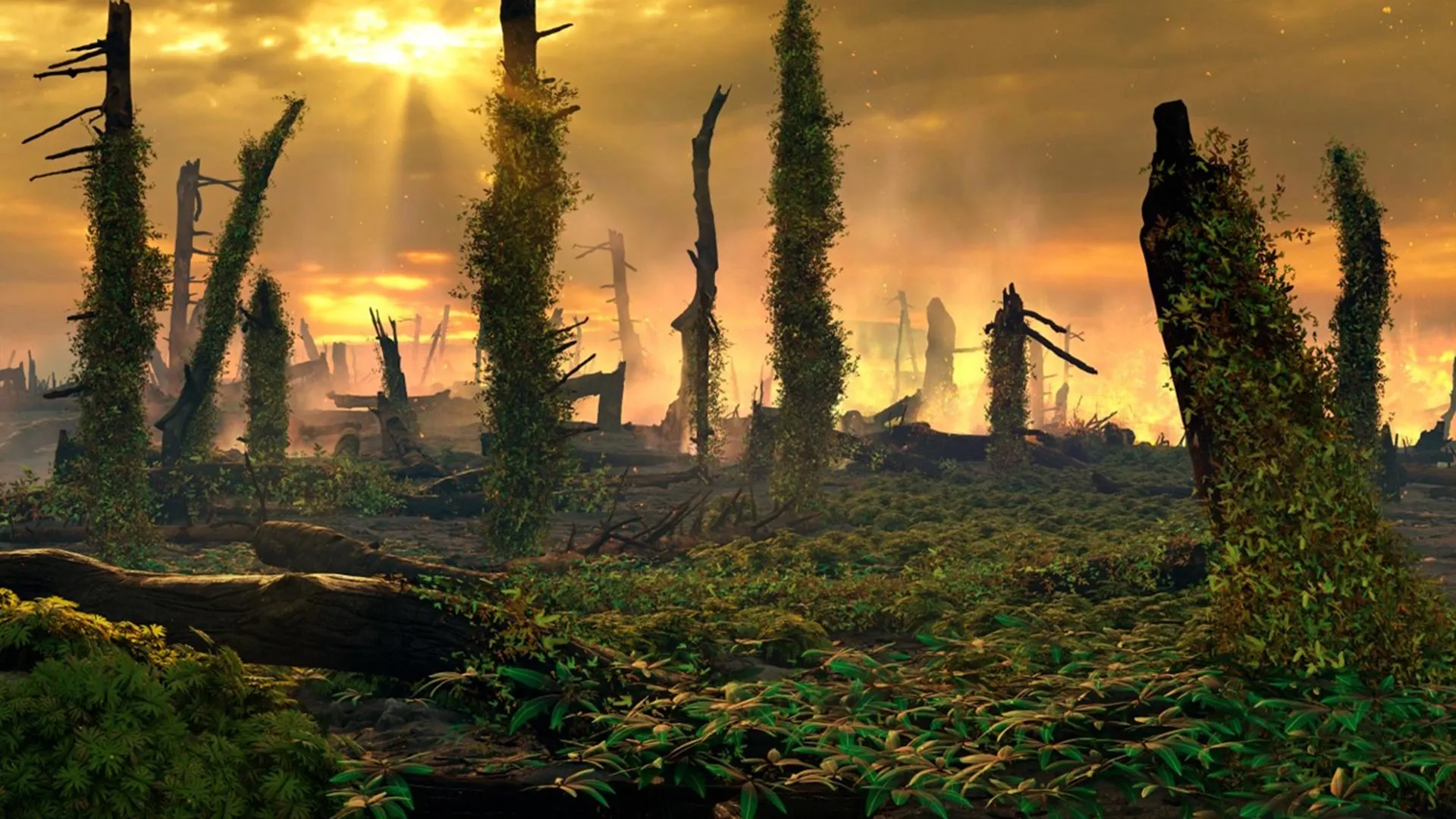
LONDON & UTRECHT — Some 201 million years ago, Earth underwent one of its most catastrophic biological bottlenecks. The end-Triassic mass extinction wiped out a staggering proportion of marine and terrestrial species, clearing the stage for the rise of the dinosaurs. For decades, scientists have known the prime suspect: massive volcanic eruptions tied to the fracturing of the supercontinent Pangea. These cataclysmic rifts belched astronomical volumes of carbon dioxide into the ancient atmosphere, driving global temperatures upward by an estimated 5 to 10 degrees Celsius.
Now, groundbreaking research published on July 21, 2026, in Nature Geoscience reveals that the planetary fever was only part of the story. According to an international team of geologists led by Utrecht University, the hothouse world triggered a devastating feedback loop of ecological collapse, extreme wildfires, and an explosion of opportunistic "disaster plants."
By analyzing four drill cores—including a recently recovered 640-meter core from the United Kingdom—researchers mapped a terrifying epoch wherein ancient fern-dominated landscapes burned continuously, transforming post-apocalyptic Northwest Europe into a recurring inferno.
Chronology of a Planetary Catastrophe
To understand how the end-Triassic world unraveled, scientists must piece together a multi-stage timeline spanning tens of thousands of years.
Phase 1: The Volcanic Trigger and Global Fever (T-0)
The crisis began when the Central Atlantic Magmatic Province (CAMP) began tearing Pangea apart. The initial pulses of volcanism released greenhouse gases at rates that rival modern anthropogenic emissions, albeit driven by geological forces. As atmospheric carbon dioxide skyrocketed, the global hydrological cycle destabilized, and surface temperatures spiked by up to 10°C.
Phase 2: Forest Collapse and the Fern Spike
As global temperatures soared and droughts intensified, the complex, tree-dominated forests that covered much of Pangea collapsed. In their wake, hardy, resilient pioneer plants stepped in. Chief among them were ferns. Spreading rapidly across damaged landscapes in what is now Northwest Europe, ferns created sprawling, savannah-like expanses.
Phase 3: The Fiery Feedback Loop (Lasting 40,000 to 300,000 Years)
Once established, these ferns did not merely endure the hothouse environment; they weaponized it. The researchers estimate that this high-fire interval persisted for anywhere between 40,000 and 300,000 years. As the ferns dried out seasonally, their dense, flammable fronds acted as perfect kindling for massive, recurring wildfires. This created a vicious cycle: climate change destroyed the forests, ferns took over, the ferns fueled relentless megafires, and the resulting fires cleared more ground for the ferns to expand further.
Supporting Data: Unlocking Deep-Time Fires
Reconstructing wildfire activity from two centuries ago is a complex challenge; reconstructing it from 201 million years in the past requires innovative science. Traditionally, geologists rely on two main proxies to track ancient fires: fossilized charcoal fragments and polycyclic aromatic hydrocarbons (PAHs)—organic smoke compounds preserved in sedimentary rock.
However, both traditional methods carry inherent flaws. Large charcoal pieces can fragment into countless smaller bits during fossilization, making prehistoric fire activity appear artificially exaggerated. Meanwhile, PAHs are volatile and can drift vast distances from their source fire, while some chemical markers fail to survive the geological deep-time record intact.
To circumvent these limitations, the international research team pioneered a novel, highly cost-effective technique: the Palynomorph Darkness Index (PDI).
The Palynomorph Darkness Index Explained
Organic microfossils, such as pollen and spores, naturally darken over time as they are buried deeper in the Earth. Increased geological pressure and rising subsurface temperatures "cook" the organic material, meaning that older, deeper sediments typically contain darker fossils.
However, when examining the four drill cores, the Utrecht-led team discovered a glaring anomaly.
"The oldest and deepest pollen and spores in the cores remained lightly colored," explains Dr. Bas van de Schootbrugge of Utrecht University, a senior author on the study. "Yet fossils from the extinction interval became progressively darker, eventually reaching an extremely dark brown. Once the extinction period ended, the fossils returned to a pale yellow color."
Because this darkening occurred simultaneously across four distinct geological basins with vastly different burial histories, it could not be blamed on standard thermal maturation from deep burial. Instead, it was an external atmospheric signal.
Using a light microscope connected to a digital camera, the researchers converted RGB color data from 15,000 individual pollen and spore samples into an average grayscale value. By comparing tree pollen with fern spores across strata, they discovered that all plant groups darkened uniformly during the extinction interval. When cross-referenced against charcoal and PAH levels, the mystery was solved: the mysterious "Dark Zone" in the fossil color records was a direct signature of severe, persistent wildfire smoke.
Official Responses and Expert Insights
The implications of the PDI technique and the wildfire data have sent ripples through the paleontology and geology communities.
Dr. Van de Schootbrugge emphasizes the extraordinary resilience—and danger—of the flora that dominated the end-Triassic. "Ferns are truly remarkable plants that have withstood many crises throughout Earth history, and some species can adapt to some of the most extreme environments. They can be considered to be true disaster species."
When other vegetation perished from soil erosion, deforestation, and greenhouse warming, ferns capitalized instantly. Although surface fronds burned away during fires, their robust underground root systems survived, allowing them to regenerate faster than competing flora.
"When the ferns dry out, the thick mats act as the ideal fuel to trigger massive wildfires," Van de Schootbrugge notes, describing the landscapes as "a truly hellish world." Certain low-lying fern species functioned effectively as "fire ladders," carrying flames rapidly across terrain while choking out any competing biodiversity that attempted to recover.
Independent reviewers of the study have praised the PDI method as a methodological breakthrough. By reducing reliance on fragmented charcoal and mobile PAHs, scientists now possess a high-resolution, standardized yardstick for measuring paleo-wildfire intensity across global basins.
Implications: A Warning from Deep Time
While the end-Triassic mass extinction is an ancient event frozen in stone 201 million years ago, the mechanics driving it bear an unsettling resemblance to modern ecological crises.
The research team highlights that the disaster was not caused by a single catastrophic event, but by a cascading chain reaction. Climate change, deforestation, and the proliferation of opportunistic, fire-prone species combined to create an environmental "perfect storm."
As modern ecosystems face unprecedented rates of anthropogenic climate change, deforestation, and habitat fragmentation, the end-Triassic serves as a stark historical warning. When complex, stabilizing ecosystems are dismantled, they can be rapidly replaced by resilient, volatile disaster species that actively encourage environmental degradation—turning a warming planet into a global tinderbox.
