

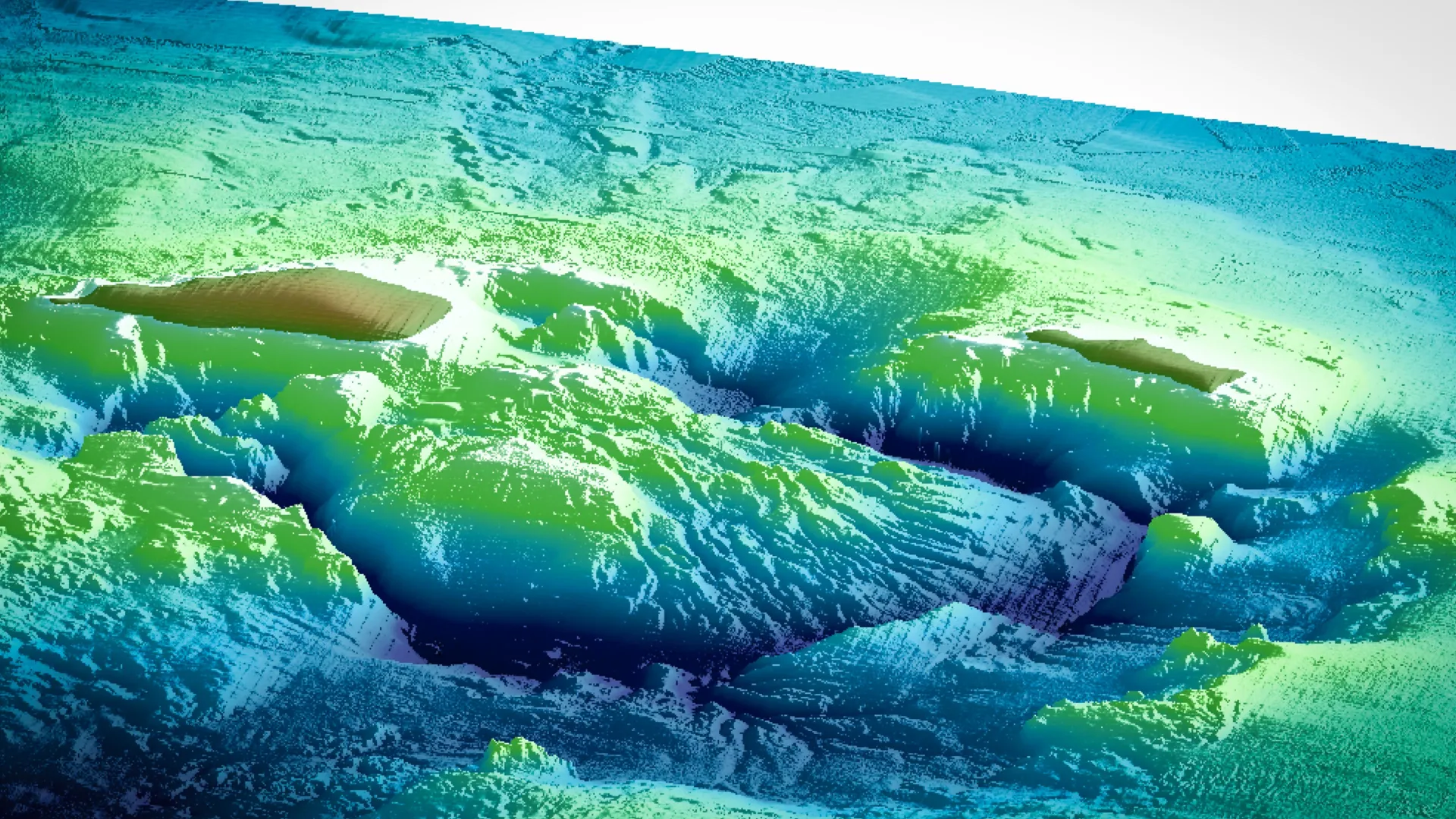
TOKYO — Deep beneath the rolling, azure waves of the East China Sea, south of Japan’s main islands, a colossal geological engine is quietly roaring back to life.
Researchers at Kobe University, working in tandem with the Japan Agency for Marine-Earth Science and Technology (JAMSTEC), have uncovered compelling evidence that a massive underground reservoir of magma beneath the submerged Kikai caldera is actively refilling. Published in the journal Communications Earth & Environment, the discovery offers volcanologists a rare, high-resolution window into the cyclical life of some of Earth’s most catastrophic volcanic systems.
While the findings do not portend an imminent eruption, they provide unprecedented insights into how supervolcanoes recover from apocalyptic events. More importantly, the new data sheds light on the subterranean mechanics that govern similar giant caldera systems around the globe, including Yellowstone in the United States and Lake Toba in Indonesia.
Main Facts: Unlocking the Secrets of the Kikai Caldera
At the heart of the recent scientific breakthrough is the identification of a substantial, active magma-rich zone directly beneath the Kikai caldera—the very same structure responsible for the most devastating volcanic eruption of the Holocene epoch.
The Scale of a Supervolcano
To understand the magnitude of Kikai, one must look back roughly 7,300 years. During the prehistoric Holocene epoch—which began about 11,700 years ago and continues today—Kikai unleashed the largest known eruption of the era.
When a volcano of this magnitude erupts, it ejects such an unfathomable volume of magma that the underground chamber empties, causing the overlying bedrock and surface crust to collapse inward. This catastrophic failure creates a wide, saucer-shaped depression known as a caldera, rather than the iconic cone-shaped mountain associated with standard stratovolcanoes.
The sheer volume of material displaced by such an event defies easy visualization. Geologists calculate that the magma expelled during Kikai’s ancient cataclysm was so vast it could bury the entirety of New York City’s Central Park under a scorching layer of rock and ash 12 kilometers (nearly 7.5 miles) deep.
The Marine Advantage
Paradoxically, the fact that much of the Kikai caldera is submerged beneath the ocean proved to be a decisive advantage for the research team. While land-based volcanoes often present logistical hurdles—such as dense vegetation, difficult terrain, and restricted access—studying a submarine caldera allows for clean, unobstructed geophysical mapping.
"The underwater location allows us to implement systematic, large-scale surveys," notes Kobe University geophysicist Nobukazu Seama, who led the research initiative.
Utilizing specialized research vessels equipped with airgun arrays, the scientific team generated controlled, low-frequency seismic pulses that penetrated the ocean floor. Simultaneously, a grid of ocean-bottom seismometers recorded how these shockwaves traveled through the Earth’s crust. Because seismic waves alter their speed and trajectory depending on the density, temperature, and state (solid versus molten) of the rocks they traverse, researchers were able to stitch together a vivid three-dimensional "ultrasound" of the subterranean architecture beneath the seafloor.
The resulting data revealed a robust, partially molten magma reservoir sitting squarely in the plumbing system that fed the ancient eruption 7,300 years ago. Geochemical and structural analysis confirmed that this is not stagnant, cooling sludge left over from the prehistoric blast; rather, it is a dynamic system being continually replenished by fresh, newly injected magma rising from deep within the Earth’s mantle.
Chronology: From Ancient Catastrophe to Modern-Day Rejuvenation
To fully appreciate the significance of the Kobe-JAMSTEC discovery, researchers must trace the timeline of the Kikai caldera across millennia—a chronology marked by unimaginable destruction, quiet recovery, and steady underground accumulation.
Phase 1: The Prehistoric Cataclysm (~7,300 Years Ago)
Before the great collapse, Kikai stood as a formidable volcanic center. When pressures finally breached the critical threshold, it produced a cataclysmic eruption that sent pyroclastic flows racing across the sea and blanketed parts of the Japanese archipelago in thick layers of ash. The colossal withdrawal of magma caused the chamber roof to cave in, forming the vast submerged depression visible today. For centuries afterward, the region remained a silent, scarred expanse of ocean.
Phase 2: The Birth of the Lava Dome (~3,900 Years Ago)
Volcanoes of this scale rarely remain dormant forever. Approximately 3,900 years ago, volcanic activity resumed within the center of the caldera, albeit in a different form. Instead of explosive, cataclysmic detonations, thick, viscous magma began to ooze slowly toward the surface, piling up over the vent to form a growing lava dome.
Geochemical analyses of rocks from this dome, as well as subsequent minor volcanic episodes, revealed a distinct chemical signature. The magma reaching the surface in recent millennia differs markedly in composition from the material expelled during the giant eruption 7,300 years ago. This discrepancy provided the first major clue that Kikai was no longer venting the remnants of its ancient reservoir, but was instead being stoked by a brand-new supply line from the Earth’s interior.
Phase 3: The Modern Geophysical Surveys (Recent Years)
Armed with advanced marine seismic technology, researchers launched targeted expeditions to peer inside the caldera’s plumbing. By mapping the velocity anomalies of seismic waves, the team mapped the modern reservoir’s dimensions, confirming that fresh magma has been quietly pooling beneath the seafloor, systematically rebuilding the supervolcano’s internal reserves.
Supporting Data: The Mechanics of Magma Re-Injection
The findings published in Communications Earth & Environment rely heavily on rigorous geophysical and geochemical datasets.
- Seismic Tomography: By measuring the travel times of seismic waves generated by airgun arrays, researchers identified pronounced low-velocity zones beneath the caldera. In ge geophysics, seismic waves slow down significantly when encountering partial melt or magma pockets, allowing scientists to outline the boundaries of the underground reservoir with high fidelity.
- Volcanic Gas and Rock Chemistry: Laboratory testing of samples retrieved from the central lava dome demonstrated variations in trace elements and mineral crystals compared to the ejecta of the 7,300-year-old event. This geochemical fingerprinting proved essential in distinguishing between remnant ancient magma and freshly injected mantle material.
- Funding and Collaboration: The multi-year project was substantially supported by Japan’s Ministry of Education, Culture, Sports, Science and Technology (MEXT) under The Third Earthquake and Volcano Hazards Observation and Research Program (Earthquake and Volcano Hazard Reduction Research), alongside grants from the Japan Society for the Promotion of Science (JSPS grant 20H00199). The operational success relied entirely on the technological prowess and vessel fleets provided by JAMSTEC.
Official Responses and Expert Perspectives
The academic community has received the study with immense enthusiasm, viewing it as a milestone in caldera research.
Dr. Nobukazu Seama, the lead geophysicist behind the project at Kobe University, emphasized the fundamental importance of understanding how supervolcanoes recharge.
"We must understand how such large quantities of magma can accumulate to understand how giant caldera eruptions occur," Seama stated during a press briefing discussing the publication.
Addressing the nature of the newly discovered reservoir, Seama added:
"Due to its extent and location, it is clear that this is in fact the same magma reservoir as in the previous eruption. However, this means that the magma that is now present under the lava dome is likely newly injected magma."
Seama and his colleagues are careful to stress that the public and maritime authorities should not panic. The detection of a refilling magma chamber does not signify an impending eruption. Rather, it offers a baseline normal state for a healthy, active supervolcano system.
"The discovery does not mean that Kikai is about to erupt," the research team clarified in a joint statement. "Instead, it provides valuable evidence that the underground system responsible for its ancient catastrophe remains active and continues to receive new magma."
Implications: A Global Window into Supervolcanoes
While the study centers specifically on Kikai, the theoretical framework it supports has profound global implications. Volcanologists have long debated whether giant caldera systems remain dormant until they cool completely, or if they undergo active, episodic rejuvenation cycles.
Parallels with Yellowstone and Toba
The model of magma re-injection confirmed at Kikai aligns remarkably well with what scientists suspect is happening beneath other infamous supervolcanoes, such as the Yellowstone Caldera in the United States and the Toba Caldera in Sumatra, Indonesia. Both systems feature massive, shallow low-velocity zones interpreted by seismologists as extensive magma reservoirs.
"This magma re-injection model is consistent with the existence of large shallow magma reservoirs beneath other giant calderas like Yellowstone and Toba," Seama noted.
By establishing that fresh magma can continuously percolate into and inflate old, collapsed chambers without triggering an immediate cataclysm, the Kikai study provides a conceptual bridge for researchers monitoring other global supervolcanoes.
The Ultimate Goal: Predictive Monitoring
Ultimately, the study’s authors hope their methodological framework will pave the way for early-warning systems capable of distinguishing between standard, harmless magmatic adjustments and the dangerous escalation phases that precede giant eruptions.
As magma enters these massive crustal reservoirs, it alters the surrounding rock, induces localized uplift, and shifts seismic signatures in subtle ways. By refining marine and terrestrial geophysical monitoring techniques, scientists aim to crack the code on pre-eruptive indicators.
"We want to refine the methods that have proved to be so useful in this study to more deeply understand the re-injection processes," Seama concluded. "Our ultimate goal is to become better able to monitor the crucial indicators of future giant eruptions."
As researchers continue to listen to the silent, rhythmic pulse of the Earth beneath the sea, studies like the one at Kikai bring humanity one step closer to understanding—and eventually anticipating—the most powerful forces shaping our planet.
