

Published October 5, 2026
In the practice of hatha yoga, the physical body frequently transcends mechanics, transforming into an expressive lexicon of shape, intent, and surrender. While modern yoga instruction often prioritizes major muscle groups, spinal extensions, and hamstring flexibility, foundational research from the Yoga Journal archives highlights an essential, yet frequently overlooked, architectural anchor: the human hand.
By re-examining the hand’s placement, symbolism, and functional anatomy—specifically within Adho Mukha Svanasana (Downward-Facing Dog Pose)—practitioners can unlock deeper structural alignment, alleviate chronic joint strain, and cultivate a profound meditative awareness that permeates every asana.
Main Facts: The Anatomy and Symbolism of the Hand in Yoga
Throughout Indian culture, hands have historically carried immense symbolic and practical significance. Dating back to Vedic rituals, priests used manual gestures to accentuate sacred mantras, while classical religious sculpture from the third century BCE onward utilized distinct hand postures, or mudras, to communicate divine attributes.
By the Tantric period (fourth to eighth centuries CE), mudras evolved into intricate systems of sacred geometry. Scholars describe a mudra not merely as a gesture, but as a "seal"—a solemn pact binding the practitioner to the spiritual realm.
This philosophy translates directly onto the yoga mat. When standing in Tadasana (Mountain Pose) with hands joined at the chest in namaste, a subtle energetic shift occurs. The mind quiets as the left and right sides of the body integrate. However, this feeling of reverence relies entirely on execution. Collapsing the bones together causes shoulder tension and upper chest constriction; conversely, broadening from the center of the palms allows the shoulders to drop and the chest to expand.
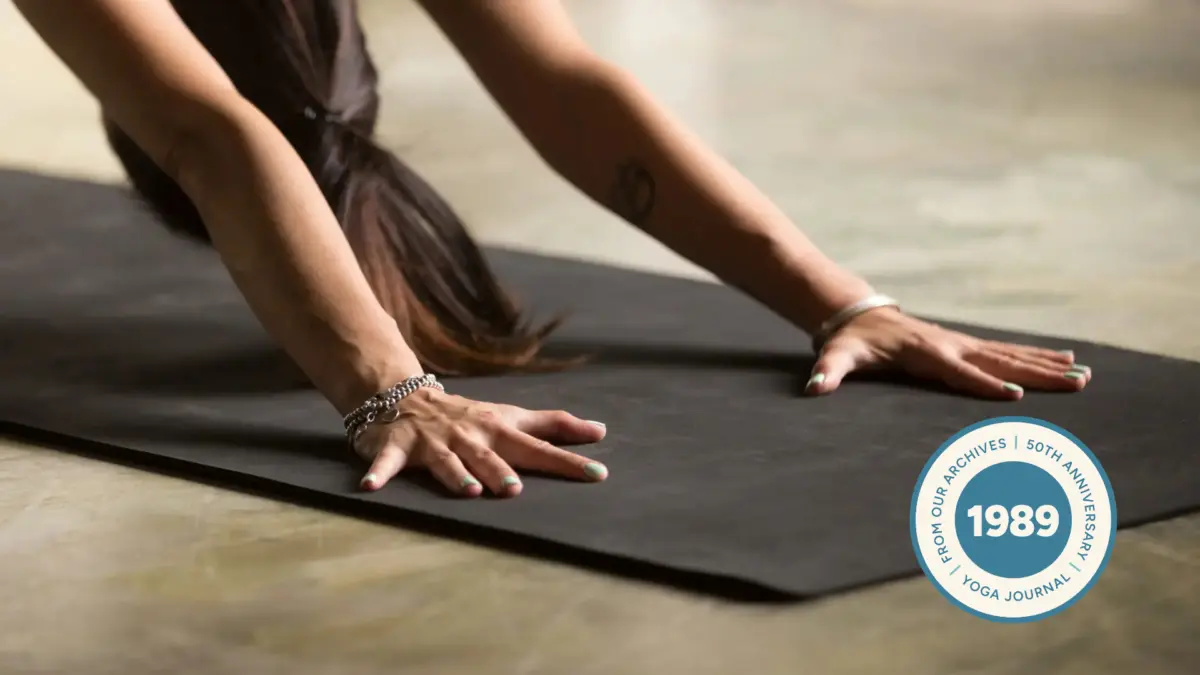
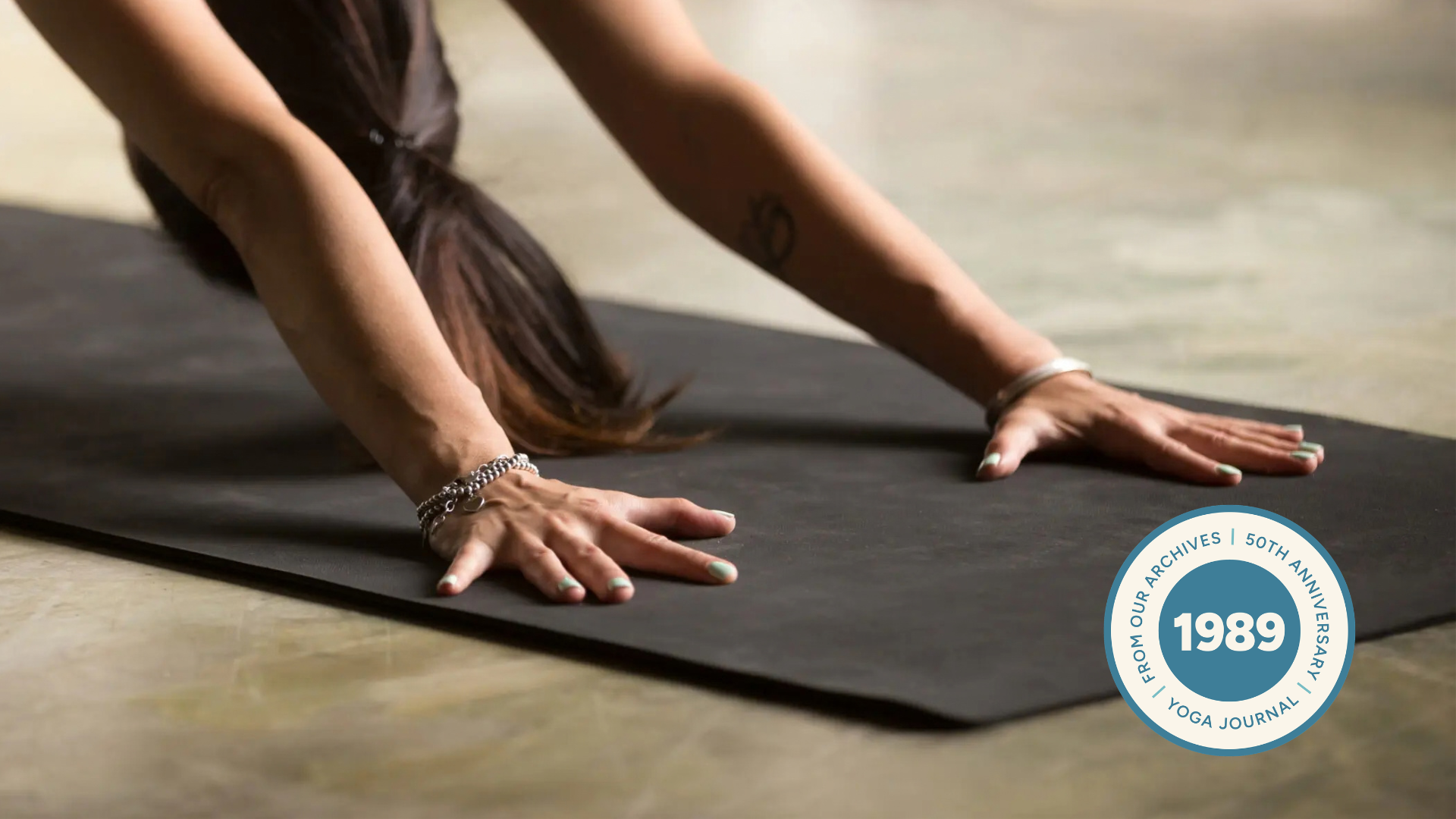
This principle of palm-broadening is critical for weight-bearing postures. While beneficial in Tree Pose and Upward-Facing Bow Pose, applying it to Downward-Facing Dog Pose presents unique biomechanical hurdles due to the natural unevenness of human hands.
Chronology: Evolution of Hand Awareness in Yoga Journal
- Vedic Era to Classical Antiquity: Hands and fingers used systematically in religious rituals, storytelling, and sacred iconography.
- 4th–8th Century CE: Development of complex Tantric mudras, viewing the hand as a "universe in miniature."
- November–December 1989: Yoga Journal publishes a landmark archival piece detailing the precise role of the hands and inner arms in Downward-Facing Dog Pose, outlining diagnostic techniques for postural asymmetries.
- October 2026: Yoga Journal curates and re-releases these foundational insights within its digital archives series, reinforcing timeless alignment strategies for modern practitioners.
Supporting Data and Structural Challenges in Adho Mukha Svanasana
In Adho Mukha Svanasana, the hands form the primary foundation for the entire upper body. Yet, structural impediments frequently sabotage this foundation:
- The Indented Palm and Thick Thumb Mound: For many students, the center of the palm features a deep indentation, while the inner thumb mound protrudes noticeably. This anatomical variance causes body weight to roll toward the outer edge of the hand, lifting the base of the index finger completely off the floor.
- The Risk of Compensatory Misalignment: When the base of the index finger loses contact with the floor, weight shifts unevenly, causing the rib cage to sink into the shoulder joints and slackening the abdominal wall.
- Asymmetry Detection: Postural imbalances in Downward-Facing Dog directly mirror those found in inversions like Headstand (Sirsasana) and Shoulderstand (Sarvangasana). Studies of practitioner movement patterns indicate that a chronically tighter or "problem" shoulder often correlates with an unengaged inner arm and an uneven distribution of weight across the crown of the head or spine.
Seven Diagnostic Adjustments for Downward-Facing Dog
To correct these structural inefficiencies, teachers and practitioners can employ seven targeted technical adjustments:
1. Adjusting the Position of the Thumb
With the assistance of a teacher—or by using the opposite hand to manually draw the skin and flesh of the inner thumb mound toward the outer hand while the palm is lifted—practitioners can create a flatter, broader palm base. This ensures firm contact at the base of the index finger, securing stability through the entire arm.
2. Utilizing Yoga Blocks
Placing hands on blocks positioned lengthwise against a wall helps students with tight shoulders or weak wrists. Aligning the heels of the hands against the front edge of the blocks shifts weight toward the finger bases, alleviating wrist strain while lengthening the pelvis upward.
3. Activating and Strengthening the Inner Arms
Rather than turning middle fingers forcefully inward—which can twist the wrists—aligning the wrists straight across with the fork of the second and third fingers pointing forward activates the inner arms. Isometric wall exercises and partner-assisted resistance training on the upper arms help rotate the upper arm bones outward, allowing the rib cage to lift effortlessly away from the shoulders.
4. Implementing a Forearm Strap
Placing a strap snugly around the upper arms or elbows prevents hyperextended elbows from buckling and keeps the upper arms parallel. For those experiencing discomfort or needing forearm strengthening, the strap can be shifted to the fleshy part of the forearm.
5. Recognizing Postural Patterns and Asymmetries
By using a straight line on the floor as a reference point—aligning the nose directly over the median line during transition—practitioners can observe whether their weight shifts to the right or left. Placing a folded blanket lift beneath the heel of the hand corresponding to the dropping shoulder restores equilibrium, a principle that applies equally to correcting asymmetries in Headstand and Shoulderstand.
6. Activating the Thighs to Relieve Upper Body Pressure
When the lower body remains passive, the entire weight of the torso collapses onto the shoulders and arms. Utilizing a broad strap held firmly across the upper front thighs by a partner allows the practitioner to press the thigh bones away, lengthening the lower back and drastically reducing arm load.
7. Pacifying Neck Muscles with Bolster Support
For practitioners whose trapezius muscles grow rigid during overhead arm extensions, resting the forehead on a bolster (or a bolster elevated with a folded blanket) during Downward-Facing Dog softens the neck, relieves tension, and integrates the upper body after intense backbending.
Official Responses and Expert Perspectives
The integration of physical mechanics and spiritual awareness in yoga has long been championed by senior teachers and philosophical leaders. Commenting on the transition from mechanical execution to holistic embodiment, Zen priest and San Francisco Zen Center co-abbot Reb Anderson notes:
"When you meditate or take a yoga posture, you are taking the yoga posture in the realm of knowing. What you are dealing with is not a direct experience; you’re dealing with a concept of your body… Yet as you become more completely aware to the very limit of your ability in the realm of knowing, the body of direct experience comes to meet [the conceptual body]… Little by little this practice, which starts out as a kind of conscious activity, gets a gift or infusion from a realm beyond our conception."
Yoga anatomists echo this sentiment, emphasizing that subtle structural adjustments—such as broadening a palm or firming an inner arm—act as physical gateways to this deeper state of integration.
Implications for Modern Yoga Practice
The archival resurrection of these foundational hand techniques carries profound implications for contemporary yoga instruction. In an era dominated by fast-paced vinyasa classes and aesthetic-driven social media content, foundational posture mechanics are frequently glossed over, leading to high rates of chronic wrist, shoulder, and neck injuries.
By shifting focus away from superficial depth and toward structural integrity at the micro-level—starting with the hands—practitioners can:
- Prevent Injury: Protect vulnerable joints like the wrists, elbows, and cervical spine from repetitive strain.
- Enhance Longevity: Build sustainable, intelligent strength that supports advanced inversions and arm balances without joint degeneration.
- Deepen the Meditative State: Transform a routine physical transition into an embodied mudra, aligning physical mechanics with mental focus and spiritual intent.
Ultimately, the humble hand in Downward-Facing Dog serves as a microcosm of the entire yoga practice: a bridge between the physical mechanics of the known body and the expansive, unquantifiable realm of inner awareness.
