

To the casual observer, the blur of feathers darting between a backyard feeder and a nearby oak branch is merely a fleeting moment of nature. But to the wildlife photographer, it represents one of the most demanding yet rewarding challenges in modern imaging. Passerine birds—belonging to the largest taxonomic order of birds, Passeriformes—account for over half of all avian species globally. From the brilliant crimson chest of a robin to the electric gold of a goldfinch, these perching birds are ubiquitous across gardens, dense forests, and open fields worldwide.
Yet, their accessibility belies their difficulty as photographic subjects. Small, hyperactive, and perpetually in motion, passerines test the limits of both fieldcraft and technical photographic prowess. This comprehensive guide explores the methods, equipment, and biological insights required to master passerine photography, elevating snapshots into striking works of wildlife art.

Main Facts: Understanding the Biology and Habits of Passeriformes
To photograph any animal successfully, one must first understand its biology. Passerines are defined anatomically by their unique anisodactyl toe arrangement: three toes pointing forward and one long toe facing backward. This specialized morphology is an evolutionary adaptation for perching, allowing them to lock their feet securely onto branches, reeds, and artificial structures without expending muscular energy.
Commonly recognized passerines include sparrows, tits, finches, warblers, swallows, and thrushes. Because these birds are largely arboreal and highly vocal, ornithologists and photographers alike rely heavily on auditory cues. Learning bird songs is often the most effective way to locate and identify hidden species long before they come into visual range.

Furthermore, passerines are altricial, meaning their hatchlings are born blind, naked, and entirely dependent on parental care. This lifecycle creates distinct seasonal behavioral shifts—from territorial singing in the spring to frantic foraging during harsh winter months—that dictate when and how photographers should approach them.
Chronology: The Lifecycle of a Passerine Year and Photographic Seasons
Capturing compelling imagery requires aligning your photographic calendar with the biological rhythms of your subjects. The passerine year moves through distinct phases, each offering unique visual opportunities:

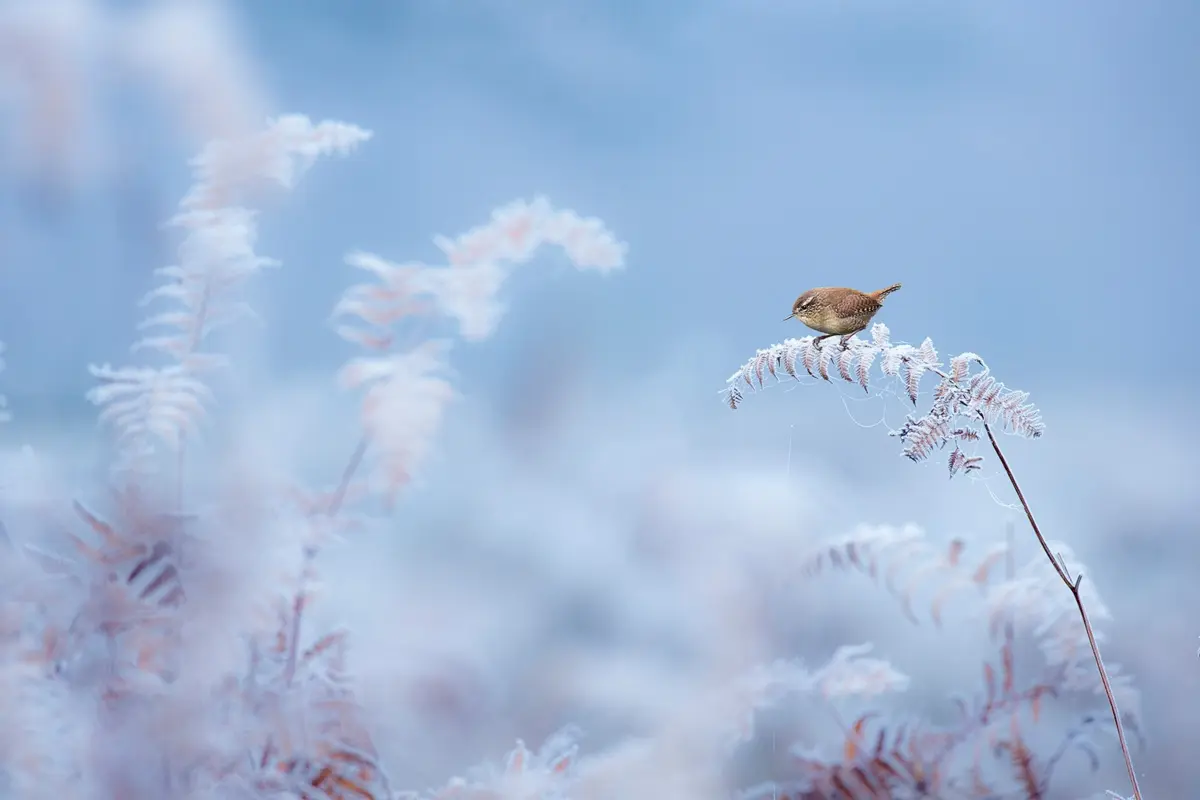
- Late Autumn and Winter (The Feeding Season): As natural food sources dwindle, passerines become heavily reliant on supplemental feeding stations. Harsh weather forces them out into the open, often resulting in dramatic interactions, fluffed-up plumage to combat the cold, and stark, minimalist snowscapes.
- Early Spring (The Courtship and Song Phase): As temperatures rise, species like robins, wrens, and blackbirds establish and defend breeding territories. This is the prime time to capture vocalizing birds with open beaks, vibrant spring plumage, and fresh botanical perches like budding blossoms.
- Late Spring and Summer (The Parenting Phase): Adult passerines transition into intensive foraging to feed hungry nestlings. Once fledglings leave the nest, parents frequently guide them toward reliable garden feeding stations. This period yields touching portraits of parental care, though it demands the highest level of ethical restraint to prevent undue stress on developing wildlife.
- Early Autumn (The Molting and Flocking Phase): Birds gather in flocks before migration or winter residency. Flocks feeding together create dynamic, chaotic action shots that test autofocus tracking and burst-mode capabilities.
Supporting Data: Technical Parameters for Freezing Motion
Passerines present a formidable technical challenge due to their rapid acceleration rates and erratic flight patterns. Achieving critical sharpness requires strict adherence to specialized camera settings.
Shutter Speed Specifications
To freeze the motion of a perching passerine twitching its head or preening, a shutter speed of at least 1/1000th of a second is mandatory. For birds in flight, taking off, or landing, professionals universally recommend pushing speeds to 1/2500th of a second or faster.

Aperture and Depth of Field
While wide apertures (ranging from $f/2.8$ to $f/5.6$) are favored to isolate subjects against a dreamy, blurred background (bokeh), close-up macro or tight portraits require careful calculation. Because the working distance to a garden feeder is short, depth of field shrinks dramatically. Photographers must occasionally stop down slightly to ensure that both the bird’s eye and its chest feathers remain pin-sharp.
ISO and Low-Light Management
In shaded woodlands or during golden hour lighting, maintaining a fast shutter speed requires higher ISO values. Modern digital sensors handle noise remarkably well; therefore, embracing digital noise is far preferable to capturing a motion-blurred, unusable image.

Official Responses: Ethical Frameworks in Wildlife Photography
As backyard feeding stations and wildlife photography workshops grow in popularity, conservationists and ornithological societies have emphasized the need for ethical boundaries. Wildlife photography must never compromise the welfare of the subject for the sake of an image.
Leading nature photography organizations advocate for the following ethical mandates:

- Habitat Protection: Photographers must avoid trimming foliage directly surrounding active nests, as this exposes vulnerable chicks to predators and harsh weather.
- Baiting and Stress Limits: While artificial feeding stations are widely accepted for backyard passerine photography, food should be nutritionally appropriate (e.g., high-quality sunflower seeds, nyjer seeds, and mealworms) and free of harmful additives, salt, or processed human foods.
- Disturbance Monitoring: If a bird exhibits signs of alarm—such as persistent warning calls, wing-flicking, or abandoning a feeding site—the photographer must increase their distance or retreat to a blind.
- Hygiene Protocols: Backyard feeding stations must be cleaned regularly using a mild bleach solution and allowed to dry completely. Unsanitary feeders are primary vectors for avian diseases, such as trichomonosis, which can devastate local passerine populations.
Implications: Crafting the Ultimate Setup and Composition
Creating award-winning passerine imagery extends far beyond simply pointing a telephoto lens at a plastic bird feeder. It requires environmental orchestration, meticulous composition, and a deep appreciation for the final frame.
Setting Up the Ideal Feeding and Bathing Station
To avoid clinical, unnatural-looking backyard photos, integrate natural elements into your setup. Position a feeding station near protective foliage, as skittish passerines require the safety of nearby cover to feel secure.

Furthermore, installing a shallow reflection pool—such as a rectangular planting tray outfitted with a submerged rock or natural log—invites stunning bathing and drinking behaviors. Photographers should carefully angle reflection pools to capture the soft, muted colors of surrounding trees or foliage, avoiding harsh, blown-out reflections of the open sky.
The Power of the Natural Perch
Artificial metal feeder perches instantly betray the wild nature of an image. To counteract this, mount natural, aesthetically pleasing perches—such as lichen-covered branches, weathered twigs, or seasonal blossoms—directly adjacent to your feeders. Ensure the perch harmonizes with the bird’s native habitat to maintain authenticity.

Mastering Compositional Guidelines
Once the technical elements are secured, artistic framing transforms a simple documentation photo into a compelling narrative:
- The Rule of Densities and Negative Space: Leaving ample negative space around a solitary bird—particularly against a minimalist winter backdrop of snow or frost—conveys isolation and scale. Always position the bird so it is looking or moving into the frame rather than out of it.
- Eye-Level Perspective: Shooting from a low tripod stance that aligns your lens directly with the bird’s eye creates an intimate psychological connection with the viewer.
- Leading Lines: Utilize natural diagonal lines, such as rustic dry-stone walls or overlapping branches, to naturally guide the viewer’s eye directly to the subject.
Recommended Equipment Arsenal
Executing these techniques reliably demands specialized gear:

- Camera Bodies: Modern mirrorless or high-end DSLR cameras equipped with high continuous frame rates (10+ frames per second) and advanced animal-eye autofocus tracking.
- Lenses: Telephoto prime or zoom lenses ranging from 300mm to 600mm. Longer focal lengths inherently compress background distance, rendering distracting surroundings into smooth, creamy bokeh.
- Support Systems: A sturdy tripod equipped with a fluid gimbal head is vital for stabilizing massive telephoto glass during long stakeouts, while portable hides or camouflage netting allow photographers to merge seamlessly into the environment.
Conclusion
Passerine bird photography is a masterclass in patience, fieldcraft, and technical execution. Because these tiny avian dynamos move with blinding speed and inhabit nearly every corner of our natural world, they offer an endless canvas for creative expression. By respecting their biological rhythms, maintaining strict ethical standards, and mastering the intricate balance of light, shutter speed, and composition, photographers can unlock an enchanting micro-world of avian beauty right outside their doors.
