Internationally acclaimed interior designer Lorenzo Castillo stands at the absolute zenith of his career. Born in Madrid in 1968, Castillo has evolved far beyond the traditional boundaries of high-end residential decoration. While continuing to service a coveted roster of elite international clientele—collaborating with some of the most prestigious names in the global design sphere over the past five years—Castillo’s primary focus has shifted toward education, historic preservation, and the fundamental theories of interior architecture.
This educational mission extends well beyond his television appearances as a judge on the hit Spanish design competition series DecoMasters. Castillo is currently preparing a definitive book outlining the foundational principles of interior design, cementing his role as a historian and mentor for future generations.
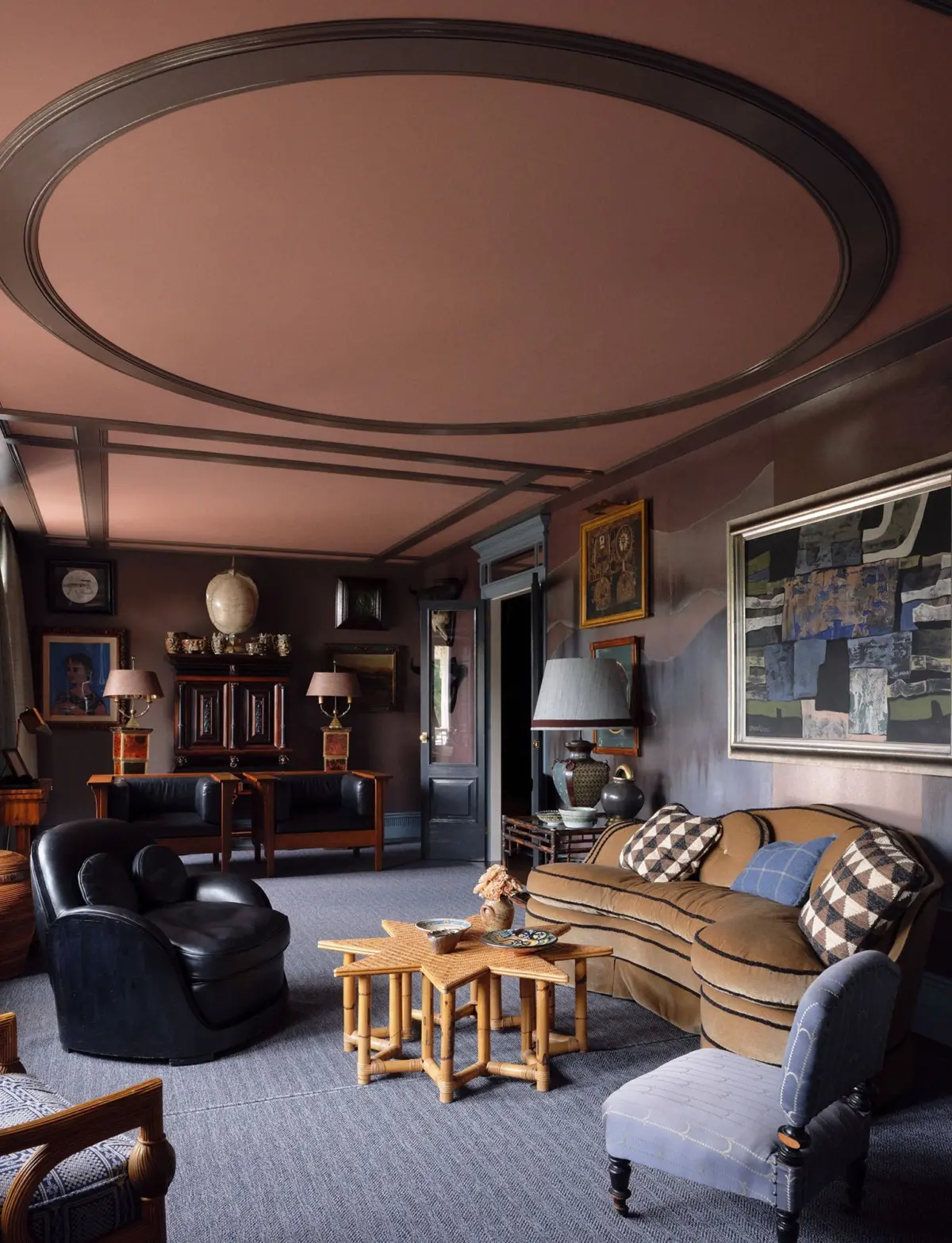
At the center of his personal life and creative output is his stunning new residence in Oviedo, the capital of Spain’s northern Asturias province. Housed within an early 20th-century French-style building overlooking the historic Campo de San Francisco park, the apartment is a masterclass in theatrical layout, historical layering, and unapologetic maximalism. Created by combining two separate apartments into one expansive floor plan, the home serves as a living museum of Castillo’s career. It features bespoke furniture collections, rare antiques, and iconic 20th-century pieces by Jansen, Gabriella Crespi, Anthony Redmile, and Romeo Rega, all curated to reflect the stately character and shifting northern light of Oviedo.
Chronology: A Trajectory Shaped by Passion, Antiques, and Academia
To understand Lorenzo Castillo’s distinctive design philosophy, one must trace the chronological milestones that shaped his creative awakening:
1968: Lorenzo Castillo is born in Madrid into a professional family. His father practices as a maxillofacial surgeon and university professor, while his mother frequently redecorates their family home, instilling in young Lorenzo a lifelong obsession with domestic transformation.
The 1970s (Formative Years): Growing up in Spain, Castillo finds solace and inspiration in art and design. Influenced heavily by his maternal grandmother—who subscribed to the American edition of Architectural Digest and decorated her Madrid apartment with pioneering flair—Castillo develops an early passion for textiles and spatial arrangement. Despite facing social isolation as a young boy studying art history at Colegio Estudio and Universidad Complutense in a rigid post-Franco society, he presses forward with his artistic pursuits.
The Antiques Era: Castillo teams up with his brother, Santiago, to open an antique shop in Madrid’s historic Barrio de las Letras neighborhood, backed by their father. Sourcing items in France, Castillo soon grows frustrated by the rigid, commercial nature of the antiques trade. However, his theatrical styling of exhibition stands at antique fairs catches the eye of professional decorators, blurring the line between dealer and designer.
Rise to Prominence: Rejecting the sterile minimalism born from post-World War II modernism, Castillo pioneers a fresh approach in Spain. Instead of treating antiques as untouchable museum pieces meant solely for elite collections, he adopts a decorative, narrative-driven approach. He shocks the Spanish market by fearlessly pairing classic French and Dutch antiques with mid-century modern furniture from the 1960s and ’70s, establishing a signature style that channels the spirit of legendary designers like David Hicks and Renzo Mongiardino.
Present Day: Now globally recognized as an AD100 designer, Castillo splits his time between major international commissions, television work, and his newly completed sanctuary in Oviedo. He is currently putting the finishing touches on a comprehensive book on interior design fundamentals.
Supporting Data: Inside the Oviedo Sanctuary
Castillo’s Oviedo apartment is a testament to meticulous architectural planning and rich material juxtaposition. The spatial intervention required merging two distinct properties to establish comfortable, fluid traffic patterns for Castillo, his partner of over twenty years (Alfonso Fernández Reyero), and their fiercely protective dog, Tana.
Architectural Layout and Spatial Dynamics
The Façade: The prime front exposure facing the Campo de San Francisco park is dedicated entirely to the primary bedroom suite—a dramatic departure from traditional floor plans that typically place formal living rooms on the best side of a building.
The Gallery: The main living room is pushed to the rear of the apartment, featuring a restored glass-enclosed gallery that honors traditional Asturian architecture.
Private Quarters: Within his sprawling homes, Castillo maintains an ultra-private "apartment within an apartment"—a duplex sanctuary shared exclusively with Alfonso and Tana, completely off-limits to guests.
Materiality and Color Theory
The Bedroom Suite: Because this space receives limited afternoon sunlight, Castillo deliberately avoids pale, sterile shades. Instead, he envelops the room in deep, soothing tones: chocolate brown, camel, rich blues, and dusty pinks on the ceiling. The four-poster bed is draped in navy blue Ralph Lauren fabric lined with Castillo’s own silk and velvet.
The Bright Living Areas: Conversely, the brighter, rear-facing rooms utilize warm, reflective hues—butter, cream, ochre, and mustard.
The Omnipresent Gold: Castillo is unabashed in his love for gold, viewing it not as a superficial symbol of wealth, but as an essential source of warmth and light. He favors patinated gold over bright, contemporary finishes, often pairing its warmth with the cool counterpoint of silver accents to achieve optical balance.
Official Responses and Direct Insights
In an exclusive interview with Architectural Digest, Castillo opened up about his design philosophy, his personal inspirations, and his cultural observations:
On the Definition of Home and Happiness
When asked what makes his Oviedo residence unique, Castillo invoked the spirit of Karl Lagerfeld:
"I always say this, but to paraphrase Karl Lagerfeld: ‘The next house will be the best one.’ In this case, this home is the one [laughs]… Deep down, decor must always be linked to our quality of life and our search for happiness. That’s why I make those constant changes: because I’m still searching for happiness. And since I haven’t found it yet, I’ll keep designing!"
On Cinema as a Creative Catalyst
Castillo’s design vocabulary is deeply informed by cinema, most notably the works of Luchino Visconti and Stanley Kubrick. Describing his recent creative obsession, he revealed:
"Over the past month, ever since I went to Venice to visit the Dries Van Noten Foundation, I’ve watched the 1971 Luchino Visconti movie Death in Venice about 20 times—almost obsessively… I find myself noticing the drapes, the Indian fabrics, the Murano necklaces sold on the beach—which are the same ones I have from my grandmother’s collection. Cinema inspires me so much right now."
On the Democratization of Interior Design
Reflecting on his transition from high-end practitioner to educator, Castillo emphasized that good design transcends financial status:
"My father, who was a scientist, also taught at a university. From him I inherited a passion for teaching, and what motivates me most right now is sharing my knowledge of interior design… Interior design is becoming increasingly accessible and it appeals to a growing number of people from all walks of life, because it depends less on one’s financial situation and more about having the curiosity to understand how to create beautiful spaces."
Implications: The Renaissance of Maximalism and Spanish Design Heritage
Lorenzo Castillo’s career trajectory and his latest residential masterwork carry significant implications for the contemporary global design landscape:
The Rejection of Sterile Minimalism: Castillo’s sustained success signals a broader cultural fatigue with austere minimalism. By championing historical layers, heavy textiles, rich wood paneling, and an eclectic mix of eras, he validates a return to emotional, maximalist interiors that prioritize personal comfort and storytelling over cold architectural purity.
Elevating Spanish Design History: For decades, international interior design discourse has been dominated by Anglo-French traditions. Castillo has dedicated much of his platform to championing unsung Spanish pioneers like Jaime Parladé and Rafael García, while re-evaluating Spain’s historic cross-cultural exchanges with Islamic, Asian, and European aesthetics. By doing so, he is repositioning Spain as a historical powerhouse of interior innovation.
The Shift Toward Design Pedagogy: As high-end designers increasingly pivot toward public education—through masterclasses, television, and publishing—the barrier to entry for understanding aesthetic history is lowering. Castillo’s upcoming book on the fundamentals of interior design bridges the gap between elite high-society decoration and accessible domestic self-expression, proving that the tools for creating a sanctuary are available to anyone with intellectual curiosity.