

Main Facts
The global automotive landscape is undergoing its most radical transformation since the invention of the internal combustion engine, yet the United States is increasingly moving out of step with the rest of the world. While major economic powerhouses and developing nations alike accelerate their transition toward sustainable mobility, the U.S. market is experiencing a stark deceleration.
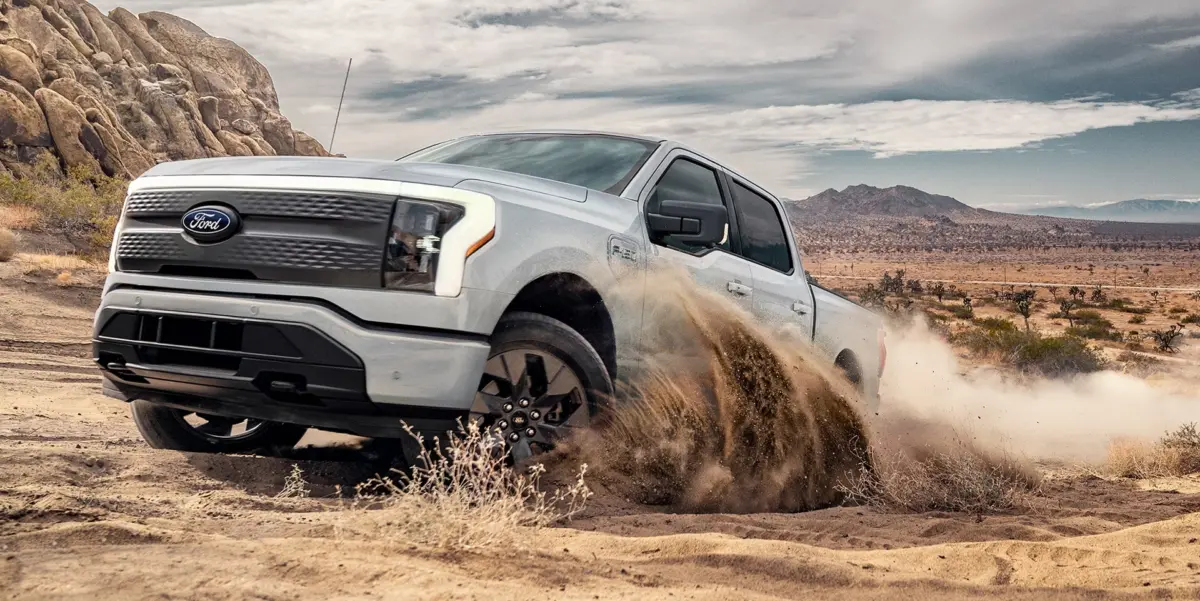
This friction is symbolized by high-profile domestic retreats—such as the scaling back and intermittent pullouts of flagship American electric vehicles like the fully electric Ford F-150 Lightning from certain segments of the U.S. auto market—alongside widespread policy shifts, canceled EV manufacturing projects, and lingering automaker apathy.
In sharp contrast, international markets are charging ahead. China has firmly cemented its status as the epicenter of the electric vehicle (EV) revolution, capturing a staggering 45% battery electric vehicle (BEV) market share by August 2026. Europe, while trailing the Asian powerhouse, maintains a robust 26% BEV market share. Even emerging markets are bypassing traditional automotive milestones: Uruguay has rocketed to an astonishing 50% BEV market share, and nations across South America, Asia, and Africa are rapidly embracing affordable, highly competitive Chinese EV imports.
Meanwhile, the United States languishes at a meager 5.9% BEV market share during the first half of 2026. Heavily insulated by protectionist tariffs and domestic political crosswinds, the U.S. auto industry finds itself effectively walled off from the world’s most innovative and cost-effective electric vehicles. This strategy of isolation raises a sobering, once-unthinkable question: Could the United States—once a pioneer of modern electric mobility—end up dead last in the global transition to vehicle electrification?
Chronology
To understand how the United States arrived at this critical juncture, it is necessary to examine the timeline of the global EV movement and how American momentum diverged from international trends.
- The Early Pioneers (Late 1990s–2010s): The U.S. initially positioned itself as a global leader in electric mobility. General Motors introduced the pioneering EV1 in the late 1990s, followed decades later by commercial game-changers like the Chevy Volt and Chevy Bolt. Concurrently, Tesla emerged in California, proving that high-performance electric vehicles could capture the public imagination. State-level mandates, particularly from California, set the benchmark for zero-emission vehicle policies worldwide.
- The Global Acceleration (2020–2024): As battery technologies matured and manufacturing scaled, China implemented aggressive industrial policies supporting domestic EV startups (such as BYD, Nio, and Leapmotor). Europe quickly followed suit, introducing stringent fleet emission standards that pushed automakers to electrify rapidly. During this period, the global market shifted from niche compliance cars to mass-market consumer desires.
- The Domestic Retrenchment (2025–Early 2026): Faced with slowing early-majority adoption, shifting political landscapes, and high interest rates, traditional American automakers began hitting the brakes. Major EV production lines were scaled back, investments were reallocated toward hybrid powertrains or internal combustion engines, and halo projects—such as Ford’s electric pickup initiatives—faced severe turbulence, leading to restructured production schedules and strategic withdrawals from the domestic market.
- The Current Divide (Mid-to-Late 2026): Recent sales data highlights a widening chasm. By mid-2026, U.S. BEV adoption stagnated at roughly 5.9%. Conversely, international markets experienced explosive growth. By August 2026, China’s BEV market share soared to 45%. Latin American nations like Brazil and Uruguay recorded unprecedented spikes in EV adoption, heavily driven by the influx of competitively priced Chinese imports. Meanwhile, countries historically aligned with U.S. trade norms, such as Canada, began exploring pathways to open their doors to these same global EV models, leaving U.S. protectionist policies increasingly isolated on the world stage.
Supporting Data
A comparative analysis of global electric vehicle adoption rates reveals a profound structural disparity between the United States and international markets. The numbers illustrate a global market moving at warp speed while the American market idles in neutral.

| Region / Country | BEV Market Share (2026 Data) | Primary Growth Drivers |
|---|---|---|
| Uruguay | ~50.0% (August 2026) | Rapid infrastructure rollout, aggressive import diversification, and falling vehicle acquisition costs. |
| China | 45.0% (August 2026) | Hyper-competitive domestic brands, advanced supply chain integration, technological parity/superiority, and government backing. |
| Europe | 26.0% (July 2026) | Stringent corporate average fuel economy (CAFE) standards, urban low-emission zones, and diverse regional manufacturing. |
| Brazil | Rapidly approaching U.S. parity | Influx of affordable Chinese BEVs, rising consumer preference, and expanding charging networks. |
| United States | 5.9% (H1 2026) | Heavy protectionism, high average vehicle price points, rollback of EV investment projects, and infrastructure gaps. |
The data underscores a fundamental reality: the most competitive, feature-rich, and cost-effective electric vehicles are no longer being manufactured by legacy Western automakers. Chinese brands have successfully decoupled BEV production costs from internal combustion engine pricing, making electric cars cheaper to buy and operate than their fossil-fuel counterparts in many regions. By erecting insurmountable tariff walls to protect domestic legacy automakers, the U.S. has insulated its market not just from foreign competition, but from the very economic forces driving global EV affordability.
Official Responses
The widening gap in global electrification has prompted sharp commentary, policy defenses, and strategic reassessments from industry analysts, policymakers, and automotive executives.
Domestically, U.S. policymakers and legacy executives have defended protectionist measures—such as prohibitive tariffs on Chinese-made electric vehicles and components—as necessary safeguards to protect American manufacturing jobs and national security. Proponents of these trade barriers argue that an influx of heavily subsidized foreign EVs could overwhelm domestic industrial capacity and decimate union labor.
However, critics and free-market advocates argue that these policies have acted as a cushion that fosters complacency. Rather than aggressively innovating to close the cost and technology gap, some traditional American automakers have used political lobbying and trade barriers as a shield, scaling back electric vehicle investments when consumer adoption hit early-market speed bumps.
International responses highlight bewilderment at the U.S. trajectory. Automakers and energy analysts in Europe, Asia, and South America point out that developing economies—often cited by U.S. skeptics as places where EVs would never succeed—are actively leapfrogging traditional fossil-fuel infrastructure. African nations and Latin American markets are recognizing that eliminating oil dependency stabilizes local economies against volatile global petroleum prices.
Meanwhile, international trade partners have noted that while the U.S. stalls, other Western-aligned nations, such as Canada, are recalibrating their strategies to avoid missing out on the economic and environmental benefits of next-generation mobility. Even traditionally closed markets like Russia are reportedly embracing competitive Chinese EV models to fill domestic automotive voids, leaving the U.S. in the unusual position of being more protectionist than several of its geopolitical rivals.

Implications
The ramifications of the United States falling behind in the global vehicle electrification race extend far beyond environmental metrics; they threaten the long-term competitiveness of the American automotive industry, national technological leadership, and energy security.
1. Economic Competitiveness and the "Nokia Moment"
When industries fail to adapt to paradigm-shifting technologies due to regulatory insulation, they risk sudden obsolescence—often referred to in business circles as a "Nokia moment." By locking out the world’s most efficient EV manufacturers, U.S. automakers risk cultivating an insulated domestic bubble. Protected from global competitive pressures, American legacy brands may lose the ability to compete internationally. While U.S. companies focus heavily on high-margin, oversized internal combustion engine trucks and SUVs, the rest of the world is mastering affordable, software-defined electric mobility. Once the rest of the global market standardizes around advanced EV architectures, American automakers may find themselves unable to sell vehicles outside their own borders.
2. Energy Security and Macroeconomic Vulnerability
The transition away from internal combustion engines is, at its core, a transition away from oil dependency. Nations that rapidly electrify their light-duty vehicle fleets insulate themselves from geopolitical oil shocks, foreign supply chain disruptions, and currency volatility tied to petroleum imports. By dragging its feet on EV adoption, the United States remains tethered to global oil markets, exposing its economy to the very vulnerabilities that alternative energy technologies are designed to eliminate.
3. Climate and Public Health Costs
Transportation remains one of the largest contributors to greenhouse gas emissions and urban air pollution. Every year the U.S. delays widespread light-duty vehicle electrification results in millions of tons of avoidable carbon emissions and continued public health burdens from particulate matter and smog in densely populated metropolitan areas. While cities in China, Europe, and South America aggressively clean their air through rapid electrification, major U.S. urban centers continue to lag behind.
Conclusion
The trajectory of the global automotive market is clear, irreversible, and accelerating. Electric vehicles have crossed the chasm from niche novelty to dominant global standard. Whether through the lens of economic survival, technological leadership, or environmental stewardship, the current U.S. strategy of protectionism, project cancellations, and market withdrawal is a high-stakes gamble. If current trends persist, the nation that once pioneered the mass-produced automobile risks finishing dead last in the electric century—watching from the sidelines as the rest of the world drives into the future.
