Published: September 29, 2026 Author: Health & Wellness Desk
In the modern corporate ecosystem, the traditional 9-to-5 workday has quietly evolved into an endurance test of physical stillness. For millions of desk-bound professionals, hours spent hunched over glowing screens, participating in endless virtual meetings, and typing out urgent emails have taken a profound toll on the human body. Chronically tight hips, locked lower backs, stiff wrists, and rounded shoulders have become the silent occupational hazards of the digital age.
However, a growing movement in workplace wellness suggests that reclaiming your physical alignment does not require an hour-long trip to the gym, specialized athletic wear, or even a yoga mat. Enter the 3-Minute Standing Yoga for Posture routine—a fast, highly targeted sequence designed by yoga educator Jaffer Hussain to melt away desk tension and reset compressed muscles using only your body, your breath, and a desire to move.
Main Facts: Deconstructing the 3-Minute Posture Flow
Prolonged sitting places constant, static stress on the spine, hip flexors, and posterior chain. Over time, this leads to muscular imbalances, postural degradation, and chronic pain. The 3-minute standing sequence addresses these exact pain points by moving the spine through its primary planes of motion: flexion, extension, lateral side-bending, and rotation.
Unlike complex fitness regimes, this routine is built on accessibility. It requires no equipment, though a simple hand towel or yoga strap can be utilized to assist tight shoulders. Demonstrating the flow, yoga teacher Jaffer Hussain breaks down a precise sequence of accessible yet potent standing postures:
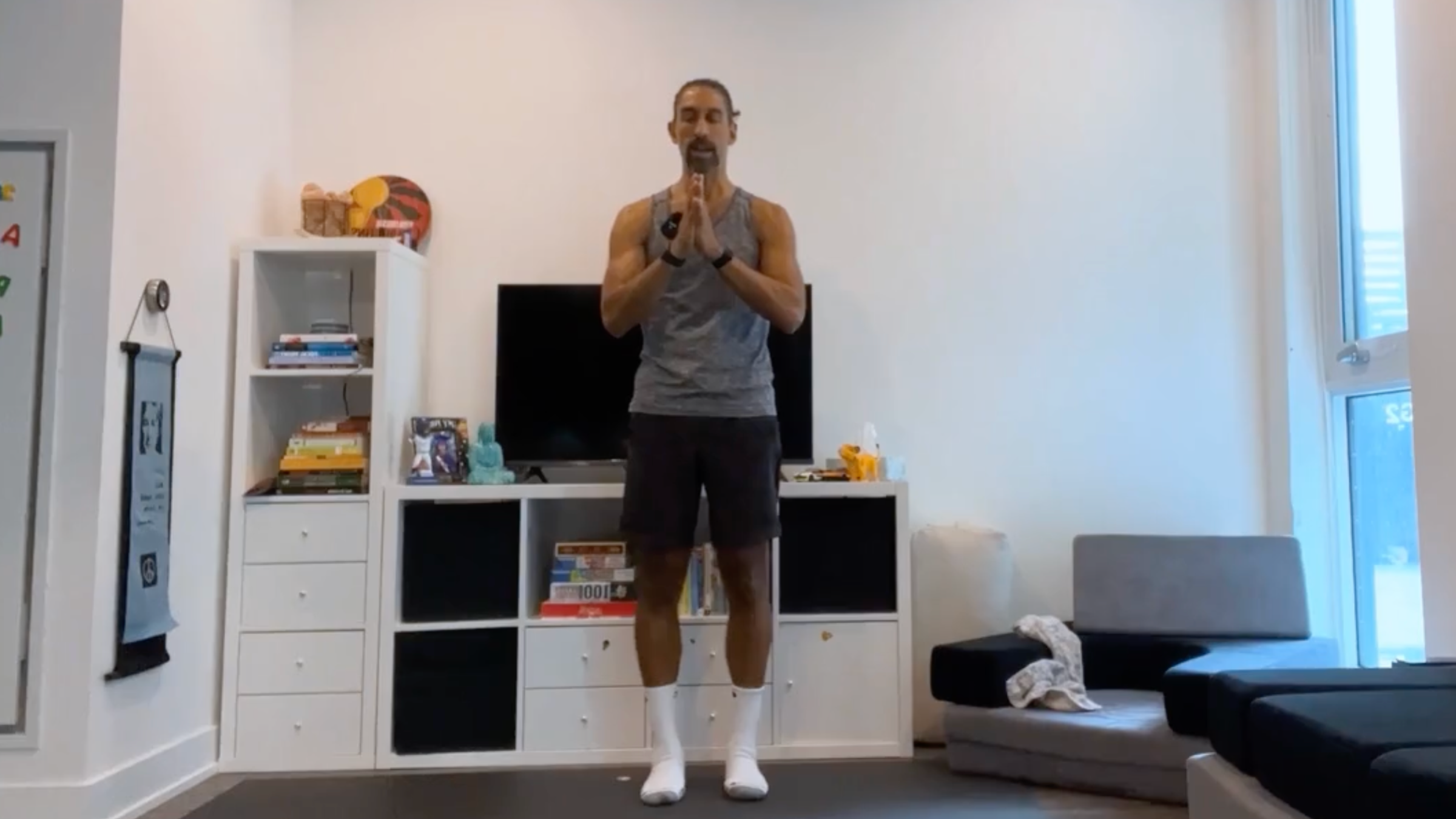
Mountain Pose (Tadasana): The grounding foundation that resets overall body alignment.
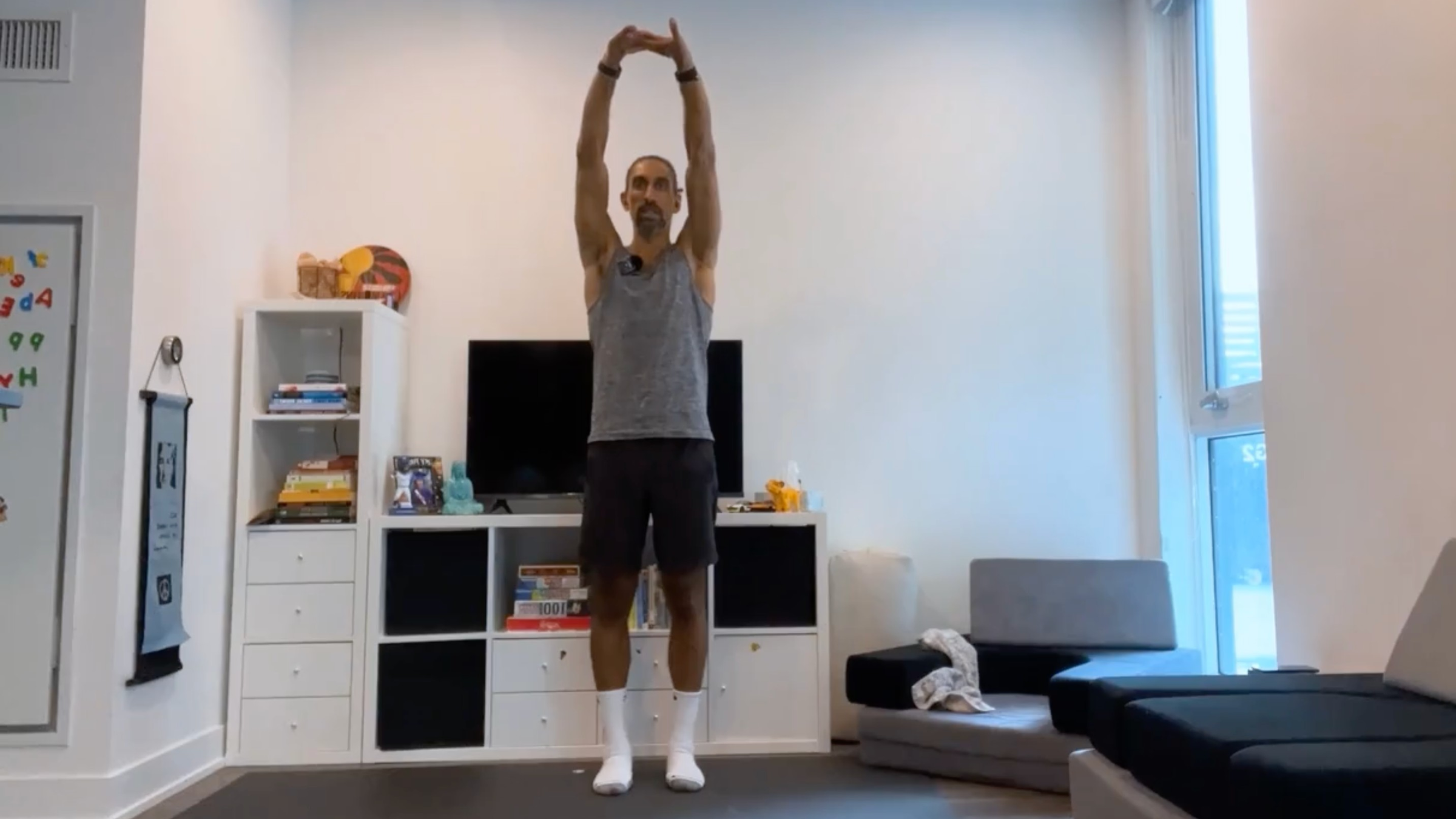
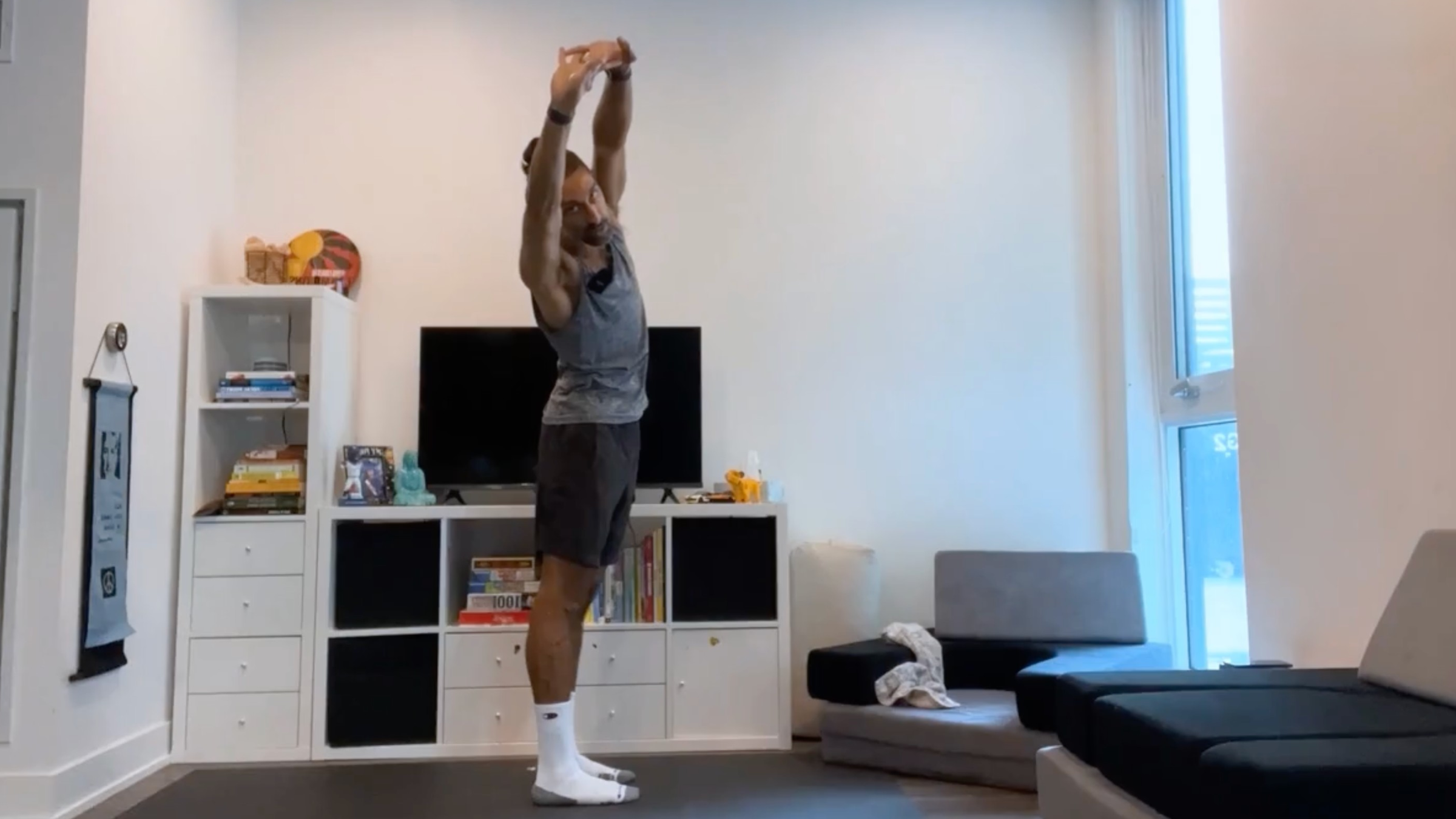
Upward Salute Variation (Urdhva Hastasana): An overhead reach that actively decompresses the spine and opens tight wrists and fingers.
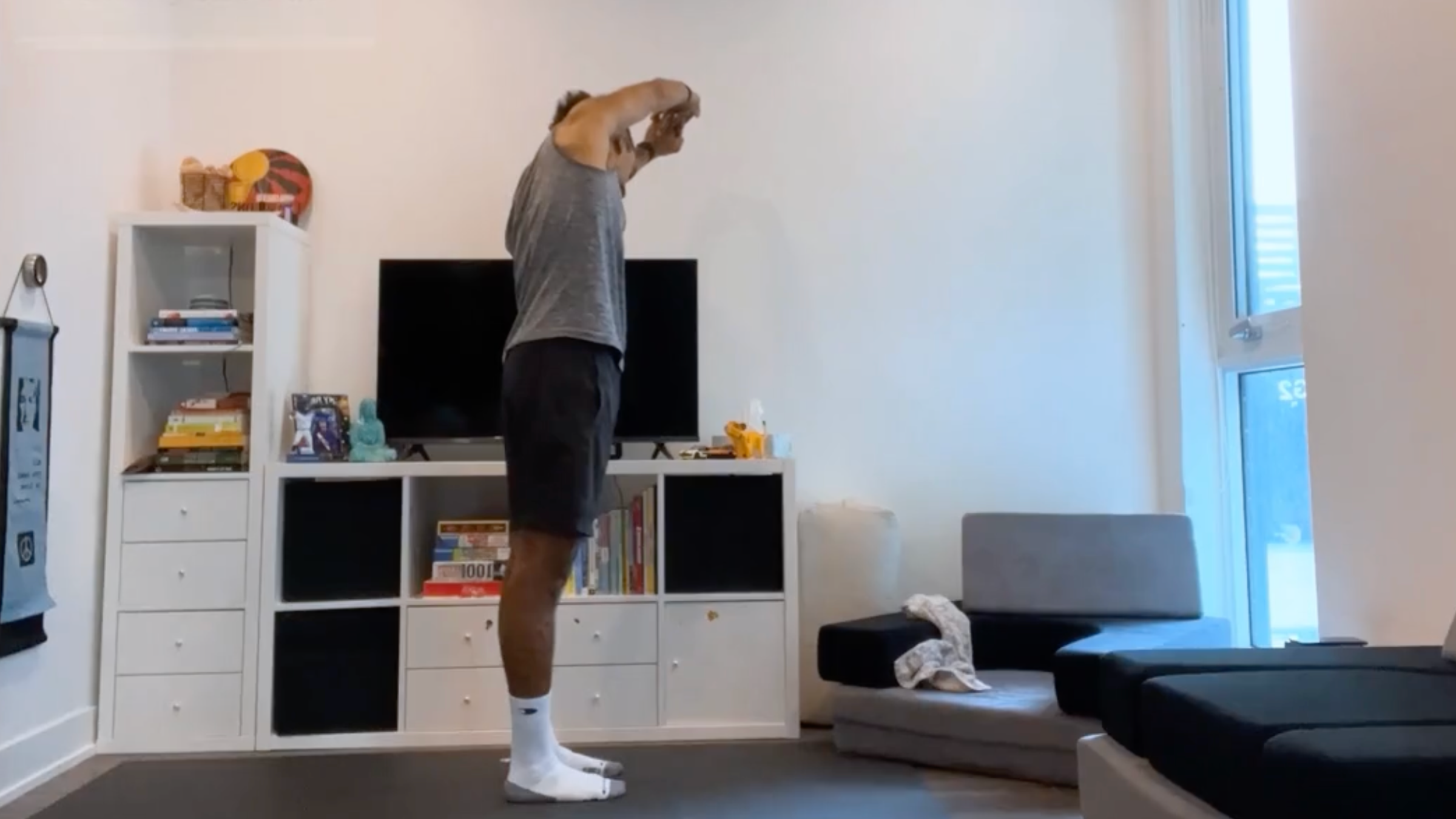
Standing Side Bend: A lateral stretch targeting the obliques, intercostal muscles, and compressed side-body spaces.
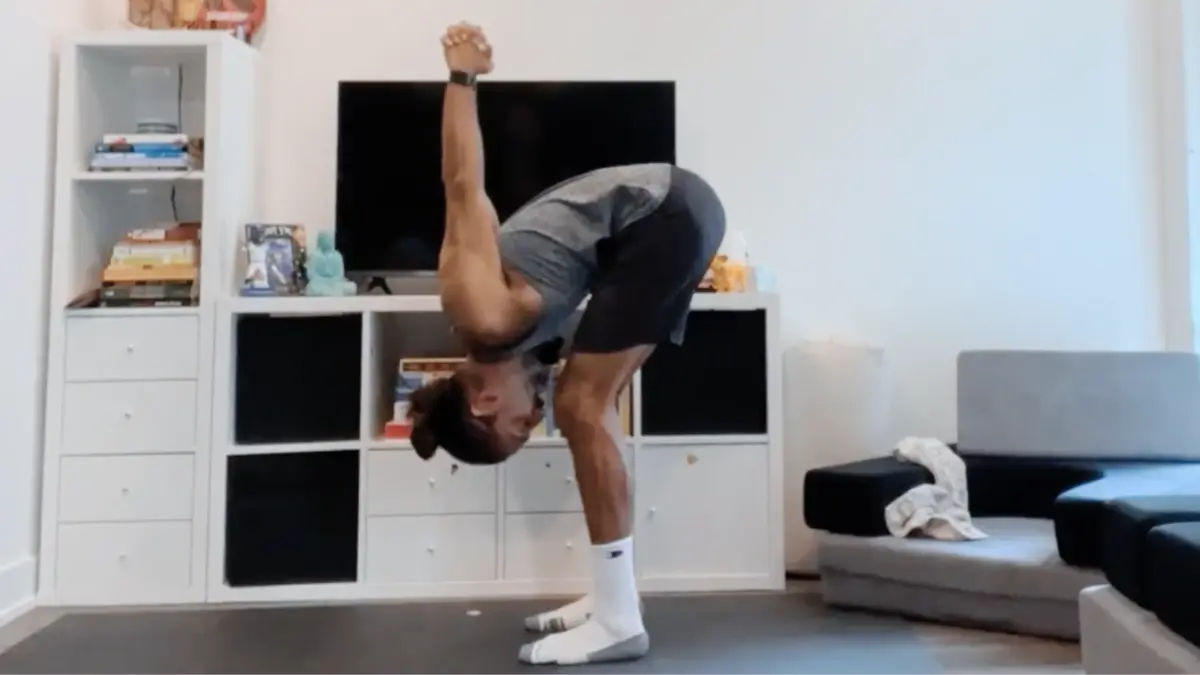
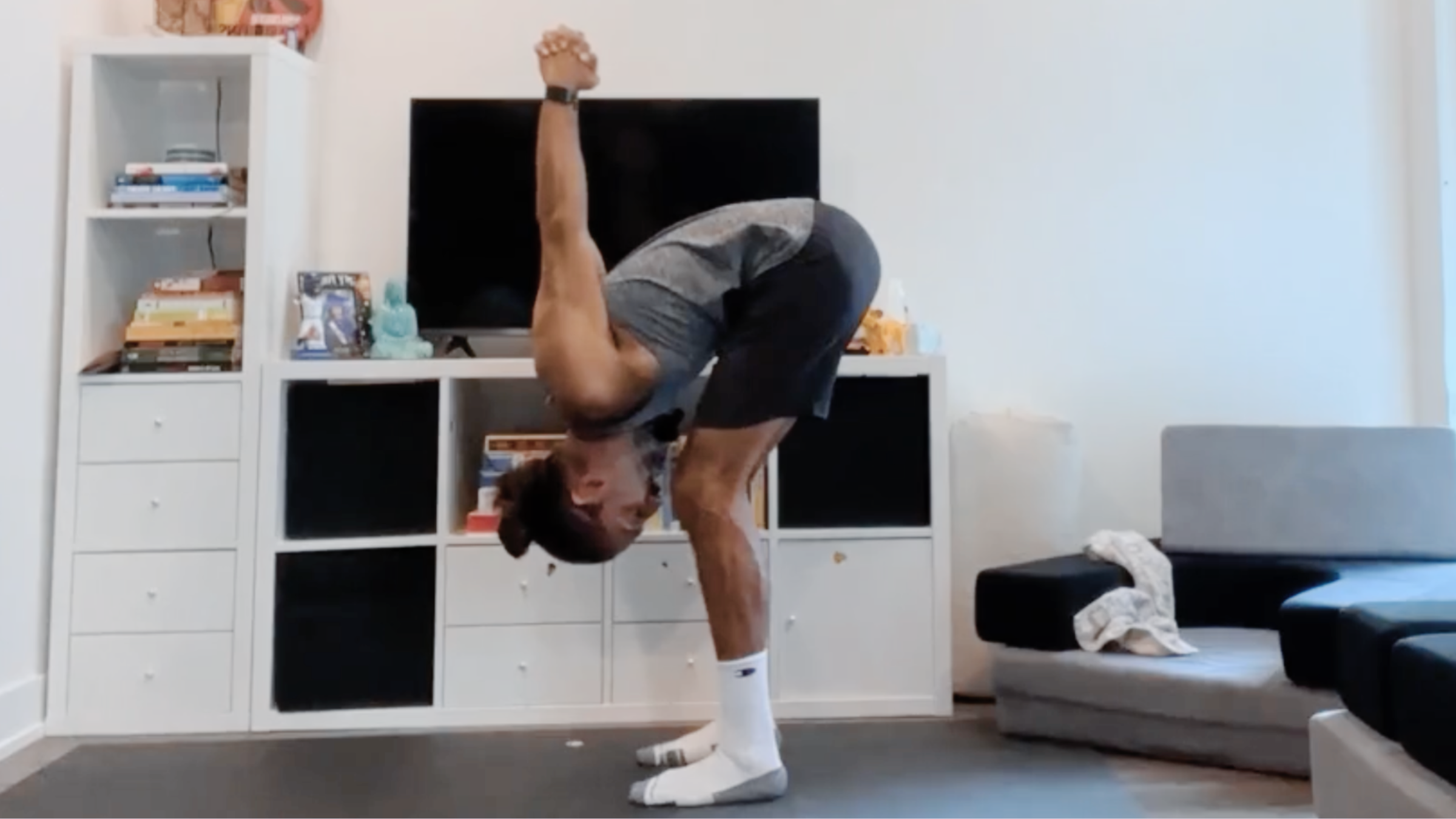
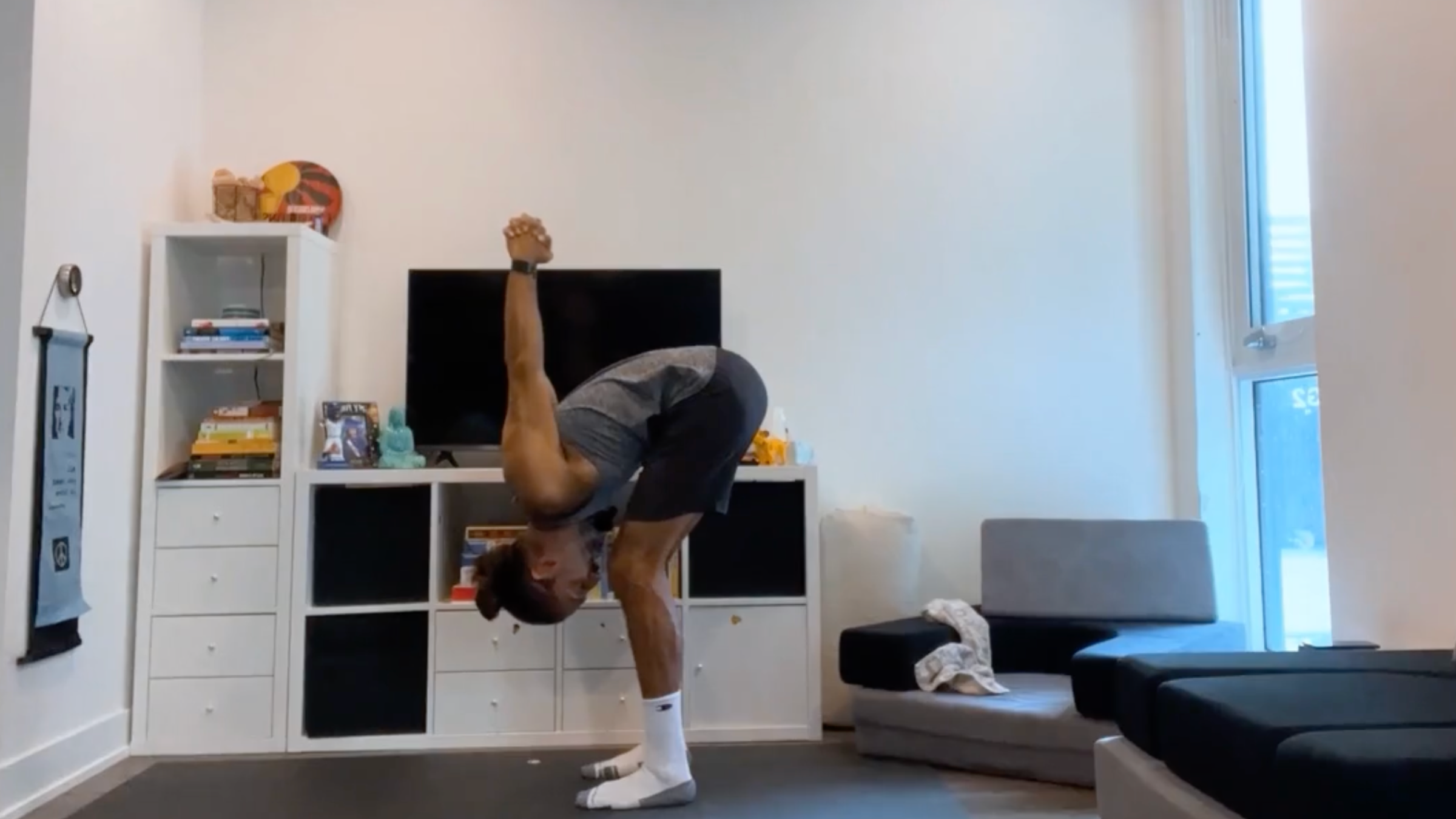
Standing Forward Bend Variation with Shoulder Opener: A powerful antidote to "computer slouch," utilizing a clasp behind the lower back to pull hunched shoulders open.
Halfway Lift (Ardha Uttanasana): A flat-back extension that lengthens the hamstrings and decompresses lumbar vertebrae.
Revolved Standing Forward Bend: A spinal twist that stimulates digestion, releases tension in the lower back, and stretches the outer hips.
Chronology: A Step-by-Step Guide to the 3-Minute Routine
To understand how a mere 180 seconds can effectively counteract eight hours of sitting, one must look at the exact chronological progression of the sequence. Designed to flow seamlessly from one movement to the next, the routine takes the body from a grounded vertical stance into deep extensions and twists, before returning to a state of calm equilibrium.
Phase 1: Grounding and Decompression (Seconds 0–45)
Mountain Pose: Begin by standing tall with your feet firmly planted on the floor. Bring your hands together at your heart center (Anjali Mudra). Take a deep, intentional breath to anchor your awareness in your body.
Upward Salute Variation: From Mountain Pose, interlace your fingers and press your palms forward. Inhale as you sweep your arms overhead, turning your palms upward toward the ceiling. Actively press up through the heels of your hands to stretch out computer-fatigued fingers, carpal-tunnel-prone wrists, and tight shoulders.
Phase 2: Lateral Mobility (Seconds 45–90)
Standing Side Bend (Left and Right): Inhale deeply to lengthen your spine. As you exhale, gently lean your torso to the left, shifting your hips slightly to the right to maintain balance. Direct your gaze down toward your left pinky toe to protect the neck. Hold for two slow cycles of breath.
Inhale back to the center, then exhale as you repeat the side bend to the right side. Return to a neutral center position on your next inhalation, look up briefly to open the chest, and release your arms to your sides on the exhalation.
Phase 3: Counteracting the "Desk Slouch" (Seconds 90–150)
Standing Forward Bend Variation: Interlace your fingers behind your lower back. If your shoulders are exceptionally tight from daily desk work, loop a hand towel or yoga strap between your hands to bridge the gap. Keep a micro-bend in your elbows and gently squeeze your arms toward one another.
Inhale to lift your chest high, creating space across the front of your shoulders. Exhale as you hinge at the hips into a forward fold. Generously bend your knees for comfort—this is not a hamstring flexibility test—and let your bound hands float upward toward the sky, aggressively reversing the forward-rounded posture of the upper back. Stay here for four deep breaths, allowing for intuitive movements or a gentle pedaling of the feet.
Phase 4: Spine Lengthening and Rotational Release (Seconds 150–180)
Halfway Lift: Exhale to release your hands down to rest on your shins. Inhale as you lengthen your spine forward with a flat back, pulling your crown away from your tailbone.
Revolved Standing Forward Bend: Plant your right fingertips firmly on the floor directly beneath your head (or about six inches ahead of your feet). Bend your right knee while keeping your left leg relatively straight. Inhale as you reach your left arm toward the sky, twisting your torso open. Hold for three complete breaths, then exhale back to center and switch sides.
The Final Reset: Return to a Halfway Lift to re-lengthen the spine on an inhalation. Press down through your feet to stand all the way up, sweeping your arms high overhead, and exhale your hands back to your heart center in Mountain Pose.
Supporting Data: The Biological Toll of Sitting and the Science of Movement
To contextualize why a 3-minute movement break is valuable, public health data highlights the sheer volume of sedentary behavior in contemporary society. According to recent occupational health studies, office workers spend an average of 6.5 to 8 hours a day sitting at a desk.
Musculoskeletal Strain: Prolonged sitting causes the hip flexors (psoas muscles) to shorten and tighten, leading to anterior pelvic tilt and lower back pain. Simultaneously, the gluteal muscles become inhibited—a phenomenon sometimes clinically referred to as "dormant butt syndrome."
The Upper Cross Syndrome: Staring at a computer monitor forces the head forward by an average of two to three inches, placing up to 30 pounds of extra leverage stress on the cervical spine. This triggers the upper trapezius and levator scapulae muscles to lock up, resulting in chronic tension headaches and neck stiffness.
Physiological Response to Movement: Research in sports science indicates that even brief, micro-movement breaks lasting 2 to 5 minutes every hour can significantly improve microvascular function, lower blood glucose spikes post-meal, and reset neural signaling to overworked muscle groups. By incorporating spinal extension and thoracic rotation (as seen in the Revolved Standing Forward Bend), the body releases accumulated fascial restrictions, improving overall blood flow and oxygen delivery to the brain.
Official Responses: Ergonomic Experts and Wellness Advocates Weigh In
The introduction of bite-sized, equipment-free movement routines has garnered enthusiastic support from physical therapists, workplace ergonomists, and corporate wellness directors.
Dr. Elena Vance, a specialist in occupational physical therapy and spinal health, emphasizes the psychological and physiological shift that micro-breaks provide:
"We often fall into the trap of thinking that self-care requires a massive time investment—a 60-minute yoga class or an intense workout. But human anatomy doesn’t work that way. The body responds remarkably well to frequent, small inputs of movement. A 3-minute sequence like this acts as a circuit breaker for the nervous system, interrupting chronic postural degradation before it solidifies into chronic pain."
Corporate wellness consultants have also noted an uptick in companies integrating mandatory or encouraged movement intervals into the workday. Marcus Chen, director of workplace culture solutions at WorkWell Global, points out that physical stiffness directly correlates with cognitive fatigue:
"When employees are physically uncomfortable—when their neck is tight, their lower back aches, and their wrists throb—their focus plummets. Providing tools that employees can execute right beside their desks without feeling self-conscious is a game-changer for productivity, employee morale, and long-term injury prevention."
Implications: The Future of Remote and Office Work Culture
As the boundaries between home and office continue to blur in a hybrid work era, the responsibility for maintaining physical health increasingly falls on the individual—yet organizations hold the power to foster healthier environments.
The widespread adoption of routines like the 3-minute standing yoga flow signals a broader cultural shift away from "grind culture" toward sustainable productivity. It challenges the archaic notion that a productive worker is one who remains unmoving and chained to a chair for eight consecutive hours.
Furthermore, the accessibility of these routines democratizes wellness. Because no yoga mat, studio membership, or specialized gear is required, these practices can be performed in a corporate high-rise, a home office, a hotel room during a business trip, or even a cramped airport terminal.
Ultimately, integrating brief moments of intentional movement into the daily routine does more than just relieve a tight hamstring or an aching shoulder. It re-establishes the vital mind-body connection, reminding busy professionals that physical well-being is not a luxury to be saved for the weekend, but an essential, active practice that can be accessed anytime, anywhere—in just three minutes.