

Main Facts: The Enigma of Pamela Colman Smith’s Grave
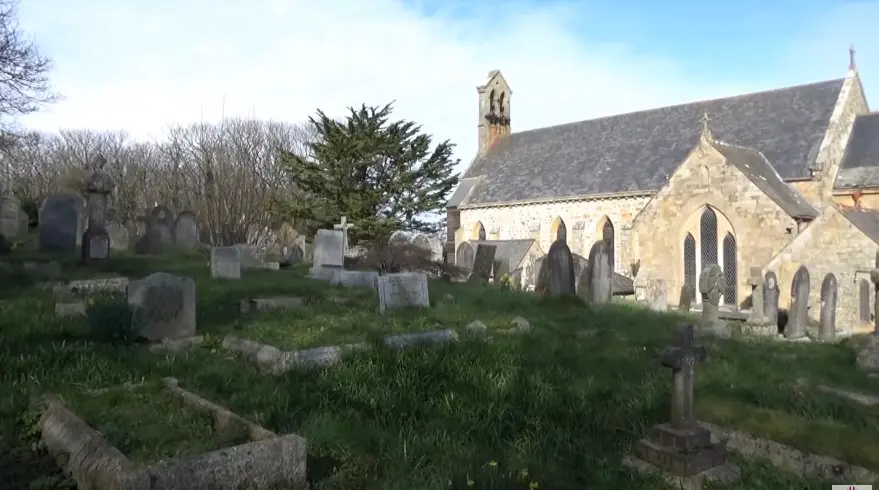
Decades after her passing, the final resting place of one of the most influential artists in the history of esoteric symbolism remains shrouded in mystery, yet researchers are steadily drawing back the veil of time. Pamela Colman Smith—affectionately known to tarot enthusiasts worldwide as "Pixie"—passed away on September 18, 1951. Nearly a week later, on September 25, 1951, her mortal remains were committed to the earth in the churchyard of St. Michael & All Angels Church. The service was conducted by a well-regarded Roman Catholic priest, Father Joseph Henry du Moulin-Browne.
Despite the profound cultural legacy Smith left behind—primarily through her iconic artwork for the Rider-Waite-Smith tarot deck—her physical memorialization faded into obscurity. Her original grave marker, likely a modest wooden cross or perhaps entirely unmarked due to her impoverished circumstances at the end of her life, has long since vanished. Compounding this historical loss, the definitive paper records detailing the exact plot allocations were destroyed in a tragic fire.
Nevertheless, persistent investigative efforts by tarot historians, cross-referenced with surviving parish registers, local topographical analysis, and independent expert validations, have successfully pinpointed the most probable location of her grave. Situated in a serene, windswept corner of the St. Michael & All Angels churchyard, this specific plot offers a poignant poetic justice. It is an idyllic final resting place that overlooks the shoreline and embraces the natural beauty—woodlands, coastal breezes, and birdsong—that Smith cherished so deeply during her mortal years.
Chronology: Tracing the Life, Passing, and Rediscovery of "Pixie"
To understand the journey of Pamela Colman Smith’s final resting place, one must first retrace the timeline of her remarkable yet often tumultuous life and the subsequent decades of historical oversight.
1878–1951: A Life in Art and Esotericism
- 1878: Pamela Colman Smith is born in London to American parents, spending her formative years moving between London, Jamaica, and New York. Her exposure to diverse cultures profoundly influences her distinct artistic style, which leans heavily into symbolism, folklore, and impressionism.
- Early 1900s: Smith becomes deeply embedded in the London artistic and occult communities. She joins the Hermetic Order of the Golden Dawn, where she meets Arthur Edward Waite.
- 1909: Commissioned by Waite, Smith creates the revolutionary 78-card tarot deck published by Rider & Son. Eschewing the purely abstract or strictly pip-based designs of earlier decks, Smith populates the minor arcana with rich, narrative illustrations that breathe psychological and emotional life into cartomancy. This deck eventually becomes the undisputed global standard for tarot reading.
- September 18, 1951: Smith passes away at her home in Cornwall, largely forgotten by the mainstream art world and living in relative financial destitution.
- September 25, 1951: Father Joseph Henry du Moulin-Browne presides over her burial at St. Michael & All Angels Churchyard.
The Posthumous Erasure and Investigation
- The 20th Century (Post-1951): As decades pass, the transient nature of early 1950s burials—particularly for individuals without extensive familial wealth or immediate descendants to maintain monuments—takes its toll. Smith’s grave marker deteriorates or is removed.
- The Parish Fire: During subsequent renovation work on the church, a fire breaks out in a builders’ hut where crucial parish records are temporarily stored. The official map and log of burial plots from the mid-20th century are incinerated, seemingly erasing the documentary evidence of Smith’s exact location.
- Modern Era (2015–Present): Driven by renewed scholarly interest in the origins of modern tarot, researchers—including Marcus Katz, Tali Goodwin, and representatives of the Tarot Association—embark on rigorous archival and site-based investigations to locate Smith’s grave, culminating in recent site visits, video documentation, and independent historical verifications.
Supporting Data: Methodology and Evidence in Locating the Plot
In the absence of direct documentary proof due to the builders’ hut fire, researchers had to rely on circumstantial, structural, and forensic historical methodologies to isolate Smith’s probable plot within the St. Michael & All Angels Churchyard.
1. Chronological Burial Sequencing
A critical breakthrough in the investigation came from analyzing the architectural and spatial layout of the graveyard itself. Careful mapping revealed that the overwhelming majority of plots within the entire St. Michael & All Angels churchyard were arranged in strict chronological order. Graves from the late 1940s flow sequentially into the early 1950s, moving systematically across the landscape.
2. Parish Register Cross-Referencing
By extracting the exact date of Smith’s burial—September 25, 1951—from surviving, undamaged parish registers, researchers could match this date against the surviving markers in the graveyard. This pointed directly to a specific quadrant in the far corner to one side of the church.
3. Physical Inspection and Surrounding Markers
Upon visiting the site, researchers identified a cluster of three marked graves bearing dates from 1950 and 1951. Immediately adjacent to these dated markers lay at least three unmarked plots that fit the exact chronological window of late September 1951.
4. Independent Historical Validation
The hypothesis formed during the initial site visit was not left to subjective interpretation. The following day, the findings were submitted to a local historian who had extensively researched the churchyard’s history and layout thirty years prior. Operating independently, the local historian reviewed the spatial data, the chronological sequencing, and the surviving registers, and independently validated the conclusion: this remote corner is, beyond any reasonable historical doubt, the ground that received Pamela Colman Smith fifty years ago.
Official Responses and Expert Insights
The rediscovery and contextualization of Smith’s final resting place have elicited profound emotional and intellectual responses from the international tarot community and dedicated researchers.
During the recent site visit—captured on video for posterity—researchers noted a striking moment of synchronicity. Just as the camera focused on the suspected resting place, the bells of St. Michael & All Angels Church began to ring out across the landscape. Observers on site described the pealing bells as feeling remarkably like a benevolent message or a spiritual benediction, offering a sense of peace and well-being for an artist who spent much of her life under-appreciated.
Scholarly discourse has likewise expanded to honor her memory. In the seminal publication Secrets of the Waite-Smith Tarot (Llewellyn, 2015), authors Marcus Katz and Tali Goodwin shed unprecedented light on the collaborative dynamic between Pamela Colman Smith and Arthur Edward Waite. The book introduced groundbreaking photographs, historical letters, and factual corrections that elevated Smith from a mere footnote in occult history to her rightful status as co-creator of the world’s most popular tarot deck.
Furthermore, the Tarot Association has integrated these latest findings into its ongoing educational framework. Under the exclusive member-only portal, a dedicated feature titled "The Kiss of the Sun for Pardon: A Memory of Pamela Colman Smith" provides members with expanded photographic archives, newly uncovered biographical details, and comprehensive breakdowns of the site investigation at St. Michael & All Angels.
Implications: Preserving the Legacy of an Unsung Icon
The efforts to definitively locate, document, and honor the final resting place of Pamela Colman Smith carry profound implications for the broader study of esoteric history, art history, and cultural preservation.
For decades, the narrative surrounding the Rider-Waite-Smith deck disproportionately elevated Arthur Edward Waite while casting Smith into relative obscurity—a common historical trajectory for female artists and creators working within male-dominated occult societies of the early 20th century. By actively investigating her life’s end, preserving her memory, and mapping her final earthly coordinates, modern historians are engaging in an act of historical restitution.
This rigorous investigative work proves that archival gaps, such as accidental fires and missing markers, can be overcome through meticulous cross-disciplinary research combining archaeology, local oral histories, spatial analysis, and genealogical records. It transforms an anonymous patch of earth into a place of pilgrimage for artists, writers, tarot practitioners, and historians from across the globe.
Ultimately, understanding where Pamela Colman Smith rests allows the modern world to connect more deeply with the human being behind the brush. It reminds us that the enduring archetypes of the tarot—images that continue to guide, heal, and inspire millions of people today—were forged by a flesh-and-blood woman who loved the sound of the birds, the crashing of the shoreline, and the quiet beauty of the English countryside. Through ongoing research, open-access education, and dedicated preservation, the legacy of "Pixie" Smith continues to shine brighter than ever, ensuring that her contributions will never be lost to the ashes of time again.
