

Published: September 24, 2026
From the Yoga Journal Archives (Originally published November–December 2000)
Main Facts: The Intersection of Seasonality and Asana
As the Northern Hemisphere transitions into the deep, quiet months of late autumn and winter, the natural world undergoes a profound shift. The frantic pace of growth yields to a period of dormancy, inviting both nature and human beings toward an extended phase of inner stillness. Beneath the external bustle of the holiday season, the Earth prepares for a long, restorative pause before the eventual rebirth of spring.
This seasonal turning point naturally evokes introspection. It prompts universal questions: What has transpired over the past year? Where are we headed? What remains undone?
Within the ancient traditions of yoga, this practice of deliberate self-reflection is known as svadhyaya. Composed of sva (meaning “self”) and adhyaya (meaning “study”), svadhyaya is one of the foundational ethical disciplines (niyamas) outlined in Patanjali’s Yoga Sutra. Traditionally, it encompasses both the study of sacred philosophical texts and the refined cultivation of self-observation.
In a modern physical practice, svadhyaya translates into paying close attention to moment-to-moment changes in both body and mind. Practitioners learn to ask: How does the physical body feel today? Is the mind genuinely present, or drifting? What thoughts pull awareness away?
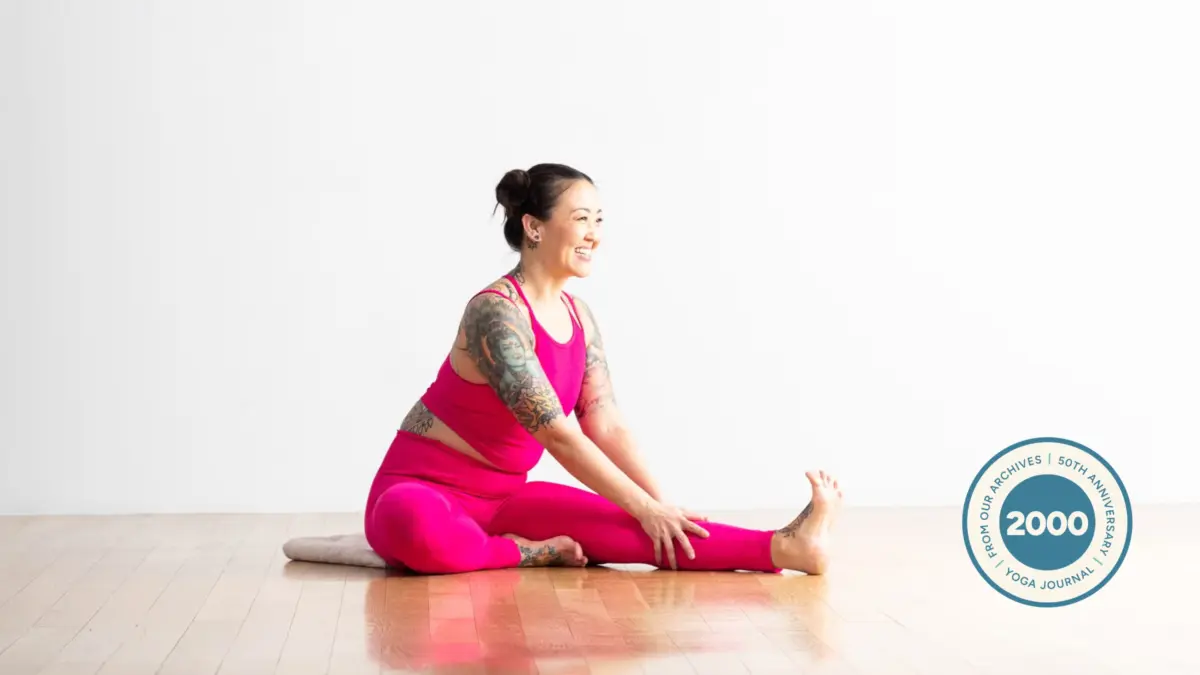
To explore this concept practically as the year draws to a close, instructors and practitioners often turn to Janu Sirsasana (pronounced JAH-noo sheer-SHASH-annah, or the Head-to-Knee Forward Bend). This subtle, asymmetrical twisting forward fold bridges the gap between physical alignment and deep internal quiet, cultivating balance, introspection, and connectedness precisely when humans crave it most.
Chronology: Tracing the Evolution of Svadhyaya and Alignment
Historical Roots in the Yoga Tradition
- Antiquity: The philosophical underpinnings of svadhyaya were formalized centuries ago in classical texts like Patanjali’s Yoga Sutra, establishing self-study as an indispensable tool for spiritual unification (yoga).
- The Late 20th Century: As yoga gained widespread popularity in the West throughout the 1970s, 1980s, and 1990s, master teachers began translating traditional philosophical concepts into accessible, alignment-focused asana practices.
- November–December 2000: Yoga Journal originally published a landmark archive piece detailing how to approach Janu Sirsasana not merely as a hamstring stretch, but as a moving meditation in self-study.
- September 2026: Recognizing the timeless relevance of seasonal introspection, Yoga Journal resurfaced these foundational teachings in its ongoing digital archive series, bridging classical wisdom with contemporary wellness practices.
Supporting Data: Understanding the Mechanics of Janu Sirsasana
Mastering Janu Sirsasana requires a delicate balance of mobility, stability, and biomechanical awareness. Because the posture combines a deep hip opening, an asymmetrical seat, a spinal twist, and a forward fold, it offers a rich landscape for anatomical observation.
Key Anatomical Focus Areas
- The Pelvic Foundation: Elevating the hips slightly using a folded yoga blanket or flat pillow allows the pelvis to tilt forward naturally, preventing the lower back from rounding prematurely.
- The Bent-Leg Anchor: Drawing the right knee back by actively engaging the outer hip establishes a stable base, preventing the torso from collapsing awkwardly over the extended leg.
- The Active Extension: Flexing the straight leg (the left leg) and pressing through the ball of the foot—simulating stepping on a gas pedal while keeping toes drawn back—activates both the anterior and posterior chains of the lower limb.
- The Spinal Axis: Utilizing a yoga strap around the ball of the foot enables practitioners to maintain length through the front, back, and sides of the torso, keeping the heart open rather than caving inward.
| Postural Component | Common Misalignment | Corrective Action via Svadhyaya |
|---|---|---|
| Pelvis | Tipping backward, slouching | Sit on a blanket; root sitting bones evenly into the earth. |
| Straight Leg | Passive ankle, sleepy hamstrings | Flex the foot, press the back of the knee down, and spread the toes. |
| Torso | Hunched spine, collapsed chest | Use a strap to lengthen the spine; draw shoulder blades down toward the heart. |
| Twist | Forcing the fold without alignment | Inhale to lengthen the spine out of the pelvis; exhale to gently twist toward the extended leg. |
Official Perspectives: Bridging Ashtanga and Iyengar Methodologies
When exploring a posture as nuanced as Janu Sirsasana, teachers often draw from contrasting yoga lineages to optimize safety and alignment.
Historically, purists trained in the Ashtanga-vinyasa system rely on minimal external support, emphasizing internal energetic locks (bandhas), breath (ujjayi), and continuous movement. In this tradition, props are rarely utilized, encouraging practitioners to build raw, functional strength and flexibility through repetition and heat.
Conversely, the Iyengar approach pioneered the strategic use of props—such as blankets, blocks, and straps—to help students of all body types find structural integrity, anatomical precision, and safety within a form.
In the modern practice of Janu Sirsasana, contemporary instructors frequently blend these philosophies. They use props like a blanket to elevate the pelvis and a belt to safeguard the lower back, while simultaneously retaining the internal focus, breath synchronization, and dynamic engagement characteristic of Ashtanga. This hybrid perspective ensures that students honor their unique anatomical edges without risking strain or injury.
Implications: Translating the Mat Experience to Daily Life
The true value of practicing Janu Sirsasana through the lens of svadhyaya extends far beyond physical flexibility. When a practitioner sits on their mat, engages their legs, honors bodily asymmetry, and folds forward with mindful breath, they are engaging in a micro-study of how they respond to challenge, restriction, and stillness.
1. Emotional and Psychological Awareness
As the posture encourages the body inward, it naturally brings hidden mental and emotional tones to the surface. When folding forward, a practitioner might notice tightness, impatience, or frustration. By observing these reactions without judgment, individuals practice emotional regulation. Much like the sage Ramana Maharshi, who found profound realization through meditating on the fundamental question "Who am I?", quiet introspection on the yoga mat trains the mind to look past superficial discomfort and touch a deeper sense of internal truth.
2. Navigating Seasonal Transitions
Aligning physical routines with the rhythms of the natural world offers a vital counterbalance to modern over-stimulation. By deliberately slowing down during the late-year transition, individuals can process the emotional and mental weight of the closing months. Janu Sirsasana serves as a physical manifestation of this seasonal transition: an intentional turning inward, a shedding of unnecessary tension, and a quiet preparation for what is yet to come.
Ultimately, whether approached with the precision of a prop-assisted alignment or the flowing heat of a traditional vinyasa, the practice remains a powerful vehicle for self-discovery—proving that the deepest journey in yoga is always the one taken within.
