

HANNOVER, Germany — In a move that has sent ripples of anxiety through Europe’s legacy automotive boardrooms, Chinese electric vehicle giant BYD has launched a fierce offensive into the continent’s lucrative heavy-duty commercial transport sector. Unveiled at the biennial IAA Transportation show in Hannover, Germany, BYD’s showcase was headlined by the ETT 44—a formidable 44-metric-ton electric tractor—paired with an ultra-fast commercial megawatt charging architecture designed to challenge established European truck manufacturers directly on their home turf.
While BYD has spent the past decade establishing a dominant global footprint in passenger electric vehicles and municipal transit buses, its latest Hannover debut signals a strategic escalation. The automaker is no longer content with capturing last-mile courier vans or urban municipal fleets; it is diving headfirst into the heavy end of regional and long-haul logistics.
Main Facts: The BYD ETT 44 and Megawatt Ecosystem
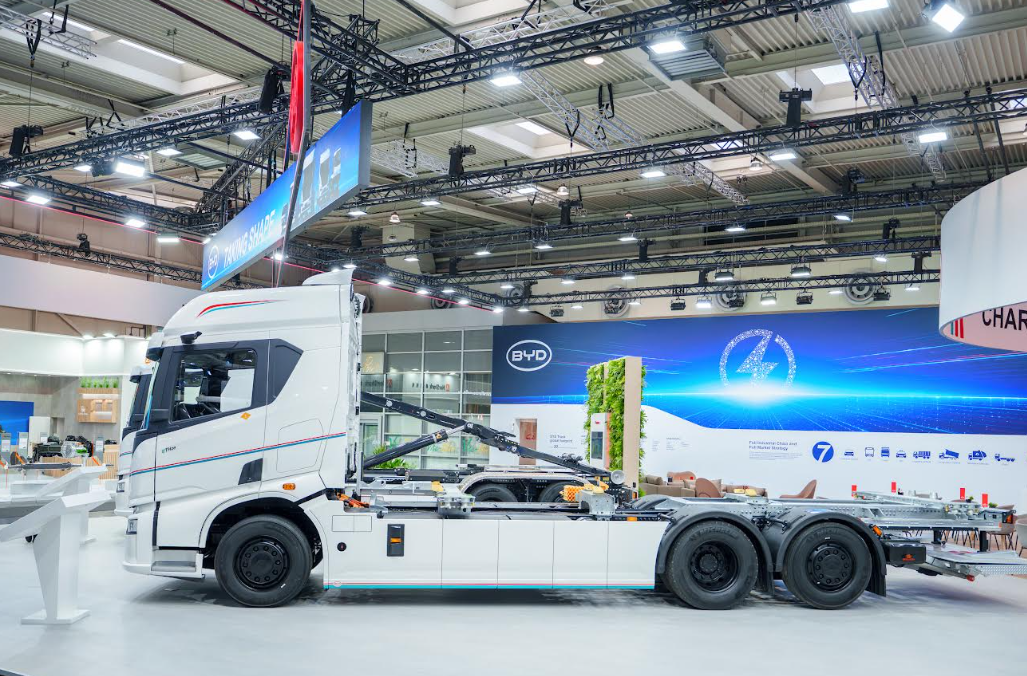
At the absolute center of BYD’s European commercial expansion is the BYD ETT 44, a purpose-built 4×2 heavy-duty electric semi-truck engineered to meet the grueling demands of continental freight corridors.
Key technical specifications of the ETT 44 include:
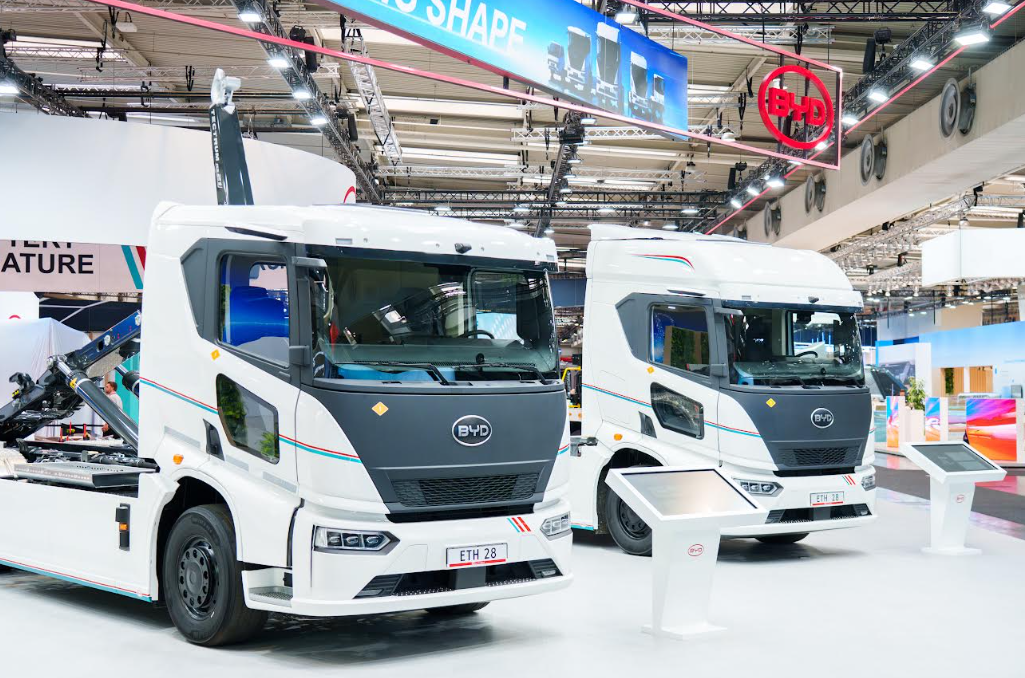
- Gross Combination Weight (GCW): 44 metric tons, aligning with standard maximum limits for heavy European freight transport.
- Powertrain Performance: Up to 1,000 metric horsepower, offering immense torque and climbing capability suited for alpine routes and heavily loaded highway operations.
- Battery Technology: A massive 651-kilowatt-hour lithium iron phosphate (LFP) Blade Battery pack integrated directly into the chassis.
- Operating Range: Up to 372 miles (approx. 600 kilometers) on a single charge under optimal highway conditions.
- Charging Infrastructure: Supported by a proprietary commercial flash-charging architecture capable of pulling up to 1.5 megawatts of direct-current (DC) power.
- Recharge Times: The system can replenish the massive battery pack from 20% to 80% capacity in approximately 20 minutes, injecting roughly 248 miles of highway range back into the vehicle.
Beyond the flagship long-haul tractor, BYD expanded its European medium- and heavy-duty portfolio with two new rigid models shown in 4×2 and 6×2 configurations. These additions include a 26-metric-ton swap-body carrier and a vocational hooklift unit. Consequently, BYD now markets a comprehensive commercial zero-emission lineup spanning from 3.5 metric tons in the urban distribution sector up to 44 metric tons in regional and long-distance transport.
Chronology of an Aggressive European Expansion
BYD’s arrival as a heavy-duty contender in Europe has been carefully orchestrated over several years, marked by a steady progression from niche transit applications to mainstream commercial dominance:
- Early 2010s: BYD initiates its European footprint quietly, focusing primarily on electric municipal transit buses and localized airport shuttle fleets in partnership with regional municipalities.
- Late 2010s to 2020s: The company accelerates its passenger vehicle (PV) rollout, establishing dealer networks in key European markets like Norway, Germany, Sweden, and the UK, proving its manufacturing scale and consumer appeal.
- Mid-2020s: Capitalizing on its massive internal battery production infrastructure, BYD pivots toward commercial transport. The company tests various heavy-duty platforms in select global markets while quietly tailoring its chassis and software architectures to comply with stringent European regulatory frameworks.
- IAA Transportation (Hannover): BYD officially pulls the curtain back on the ETT 44 and its 1.5-megawatt flash-charging ecosystem, signaling the official commencement of its commercial assault on Europe’s freight highways.
Supporting Data & Regulatory Pressures
BYD’s rollout arrives at a critical financial and regulatory juncture for the European road freight sector, which is wrestling with tightening carbon dioxide reduction mandates enforced by the European Union.
The Regulatory Squeeze
Under current continental regulations, commercial vehicle manufacturers face aggressive fleet-wide emissions reduction targets:
- 2030 Mandate: A 45% reduction in CO2 emissions from heavy commercial vehicles compared to baseline figures.
- 2040 Mandate: A staggering 90% reduction, effectively forcing the phase-out of traditional internal combustion diesel freight trucks.
These binding rules have compelled legacy European brands—including Daimler Truck, Volvo Group, Scania, and Traton’s MAN—to invest billions of euros into developing their own battery-electric and hydrogen-fuel-cell architectures. Models like the Mercedes-Benz eActros 600 and the Volvo FH Electric have slowly begun trickling onto European motorways.
The Adoption Hurdle
Despite regulatory pressures, fleet operators across Europe have been slow to embrace zero-emission trucks at scale. Two primary friction points have hindered mass adoption:
- High Purchase Premiums: Heavy-duty electric trucks remain significantly more expensive upfront than their diesel equivalents.
- Underdeveloped Public Infrastructure: A glaring lack of high-capacity megawatt charging stations along trans-European transport corridors creates severe range anxiety for long-haul operators.
BYD is attempting to systematically neutralize these hesitations through ruthless vertical integration, aggressive warranty backing, and a holistic energy ecosystem model.
While base warranties for heavy trucks in Europe typically span two to three years—with battery coverage capped at six to eight years unless haulers purchase expensive secondary service plans—BYD is offering the ETT 44’s battery with a standard 10-year or 1.2-million-kilometer warranty.
Official Responses and Industry Perspectives
At the Hannover fairgrounds, BYD executives framed the company’s commercial vehicle push not merely as a hardware play, but as part of a much larger, closed-loop energy strategy.
Stella Li, Executive Vice President of BYD, addressed attendees during the company’s high-profile presentation, emphasizing the synergy between the company’s passenger vehicle innovations and its heavy-duty ambitions:
"We have already put FLASH Charging into practice in passenger vehicles. Today, we are bringing this technology to commercial vehicles, starting with our trucks," Li said. "With 1.5 megawatts of charging power, it can charge from 20 percent to 80 percent in about 20 minutes, delivering up to 248 miles of range. Less time charging. More time on the road."
Li went a step further, explaining that BYD intends to sell freight haulers not simply as standalone tractors, but as components within a broader, proprietary logistics energy network. This ecosystem spans on-site solar generation, stationary battery storage, dynamic energy pricing management, and customized fleet financing.

"From batteries and solar power to energy storage, FLASH Charging and commercial vehicles, we provide a one-stop solution for sustainable commercial transport," Li added.
Industry analysts at the event noted that while European manufacturers boast impressive engineering legacies, BYD’s complete vertical integration—giving it total control over its battery cell, semiconductor, and powertrain production—yields an unbeatable pricing and scale advantage. This structural reality has visibly unsettled legacy automotive executives who rely heavily on complex, multi-tiered tier-one supply chains.
Strategic Implications for the Global Freight Market
BYD’s debut in Hannover carries profound implications for the geopolitical and economic landscape of the global automotive industry:
1. Disrupting the Eurocentric Status Quo
For decades, the European heavy commercial vehicle market has operated as a closed loop dominated by domestic heavyweights. BYD’s ETT 44 shatters this dynamic, proving that Chinese automakers can engineer heavy-duty trucks that match or exceed European standards in payload capacity, range, and charging speed.

2. Navigating Trade Tensions and Tariffs
Trade frictions between Brussels and Beijing over electric vehicle subsidies have introduced a layer of complexity to BYD’s commercial expansion. While the European Commission’s protectionist measures have thus far focused heavily on passenger cars, Chinese commercial vehicle manufacturers are preemptively hedging their bets. Many are accelerating plans to anchor local assembly operations, distribution agreements, and technical partnerships directly inside Europe to insulate their supply chains against future regulatory barriers.
3. Redefining Fleet Economics
By backing its LFP Blade Batteries with an unprecedented 1.2-million-kilometer warranty, BYD is effectively rewriting the depreciation models of commercial freight. Combined with 1.5-megawatt charging speeds that mimic the quick turnaround times of diesel refueling, BYD is stripping away the operational excuses that fleet managers have traditionally used to delay electric fleet transitions.
As the smoke clears at the Hannover fairgrounds, one reality remains glaringly obvious: the race to decarbonize European freight has entered a new, highly competitive phase, and the reigning champions of European trucking now face a formidable challenger from the East.
