

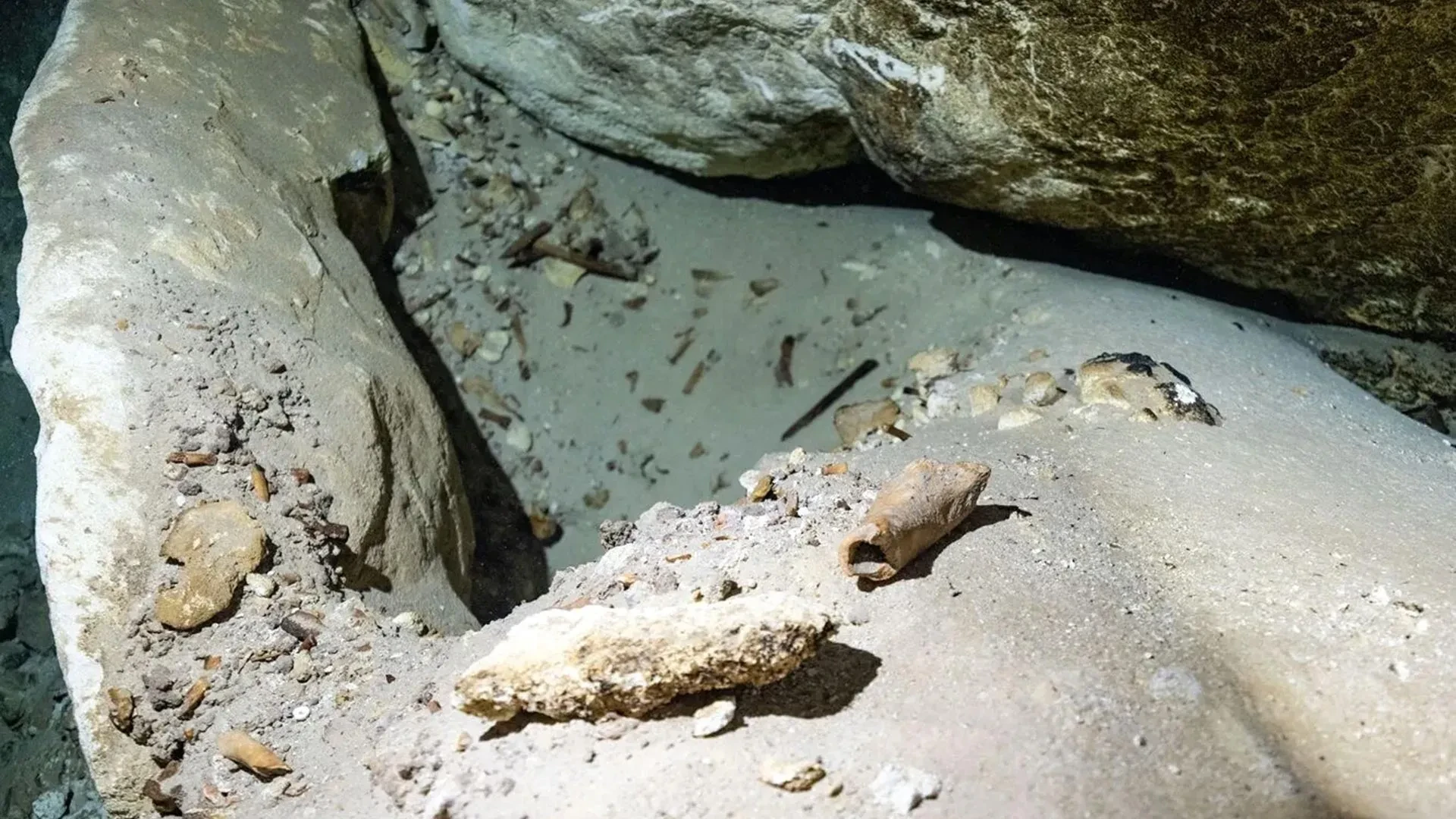
ADELAIDE, AUSTRALIA — Deep beneath the sun-baked limestone plains of South Australia lie subterranean labyrinths of flooded passages, crystal-clear sinkholes, and pitch-black caverns. For decades, these treacherous underwater vaults have yielded some of the most startling paleontological discoveries in the Southern Hemisphere: the pristine, remarkably preserved skeletal remains of long-extinct megafauna alongside modern animal carcasses.
Until now, however, these underwater graveyards have kept their deepest secrets. While scientists recognized that submerged caves could act as exceptional time capsules, they lacked a reliable, standardized methodology to decode the complex life cycle of these bones—how they arrived in the depths, how they interacted with their subterranean environments over millennia, and how to accurately distinguish between ancient fossils and more recent remains.
That analytical barrier has finally been broken. A groundbreaking study led by researchers at Griffith University has established the world’s first comprehensive framework for reading the environmental and taphonomic "fingerprints" left on bones preserved in underwater caves. Published in the peer-reviewed journal PLOS One under the title "Neotaphonomic characteristics of vertebrate site formation in underwater caves," the research promises to reshape how archaeologists and paleontologists reconstruct ancient ecosystems across the globe.
Main Facts: A New Scientific Lens for Submerged Skeletons
At its core, the Griffith University-led study provides a rigorous manual for interpreting the physical, chemical, and biological alterations that occur when vertebrate remains are deposited in flooded subterranean environments.
Led by Meg Walker, a PhD candidate at the Australian Research Centre for Human Evolution (ARCHE) under the supervision of ARCHE Director Professor Julien Louys, the research team conducted a meticulous, multi-scale analysis of animal bones recovered from two distinct underwater cave systems near Mount Gambier in South Australia: Green Waterhole and Gouldens Sinkhole.
The investigation departed from traditional methodologies by examining remains through a wide spectrum of analytical lenses—ranging from macroscopic spatial distributions and surface bone modifications down to microscopic elemental compositions and ancient proteins trapped within cellular structures.
The findings upend several long-held assumptions about bone preservation. While scientists previously understood that water could preserve organic material by cutting off oxygen and scavenging predators, this new study reveals that underwater caves impart hyper-specific biological and chemical signatures. These signatures are dictated largely by proximity to light, water chemistry, and the microscopic organisms inhabiting specific zones of the cave system.
By mapping these variables against a rigorously dated timeline, the research team has created a vital bridge between modern deposition processes and the ancient, often mysterious fossil beds of extinct Australian megafauna—such as giant short-faced kangaroos, marsupial lions (Thylacoleo carnifex), and lumbering wombats the size of rhinoceroses (Diprotodon).
Chronology: From European Settlement to the Depths of South Australia
To understand how ancient fossils behave in submerged environments, the research team had to study more recent history. The chronology of the project spans from the mid-19th century colonial expansion of South Australia up to modern scientific diving expeditions.
The 1840s and Beyond: Accumulation of a Modern Menagerie
The bones analyzed in the study did not solely belong to prehistoric beasts. They included a diverse array of native and introduced species: cows, sheep, pigs, rabbits, dingoes, kangaroos, emus, possums, quolls, and swamp rats. Many of these modern specimens date back to the arrival of the first European settlers in the Mount Gambier region during the 1840s.
As agriculture expanded and European settlers established homesteads near these natural limestone sinkholes, animals frequently fell to their deaths or washed into the vertical shafts during heavy rains. These historical carcasses accumulated on the cave floors, gradually sinking into the submerged sediment layers. By analyzing these relatively recent remains—whose entry dates are well-documented—the researchers could observe the initial stages of bone degradation and modification over decades and centuries.
Modern Expeditions: Cave Divers and Deep-Water Recovery
Recovering these delicate specimens required extraordinary technical expertise. The research team partnered with specialist cave divers from the Cave Divers Association of Australia (CDAA). Navigating zero-visibility silt clouds, tight restriction tunnels, and deep vertical shafts, these divers painstakingly mapped and retrieved skeletal elements from deep within Green Waterhole and Gouldens Sinkhole.
Once brought to the surface, the bones underwent a rigorous battery of non-destructive and destructive laboratory analyses, utilizing radiocarbon dating to anchor the specimens securely within a chronological timeline.
Supporting Data: Light, Microbes, and Chemical Signatures
The data generated by Walker and her colleagues reveals a striking dichotomy between different zones within underwater cave systems, as well as a sharp contrast between wet and dry cave environments.
The Photic Zone: Light and Algae
Near the entrances of sinkholes and shallow underwater caverns where sunlight penetrates (the photic zone), environmental conditions are dynamic. The presence of light permits the growth of aquatic plants and specialized algae.
According to the study, these organisms frequently colonize the exposed surfaces of submerged bones. As they grow and interact with the bone matrix, they leave behind distinct biological signatures—microscopic etchings, organic films, and chemical residues that signal to researchers that the bone spent time in a well-lit, shallow aquatic environment before settling deeper into the sediment.
The Aphotic Zone: The Pristine Midnight Realm
In stark contrast, the deep interior of these cave systems—the aphotic "midnight regions"—is characterized by total, perpetual darkness. Because sunlight cannot reach these subterranean depths, photosynthetic organisms cannot survive.
Consequently, bones deposited or washed deep into these remote chambers often remain remarkably pristine. Free from algal colonization and sheltered from surface-level disturbances, these skeletal remains retain their original structural integrity, delicate surface details, and even microscopic cellular architecture with extraordinary fidelity.
The Dry Cave Contrast
To validate their findings, the research team compared the underwater bone assemblages with those recovered from dry caves in the same geographic region. The preservation pathway here was found to be entirely different.
Dry cave bones completely lacked the aquatic algal signatures and specialized chemical markers found on submerged remains. Instead, they bore the unmistakable scars of terrestrial destruction: land-based bacteria had actively consumed parts of the organic bone matrix, while subterranean plant roots had wormed their way through the sediment, carving long, branching grooves across the bone surfaces.
Official Responses: Insights from the Research Team
The implications of the study have drawn high praise from academic leaders within the fields of paleoanthropology and evolutionary biology.
"By analyzing animal bones from two underwater cave systems in South Australia, we have revealed how different cave environments leave distinct preservation ‘fingerprints’ on skeletal remains," explained lead author Meg Walker.
Walker emphasized the comprehensive nature of the methodology, noting: "Backed by radiocarbon-dated bones, we tracked how skeletons accumulated and were modified over decades and centuries in underwater caves, then compared them to those buried in dry caves. Using a range of methods, from the macro to the micro, we looked at features associated with wet and dry caves—things like spatial distributions of the bones and their surfaces, down to elemental compositions and proteins trapped in ancient cells."
Professor Julien Louys, Director of the Australian Research Centre for Human Evolution and Walker’s doctoral supervisor, underscored the broader significance of the breakthrough for the scientific community.
"This study has delivered the first framework for interpreting how megafauna fossils formed, survived, and changed in underwater caves," Miss Walker noted on behalf of the collaborative team. "It will provide archaeologists and paleontologists worldwide with a powerful new tool for reconstructing past environments and histories in these challenging conditions."
Implications: A New Era for Megafauna and Paleoenvironmental Research
The publication of this framework marks a significant milestone for global paleontology. Underwater caves exist across every continent, frequently acting as natural traps that preserved snapshots of ancient biodiversity untouched by surface-level erosion, scavenging carnivores, or human disturbance.
However, until now, researchers studying submerged fossils struggled to answer fundamental taphonomic questions: Did a bone wash into the cave from miles away, or did the animal die on the spot? Did the chemical environment leach vital isotopic data needed for dietary and climate reconstructions, or was the original biological signal preserved?
By establishing a baseline of how modern and historical bones react to distinct underwater micro-environments—ranging from lit cave mouths to pitch-black, mineral-rich deep chambers—the Griffith University study gives scientists a decoding key.
Archaeologists and paleontologists working in subterranean systems from the cenotes of the Yucatán Peninsula in Mexico to the flooded cave networks of Europe and the Mediterranean can now apply this multi-proxy framework to their own local sites.
Furthermore, understanding the preservation states of these bones aids in the reconstruction of ancient climates. The elemental and isotopic compositions trapped within these well-preserved matrices hold a detailed archive of past rainfall, vegetation shifts, and temperature fluctuations during the Pleistocene epoch—a critical era when Australia’s iconic megafauna walked the earth before vanishing in a wave of environmental change.
As scientific divers continue to probe the uncharted depths of the world’s flooded limestone caverns, they do so equipped with a powerful new methodology. The submerged skeletons of the past are finally beginning to surrender their secrets, offering an unprecedented window into lost worlds preserved beneath the earth.
