

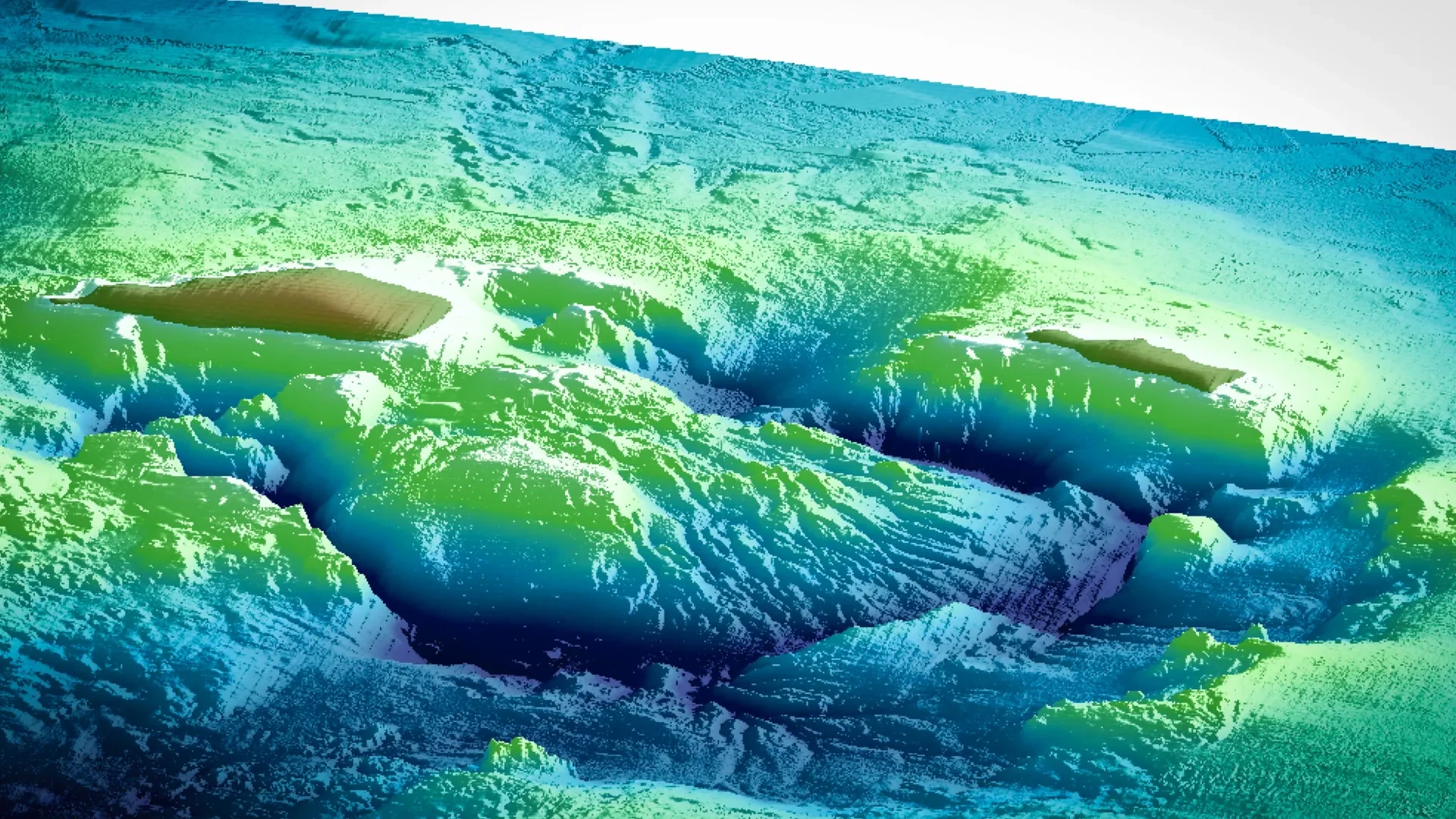
TOKYO — Deep beneath the rolling, azure waves south of Japan lies a sleeping giant whose ancient fury once reshaped the planet. The Kikai caldera, a largely submerged volcanic behemoth, has long fascinated and terrified geologists. Now, a groundbreaking study led by researchers at Kobe University has revealed that this colossal subterranean engine is stirring once more. Fresh magma is actively flooding a vast reservoir beneath the ocean floor, offering volcanologists an unprecedented, real-time look at how Earth’s most destructive supervolcanoes recover from apocalyptic eruptions and prepare for future seismic chapters.
The discovery, recently published in the prestigious journal Communications Earth & Environment, bridges a critical knowledge gap in modern volcanology. By unlocking the hidden plumbing systems of Kikai, scientists believe they are closer to understanding the life cycles of other legendary supervolcano systems across the globe, including Yellowstone in the United States and Indonesia’s Lake Toba. While the findings confirm that the volcano is actively recharging, experts stress that an imminent eruption is not indicated—rather, the research provides a vital baseline for monitoring the subtle, subterranean heartbeat of the planet’s most dangerous geologic structures.
Main Facts: Unveiling Kikai’s Subterranean Resurrection
At the center of this scientific breakthrough is the confirmation that a massive, magma-rich reservoir is actively refilling beneath the Kikai caldera. This underwater structure is not merely holding onto the remnants of past cataclysms; it is being aggressively fed by newly injected molten rock from deep within the Earth’s mantle.
To comprehend the scale of the Kikai system, one must look back approximately 7,300 years to the Holocene epoch’s most violent volcanic event. During this cataclysm, Kikai expelled an unimaginable volume of pyroclastic material and magma—an amount so vast that it famously emptied the underground chamber, causing the overlying crust to collapse inward and form a sprawling, sunken caldera measuring nearly 20 kilometers across.
To visualize the sheer magnitude of that prehistoric eruption, geophysicists offer a striking spatial analogy: the volume of magma displaced during the event would be sufficient to bury New York City’s Central Park under a scorching, suffocating layer of molten rock twelve kilometers (about 7.4 miles) deep.
When an eruption of this magnitude occurs, it creates what scientists classify as a supervolcano or giant caldera system. Unlike traditional cone-shaped volcanoes that tower majestically over the landscape, calderas present a deceptive profile, often appearing as broad, water-filled depressions or subtle ocean basins. Because their magma chambers are planetary in scale, their behaviors are notoriously difficult to predict. For decades, the fundamental mechanics of how these systems manage to re-accumulate such staggering quantities of magma after a total evacuation remained an elusive mystery.
The new study from Kobe University, conducted in close collaboration with the Japan Agency for Marine-Earth Science and Technology (JAMSTEC), changes that narrative. By deploying advanced marine geophysical imaging techniques, the research team successfully mapped the architecture of the underground reservoir. Their data confirms that the newly detected magma pool occupies the exact same spatial footprint as the chamber that fed the prehistoric catastrophe 7,300 years ago. However, chemical analyses of subsequent lava domes indicate that this is not stagnant magma; it is fresh, newly mobilized rock actively breathing life back into an ancient system.
Chronology of the Kikai Caldera: A Timeline of Catastrophe and Renewal
To fully grasp the significance of the recent findings, researchers have pieced together a chronological framework spanning millennia, tracing Kikai from its prehistoric devastation to modern-day seismic exploration.
- ~11,700 Years Ago (Beginning of the Holocene Epoch): The current geological epoch commences, setting the stage for one of the most violent climatic chapters in human and geological history.
- ~7,300 Years Ago (The Akahoya Eruption): Kikai unleashes the largest known Holocene volcanic eruption. The catastrophic expulsion of magma empties the subterranean reservoir, triggering a massive structural collapse that forms the modern caldera. Plumes of ash blanket vast regions of East Asia, profoundly impacting local ecosystems and ancient human populations.
- ~3,900 Years Ago (The Post-Collapse Awakening): Following millennia of relative dormancy, viscous magma begins to slowly force its way toward the surface near the center of the caldera, initiating the formation of a massive lava dome. Unlike fluid basaltic flows, this thick magma piles up over the vent, signaling that the deep-seated plumbing system has found a new, sustained pathway to the surface.
- Modern Era (The JAMSTEC Surveys): Recognizing the need to look beneath the ocean waves, Kobe University and JAMSTEC launch systematic marine geophysical expeditions. Utilizing controlled-source seismology, researchers map the hidden crustal architecture of the caldera.
- Present Day (Re-injection Confirmation): Publication of findings in Communications Earth & Environment. Scientists officially confirm that fresh magma is actively re-injecting and rebuilding the shallow reservoir beneath Kikai, validating the global "magma re-injection model" for supervolcanoes.
Supporting Data: Listening to Seismic Waves Beneath the Ocean
Conducting geological fieldwork in the middle of the ocean presents formidable logistical hurdles. Yet, in the case of the Kikai caldera, its marine setting turned out to be a profound scientific advantage. Because the vast majority of the volcanic structure rests beneath the sea, researchers were able to execute clean, unobstructed, and systematic geophysical surveys across the entire breadth of the caldera—a luxury rarely afforded to scientists studying land-locked supervolcanoes like Yellowstone, where dense forests, infrastructure, and topography complicate data collection.
The research team, spearheaded by Kobe University geophysicist Nobukazu Seama, partnered with JAMSTEC to execute a high-resolution seismic imaging campaign. The methodology relied on controlled-source seismology, a technique akin to a geological ultrasound.
First, specialized research vessels deployed powerful airgun arrays near the ocean surface. These airguns released controlled, high-energy pneumatic pulses—essentially generating harmless, artificial sound waves that traveled downward through the water column and penetrated deep into the oceanic crust beneath the seafloor. As these seismic waves propagated through different layers of rock, magma, and sediment, their velocity and trajectory altered depending on the physical properties of the material they encountered. Molten and partially molten rock, for instance, significantly slows down seismic waves and alters their frequency profiles.
To capture these subtle shifts, the research team strategically placed an array of sensitive ocean-bottom seismometers (OBS units) directly onto the floor of the caldera. These instruments recorded the echoing seismic waves with pinpoint precision. Back on land, advanced computational processing allowed the geophysicists to invert the seismic data, translating wave travel times into vivid, three-dimensional tomographic images of the Earth’s interior.
The resulting subterranean maps exposed a massive, low-velocity anomaly sitting directly beneath the vent structures responsible for the ancient Holocene eruption. This anomaly—identified as a high-concentration magma reservoir—matched the exact geographical footprint of the chamber that fueled the disaster 7,300 years ago.
Crucially, geochemical data extracted from the nearby lava dome, which has been growing for the past 3,900 years, provided the final piece of the puzzle. The chemical signatures of the minerals within the dome’s lavas contrasted sharply with the debris left behind by the ancient super-eruption. This chemical divergence confirmed that the current reservoir is not merely cooling remnants of the past, but is actively being replenished by fresh, foreign batches of magma ascending from deeper mantle sources.
Official Responses and Expert Perspectives
The implications of the Kikai study have resonated deeply within the global geophysical community, prompting statements from lead researchers and institutional bodies involved in the multi-year project.
Dr. Nobukazu Seama, the lead geophysicist on the project at Kobe University, emphasized the fundamental importance of the discovery for understanding volcanic life cycles.
"We must understand how such large quantities of magma can accumulate to understand how giant caldera eruptions occur," Dr. Seama stated during a briefing on the findings. Addressing the specific mechanics of the reservoir, he added, "Due to its extent and location, it is clear that this is in fact the same magma reservoir as in the previous eruption. However, chemical analyses show that the magma now present under the lava dome is likely newly injected magma."
Seama highlighted that the project’s success validates a broader, long-theorized geological model. For years, scientists debated whether supervolcanoes remained dormant between catastrophic events or if they operated as dynamic, constantly refilling systems. The Kikai data strongly supports the latter.
"This magma re-injection model is consistent with the existence of large shallow magma reservoirs beneath other giant calderas like Yellowstone and Toba," Seama noted, drawing a direct line between the Japanese caldera and its global counterparts.
Institutional support for the research was robustly backed by the Japanese government and scientific agencies. The study received vital funding and resources from the Ministry of Education, Culture, Sports, Science and Technology (MEXT) under The Third Earthquake and Volcano Hazards Observation and Research Program (Earthquake and Volcano Hazard Reduction Research), alongside substantial grants from the Japan Society for the Promotion of Science (JSPS Grant 20H00199). The collaborative framework between Kobe University and JAMSTEC was praised by academic reviewers as a masterclass in interdisciplinary marine geoscience.
Implications: A New Frontier in Global Volcano Monitoring
While the headlines surrounding "recharging supervolcanoes" naturally evoke cinematic anxieties of global destruction, scientists are careful to contextualize what the Kikai findings actually mean for human safety.
Kikai is not about to erupt. The identification of a refilling magma reservoir does not equate to an imminent cataclysm. Volcanic systems operate on geological timescales that span millennia, and the process of magma re-injection is often a slow, agonizingly gradual diffusion of heat and molten material. A reservoir can sit and recharge for thousands of years without ever reaching the critical pressure threshold required to trigger a super-eruption.
Instead, the true value of the research lies in hazard mitigation, predictive modeling, and early warning capabilities. By establishing clear baselines for how a supervolcano behaves during its quiet, recharging phase, scientists can better identify the subtle diagnostic precursors that distinguish routine hydrothermal or seismic activity from the dangerous, accelerated escalation preceding a major eruption.
The framework developed during the Kikai study provides a template that can be exported directly to other high-risk supervolcanoes around the world. At Yellowstone in the United States—which attracts millions of visitors annually and sits atop one of the world’s most scrutinized volcanic systems—understanding the mechanics of shallow magma reservoirs is paramount. Similarly, Lake Toba in Indonesia, which produced a colossal eruption roughly 74,000 years ago that nearly bottlenecked human evolution, remains a focal point for international disaster preparedness.
As computational power improves and marine seismic imaging techniques become more sophisticated, researchers aim to continuously monitor the density, volume, and ascent rates of magma chambers worldwide.
Dr. Seama outlined the ultimate objective of the ongoing research agenda:
"We want to refine the methods that have proved to be so useful in this study to more deeply understand the re-injection processes. Our ultimate goal is to become better able to monitor the crucial indicators of future giant eruptions."
Ultimately, the Kikai caldera has transformed from a silent, mysterious abyss into an open laboratory. By listening to the echoes of seismic waves beneath the ocean floor, humanity has taken a profound step forward in learning to read the deepest pulses of the Earth—turning the study of ancient apocalypses into a safeguard for the future.
