

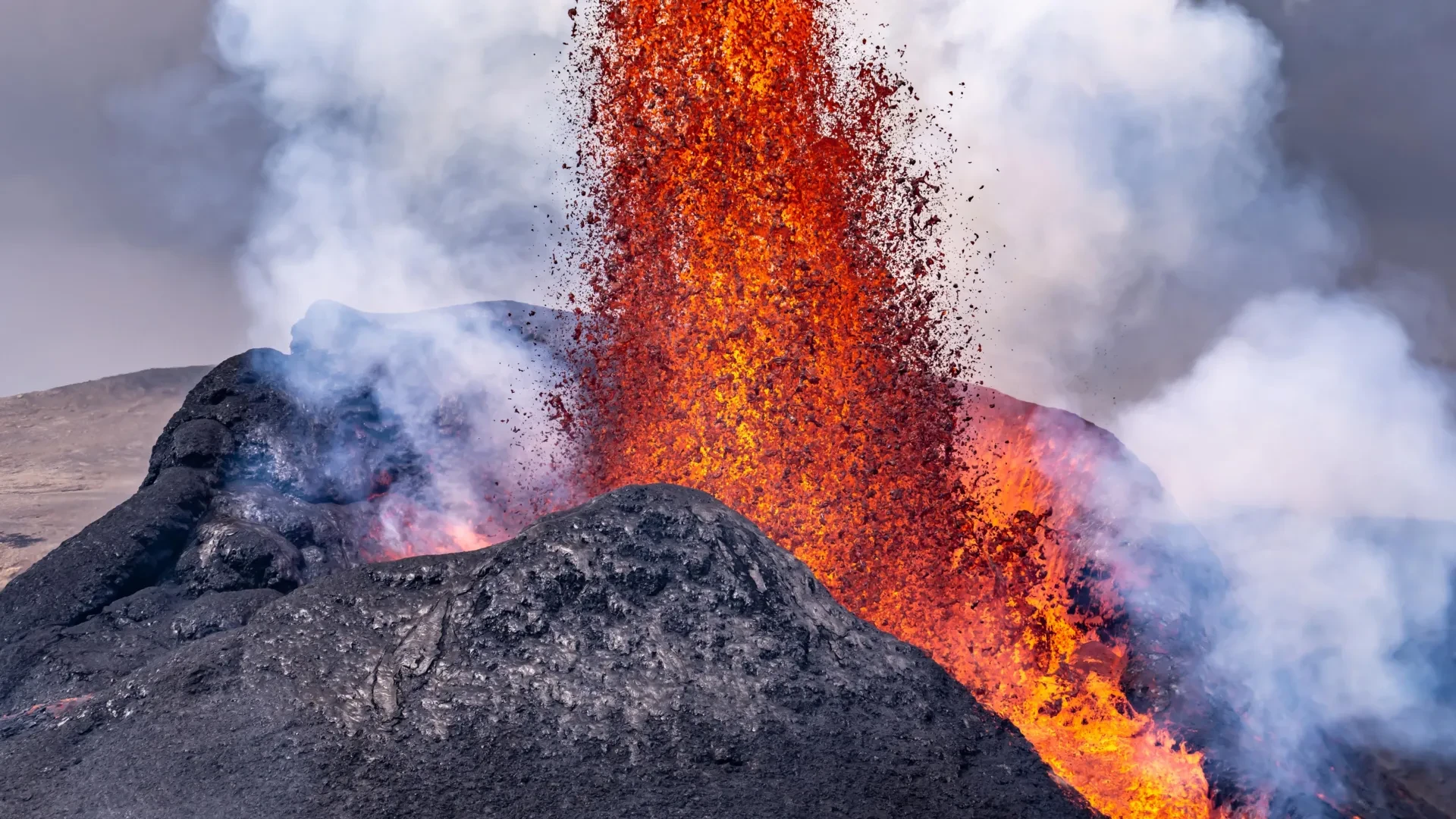
PERTH, AUSTRALIA — In the sun-baked expanses of Western Australia’s Pilbara Craton lies a geological time capsule that is forcing scientists to radically rethink the youth of our planet. According to a landmark international study published in Nature Communications, water was already actively influencing Earth’s interior and driving volcanic activity more than three billion years ago.
Led by Dr. Eric Vandenburg, a geochemist from the University of Adelaide, a multidisciplinary team of researchers analyzed exceptionally well-preserved volcanic rocks dating back roughly 3.1 billion years. Their findings reveal that surface water had somehow penetrated deep beneath the crust long before modern plate tectonics became established, acting as a catalyst for ancient magma generation. The discovery provides a tantalizing glimpse into a dynamic, primordial Earth that was recycling its most essential fluid far earlier than previously believed.
Main Facts: The Discovery and Its Core Significance
At the heart of the breakthrough is the realization that surface water played a pivotal role in the formation of Archaean magmas that mimic the explosive characteristics of today’s Pacific "Ring of Fire."
Modern volcanism along subduction zones—where oceanic plates plunge into the mantle—is heavily dependent on water. As tectonic plates descend, they release trapped seawater into the hotter mantle rock above, lowering its melting point and generating the magma that fuels volcanic arcs and builds continental crust.
However, standard geological models dictate that the young Earth was far too hot and its crust too buoyant for modern-style plate tectonics to operate. Consequently, scientists operated under the assumption that surface water could not have journeyed deep into the subterranean mantle during this era. The Pilbara rocks challenge this long-held dogma.
- The Location: The Pilbara Craton in Western Australia, home to some of the oldest and best-preserved crustal fragments on Earth.
- The Timeline: The rocks studied date back approximately 3.1 billion years, placing them firmly in the Mesoarchaean era.
- The Mechanism: Instead of traditional subduction, researchers propose a process known as "dripduction," whereby dense, water-saturated crustal sections sagged and collapsed directly into the mantle.
- The Implication: Earth’s surface and deep interior were interacting and exchanging materials hundreds of millions of years earlier than textbooks currently state.
Chronology: Unlocking a 3.1-Billion-Year-Old Mystery
The journey toward this paradigm-shifting discovery spans years of meticulous field collection, advanced geochemical analysis, and collaborative international research involving institutions across Australia, the United Kingdom, and Germany.
The Archaean Setting (3.1 Billion Years Ago)
During the Mesoarchaean era, Earth bore little resemblance to the blue-and-green marble we inhabit today. The atmosphere lacked free oxygen, the sun was dimmer, and global surface temperatures were significantly higher. Oceans covered the majority of the globe, but the continental landmasses were small, fragmented proto-continents. Deep beneath these shallow primordial seas, magmatic systems were churning, depositing the volcanic layers that would eventually fossilize the geochemical signatures discovered by Dr. Vandenburg’s team.
Fieldwork and Sampling in the Pilbara
Because rocks from this era have been relentlessly recycled, melted, and deformed by subsequent tectonic activity, finding pristine samples is akin to hunting for a needle in a haystack. The Pilbara Craton, however, is one of the rare geological sanctuaries on Earth where Archaean crust has remained relatively undisturbed. Researchers fanned out across the rugged Australian landscape, collecting targeted volcanic and plutonic rock samples designed to record the pristine chemical conditions of the early mantle.
Laboratory Analysis and Breakthrough (Recent Years)
Back in the laboratory, the international team subjected the Pilbara samples to rigorous geochemical scrutiny. By measuring trace element concentrations and isotopic ratios locked within mineral grains, the researchers traced the lineage of the magma back to its source.
To their astonishment, the chemical fingerprints unmistakably indicated the presence of water that had originated at the surface, traveled deep into the mantle, and subsequently influenced the melting processes that birthed the region’s ancient volcanoes. The data did not fit conventional models, forcing the research collective to formulate an entirely new explanation for how the water got there.
Supporting Data: The Mechanics of "Dripduction"
To explain how surface water reached the mantle in the absence of modern plate tectonics, the research team turned to a specialized geological process they have dubbed "dripduction."
The Physics of Dripduction
In the sweltering thermal regime of the early Earth, the lithosphere—the rigid outer shell of the planet—was more ductile and prone to gravitational instabilities. As oceanic crust interacted with surface water, parts of the upper crust became hydrothermally altered and densely packed with hydrated minerals.
Over time, these heavy, water-rich sections of the cool outer crust grew gravitationally unstable relative to the hotter, buoyant mantle below. Rather than sliding sideways in a subduction zone, these dense regions began to sag downward like heavy drips of honey, eventually detaching and sinking vertically into the mantle.
The Chemical Catalyst
As these crustal "drip" structures plummeted into the scorching depths, the extreme heat and pressure caused the trapped water to escape into the surrounding mantle rock. Much like sprinkling salt on ice, the introduction of this water dramatically lowered the melting point of the mantle peridotite. This process triggered localized melting, producing buoyant magma that ascended toward the surface, erupted through ancient volcanic chains, and ultimately cooled into the durable rocks preserved in the Pilbara today.
Official Responses and Expert Perspectives
The publication of the study in Nature Communications has sent ripples through the global geoscience community, drawing commentary from the lead researchers and co-authors across multiple premier academic institutions.
Dr. Eric Vandenburg, lead author of the study from the University of Adelaide’s School of Physics, Chemistry and Earth Sciences, emphasized just how drastically the young Earth’s operating system differed from today’s.
"These rocks formed more than three billion years ago, when Earth was a very different place," Dr. Vandenburg noted. "The early Earth was too hot for plates to behave that way, so until now it has been unclear whether surface water could have made that journey more than three billion years ago, and if so, how. What surprised us was finding evidence that large amounts of water had already made their way deep into the Earth’s interior and influenced the formation of volcanic rocks."
Dr. Vandenburg further stressed that while the planet’s mechanics were alien to our current experience, the foundational recycling loops were already functioning.
"The Earth wasn’t operating exactly as it does now, but it appears some of the key processes were already in place," he added.
The study reflects a massive collaborative effort, bringing together expertise from the University of Adelaide, Monash University, the Geological Survey of Western Australia, Curtin University, the Australian National University, Cardiff University, and the GEOMAR Helmholtz Center for Ocean Research in Germany. Co-authors point out that integrating field geology with high-precision isotope geochemistry was the key to unlocking a secret that has remained hidden in plain sight for millennia.
Implications: Rewriting the History of Our Planet
The revelation that water was circulating deep into Earth’s interior 3.1 billion years ago carries profound implications across multiple branches of earth science, from planetology to the study of early life.
1. The Genesis of Continents
Continental crust is richer in silica and less dense than oceanic crust, making it buoyant enough to persist above sea level. The generation of this continental building material relies heavily on water-fluxed melting in subduction-like environments. By proving that "dripduction" could achieve similar geochemical conditions, the study provides a vital missing link in understanding how Earth grew its first true continents.
2. The Global Water Cycle
Understanding when the deep-Earth water cycle began helps scientists model long-term climate stability. The mantle acts as a vast reservoir for water, holding many times the volume of all surface oceans combined. Knowing that this deep exchange was active in the Archaean eon suggests that Earth’s volatile inventory has been actively regulated between the surface and the interior for the vast majority of geological history.
3. Implications for Habitability and Astrobiology
Water is the universal solvent for carbon-based life. The cycling of water and associated nutrients (such as phosphorus, nitrogen, and sulfur) between the lithosphere, hydrosphere, and mantle fuels the chemical gradients that may have nurtured early microscopic life. By demonstrating that planetary-scale recycling was operational during the Archaean, the findings shed light on the environmental conditions that shaped the crucible of life on Earth—and perhaps offer clues about what to look for when searching for habitable rocky exoplanets orbiting distant stars.
Looking Ahead
As analytical techniques continue to advance, geochemists are eager to comb through other ancient cratons across the globe—such as the Kaapvaal Craton in South Africa and the Superior Craton in Canada—to see if "dripduction" left its mark elsewhere. For now, the sun-scorched rocks of the Pilbara Craton stand as silent witnesses to a turbulent, water-drenched infancy, reminding modern science that our planet was dynamic, interconnected, and restless billions of years before the first footsteps walked its surface.
