

Main Facts
The recently concluded IFA Berlin trade show—Europe’s premier consumer electronics and home appliance exhibition—made one reality abundantly clear: the clean technology sector has officially graduated from a niche marketing category into the invisible operational baseline of modern manufacturing. While early waves of green technology innovation heavily spotlighted individual breakthroughs, such as the initial market penetration of residential solar arrays or the novelty of the first generation of heat pumps, IFA Berlin demonstrated a mature, deeply diversified approach to sustainability.

For industry observers traveling from North America, the contrast was striking. Technologies that still command headlines and specialized incentives in the United States—such as high-efficiency heat pump systems and induction cooktops—have quietly become standard, default infrastructure across Germany and broader Western Europe. Rather than treating energy efficiency as a flashy product differentiator, European manufacturers now treat it as an uncompromised baseline expectation.

Yet, this normalization has not slowed innovation; instead, it has forced companies to look far beyond energy efficiency at the point of use. The overarching theme of IFA 2026 was that true sustainability requires a holistic framework encompassing material sourcing, supply chain carbon footprints, factory-floor manufacturing efficiencies, eco-friendly packaging, and post-consumer repairability. From major multinational conglomerates to white-label original equipment manufacturers (OEMs), the exhibitors in Berlin showcased a vast mosaic of green pathways. Rather than relying on a single silver bullet, the European clean tech market is proving that systemic industrial change happens through a thousand localized optimizations.

Chronology: A Walk Through the Exhibition Halls
To understand how European consumer tech has shifted, it is helpful to trace the chronological evolution of consumer expectations over recent trade cycles, culminating in the diverse showcases deployed across the Berlin exhibition grounds this September.

- Pre-2024 (The Awareness Phase): Early tech conventions focused primarily on introducing electrified alternatives to legacy fossil-fuel appliances, making the case for induction cooktops and electric heat pumps against stiff consumer skepticism.
- 2024–2025 (The Efficiency Phase): Manufacturers competed aggressively on Coefficient of Performance (COP) ratings for heat pumps and lower kilowatt-hour consumption metrics for white goods, treating efficiency as the primary marketing hook.
- IFA Berlin 2026 (The Holistic Integration Phase): The recent exhibition marked a distinct pivot. Efficiency was largely taken for granted, and the spotlight shifted toward circular economies, low-carbon material sourcing, next-generation natural refrigerants (R290), localized thermal zone heating, and modular repair ecosystems.
Throughout the week-long event, attendees witnessed a steady procession of product unveilings that mirrored this multi-pronged philosophy. Major industry stalwarts like Bosch led the charge early in the week by introducing their Green Collection, setting a high bar for reduced embodied carbon. Mid-week saw specialized manufacturers like Gorenje and Midea command heavy foot traffic with massive structural displays detailing end-to-end supply chain footprints and the widespread adoption of eco-friendly propane refrigerants. Toward the final days of the conference, smaller innovators—ranging from screen-protector film makers like REEDEE to modular repair parts suppliers like Repartly and urban EV pioneers like Volkswagen—cemented the idea that sustainability at IFA 2026 was truly all-encompassing, touching everything from heavy transport to pocket-sized personal electronics.

Supporting Data and Technological Breakthroughs
The breadth of sustainability solutions on display at IFA Berlin 2026 can be categorized into four distinct technical pillars: low-carbon materials, natural refrigerants, targeted thermal management, and circular electronics.
1. Embodied Carbon and Sustainable Materials
While operational emissions capture most public attention, the sheer mass of modern home appliances means their embodied carbon—the greenhouse gases emitted during material extraction, transport, and manufacturing—presents a massive environmental hurdle.

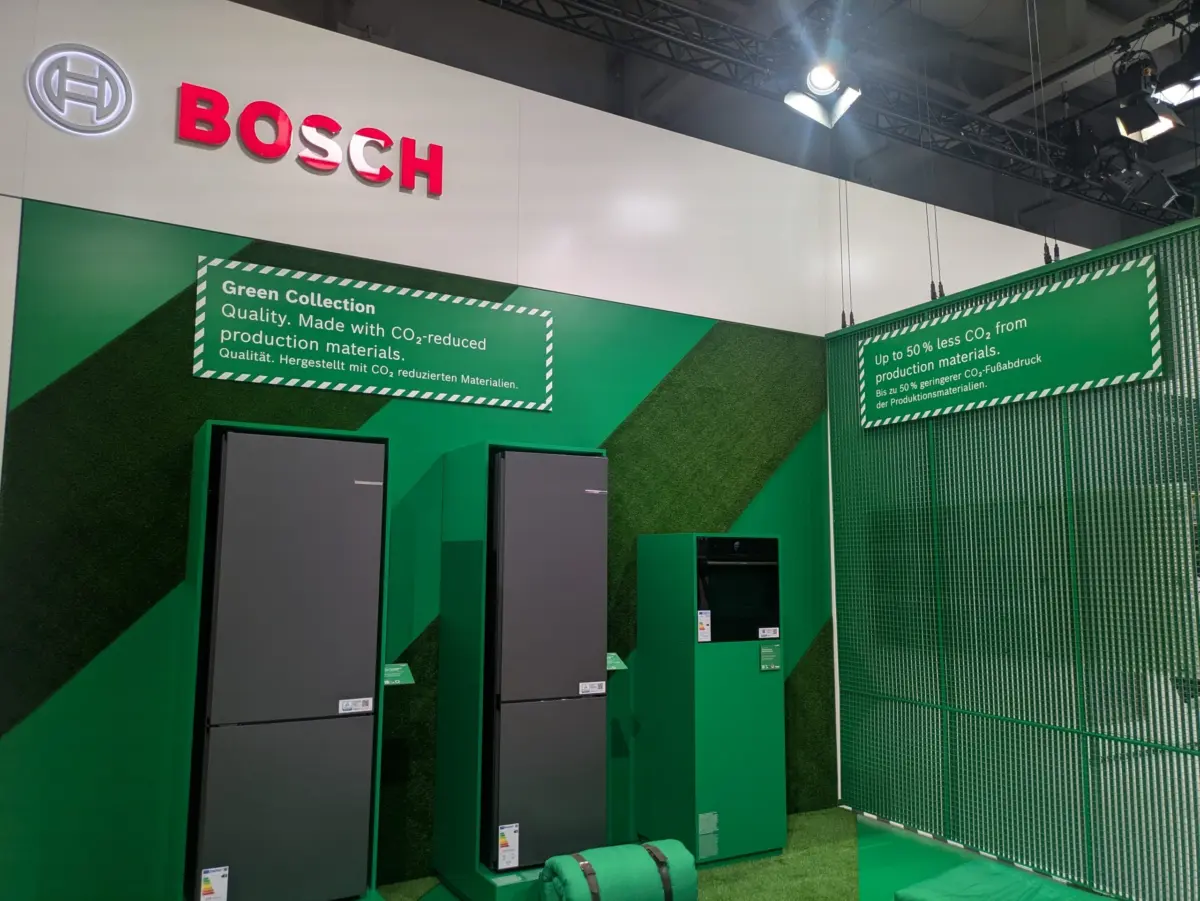
- Bosch Green Collection: Bosch unveiled its new matte black appliance line, achieving up to a 50% reduction in $textCO_2$ emissions generated from production materials compared to conventional manufacturing baselines. Beyond its carbon savings, the sleek, understated matte finish challenged the traditional aesthetic of kitchen spaces.
- Ferre and Packaging Innovations: Ferre dedicated substantial exhibition space to circular logistics, showcasing primary and secondary product packaging manufactured entirely from recycled, biodegradable materials to cut down on single-use shipping waste.
- REEDEE Polymeric Films: In the mobile accessories sector, REEDEE demonstrated advanced recycled thermoplastic polyurethane (TPU) and polyethylene terephthalate (PET) plastic films engineered for device screen protection, diverting post-consumer waste from landfills and incineration facilities.
2. The Refrigerant Revolution: Transitioning to R290 (Propane)
Traditional hydrofluorocarbon (HFC) refrigerants used in air conditioning and heat pump systems possess global warming potentials (GWPs) thousands of times higher than carbon dioxide. IFA Berlin 2026 served as the staging ground for a decisive industry-wide migration to natural refrigerants, predominantly R290 (propane).

- Midea: Midea placed its heavy-duty transition to R290 refrigerant systems at the center of its heat pump showcase, highlighting dramatically reduced environmental hazards without sacrificing thermodynamic performance.
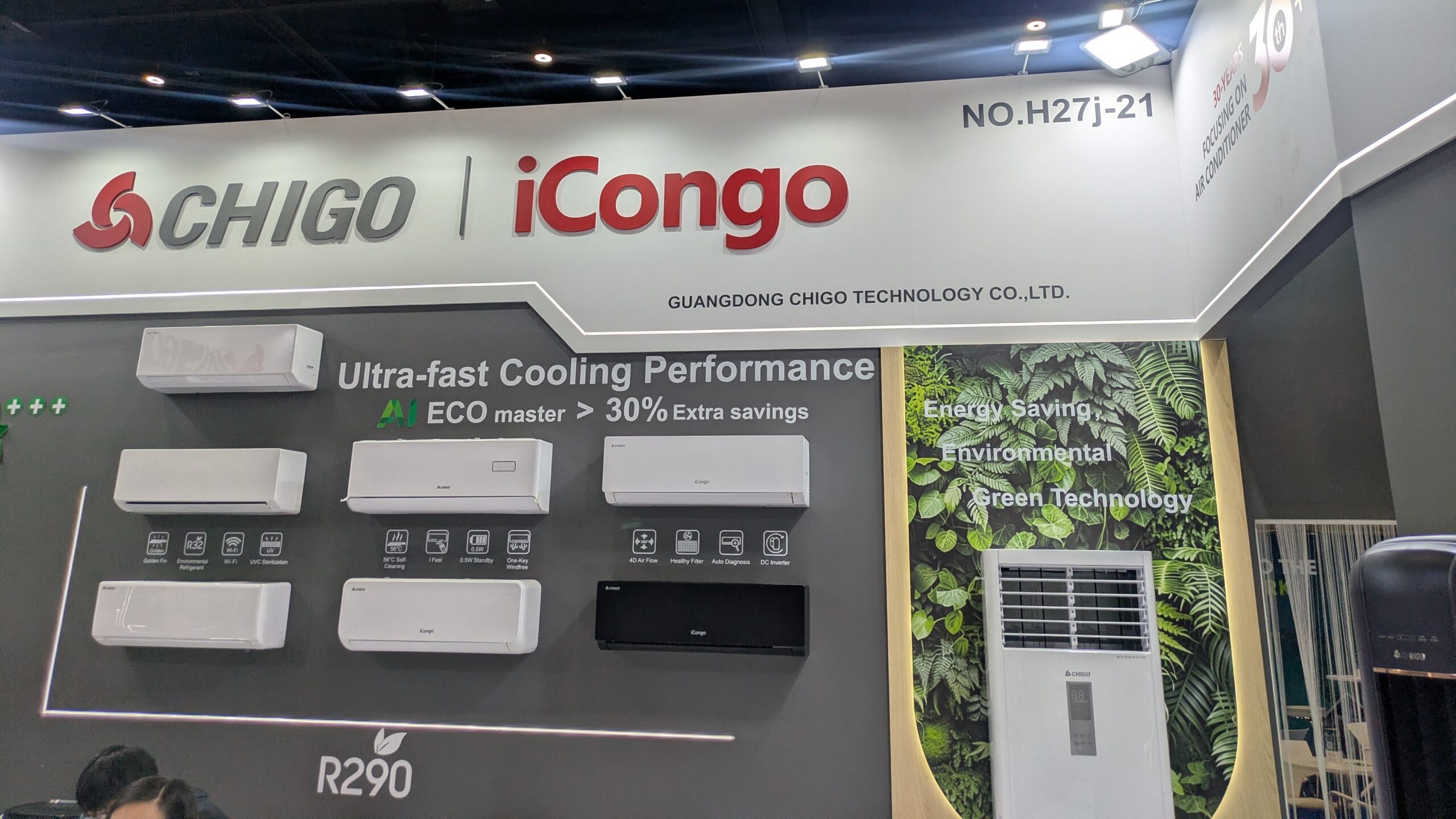
- Chigo/iCongo: Chigo introduced a new line of R290-powered air conditioning units. The brand claimed an impressive 30% reduction in energy consumption achieved via "AI-powered dynamic adjustments," though independent technical verification and testing results remain anticipated to substantiate these efficiency leaps.
3. Targeted Thermal Management and Smart Cooling
Rather than brute-forcing climate control across entire buildings, several exhibitors explored localized solutions designed to maximize human comfort while minimizing total energy grid loads.

- Eurom Infrared Heating: Eurom displayed advanced infrared home heaters. While thermodynamic per-BTU efficiency remains lower than a traditional air-source heat pump, infrared technology operates on a different physical principle: it invisibly radiates long-wavelength energy directly onto human skin and solid surfaces, mimicking the way the sun warms the Earth. By strategically targeting seating areas in open-concept living spaces, households can keep their overall ambient air temperatures lower while maintaining localized comfort, yielding net energy savings.
- Gforest Evaporative Cooling: Ningbo Green Forest Electronic Technology (Gforest) showcased innovative solutions for European homes, where historical lack of air conditioning clashes with intensifying heatwaves. Alongside their high-efficiency food waste recyclers—which dry and break down organic refuse for garden use—they displayed novel mister fans. In addition to traditional standalone units, Gforest exhibited an ingenious prototype: an adhesive misting puck designed to mount directly onto the center casing of an existing household fan, paired with a water tank that attaches to the fan’s central pole. This low-cost, resource-efficient retrofit allows consumers to leverage evaporative cooling without purchasing heavy, energy-intensive standalone air conditioners.
4. Circularity and the Right to Repair
- Repartly: Representing the burgeoning repair economy, German platform Repartly exhibited robust localized supply chains for appliance and electronics replacement parts. By making component sourcing faster and more affordable within Germany, Repartly cuts down on transcontinental shipping emissions and extends product lifecycles, dramatically shrinking the lifecycle carbon footprint of consumer hardware.
Official Responses and Industry Insights
Conversations with engineering and product development teams across the convention floor underscored a philosophical maturation within the European appliance sector.

A senior product developer from Gorenje—Europe’s fourth-largest appliance manufacturer, operating out of Slovenia under the Hisense umbrella—offered critical insight into how regional manufacturing powerhouses approach sustainability. According to Gorenje representatives, the most effective path to decarbonization is not merely slapping green labels on legacy devices, but aggressively elevating the baseline performance of electrified household appliances. This includes engineering high-output induction cooktops that rival or exceed the raw power of gas burners, and developing high-efficiency electric pizza ovens that entice consumers away from fossil-fuel cooking methods.

Furthermore, because Gorenje operates as a major white-label manufacturer producing hardware for numerous other household brands across the continent, their internal pivot toward sustainable sourcing, localized European manufacturing, and recyclable packaging creates a cascading macro-effect throughout the entire European consumer market.

On the automotive front, Volkswagen executive teams emphasized practicality and spatial efficiency with the official showcase of their upcoming ID.Polo and ID.Cross electric vehicles. Designed specifically to navigate the narrow, historic streetscapes of European cities, the ID.Polo harkens back to the brand’s compact design heritage while offering zero-emission urban mobility. For consumers seeking hyper-local micro-mobility, Volkswagen also displayed licensed brand-partnered e-bikes available for on-site test tracks, demonstrating an integrated view of urban transit that extends far beyond standard four-wheeled passenger cars.

Implications: What IFA 2026 Means for the Global Clean Tech Transition
The cumulative picture painted by IFA Berlin 2026 holds profound implications for the global trajectory of sustainable technology.

First, it signals the death of the "one-size-fits-all" narrative in clean tech marketing. When sustainability becomes the invisible operational standard—as heat pumps and induction cooktops have become in Germany—market competition naturally shifts toward secondary and tertiary frontiers. Companies can no longer rely on the mere fact that a device is electric to capture consumer interest; they must prove how the steel was smelted, what chemical compounds are flowing through the copper pipes, how many kilometers the packaging traveled, and how easily the circuit board can be repaired when a capacitor fails.

Second, the heavy presence of circular-economy solutions—such as modular repair parts, recycled TPU screen films, food waste dehydrators, and fan-retrofit misting pucks—highlights an empowering democratization of green living. Not every sustainable intervention requires a five-figure home renovation or the purchase of a luxury electric vehicle. By lowering the financial and logistical barriers to entry, innovations like Gforest’s clip-on misters or Repartly’s localized spare parts catalogs prove that everyday consumers can materially reduce their environmental impact through modest, accessible choices.

Ultimately, the acronym IFA—traditionally standing for Internationale Funkausstellung, but widely celebrated through its contemporary ethos of Innovation For All—delivered a clear mandate. The global climate challenge will not be solved by a single miraculous invention. Instead, it will be met through an intricate, coordinated web of thousands of distinct technological improvements executed by businesses, suppliers, and citizens worldwide.
