For millions of knowledge workers, the modern office—whether located in a corporate high-rise or a spare bedroom—comes with an invisible, persistent physical tax. Spending long, uninterrupted hours hunched over a keyboard can feel defeating, particularly when constant warnings about the dangers of desk culture dominate wellness media.
The messaging is often relentless: sit less, move more, fix your posture. Yet, for most people, sitting at a desk isn’t a lifestyle choice born of negligence; it is the fundamental mechanism required to "get things done, meet deliverables, and pay the rent." When wellness advice demands an all-or-nothing approach—implying that unless you carve out an hour for the gym, your health is plummeting—it frequently breeds guilt rather than wellness.
Enter the micro-movement movement: an evidence-based, low-pressure approach to physical health that proves you do not need to overhaul your entire lifestyle to reap the physiological and cognitive rewards of physical activity. A newly popularized five-minute yoga sequence is changing the narrative, offering busy professionals an accessible pathway to release physical tension, reset their nervous systems, and return to their tasks with sharpened focus.
Main Facts: Redefining Workplace Fitness
The core premise of the five-minute workday reset is simple: sedentariness and activity do not exist in a rigid binary. You do not need to choose between grinding through an eight-hour shift motionless or abandoning your workflow for an extended workout.
The Micro-Break Advantage: Research across occupational health consistently shows that short, frequent movement breaks reduce musculoskeletal discomfort far more effectively than a single, intense workout at the end of a sedentary day.
Cognitive Enhancement: Physical resets stimulate blood flow to the brain, helping clear mental fog and directly boosting afternoon productivity.
Low Barrier to Entry: Requiring only a basic yoga mat and a small amount of floor space, the 12-step micro-sequence is designed to be performed in regular clothing, making it entirely friction-free for remote or office-based employees alike.
Rather than viewing the body as a machine that breaks down under desk work, this routine reframes physical movement as an ongoing, manageable dialogue between posture, breath, and productivity.
Chronology of Modern Desk Culture and the Rise of Micro-Yoga
To understand why a five-minute routine is gaining such traction in 2026, it is helpful to trace how contemporary work habits evolved alongside our understanding of physical health.
Pre-2020: The Era of the Ergonomic Obsession
For decades, workplace wellness focused primarily on static ergonomics. Companies invested heavily in standing desks, lumbar-supportive chairs, and wrist rests. While these tools helped, they failed to address a fundamental human biological need: the musculoskeletal system is designed for dynamic movement, not static support—no matter how expensive the chair.
2020–2024: The Remote Work Shift and Sedentary Creep
The global shift toward remote and hybrid work blurred the boundaries between living and working spaces. Commutes disappeared, replaced by immediate transitions from bed to desk. Daily step counts plummeted across global populations, and physical therapists reported a massive surge in complaints related to "tech neck," tight hips, and lower back pain. Traditional gym access fluctuated, leaving many feeling trapped in an all-or-nothing fitness paradigm.
2025–2026: The Micro-Habit Revolution
Recognizing the psychological burden of unrealistic wellness expectations, health researchers and instructors began advocating for "micro-dosing" movement. Instead of demanding hour-long commitments, experts championed 3-to-5-minute windows designed to disrupt sedentary loops. The five-minute yoga routine emerged as a standard-bearer for this philosophy, blending ancient movement disciplines with modern productivity science.
Supporting Data: The Hidden Costs of Sitting
The physical toll of prolonged sitting is well-documented by epidemiological and ergonomic studies.
Muscular Deactivation: When sitting for more than 60 consecutive minutes, the electrical activity in the leg muscles (particularly the gluteals) drops significantly, and the hip flexors remain in a chronically shortened state.
Spinal Compression: Gravity and slumped postures place uneven pressure on the lumbar discs, contributing to chronic lower back pain, which remains one of the leading causes of global workplace absenteeism.
Circulatory Stagnation: Prolonged immobility slows venous return in the lower extremities, contributing to fatigue, sluggishness, and reduced cerebral oxygenation.
Conversely, studies from corporate wellness providers indicate that introducing even brief, intentional bouts of stretching or mobility work during standard working hours yields a measurable decline in self-reported physical discomfort and a corresponding rise in sustained afternoon focus.
Official Responses and Expert Perspectives
Physical therapists, ergonomists, and corporate wellness directors have increasingly endorsed micro-routines as a pragmatic solution to modern workplace strain.
Dr. Elena Vance, a specialist in occupational ergonomics, notes that the psychological relief of shedding the "fitness guilt" is just as powerful as the physical stretch.
"When people believe they have failed because they didn’t hit a 45-minute workout goal, they tend to abandon healthy behaviors altogether," Dr. Vance explains. "Micro-routines short-circuit that perfectionist trap. Five minutes of deliberate stretching tells the nervous system it is safe to down-regulate, reducing cortisol and releasing tension before it hardens into chronic pain."
Corporate human resources departments are also taking note. Forward-thinking companies are actively encouraging employees to step away from their screens for brief cognitive and physical resets, viewing these short pauses not as lost time, but as an investment in sustained cognitive performance and error reduction.
Implications for the Future of Work
As the modern workplace continues to evolve, the integration of physical wellness into the rhythm of the workday will likely become standard operating procedure rather than an optional perk.
The success of the five-minute yoga sequence points toward a broader cultural shift: the democratization of self-care. By stripping away complicated equipment, specialized clothing, and intimidating time commitments, micro-routines empower individuals to take agency over their physical well-being on their own terms.
Ultimately, paying the rent and caring for your posture do not have to be mutually exclusive. By embracing small, manageable moments of movement throughout the day, desk workers can protect their bodies, clear their minds, and navigate the demands of modern work with greater resilience.
The 5-Minute Full-Body Desk Reset Sequence
Designed for versatility, this sequence can be practiced as a midday break, a grounding ritual before logging on in the morning, or an unwinding practice at the end of the day. All you need is a yoga mat and a willingness to come exactly as you are.
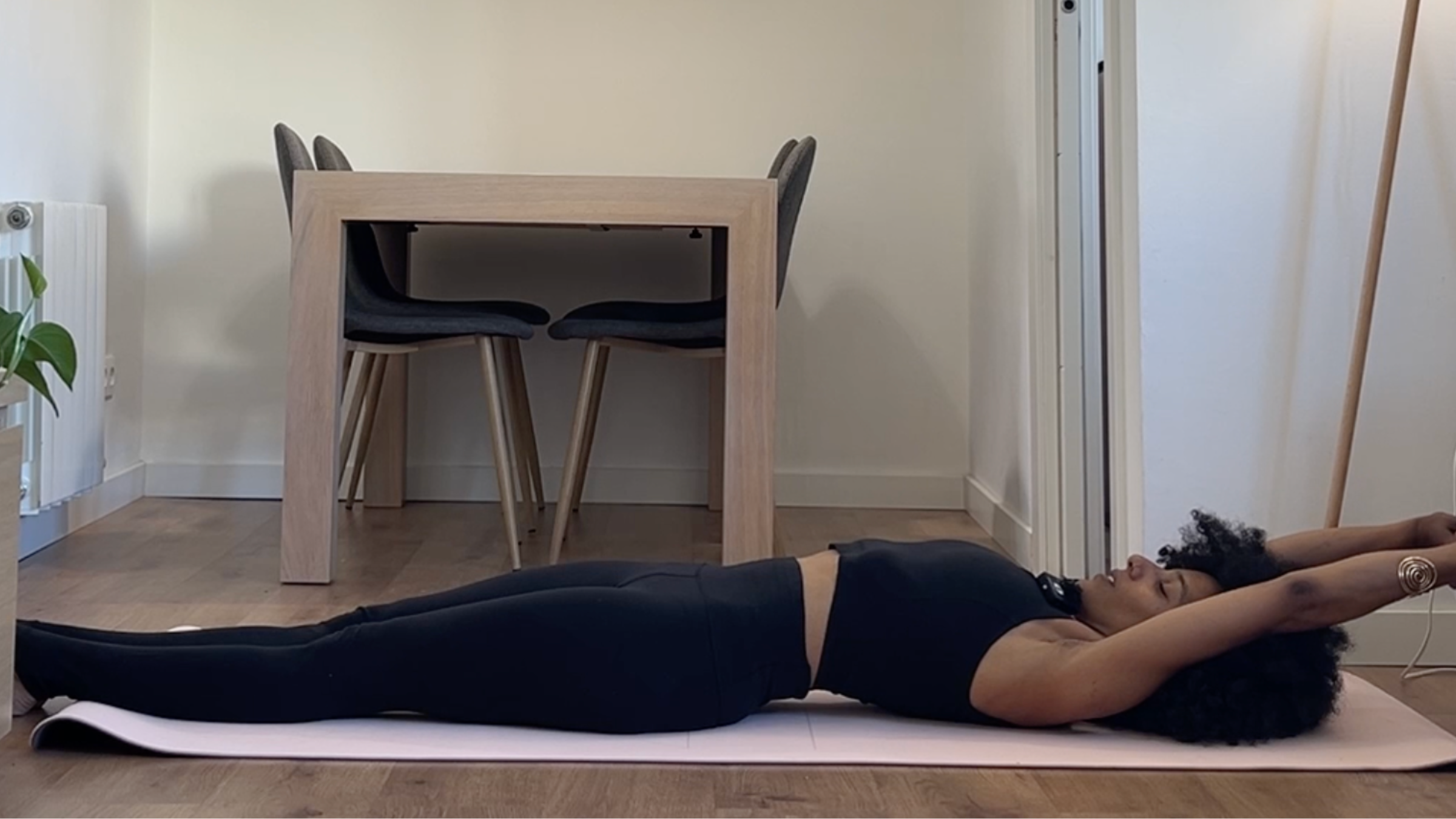
1. Full-Body Stretch
Lie flat on your back with your arms and legs straight, mimicking Savasana. Introduce small, intuitive movements—wiggling fingers and toes or gently turning your head from side to side. Take a deep inhalation as you reach your hands overhead and extend your feet in the opposite direction, elongating your entire body from head to toe. Exhale completely as you release the effort.
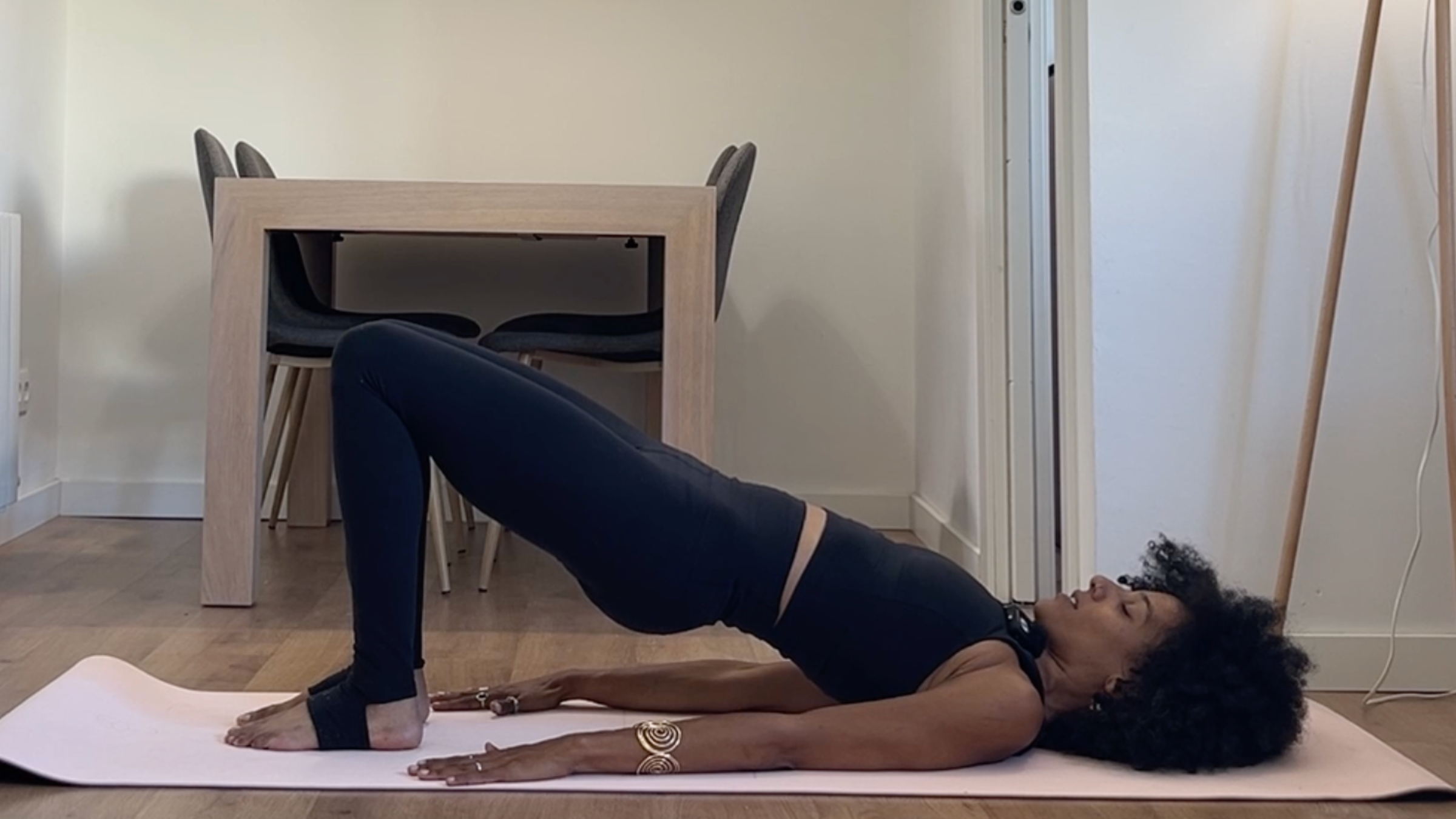
2. Bridge Pose
Bend your knees, plant your feet flat on the mat roughly hip-distance apart, and rest your arms long by your sides. Inhale as you press your palms and soles firmly into the floor, lifting your hips toward the ceiling. Exhale with control as you lower your hips back down to the mat.
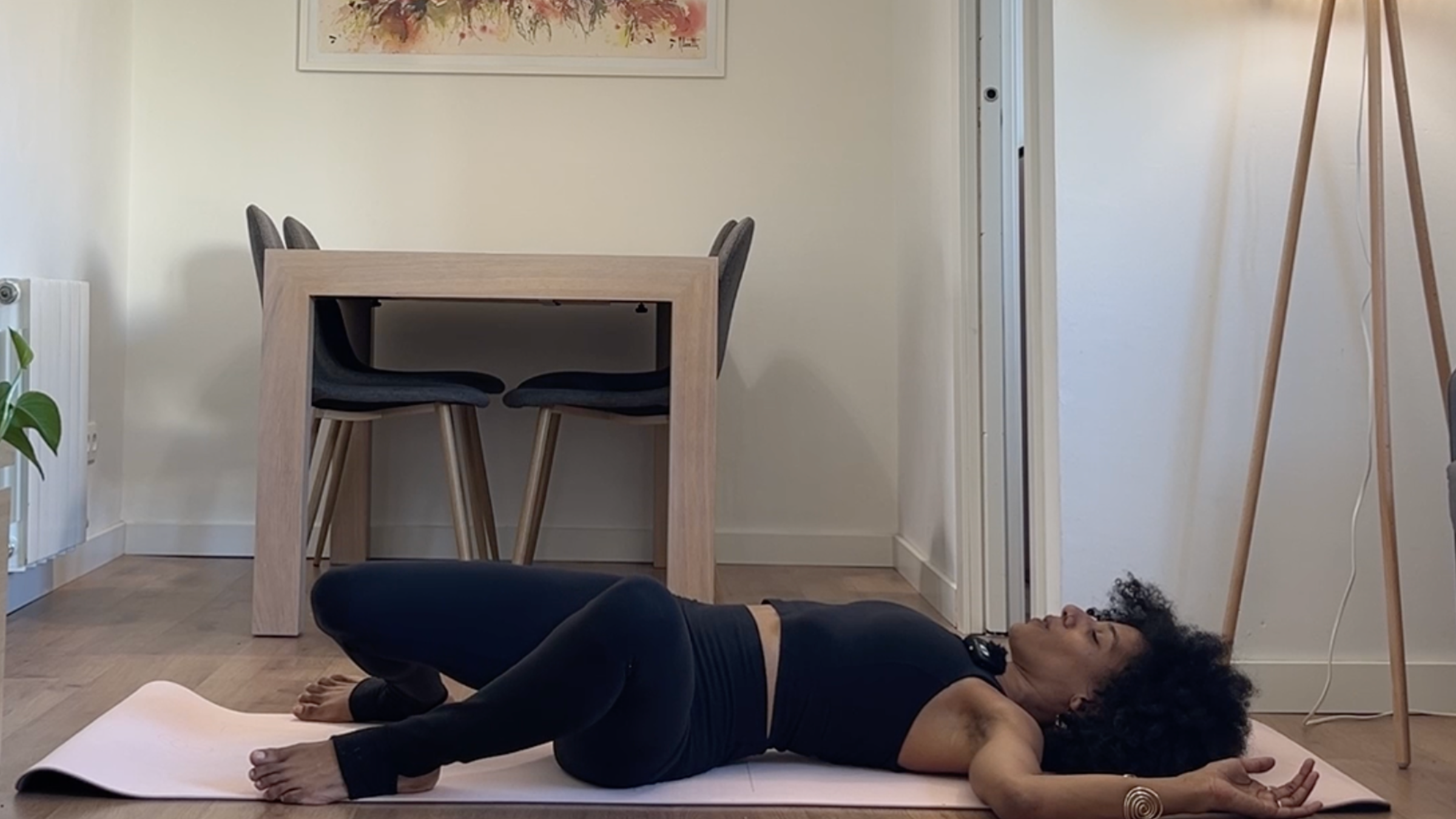
3. Windshield Wipers
Widen your feet slightly past hip-distance. Bend your elbows, bringing your arms into a goalpost or cactus shape. Exhale to let both knees drop gently toward the left. Inhale to draw them back to center, then exhale as you let them fall toward the right. Repeat this fluid motion two more times on each side.
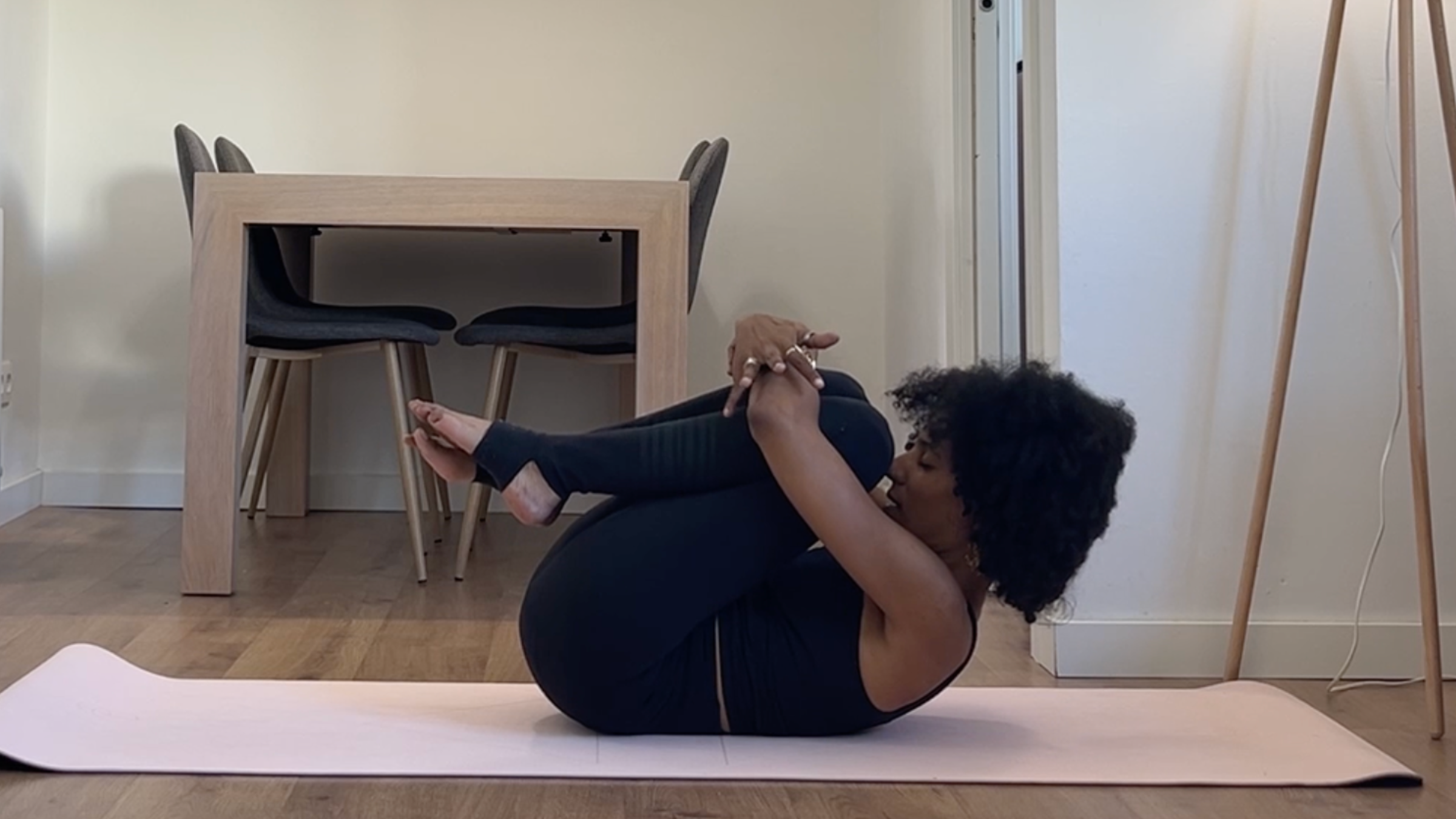
4. Wind-Relieving Pose
Draw both knees in toward your chest, wrapping your hands around your shins or the backs of your thighs. Take a few deep, grounding breaths here, allowing your lower back to release into the mat.
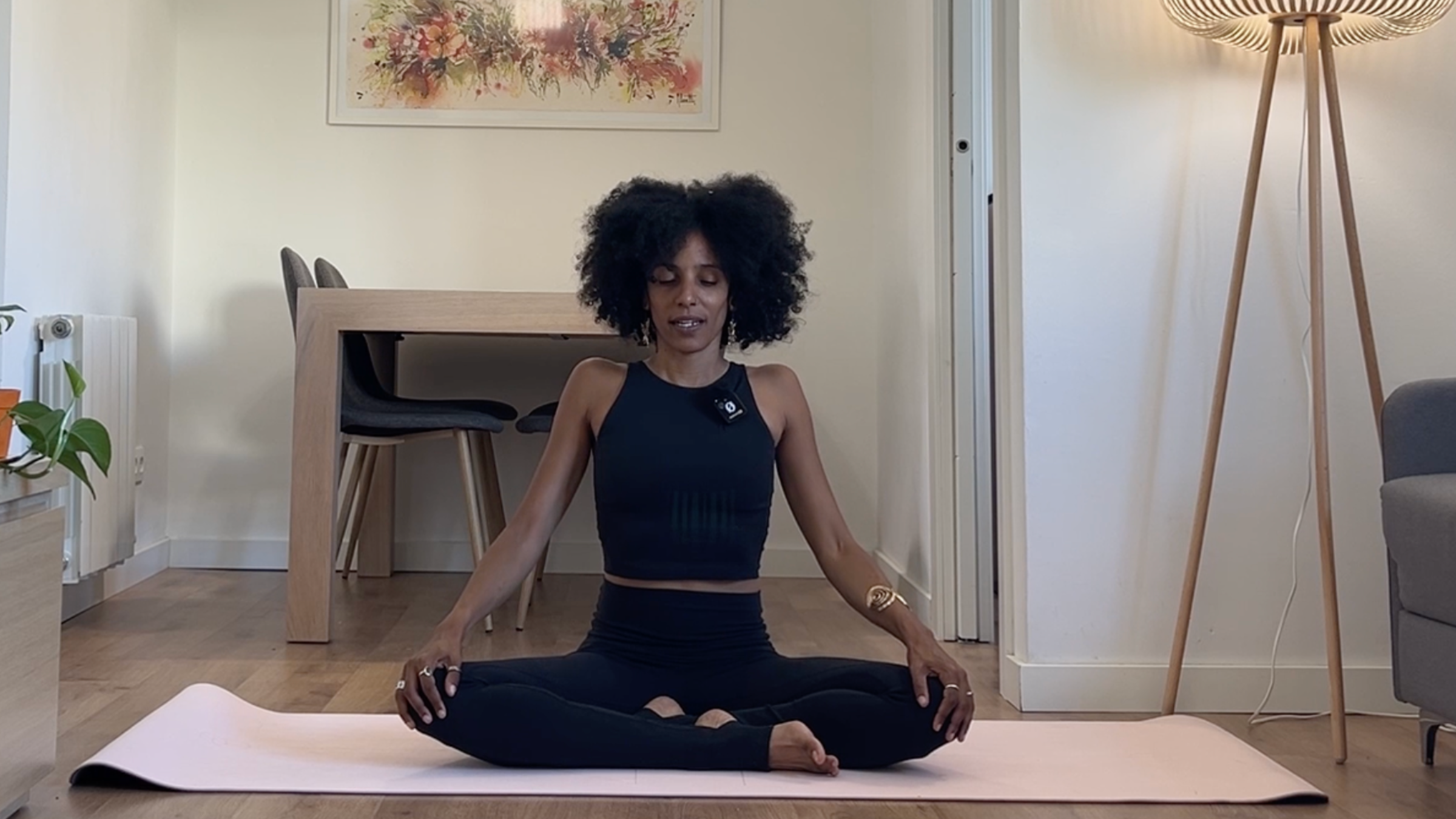
5. Seated Shoulder Rolls
Transition safely to a comfortable seated position on your mat or chair. Inhale as you draw your shoulders up toward your ears, then exhale as you roll them back, down, and forward. Continue circling in one direction for several rounds before reversing the flow.
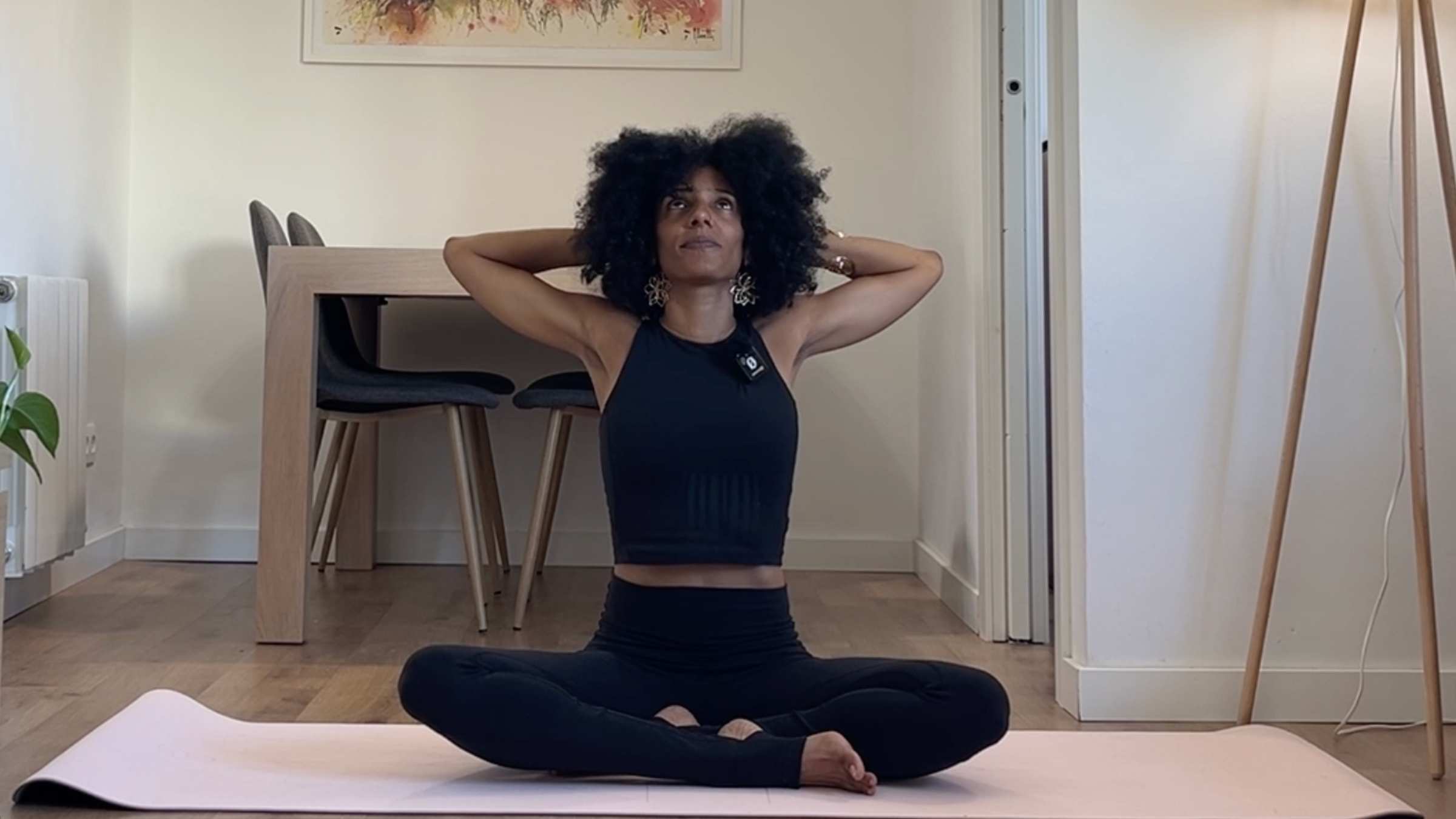
6. Seated Cat-Cow
Interlace your fingers gently behind your head, letting your elbows flare wide to the sides. On an exhale, draw your navel toward your spine, round your upper back, and tuck your chin toward your chest (Cat variation). On an inhale, lift your chest upright, open your heart, and draw your elbows back slightly (Cow variation). Repeat for several fluid breaths.
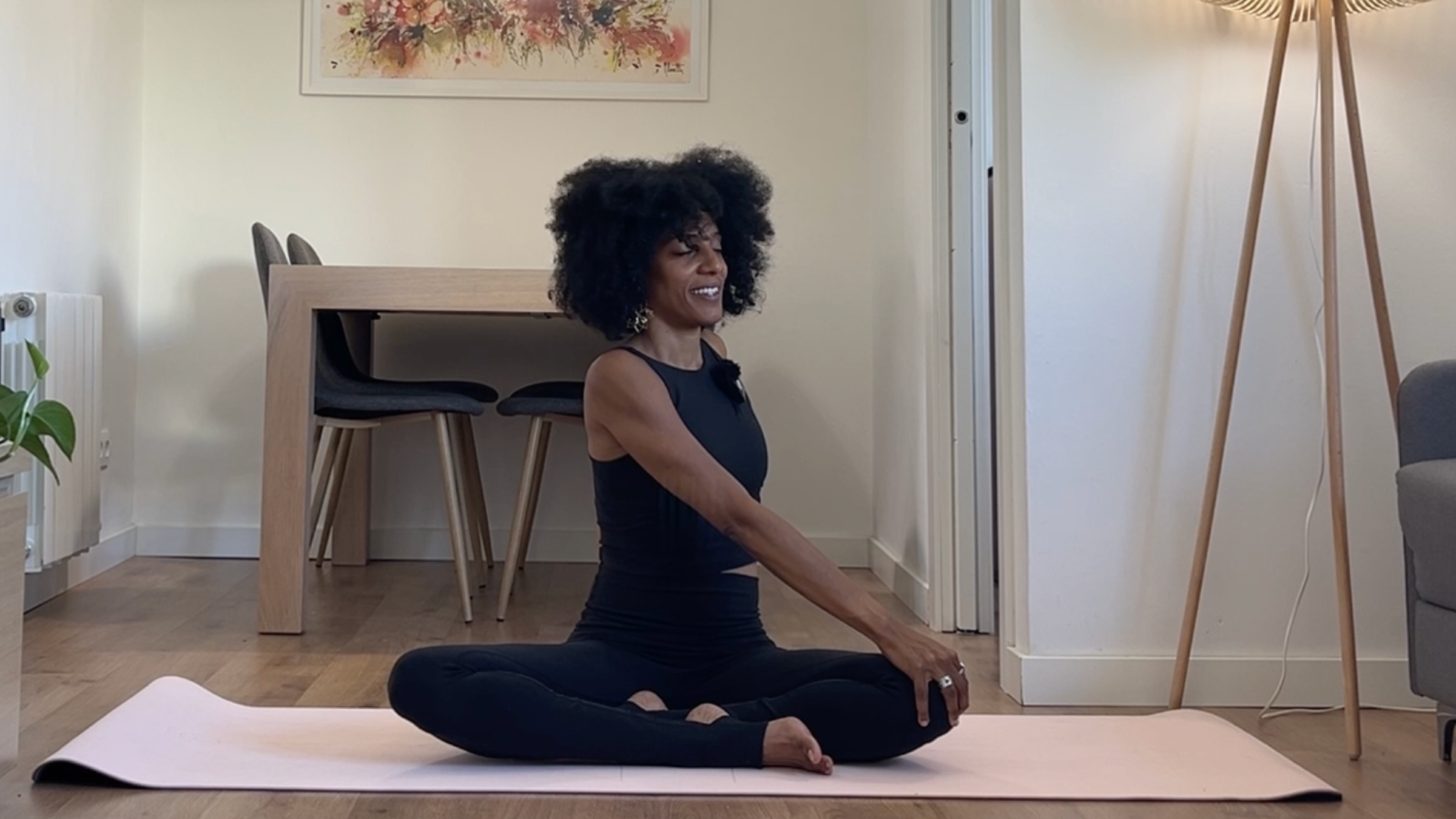
7. Seated Spinal Twist
Inhale as you sweep both arms overhead to lengthen the spine. On an exhale, twist your torso gently toward the left, placing your right hand on your left knee and your left fingertips on the floor directly behind you. Hold for a few steady breaths before returning to center and switching sides.
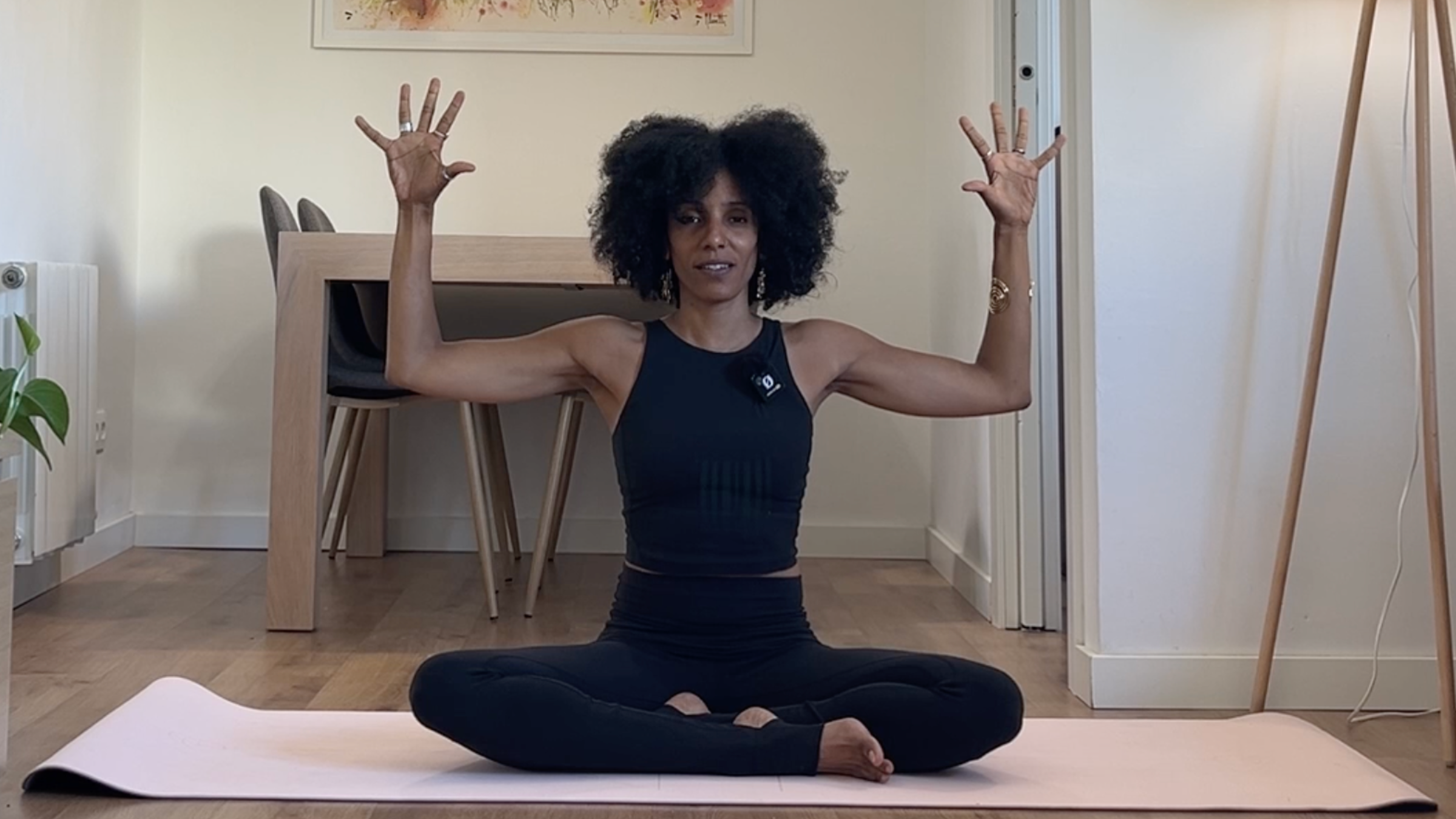
8. Hand Opening & Closing
Remaining seated, bring your arms back into a cactus shape. Open your fingers as wide as possible, stretching the palms, then snap your hands into tight, active fists. Repeat this opening and closing cycle rapidly or mindfully for as many rounds as feels restorative to tired typing hands.
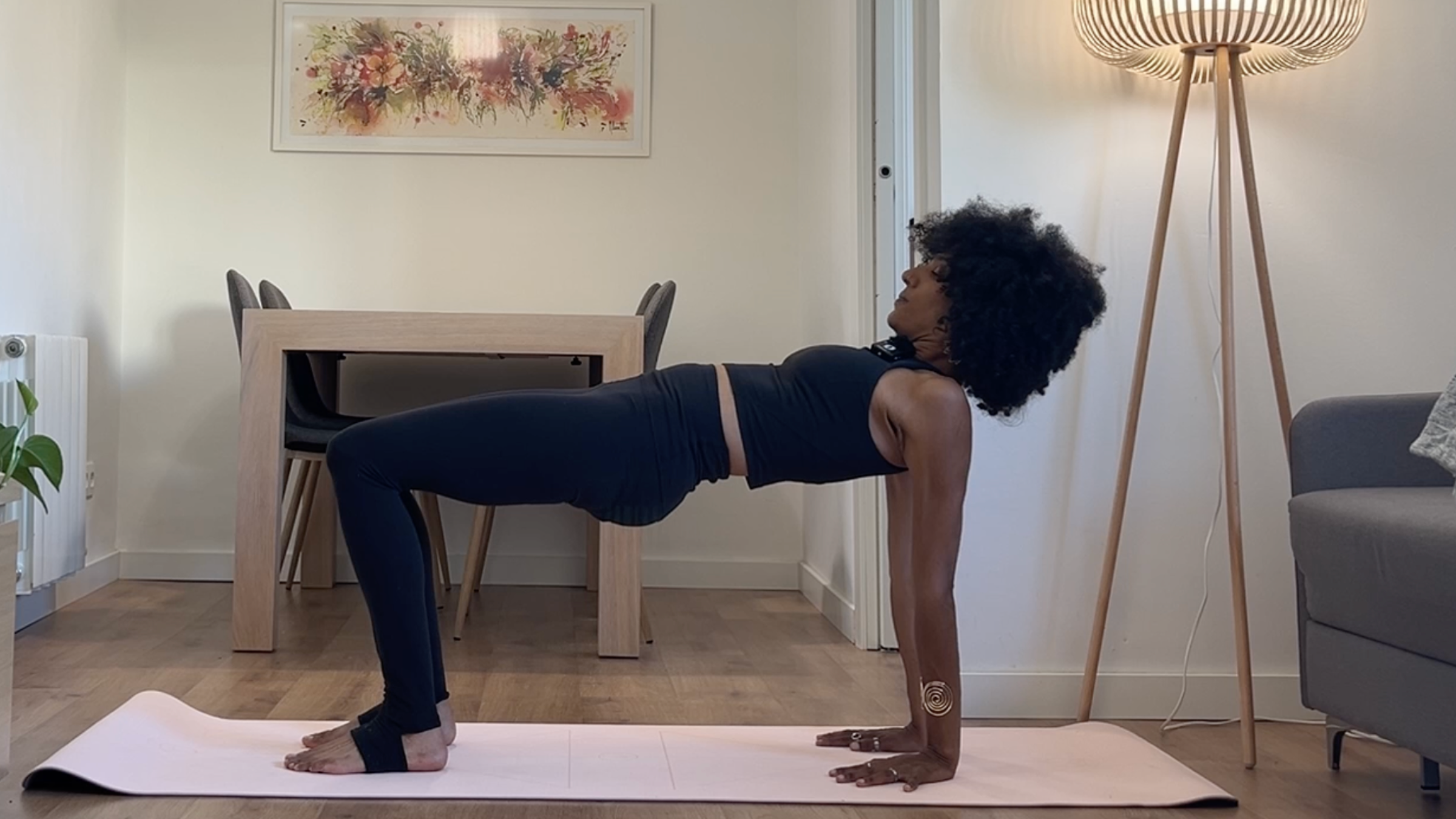
9. Reverse Tabletop
Sit with your knees bent, feet flat on the floor, and your hands placed on the mat behind your hips with your fingertips pointing forward or toward the back edge of the mat. Press your hands and feet into the floor to lift your hips. Draw your chin slightly toward your chest and gaze forward, holding for a few breaths before lowering down.
10. Bound Angle Pose
Bring the soles of your feet together, letting your knees open wide. Inhale to lift your chest. On an exhale, fold forward gently, grasping your ankles or feet. If comfortable, stack your fists and rest your forehead upon them, taking several deep breaths in this restorative fold.
11. Half Plow Pose
Lie down on your back with your arms resting at your sides, palms pressed into the mat. Bend your knees toward your chest, then extend your legs straight up so your feet reach toward the ceiling (keeping a soft bend in the knees if your hamstrings are tight). Hold briefly, then shake out your arms and legs before lowering your feet to the floor.
12. Savasana
Conclude your practice by lying flat on your back in Corpse Pose, or settle into a comfortable seated meditation posture. Take three deep, cleansing breaths, allowing the physical and mental reset to settle in before returning to the rest of your day.