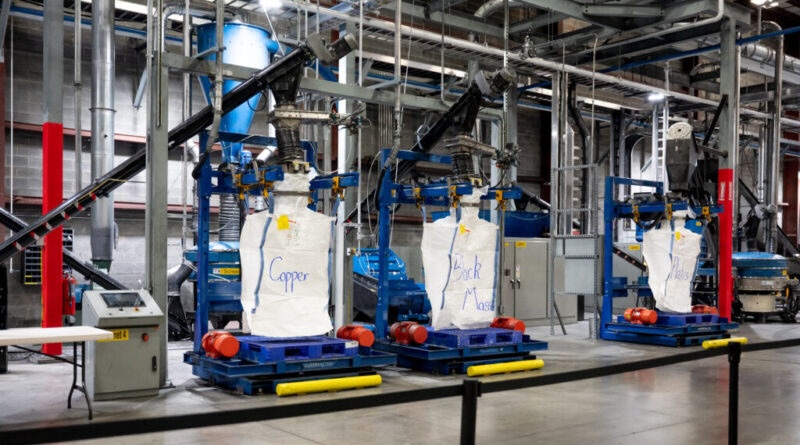
In a significant development for the domestic clean energy sector, a newly formed startup, R3 Lithium, has officially emerged from stealth mode to take over and revitalize an advanced lithium-ion battery recycling facility in Covington, Georgia. The site was previously operated by Ascend Elements, which filed for Chapter 11 bankruptcy earlier in the year following a confluence of construction disputes, canceled federal grants, and a broader collapse in global lithium prices.
Acquired by R3 Lithium on July 26 with zero legacy liabilities—despite a prior capital investment of approximately $150 million by its former owners—the Covington facility is poised to fundamentally alter the economics of domestic critical mineral production. Backed by $15 million in newly secured Series A funding from prominent investors including Integral GlobalTech Partners, TDK Ventures, and Axial Partners, R3 Lithium enters the market with a formidable commercial foundation. Crucially, the company inherits over $1 billion in pre-existing offtake agreements, including a landmark take-or-pay contract with global commodities giant Trafigura.
Rather than starting from scratch, R3 has strategically retained the core leadership and operational team responsible for the plant’s historic 2025 milestones. This includes Linh Austin, who continues in his role as Chief Executive Officer, and Dr. Eric Gratz, co-founder of Ascend Elements, who now serves as Chief Technology Officer. Gratz is also an active participant on the Technology Committee of the U.S. Department of Energy’s Li-Bridge public-private partnership, hosted by the Argonne National Laboratory.
By leveraging a streamlined, closed-loop process that extracts battery-grade lithium carbonate directly from recycled black mass on a single site, R3 Lithium aims to supply more than half of the total U.S.-produced lithium carbonate once the facility scales to full operational capacity next year.
Chronology
To understand how the Covington facility transitioned from bankruptcy to a high-flying startup launch, it is necessary to examine the turbulent timeline of the American battery supply chain over the past several years:
2025: Ascend Elements reaches a historic operational milestone at its Covington, Georgia plant, successfully becoming the first commercial-scale U.S. facility to produce 99%-plus pure lithium carbonate derived entirely from end-of-life electric vehicle (EV) batteries and manufacturing scrap.
Early 2025 to Early 2026: Federal policy shifts create severe headwinds for the clean technology sector. Following the legislative passage of President Donald Trump’s “OBBA” tax bill—which systematically eliminated key federal consumer tax credits for electric vehicles—domestic EV sales experience a sharp downturn. Concurrently, broader federal funding and grants designated for domestic electrification ventures are abruptly canceled.
April 2026: Compounded by a severe collapse in international lithium prices, construction disputes at a flagship plant in Kentucky, and legacy financial liabilities, Ascend Elements files for Chapter 11 bankruptcy protection. CEO Linh Austin issues public statements emphasizing that the voluntary restructuring is designed to preserve core operations, customer commitments, and ongoing contracts like the Trafigura agreement.
July 26, 2026: R3 Lithium formally acquires the Covington, Georgia facility. By acquiring the physical assets free and clear of previous debts and liabilities, R3 successfully resets the asset’s financial model, removing the debt overhang that crippled its predecessor.
September 10, 2026: R3 Lithium publicly emerges from stealth mode, announcing the official startup of operations at the Covington plant, underpinned by $15 million in Series A venture capital funding and more than $1 billion in pre-secured offtake contracts.
Supporting Data
The technical specifications and economic metrics underpinning the Covington facility highlight its monumental scale within the North American recycling landscape:
Processing Capacity: The plant is equipped with 30,000 metric tons of annual shredding capacity, allowing it to process massive volumes of spent lithium-ion batteries and manufacturing scrap.
Lithium Production Lines: The site currently houses a 2,500-metric-ton annual lithium carbonate production line, with physical infrastructure and footprint already allocated for an identical second line, which will double dedicated output capabilities.
Product Purity: R3’s proprietary processing methods achieve 99% purity levels for lithium carbonate derived from 100% recycled feedstock, matching the strict quality thresholds demanded by tier-one battery cell manufacturers.
Valuable Byproducts: Beyond lithium recovery, the extraction process yields a high-value, concentrated metal oxide cake containing critical components such as nickel, cobalt, manganese, and graphite. In many operational cycles, the market value of these recovered co-products offsets the raw acquisition cost of the input feedstock.
Financial Backing: The initial $15 million Series A funding round is earmarked specifically for upgrading and modernizing the lithium carbonate crystallization and precipitation lines.
National Market Impact: Once operating at full tilt projected for next year, R3’s single facility is anticipated to generate more than 50% of the aggregate domestic U.S. supply of recycled lithium carbonate.
Official Responses
Leadership from both R3 Lithium and its predecessor organization have emphasized continuity, technological resilience, and strategic independence from foreign supply chains.
Linh Austin, carrying over his leadership from Ascend Elements to R3 Lithium as CEO, underscored the unchanging nature of the plant’s operational mission in statements released ahead of the September 10 announcement. "Our mission remains exactly the same: to build a domestic, circular supply of critical battery materials using our patented process," Austin stated. He noted that day-to-day operations have continued seamlessly, ensuring that commitments to tier-one partners like Trafigura remain entirely uninterrupted.
R3 Lithium’s corporate communications highlighted the distinct competitive advantage gained through the asset restructuring: "A previous owner built the site with approximately $150 million investment; R3 acquired it with no liabilities, fundamentally resetting the economics of domestic lithium production."
Furthermore, the company detailed its exact processing methodology in official technical briefings, distinguishing its localized approach from traditional, mining-heavy supply chains:
"R3 Lithium will recover, refine, and return lithium carbonate to the domestic battery supply chain through a calciner-based crystallization and water-based precipitation process that extracts lithium directly from recycled black mass on a single site, without primary mining or non-domestic refining."
Dr. Eric Gratz, co-founder and current CTO, brings vital institutional knowledge from his dual roles in the private sector and his participation in the Department of Energy’s Li-Bridge initiative. His involvement bridges the gap between private commercialization and national strategic infrastructure goals overseen by Argonne National Laboratory.
Implications
The resurrection of the Covington plant under the banner of R3 Lithium carries profound implications for the broader energy transition, domestic manufacturing resilience, and national security.
1. Decoupling from Overseas Supply Chains
For years, Western automakers and energy storage developers have faced severe vulnerabilities stemming from reliance on foreign refining hubs—particularly in Asia. By proving that 99%-pure battery-grade lithium carbonate can be extracted and refined on a single domestic site entirely from scrap and end-of-life batteries, R3 Lithium offers a blueprint for true mineral independence. This localized loop insulates U.S. manufacturers from geopolitical trade disputes, maritime shipping disruptions, and volatile international commodity shocks.
2. The Evolution of Feedstock: Beyond EVs
While electric vehicles have historically commanded the majority of public attention regarding battery recycling, market dynamics are rapidly shifting. The exponential growth of stationary Battery Energy Storage Systems (BESS) for residential, commercial, and utility-scale grids is creating a massive secondary wave of spent batteries. Analysts note that as stationary storage installations age, they will increasingly supplement the mobility sector’s scrap stream, ensuring a steady, diversified pipeline of raw material for facilities like the Covington plant. Moreover, defense applications and military electrification initiatives continue to drive federal and private support for domestic storage security, buffering the industry against civilian market fluctuations caused by changing political administrations and tax credit rollbacks.
3. A Blueprint for Modular Expansion
R3 Lithium’s long-term corporate growth strategy relies on a modular deployment model. Rather than investing heavily in sprawling, high-risk giga-plants, the company plans to build a decentralized network of standardized, 5,000-metric-ton-per-annum facilities across North America and Europe. Crucially, these future units will only be constructed when backed by firm, pre-secured offtake agreements. This risk-mitigated approach represents a maturing clean-tech ecosystem that has learned hard lessons from the capital misallocations and bankruptcy filings of the early 2020s.
Ultimately, the transition from Ascend Elements to R3 Lithium demonstrates that the foundational infrastructure for America’s clean energy transition is durable. Even when individual companies stumble due to policy shifts, market crashes, or debt burdens, the underlying physical assets, intellectual property, and critical human talent are rapidly recycled back into the market—much like the batteries they are designed to process.