

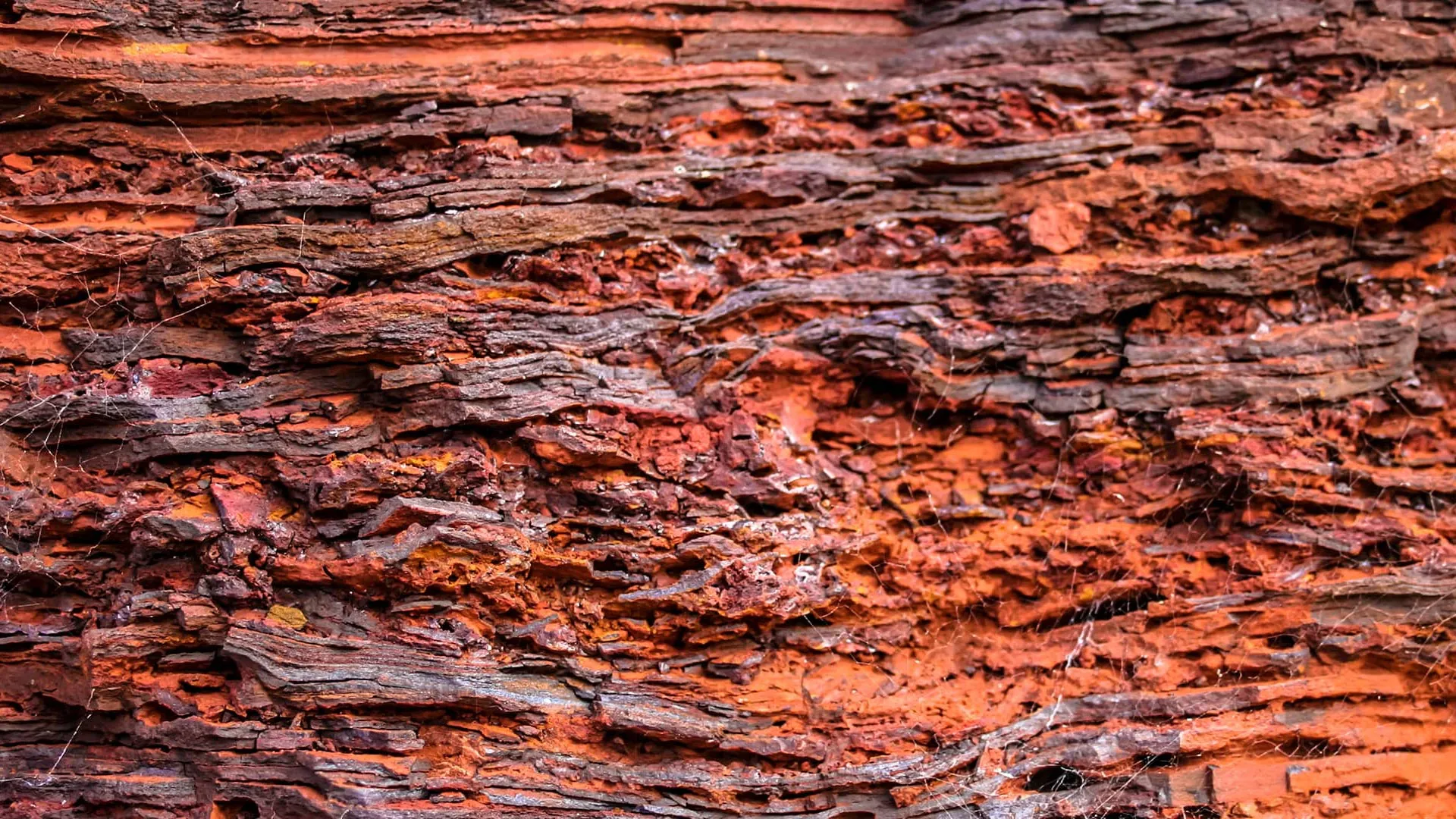
PERTH — In what could prove to be a watershed moment for the global clean energy transition, researchers at Edith Cowan University (ECU) have identified a potentially colossal source of low-emission energy lurking deep beneath the surface of Western Australia. According to groundbreaking laboratory findings, the state’s world-renowned iron ore reserves—specifically vast, iron-rich magnetite formations—are capable of generating naturally occurring hydrogen.
If this subterranean phenomenon can be harnessed and scaled up, the implications extend far beyond domestic energy security. Western Australia could pivot from being a traditional fossil fuel and mineral powerhouse into a dominant force in the international clean energy market, exporting green hydrogen to power economies across the globe.
Main Facts: The Discovery of Geologic Hydrogen in Magnetite
The core of the ECU discovery centers on magnetite, an iron oxide mineral found in staggering abundance across Western Australia, most notably within the ancient geological tapestries of the Pilbara region.
Scientists from ECU’s esteemed School of Engineering have demonstrated that magnetite is not merely an inert mineral waiting to be mined for steel production; it is an active chemical participant under the right subterranean conditions. When magnetite reacts with hot water deep beneath the Earth’s surface, it can release clean hydrogen gas.
Even more promisingly, the research team successfully engineered a method to stimulate this chemical reaction. By introducing a specialized solution into banded iron formations (BIFs), the researchers significantly accelerated hydrogen generation. This breakthrough hints at a future where subterranean hydrogen production is not just a passive natural process, but an actively managed, human-enhanced energy extraction industry.
Key elements of the discovery include:
- The Catalyst: Magnetite reacting with thermal waters under extreme geological pressure.
- The Location: Western Australia’s Pilbara region, home to some of the largest banded iron formations on the planet.
- The Innovation: The ability to artificially stimulate the reaction via fluid injection, opening the door for engineered natural hydrogen (often referred to as "gold" or "white" hydrogen) production.
- The Fluid Pathway: Hydrogen yield is governed not just by mineral volume, but by rock permeability—specifically how effectively water can navigate fractures, pores, and micro-pathways to reach fresh mineral surfaces.
Chronology: From Concept to Controlled Experiment
To arrive at these conclusions, the ECU research team undertook a meticulous, multi-stage scientific investigation designed to bridge the gap between theoretical geology and practical energy extraction.
Phase 1: Hypothesizing Subsurface Reactions
The project began with an examination of hydrothermal alteration processes—how minerals interact with hot fluids deep within the Earth’s crust. While serpentinization (water reacting with ultramafic rocks to produce hydrogen) has been studied for years, the ECU team turned their focus toward iron-rich magnetite systems, which are vastly more prevalent in Western Australia’s geology.
Phase 2: Recreating Deep Underground Conditions in the Lab
To observe the process in real-time, the researchers established a high-precision experimental protocol. Magnetite samples were submerged in water and subjected to temperatures of 200°C under immense hydraulic pressure for a continuous duration of 60 days.
These extreme parameters were carefully calibrated to replicate the searing, pressurized environments found thousands of meters beneath the Western Australian crust. By maintaining these conditions over a two-month window, the team could accurately measure gas output and analyze the structural changes occurring within the rock samples.
Phase 3: Stimulating the Reaction
Once baseline natural generation rates were established, the team introduced chemical solutions designed to interact with the banded iron formations. The intervention yielded immediate results, driving up hydrogen generation rates. This proved that subsurface hydrogen output could theoretically be optimized through human engineering.
Phase 4: Peer Review and Publication
The culmination of this rigorous timeline was documented in a study titled "Geometry-driven controls on hydrothermal natural hydrogen generation from magnetite mineral," which has officially been published in the high-impact International Journal of Hydrogen Energy.
Supporting Data and Geological Mechanics
Understanding the mechanics of this hydrogen generation requires a dive into petrology and fluid dynamics. Hydrogen is widely sought after as the ultimate zero-emission fuel because its combustion or fuel-cell utilization produces only water vapor. However, traditionally manufactured "green" hydrogen requires massive amounts of renewable electricity to split water via electrolysis—a process that can be costly and resource-intensive.
By contrast, "natural" or "white" hydrogen is generated geologically, meaning the Earth does the heavy lifting. The ECU study breaks down the precise physical and chemical parameters required for this process to succeed:
- Thermal Requirements: The hydrothermal reaction necessitates elevated temperatures (around 200°C), which are naturally occurring at depth due to the Earth’s geothermal gradient.
- Mineral Reactivity: Magnetite ($textFe_3textO_4$) acts as an electron donor in the presence of water, driving the oxidation of ferrous iron to ferric iron, which subsequently liberates hydrogen gas ($textH_2$).
- The Permeability Factor: One of the study’s most critical insights is that mass mineral volume is secondary to structural accessibility. If water cannot physically contact fresh, un-oxidized mineral surfaces, the reaction stalls. Therefore, the presence of natural fractures, pore networks, and effective permeability pathways within the banded iron formations are essential diagnostic criteria for prospective exploration sites.
[Deep Underground Environment]
       │
       ├── High Pressure & ~200°C Thermal Gradient
       ├── Water Infiltration via Rock Fractures & Pores
       └── Reaction with Magnetite (Banded Iron Formations)
                 │
                 ▼
       [Natural Hydrogen Generation (H₂)]
                 │
                 ├── Enhanced via Solution Injection
                 └── Trapped in Subsurface Reservoirs / Extracted
Official Responses from ECU Researchers
The significance of the discovery has drawn enthusiastic commentary from the leadership of the ECU School of Engineering, who emphasize the sheer scale of the opportunity before Australia.
Associate Professor Alireza Keshavarz underscored the generational impact such an energy reserve could have on the national economy.
"Australia could be sitting on a massive, untapped energy reserve — and the potential is enormous," Associate Professor Keshavarz stated.
"There is enough hydrogen for Australia to benefit for generations, and potentially enough for us to become a major exporter of clean energy to the rest of the world."
Lead author Kaveh Moghanirahimi pointed to the unique geological endowment of Western Australia, noting that the state’s geography positions it perfectly to spearhead a new global energy frontier.
"Western Australia has some of the world’s largest banded iron formations. If we can unlock this resource at scale, it could be transformative for our energy future," Mr. Moghanirahimi said.
"We even see the potential for Western Australia to strengthen its energy independence during times of crisis through access to this naturally generated hydrogen."
Professor Stefan Iglauer added crucial context regarding the transition from microscopic lab work to macroscopic, field-scale application. He stressed that understanding the stone architecture—how fluids migrate through microscopic pores—is the key to turning theory into commercial reality.
"This work helps bridge the gap between laboratory experiments and real geological systems," Professor Iglauer explained.
"Our findings show that hydrogen production depends not only on the amount of magnetite present, but also on how easily water can access fresh mineral surfaces through fractures, pores and permeable pathways."
Implications: A New Era for Western Australia’s Energy and Export Economy
The ramifications of the ECU study stretch across multiple sectors, promising to reshape geopolitical energy dynamics, domestic industrial strategy, and environmental policy.
1. Energy Independence and Security
In an era marked by geopolitical volatility, supply chain disruptions, and fluctuating fossil fuel markets, sovereign energy security is paramount. Western Australia already powers a significant portion of the nation through its vast natural gas reserves and burgeoning renewables sector. Access to a self-replenishing, subterranean source of natural hydrogen could provide a localized, zero-emission baseline fuel that buffers the state against external shocks.
2. Redefining the Pilbara
For over a century, the Pilbara has been synonymous with the export of iron ore, fueling the industrialization of nations like China, Japan, and South Korea. If magnetite formations can be co-developed for both iron extraction and natural hydrogen production, the region’s economic footprint will multiply. Industrial infrastructure already in place—ranging from heavy transport networks to deep-water ports—could potentially be adapted to handle hydrogen export logistics.
3. Revolutionizing the Hydrogen Economy
Current clean energy strategies rely heavily on manufactured "green" hydrogen, which requires dedicated wind and solar farms coupled with massive electrolyzer installations. Natural hydrogen circumvents many of these capital-intensive hurdles. If commercial drillers can tap into underground reservoirs of native hydrogen in the same fashion as natural gas or petroleum, the levelized cost of hydrogen could plummet, making it immediately competitive with fossil fuels across heavy industry, shipping, and aviation.
4. Moving from Lab to Field
Despite the immense optimism surrounding the ECU publication, researchers caution that significant hurdles remain. Transitioning from controlled 60-day laboratory bench tests to commercial-scale extraction will require extensive geological surveying, deep-earth seismic imaging, and exploratory drilling campaigns across Western Australia. Pilot projects will need to prove that stimulated hydrogen generation can be sustained over years rather than weeks, and that the gas can be safely captured and brought to the surface without leaking into the atmosphere.
Nevertheless, the foundational science has been established. Western Australia’s ancient iron-rich bedrock is no longer viewed simply as the foundation of the state’s mining wealth, but as a living chemical engine capable of fueling the future. As exploration companies turn their attention to the structural pathways mapped out by the ECU team, the Pilbara may soon be recognized not just as the iron heart of Australia, but as the birthplace of a global clean energy revolution.
