

SOUTHAMPTON, UK — For generations, science textbooks and geology guides have taught a singular, foundational narrative about the American Southwest: the awe-inspiring chasm of the Grand Canyon was patiently, meticulously carved over millions of years by the relentless currents of the Colorado River. While that narrative remains true for the final shaping of the gorge as we recognize it today, a groundbreaking international study suggests that the stage for this geological masterpiece was set nearly a billion years earlier by an entirely different, colossal architect.
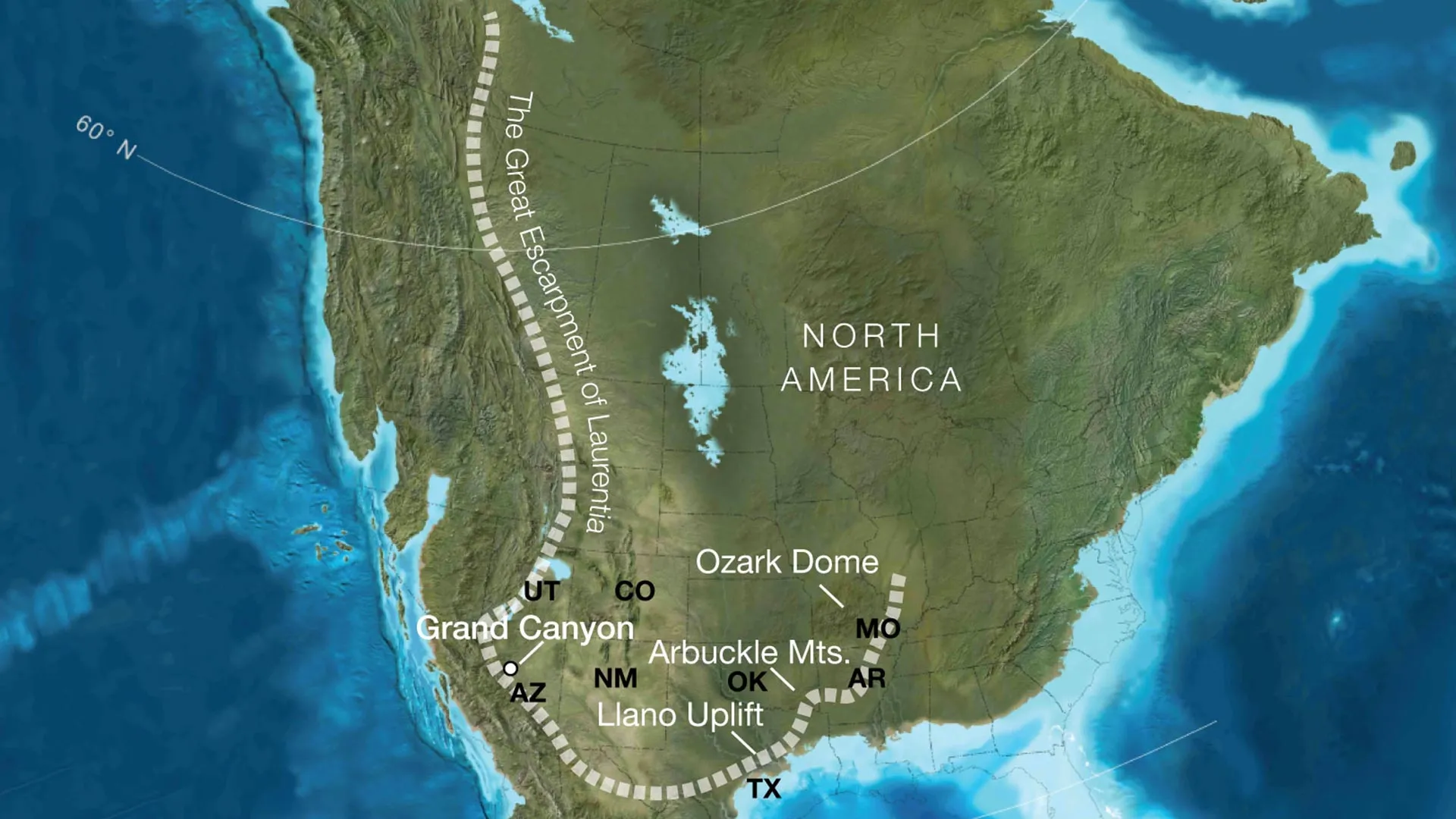
According to research led by Earth scientists at the University of Southampton, an enormous, ancient cliff system—a "great escarpment" potentially reaching a staggering kilometer in height—tore across western North America roughly 800 million years ago. This monumental landscape feature was born during the violent tectonic breakup of the ancient supercontinent Rodinia. As the landmass fractured, these towering precipices initiated an epoch of aggressive erosion, systematically stripping away miles of overlying strata and dragging the deepest, most ancient basement rocks of the Grand Canyon to the surface long before a single drop of the modern Colorado River flowed across the plateau.
Published in the journal Geology, the study upends conventional wisdom regarding the region’s origin story. By bridging the fields of plate tectonics and landscape evolution, the research team—comprising experts from the University of Southampton, the GFZ Helmholtz Centre for Geosciences, the University of Potsdam, and the University of Illinois Urbana-Champaign—offers a compelling solution to one of geology’s most enduring puzzles: the mystery of the Great Unconformity.
Main Facts: Rewriting the Chronology of the Southwest
At the heart of the new discovery lies a profound paradox that has long troubled geologists: while the Grand Canyon preserves a rich geological history stretching back roughly two billion years, more than half of that rock record is entirely missing. This notorious gap, known as the Great Unconformity, represents a billion-year period where rock layers are either dramatically thin or completely absent.
The Southampton-led research proposes that this missing chapter is not merely the result of localized erosion, but rather the fingerprint of a continental-scale tectonic and erosional event.
- The Ancient Colossus: The study reveals that a massive escarpment—towering roughly one kilometer high—formed approximately 800 million years ago along the margins of breaking Rodinia.
- Continental Reach: This cliff system was not a localized phenomenon; it stretched for thousands of kilometers, traversing regions that today correspond to modern-day Arizona, Utah, Idaho, Wyoming, Colorado, Texas, Oklahoma, Arkansas, Missouri, and Illinois.
- Massive Denudation: Over tens of millions of years, this migrating escarpment system wore down the landscape, removing an estimated five to ten kilometers of rock in certain areas, thereby exposing the crystalline basement rocks that now anchor the walls of the Grand Canyon.
- Global Analogues: The researchers utilized modern geographic analogues—such as the Great Escarpments found in South Africa and Brazil—to model how ancient North America responded to similar tectonic rifting and erosional forces.
Chronology of a Lost Landscape: From Rodinia to the Modern Canyon
To comprehend the sheer scale of this geological evolution, scientists had to reconstruct a landscape that vanished hundreds of millions of years before the first dinosaurs walked the Earth. The chronology uncovered by the research team unfolds across three distinct geological acts.
Act I: The Fracture of Rodinia (approx. 1.1 to 800 Million Years Ago)
Before North America looked anything like the continent we recognize today, it was anchored at the heart of Rodinia, a supercontinent that assembled globally around 1.1 billion years ago. As tectonic forces shifted beneath the crust, Rodinia began to pull apart. This rifting process was not gentle; it generated immense tensional forces, crustal stretching, and thermal uplift.
As the continental crust arched upward in response to heating from below, it created massive topographic relief. High ground and steep, unstable slopes emerged near the rift margins—including the region that would one day become the southwestern United States.
Act II: The Great Escarpment and Inland Migration (800 to 500 Million Years Ago)
As the supercontinent fragmented, these newly formed highlands gave rise to a colossal, continuous cliff system: the great escarpment. Reaching heights of approximately one kilometer, this rocky barrier acted as a gigantic scraper against the elements.
Crucially, escarpments of this magnitude are not static. As weathering, rain, and mass wasting battered the cliff face, the escarpment began to retreat inland. This progressive landward migration consumed immense volumes of rock over tens of millions of years. The researchers calculate that this relentless erosional engine scraped away between five and eight kilometers of overlying material in various sectors.
In doing so, it brought deeply buried, ancient crystalline basement rocks—the very rocks exposed at the very bottom of the Grand Canyon—much closer to the surface. This prolonged stripping phase created the sweeping, regional planation that defines the Great Unconformity.
Act III: The Modern Sculptor Arrives (6 Million Years Ago to Present)
With the ancient basement rocks already brought near or to the surface by the ancient escarpment’s migration, the stage was set for the final act. Much later in geological history—roughly six million years ago—the modern Colorado River established its course across the uplifted Colorado Plateau.
Benefiting from the preexisting weakness and the shallow burial of the ancient crystalline core, the river accelerated its downcutting. Water, wind, and gravity went to work on the already-primed strata, rapidly carving the deep, labyrinthine gorges that define the Grand Canyon today. In essence, the Colorado River did not dig the entire trench from a flat, high plain; rather, it inherited a landscape whose foundations had already been dramatically exhumed hundreds of millions of years prior.
Supporting Data: Reconstructing the Unseen Through Modern Analogues
Reconstructing a landscape that has been largely erased requires sophisticated methodologies. The research team combined state-of-the-art plate tectonic reconstructions with numerical models of landscape evolution. These models simulate how topography responds to uplift, climate, and erosion over vast expanses of geological time.
The team’s simulations revealed a striking geographical parallel. When Rodinia was breaking up, the paleogeographic position of the future Grand Canyon relative to the continental edge was remarkably similar to the positions of modern-day escarpments in southern Africa and Brazil. Today, features like the Great Escarpment of South Africa—a steep, dramatic drop separating the high interior plateau from the low-lying coastal oceans—provide geologists with a living laboratory.
By studying how these modern tectonic margins erode, retreat, and shed sediment, the researchers could accurately quantify the removal rates of rock in ancient North America. Their predictive models indicated that five to ten kilometers of material should have vanished from the region. Remarkably, this theoretical output aligns almost perfectly with independent geological datasets—such as thermochronology and stratigraphic records—which have long suggested that massive thicknesses of rock mysteriously disappeared from the southwestern US long before the Colorado River existed.
Official Responses and Expert Perspectives
The study has generated significant excitement within the international geoscience community, offering a fresh lens through which to examine continental interiors worldwide.
Dr. Thomas Gernon, Professor of Earth Science at the University of Southampton and lead author of the study, emphasized the transformative nature of the findings.
"Our paper suggests the Canyon’s basement rocks were progressively brought to the surface as part of an immense escarpment that developed during the breakup of an ancient supercontinent," Prof. Gernon stated. "The findings also shed light on the formation of the Great Unconformity, a mysterious gap in the rock record that spans over a billion years."
Addressing the mechanics of the ancient landscape, Gernon noted how tectonic and erosional forces intertwined to sculpt North America’s core:
"This long-lived tectonic landscape provides a missing piece in understanding why erosion associated with the Great Unconformity varies so dramatically across the southwestern US. Our work suggests that tectonic uplift related to continental rifting and breakup created both steep slopes and high ground, providing the mountainous terrain that rivers and glaciers could readily erode."
Co-researchers from the GFZ Helmholtz Centre for Geosciences, the University of Potsdam, and the University of Illinois Urbana-Champaign echoed these sentiments, highlighting that the implications extend far beyond American borders. By establishing that continental rifting can drive long-lived, retreating escarpments that fundamentally alter continental topography, the study provides a new framework for interpreting similar mysterious gaps in rock records across other continents, including Australia, Africa, and Antarctica.
Broader Implications: Reshaping North America Before Complex Life
The fallout of this research reaches far deeper than simply updating the biography of the Grand Canyon. The existence of a towering, kilometer-high escarpment stretching thousands of kilometers across ancient Laurentia—the prehistoric core of North America—would have exerted a profound influence on Earth’s surface systems during a critical juncture in planetary history.
Altering Hydrology and Sedimentation
A mountain rim of this magnitude acts as a master controller for a continent. It dictates regional climate patterns, forces orographic precipitation, dictates the paths of ancient river systems, and determines precisely where eroded sediments are dumped into surrounding ocean basins. The debris stripped away by the retreating escarpment flooded into shallow seas surrounding Laurentia, altering marine chemistry and nutrient supply.
Setting the Stage for the Cambrian Explosion
Crucially, this monumental landscape evolution occurred in the lead-up to the Ediacaran and Cambrian periods—an era marked by the sudden, dramatic diversification of complex animal life known as the Cambrian explosion. Some scientists have hypothesized that intense continental weathering and the delivery of novel minerals and sediments from eroding landmasses into the oceans played a pivotal role in driving these evolutionary leaps. By demonstrating that North America was dominated by a massive, eroding escarpment during this exact window, the Southampton study provides a vital environmental context for the dawn of complex biology.
A New Tool for Global Geology
Finally, the research offers geologists a powerful new comparative tool. As Prof. Gernon noted, active landscapes in the Southern Hemisphere today serve as a bridge to understanding deep-time Earth history.
"Today’s escarpments in Africa, Brazil, India and Antarctica provide windows into the forces that shape continents over hundreds of millions of years," Gernon concluded. "By comparing Grand Canyon’s ancient history with active landscapes like the Great Escarpment of South Africa, we’re able to see North America’s most iconic geologic landmark in an entirely new light. Our findings could help geologists reinterpret other ancient continental interiors where similarly large gaps occur in records, offering a better understanding of how Earth’s continents have changed over hundreds of millions of years."
As researchers continue to decode the silent testimony locked within stone, the Grand Canyon proves once again that its walls hold secrets far more ancient, dynamic, and globally interconnected than humanity ever dared to imagine.
