

In the contemporary professional landscape, a familiar scene plays out millions of times each day: an individual catches a sudden, unvarnished glimpse of their reflection in a dark windowpane or a computer screen, only to be struck by how severely rounded their posture has become. This posture—often humorously characterized by fitness experts as a "croissant-like" upper body shape—features sunken shoulders, a jutting chin, and an upper back curved persistently forward.
While the aesthetic implications of this slouch can be startling, the physical reality is far more concerning. Hours spent commuting, hunching over laptops, scrolling through smartphones, and staring at desktop monitors exact a heavy toll on the human musculoskeletal system. The resulting discomfort manifests as tight shoulders, a stiff and strained neck, and a persistently achy upper back.
To combat this modern epidemic of postural fatigue, many wellness practitioners are turning to a surprisingly timeless remedy: yoga backbends. Though these movements were conceived millennia before the advent of Microsoft Excel or remote-work culture, they serve as a powerful physiological antidote to the rigors of desk-bound life.
The Main Facts: The Anatomy of Modern Slouching
The human body is remarkably adaptable, molding itself over time to the physical demands placed upon it. Unfortunately, modern work culture demands sustained periods of seated, forward-facing concentration. This lifestyle promotes a distinct chain reaction throughout the upper body:
- Pectoral Tightness: The muscles of the chest (pectorals) remain shortened for hours at a time, eventually tightening and pulling the shoulders forward.
- Upper Back Strain: The muscles of the upper back (rhomboids and mid-trapezius) are forced into a prolonged, elongated state, leading to fatigue, weakness, and discomfort.
- Spinal Compression: The thoracic spine—the middle and upper section of the back—loses its natural extension, becoming rigid and resistant to upright posture.
Yoga backbends directly counteract these patterns. By stretching the neck, shoulders, chest, and upper back in the exact opposite direction of a desk slump, these poses encourage spinal mobility, restore openness to the front body, and retrain the nervous system to support a more upright, natural posture.
Chronology: From Ancient Roots to Modern Desk Therapy
Pre-Modern Origins
The practice of asana (physical yoga postures) originated thousands of years ago in ancient India. While early traditions prioritized mental clarity, spiritual discipline, and breath control, physical postures were systematically developed to keep the physical body healthy, flexible, and resilient. Backbends, known as spinal extensions, were traditionally utilized to stimulate the nervous system, energize the body, and maintain youthful elasticity in the spine.
The Rise of Sedentary Work Culture
Fast-forwarding to the 20th and 21st centuries, the nature of human labor shifted dramatically from agrarian and manual tasks to knowledge-based, desk-bound professions. The widespread adoption of personal computers, smartphones, and prolonged desk work created a brand-new class of physical ailments—collectively recognized by ergonomists and physical therapists as repetitive strain injuries, postural syndrome, and upper crossed syndrome.
The Integration of Yoga and Ergonomics
In recent decades, health professionals, physical therapists, and yoga instructors have increasingly bridged the gap between ancient movement traditions and modern ergonomics. Rather than viewing yoga solely as a spiritual practice or an intense workout, modern science recognizes it as an effective therapeutic tool for postural rehabilitation. Today, structured sequences incorporating backbends are widely recommended for office workers, remote professionals, and students seeking to undo the physical damage of long hours in front of screens.
Supporting Data: The Impact of Sedentary Lifestyle and Mobility Work
While ancient yogis relied purely on empirical observation, modern sports science and biomechanics provide robust data supporting the necessity of spinal extension work:
- The Weight of the Head: Ergonomic studies show that for every inch the head moves forward from neutral alignment, the perceived weight of the head on the cervical spine doubles. In a typical slouched desk posture, the neck muscles must work twice as hard to support the skull, contributing to chronic tension headaches and neck stiffness.
- Respiratory Efficiency: Slouching compresses the thoracic cavity, limiting the diaphragm’s ability to expand fully. Opening the chest through backbends has been shown to improve tidal volume and enhance oxygen intake, leading to greater daytime alertness and reduced fatigue.
- The Frequency Factor: According to occupational health surveys, over 70% of office workers experience recurrent neck and shoulder pain. Interventions that incorporate mobility breaks, stretching, and targeted backbends have demonstrated significant success in reducing musculoskeletal complaints and boosting workplace productivity.
Official Responses and Expert Perspectives
Physical therapists, chiropractors, and certified yoga instructors increasingly agree that static stretching alone is insufficient to counteract the physical toll of office work. True postural correction requires active mobility training that targets the thoracic spine.
The Role of Physical Therapists
"When we sit at a desk all day, our neuromuscular system essentially forgets how to engage the posterior chain," explains Dr. Sarah Jenkins, a Doctor of Physical Therapy specializing in spine health. "Backbends—when practiced safely and progressively—help reawaken the muscles of the upper back while safely opening the anterior chest wall. It is one of the most efficient ways to reset the spine after a long day of computer work."
The Yoga Perspective
Yoga educators emphasize that backbends do not need to be intimidating or deep to be effective. "You don’t need to drop back into a full wheel pose to experience relief," notes veteran yoga instructor Marcus Vance. "Gentle, supported, and accessible backbends allow practitioners to target the exact areas where desk tension accumulates without risking lower back strain."
Experts recommend integrating one or two of these poses midway through a home practice or as part of a post-work stretching routine, always ensuring the muscles are reasonably warm before diving into deeper extensions.
Implications: Four Essential Backbends to Reset Your Posture
To effectively counteract forward-rounded posture, incorporate these four accessible yoga poses into your regular routine. Hold each pose for 3 to 5 deep, intentional breaths, focusing on opening the chest and lengthening the spine.
+-------------------------------------------------------------+
|               RECOMMENDED POSTURE-RESET SEQUENCE            |
+-------------------+--------------------+--------------------+
| Pose Name         | Primary Focus      | Duration           |
+-------------------+--------------------+--------------------+
| 1. Puppy Pose     | Shoulders & Spine  | 3-5 Breaths        |
| 2. Camel Pose     | Chest & Front Body | 3-5 Breaths        |
| 3. Bridge Pose    | Upper Back & Glutes| 3-5 Breaths        |
| 4. Supported Fish | Thoracic Spine     | 3-5 Deep Breaths   |
+-------------------+--------------------+--------------------+
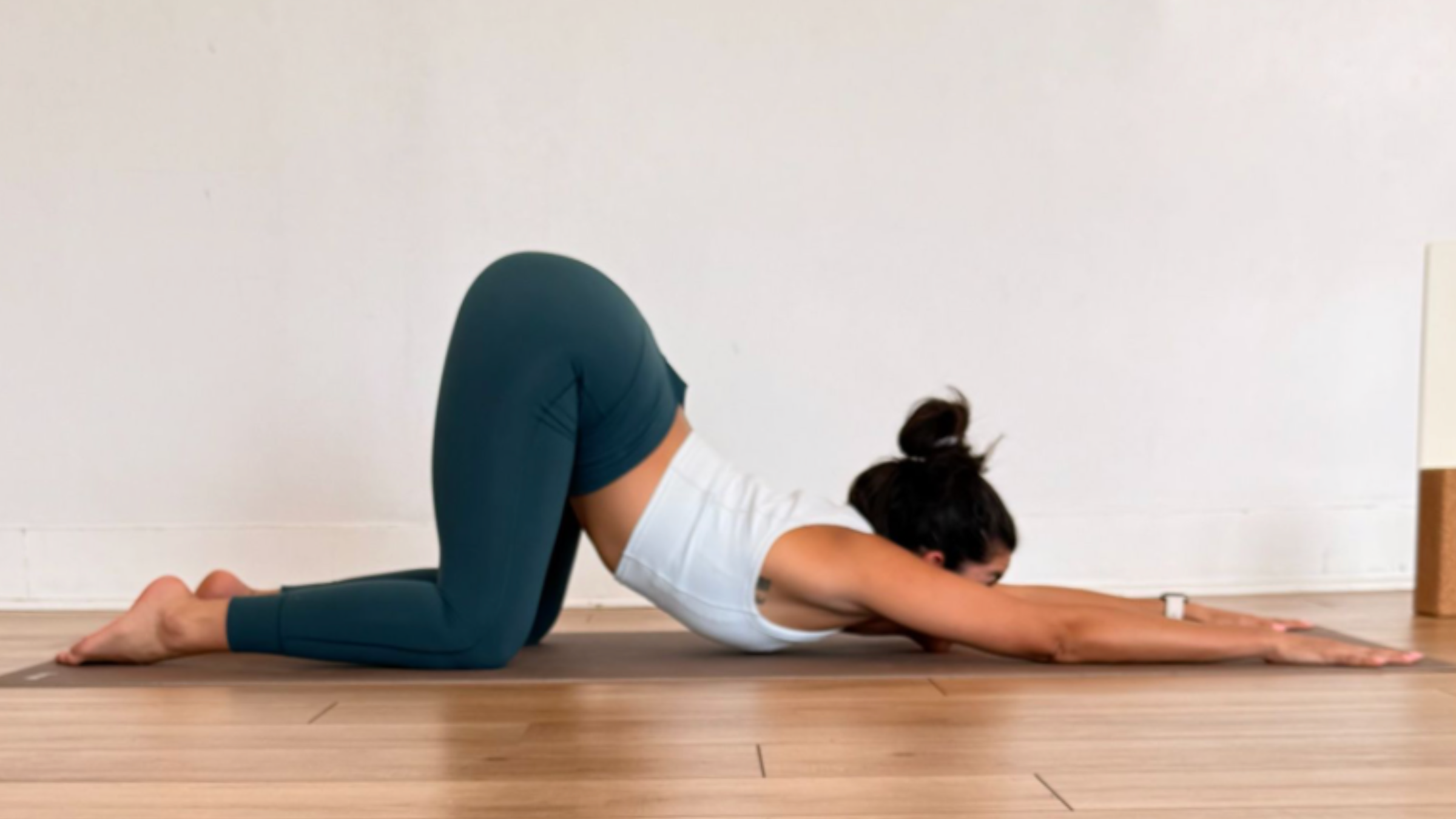
1. Puppy Pose
Puppy Pose (Uttana Shishosana) is an accessible bridge between Child’s Pose and Downward-Facing Dog, making it exceptionally effective for opening the shoulders and upper spine without placing pressure on the wrists.
- How to Practice: Begin on your hands and knees in a tabletop position. Keeping your hips stacked directly over your knees, slowly walk your hands forward. Allow your forehead to rest gently on the mat, a yoga block, or a pillow.
- The Form: Imagine your chest melting and relaxing downward toward the floor. If your shoulders feel particularly tight, widen your arms slightly to create more space. Maintain this position for 3 to 5 steady breaths, visualizing the space between your shoulder blades expanding with every inhale.
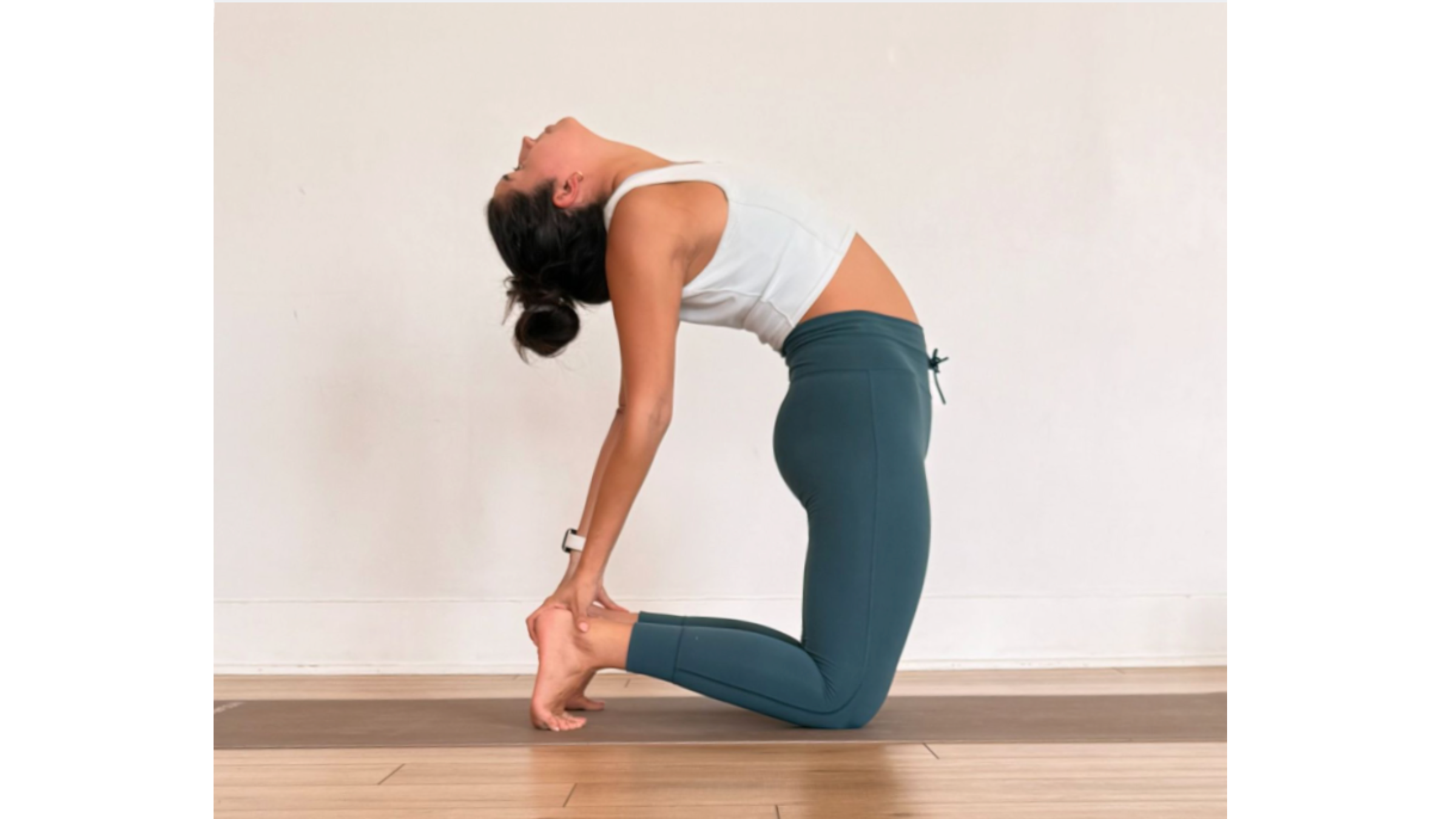
2. Camel Pose
Camel Pose (Ustrasana) is a potent kneeling backbend that actively opens the entire front line of the body, including the chest, abdomen, and hip flexors.
- How to Practice: Kneel on your yoga mat with your knees spaced roughly hip-width apart. Tuck your toes under to elevate your heels slightly, and place your hands on your lower back just below the hip bones, with your fingers pointing downward.
- The Form: Press your shins firmly into the mat and slowly draw your hips forward as you lift your chest toward the ceiling and arch your spine. Roll your shoulders back and draw your elbows toward one another. If comfortable, lift your gaze upward; otherwise, keep your gaze straight ahead. You can keep your hands on your lower back, or reach your fingertips down to your heels or to yoga blocks placed beside your feet. Hold for 3 to 5 breaths before gently returning to an upright kneeling position.
3. Bridge Pose
Bridge Pose (Setu Bandhasana) is a foundational supine backbend that strengthens the posterior chain—including the glutes, hamstrings, and upper back—while gently opening the chest.
- How to Practice: Lie flat on your back with your knees bent and your feet planted firmly on the mat hip-distance apart. Rest your arms alongside your body with your palms facing down.
- The Form: Press evenly into your feet, hands, and upper back as you lift your hips away from the mat. For an enhanced chest stretch, shimmy your shoulders underneath your body and interlace your fingers beneath your pelvis. Breathe deeply into your open chest for 3 to 5 breaths before slowly lowering your spine back down to the floor, vertebra by vertebra.
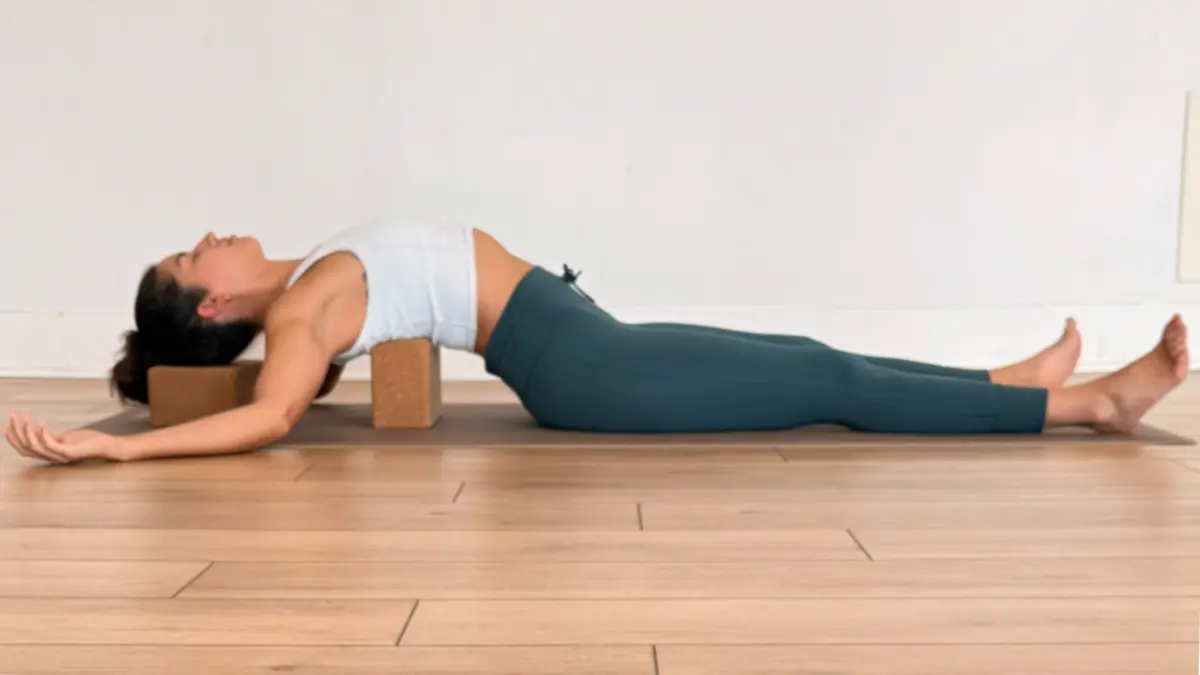
4. Supported Fish Pose
Supported Fish Pose (Matsyasana variation) is the ultimate restorative antidote to a long day of hunching. By utilizing props, this pose allows the upper body to completely relax into passive spinal extension.
- How to Practice: Gather two yoga blocks. Place the first block flat on the mat at its lowest height. A few inches behind it, place the second block on its medium height. Sit on the mat facing away from the blocks, with your knees bent and feet flat.
- The Form: Use your forearms to slowly lower yourself backward until the second block rests directly beneath your shoulder blades. Position the first block to comfortably support the back of your head. Make any adjustments necessary to ensure your neck is relaxed. Rest your arms on the floor beside you, either straight or shaped like a goalpost. You can keep your knees bent or extend your legs long on the mat like Savasana. Surrender your body to the support of the blocks and stay here for 3 to 5 slow, deep breaths.
Conclusion
While modern technology and desk-bound jobs are unlikely to disappear anytime soon, the physical toll they exact on our bodies is entirely manageable. By carving out just a few minutes each day to practice intentional spinal extensions, we can successfully counteract the "croissant-like" slouch of desk culture. Embracing these ancient yoga backbends offers a powerful pathway toward a healthier, more mobile, and pain-free spine.
