

By Tarot Insights Editorial Staff
Published February 2024
Main Facts
In the modern landscape of mindfulness, self-reflection, and alternative youth counseling, practitioners are constantly searching for accessible tools to connect with adolescents. Enter "The Four Pages"—a specialized, rapid Tarot reading technique engineered specifically for individuals aged 14 to 19.
Developed over a decade ago and rigorously refined through hundreds of face-to-face sessions conducted with strict parental permission, this method bridges the gap between ancient cartomancy and modern adolescent psychology. Instead of overwhelming young clients with complex, multi-card spreads like the Celtic Cross, "The Four Pages" utilizes a streamlined three-card focal point derived from the court cards of the Minor Arcana: the Pages.
The core mechanics of the reading are disarmingly simple yet profoundly symbolic:
- The Selection: The reader extracts the four Pages (Cups, Pentacles, Swords, and Wands) from a standard Tarot deck. The young participant chooses the Page that best represents their current identity, aspirations, or energy.
- The Integration: The remaining three Pages are returned to the deck, while the chosen Page is framed as the participant "walking into the future."
- The Shuffle: The chosen Page is reinserted into the deck, which is then shuffled. The teenager calls out when to stop.
- The Revelation: The deck is searched for the participant’s Page. The card immediately above it represents their ultimate ambition or goal to strive for, while the card immediately below it represents a foundational support system or inner strength they can call upon during hardships.
Designed to feel part-mentorship, part-magic trick, the system offers a unique framework for opening constructive dialogues about ambition, resilience, and personal growth without imposing adult frameworks upon the youth.
Chronology of Development
To understand how "The Four Pages" became a staple in modern youth-oriented cartomancy, it is essential to trace its evolution over the past ten years.
Phase 1: Inception and Initial Trials (Early 2014)
Over a decade ago, youth engagement specialists and veteran Tarot readers recognized a distinct gap in how esoteric tools were communicated to teenagers. Traditional readings often proved too dense, abstract, or prolonged for younger demographics with shorter attention spans. Creators began experimenting with subsets of the Tarot deck, isolating the court cards—specifically the Pages, who traditionally represent youth, students, messengers, and new beginnings—as a natural psychological mirror for teenagers.
Phase 2: Refinement and Safety Protocols (2015–2018)
As the technique was tested in community workshops and private settings, rigorous ethical guidelines were established. Recognizing the legal and developmental sensitivities of working with minors aged 14 to 19, mandatory parental consent protocols were integrated into the practice. Simultaneously, the layout was reduced from a complex spread to a micro-spread (Page + two surrounding cards) to ensure clarity, positivity, and constructive takeaways.
Phase 3: Road-Testing and Group Dynamics (2019–2022)
The method underwent extensive field testing across hundreds of face-to-face sessions. Practitioners discovered that framing the draw with a touch of theatrical flair—treating the search for the Page like a psychological magic trick—dramatically increased engagement. Furthermore, group settings proved exceptionally successful, as peer observation fostered a communal, interactive environment where teenagers eagerly awaited their turn.
Phase 4: Formalization and Digital Publication (2023–Present)
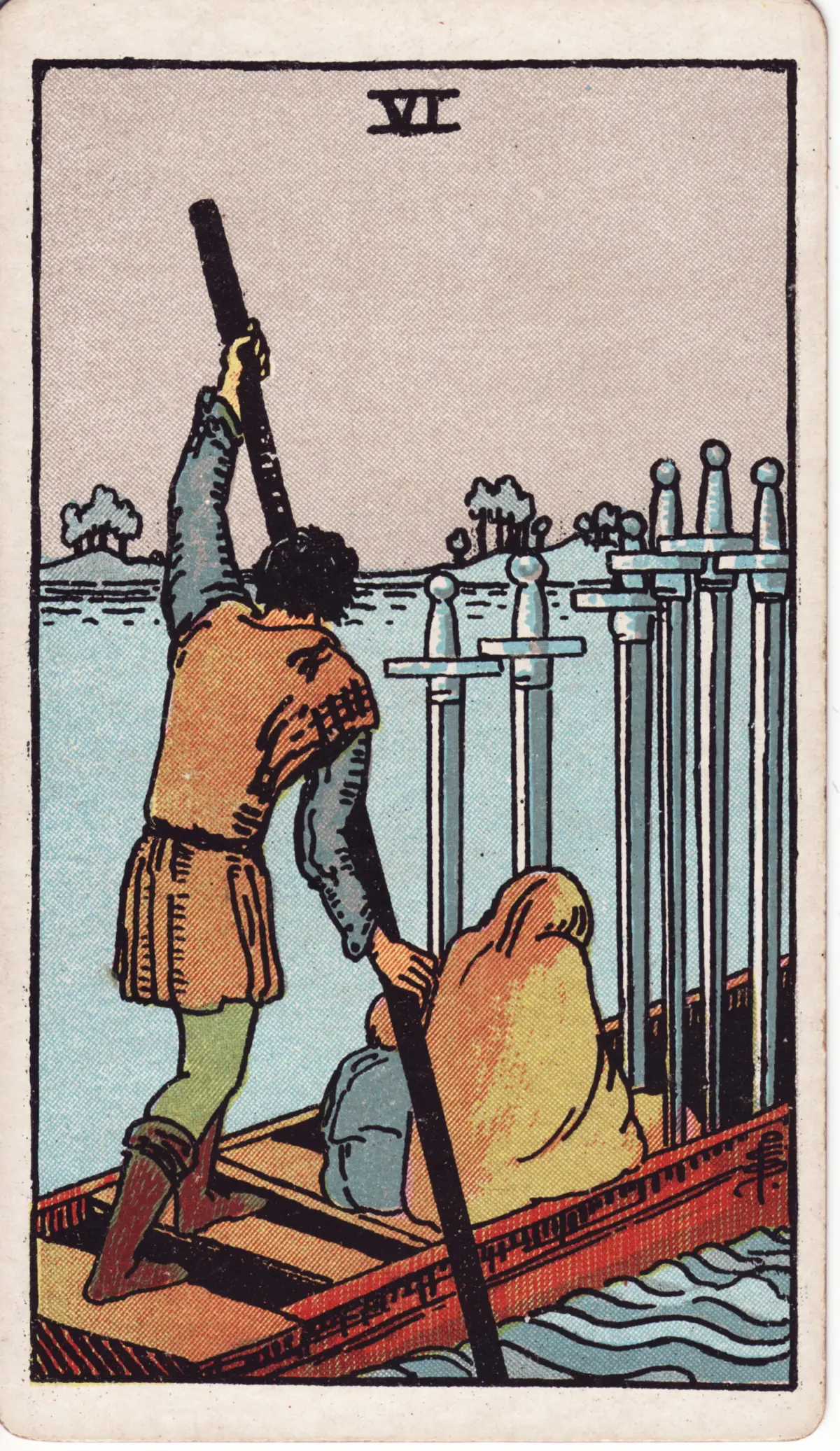
By early 2024, the methodology was formalized and published for a broader audience of esoteric practitioners and youth mentors. Supported by visual guides featuring classic Rider-Waite-Smith imagery (such as the Six of Swords and Seven of Wands), "The Four Pages" solidified its reputation as a premier, fast-read modality for the next generation.
Supporting Data and Methodological Framework
While Tarot is traditionally viewed through a mystical or divinatory lens, "The Four Pages" functions primarily as a projective psychological tool. Projective tests, such as the Rorschach inkblot test, allow individuals to project their internal states onto ambiguous stimuli. In this context, the Tarot cards act as visual catalysts for self-articulation.
Demographic Parameters
- Target Age Group: 14 to 19 years old (a critical developmental window encompassing mid-to-late adolescence, identity formation, and high school-to-college/career transitions).
- Prerequisite: Explicit parental or guardian permission prior to the reading.
- Deck Component Utilization: 100% of the Minor Arcana court Pages (Page of Cups, Page of Pentacles, Page of Swords, Page of Wands).
The Anatomy of the Reading: An Example
To illustrate how data and interpretation merge in practice, consider the sample reading outlined in the methodology:

- The Focal Card (The Teenager’s Identity): The chosen Page.
- The Aspirational Card (Card Above): The Six of Swords.
- Interpretation: Framed as an encouragement to "go the distance," travel, explore the wider world, and expand horizons through formal education or life experiences. It translates abstract ambition into actionable exploration.
- The Support Card (Card Below): The Seven of Wands.
- Interpretation: Framed as an internal anchor denoting resilience. It signifies that despite external opposition or life pressures, the young person possesses the innate ability to maintain balance, stand their ground, and defend their boundaries.
By designating these surrounding cards as "invisible friends," the reader reframes complex archetypes into digestible, empowering concepts that resonate deeply with developing minds.
Official Responses and Expert Perspectives
The introduction of streamlined, youth-centric metaphysical tools has sparked a healthy dialogue among youth mentors, educators, and esoteric professionals regarding the balance between modern wellness practices and adolescent safety.
The Mentorship Perspective
Youth counselors who have integrated "The Four Pages" into informal mentoring programs emphasize its utility as an icebreaker. According to participating practitioners, teenagers often struggle to verbalize their anxieties about the future, academic pressure, or social standing.
"When you hand a young person their chosen Page and tell them, ‘This is you walking into the future,’ an immediate psychological ownership takes place," notes one veteran youth Tarot facilitator. "They aren’t listening to a lecture from an adult; they are looking at a mirror of their own potential. The cards above and below provide a safe language to discuss goals and resilience without feeling interrogated."
Ethical and Safety Standards
Child welfare advocates and professional associations have underscored the absolute necessity of the framework’s strict boundaries—specifically the requirement for parental permission and the avoidance of fatalistic or fear-inducing language.
Because teenage brains are still developing executive function and emotional regulation, "The Four Pages" deliberately avoids dark, catastrophic, or overly complex negative interpretations. Instead, every card is positioned constructively: the upper card as a beacon of ambition, and the lower card as a wellspring of inner support.
Implications for the Future of Youth Mindfulness
As alternative wellness practices continue to surge among Generation Z and Generation Alpha, the success of "The Four Pages" signals a broader shift in how ancient traditions are adapted for contemporary psychological needs.
1. Demystifying Esoteric Tools for Youth
Historically, occult and metaphysical practices were shrouded in mystery, gatekept, or viewed with suspicion. By transforming a Tarot reading into an engaging, fast-paced, interactive experience akin to a magic trick, practitioners are stripping away intimidation and replacing it with curiosity and self-discovery.
2. Enhancing Emotional Literacy
For teenagers navigating high-stress academic environments, social media pressures, and uncertain economic futures, having access to structured self-reflection tools is invaluable. Methods like "The Four Pages" encourage adolescents to externalize their ambitions (the upper card) and recognize their internal coping mechanisms (the lower card), thereby boosting emotional intelligence and self-efficacy.
3. Fostering Healthy Group Dynamics
The methodology’s success in group settings highlights the power of shared vulnerability and peer support. When teenagers watch their peers engage constructively with archetypal imagery, social stigma dissolves, paving the way for open conversations about mental health, personal boundaries, and future aspirations.
Conclusion
"The Four Pages" proves that age-old wisdom does not need to remain static. By refining the Tarot into a rapid, safe, and highly personalized three-card interaction backed by parental consent and positive psychology, this innovative reading style offers a powerful blueprint for mentoring the leaders of tomorrow.
