

By Fritz Hasler
To live through the decades spanning the mid-20th century to the present day is to bear witness to a fundamental rewiring of human civilization. Born in 1940 and having recently celebrated my 86th birthday, I find myself in a unique generational bridge. Looking back through a century of family photographs—preserved meticulously by my father, myself, and now digital archives—the velocity of change becomes starkly apparent.
My grandparents were born into an era defined by the horse-and-buggy, yet lived to see commercial aviation, mass-market automobiles, and transcontinental telephony. The technological chasm they crossed was arguably more profound than anything my generation or my father’s experienced. Yet, the cumulative shifts in computing, mobility, optics, and artificial intelligence during my own lifetime have transformed abstract science fiction into the mundane fabric of daily life.

This is a retrospective journey across nearly nine decades of technological evolution, tracking how mechanical analog devices gave way to digital networks, how aerospace research birthed civilian navigation, and how the modern electric vehicle (EV) has evolved into an autonomous, AI-driven assistant on wheels.
Main Facts
- A Century in Focus: Archival family photos trace a direct line from 1920s agrarian and industrial infrastructure to modern digital ecosystems.
- The Mobility Paradigm Shift: Transatlantic travel shifted from a six-day steam turbine liner crossing in 1954 to piston-engine aircraft by 1961, and eventually to supersonic and modern jet travel.
- Engineering Evolution: University engineering classrooms transitioned from physical slide rules and mechanical calculators to pocket electronics, personal computers, and generative AI interfaces.
- From NASA Research to Consumer Tech: Technologies born out of Cold War military and aerospace imperatives—such as Inertial Navigation Systems (INS)—laid the groundwork for modern GPS and satellite meteorology.
- The EV and Autonomous Frontier: Modern electric mobility, exemplified by Tesla’s Full Self-Driving (FSD) architecture and integrated in-cabin AI assistants like Grok, represents the convergence of sustainable transportation and neural-net computing.
Chronology: Milestones in a Lifetime of Innovation
1. The 1954 Transatlantic Crossing: The Twilight of the Ocean Liner
In August 1954, at age 14, my family embarked on a yearlong relocation to Germany. We boarded the SS Flandre, a state-of-the-art, steam-turbine-powered vessel for the six-day transatlantic voyage departing from New York Harbor.
By today’s standards, the experience was simultaneously luxurious and rustic. While the French cuisine served on board was exceptional, the swimming pool consisted of a makeshift canvas tarp stretched across a freight compartment filled with chilling seawater.
Yet, this mode of travel was already on borrowed time. Just seven years later, in the summer of 1961, my future wife flew to Europe aboard a four-engine, piston-driven commercial airliner. By then, the multi-day maritime passenger voyage was a relic of the past, rapidly replaced by the jet age.
2. 1958: The Slide Rule Era of Mechanical Engineering
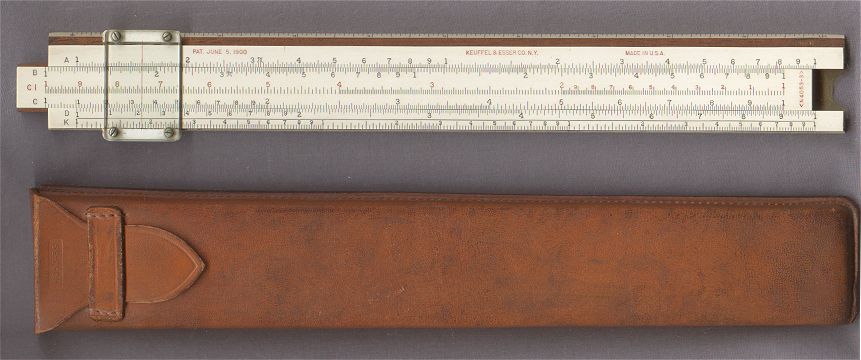
Entering the University of Wisconsin–Madison as a mechanical engineering freshman in September 1958, my peers and I relied on K&E (Keuffel & Esser) slide rules for all mathematical calculations.
The alternative—heavy, desktop mechanical calculators—was far too expensive and cumbersome for a college student. Throughout my undergraduate years, I watched calculators shrink from the footprint of a microwave oven down to handheld portables and wristwatches. Today, modern smartphones possess computational power that far surpasses the mainframe systems of the mid-20th century.
3. The Photographic Revolution: From Film to Digital and Mobile
During my junior year abroad in Munich in 1961, I purchased a 35mm single-lens reflex (SLR) film camera, sparking a lifelong passion for photography. Four decades later, in 2001 while working at NASA, I was shooting with one of the agency’s earliest practical digital SLRs: the Nikon D1.
Over the years, my kit evolved through a succession of high-end Nikon bodies, culminating in a full-frame Nikon D750 paired with a versatile Tamron 10-to-1 zoom lens. However, after purchasing an iPhone 15 Pro Max equipped with a 5x optical lens, my heavy DSLR setup largely remained in its case. The smartphone’s computational photography pipeline matches or exceeds traditional prosumer capabilities while consolidating a camera, video recorder, calculator, and global communicator into a single pocket-sized device.
4. 1974: NASA Goddard and the Roots of Modern Navigation
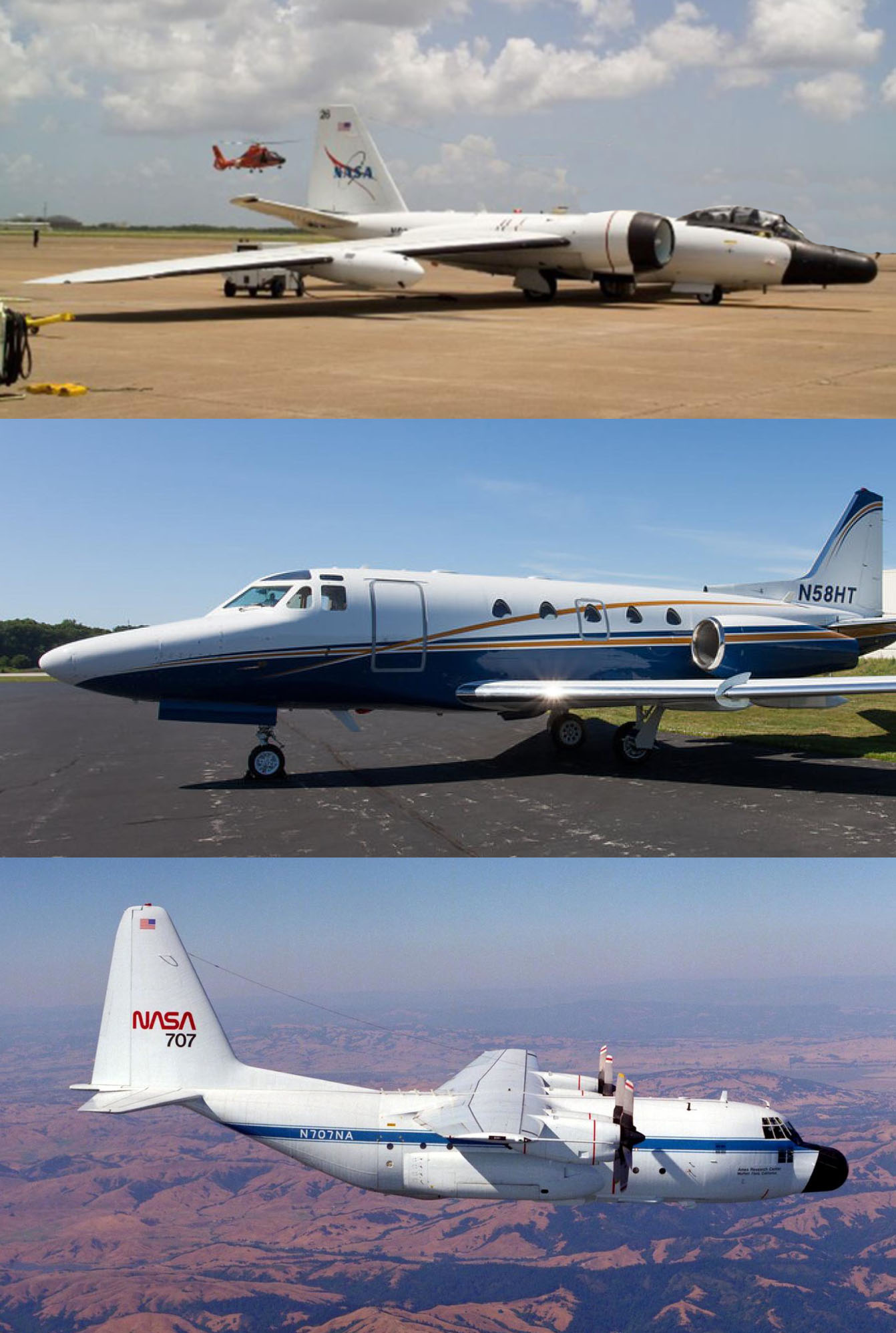
In 1974, I joined the meteorological branch at the NASA Goddard Space Flight Center. My inaugural assignment involved flying aboard a four-engine turboprop C-130 research aircraft over the Atlantic Ocean to validate cloud-motion vectors captured by newly deployed geosynchronous meteorological satellites.
[Satellite Observations]
         │
         ▼
[C-130 Research Aircraft] ──(Inertial Navigation System)──> [Wind Velocity Verification]
         │
         ▼
[Modern GPS & Autonomous Guidance]
To accurately calculate aircraft positioning and verify wind speeds, the plane relied on an Inertial Navigation System (INS)—a multi-million-dollar technology originally engineered for guiding Intercontinental Ballistic Missiles (ICBMs). While INS eventually found commercial use navigating early Boeing 707s across the Atlantic, today’s consumers take instantaneous, highly accurate GPS satellite navigation for granted in pocket smartphones and economy automobiles alike.
Supporting Data and Technological Transitions
The trajectory of human knowledge management and data retrieval has undergone an equally dramatic compression.
- Information Retrieval: Until the 1970s, exhaustive research required access to multi-volume, 30-book encyclopedia sets housed in personal or public libraries.
- The Internet and Web Crawlers: During my tenure at NASA in the 1990s, I managed a $10 million program intended to leverage the nascent Internet to distribute remote sensing data. At that time, Google had not yet been invented; publicizing project URLs required traditional print media and academic journals.
- AI and Neural Networks: Google’s algorithmic innovation of web-crawling and indexing laid the infrastructure for modern Large Language Models (LLMs). Today, interacting with an AI assistant like ChatGPT via a voice prompt yields immediate, synthesized answers, rendering static print encyclopedias obsolete.
Official Perspectives and Industry Responses
The transition toward electrification and autonomous driving has polarized industrial sectors and regional markets. While nations like Norway, Finland, Sweden, and China have rapidly embraced battery-electric vehicles (BEVs) as the dominant transport paradigm, adoption rates in rural North America—such as Northern Wisconsin—remain gradual, constrained by infrastructure habits and cultural inertia.
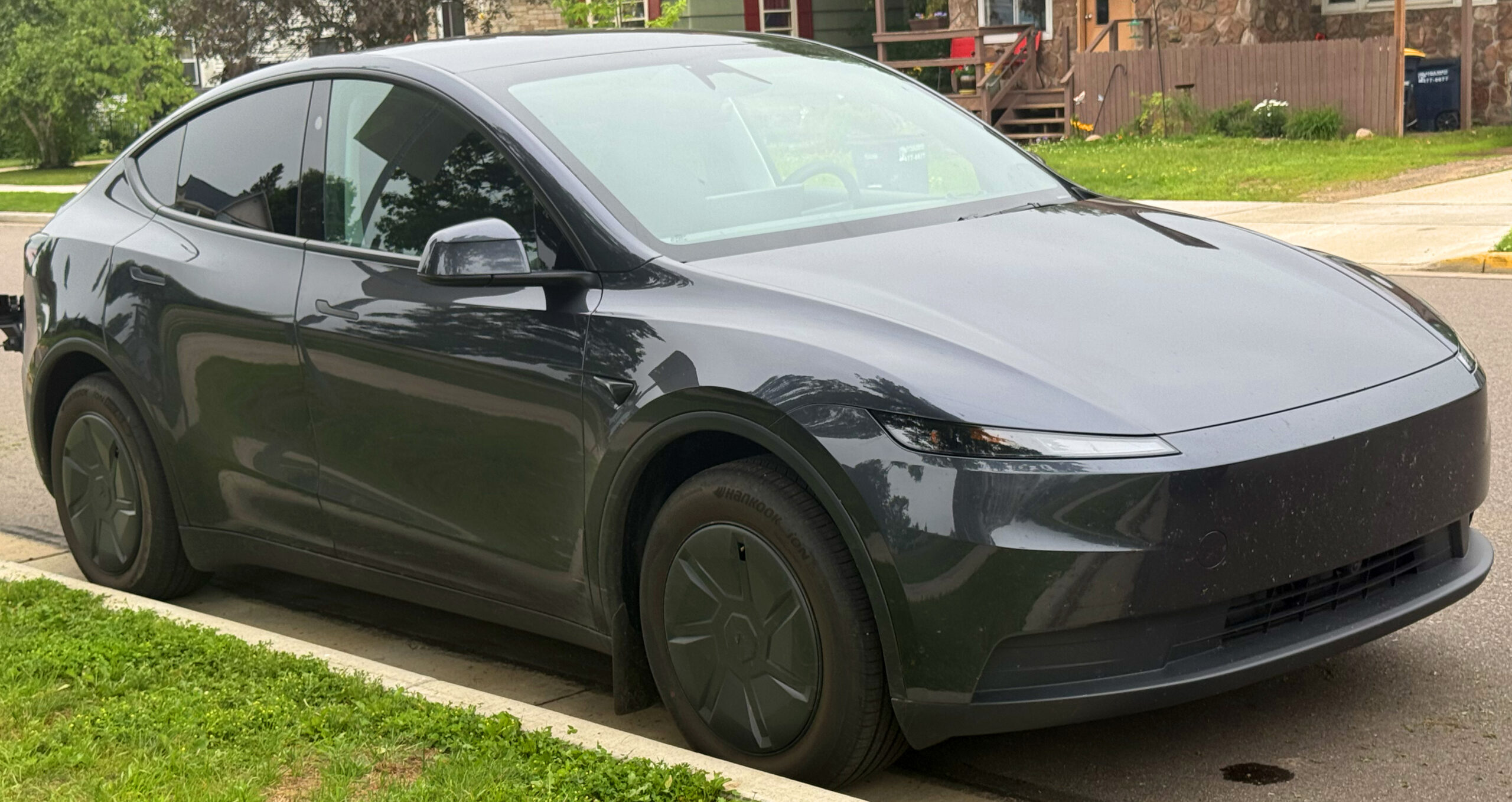
Having driven electric vehicles exclusively for the past 12 years, I view internal combustion engines as an obsolete technology. My recent experience with a 2026 Tesla Model Y running Full Self-Driving (FSD) software highlights the ongoing friction between camera-only neural network approaches and multi-sensor sensor fusion championed by competitors like Alphabet’s Waymo. While Waymo executives argue that camera-only systems cannot achieve unsupervised autonomy without redundant LiDAR and radar suites, Tesla’s iterative, data-driven approach continues to log billions of miles of real-world training data.
Implications for the Future
The convergence of electric mobility and artificial intelligence is reshaping not just how we travel, but how we interact with our immediate environment.
In modern Teslas, the integration of generative AI assistants—such as Elon Musk’s Grok platform, embodied locally by voice agents like "Ara"—signals a shift from menu-driven dashboard controls to conversational co-piloting. While early iterations struggled with nuanced routing requests, such as designating scenic waypoints without terminating trips prematurely, the removal of artificial query limits and the continuous expansion of neural training sets point toward a near future where vehicular interfaces are entirely conversational.

As we look forward, the lessons of the past century are clear: technologies that once required vast capital outlays, specialized training, and physical infrastructure—whether transcontinental steamships, slide rules, multi-million-dollar inertial guidance systems, or encyclopedic libraries—inevitably democratize, miniaturize, and dissolve into the background of everyday life.
