

By Global Science Correspondent
Published in Scientific Horizons
Main Facts
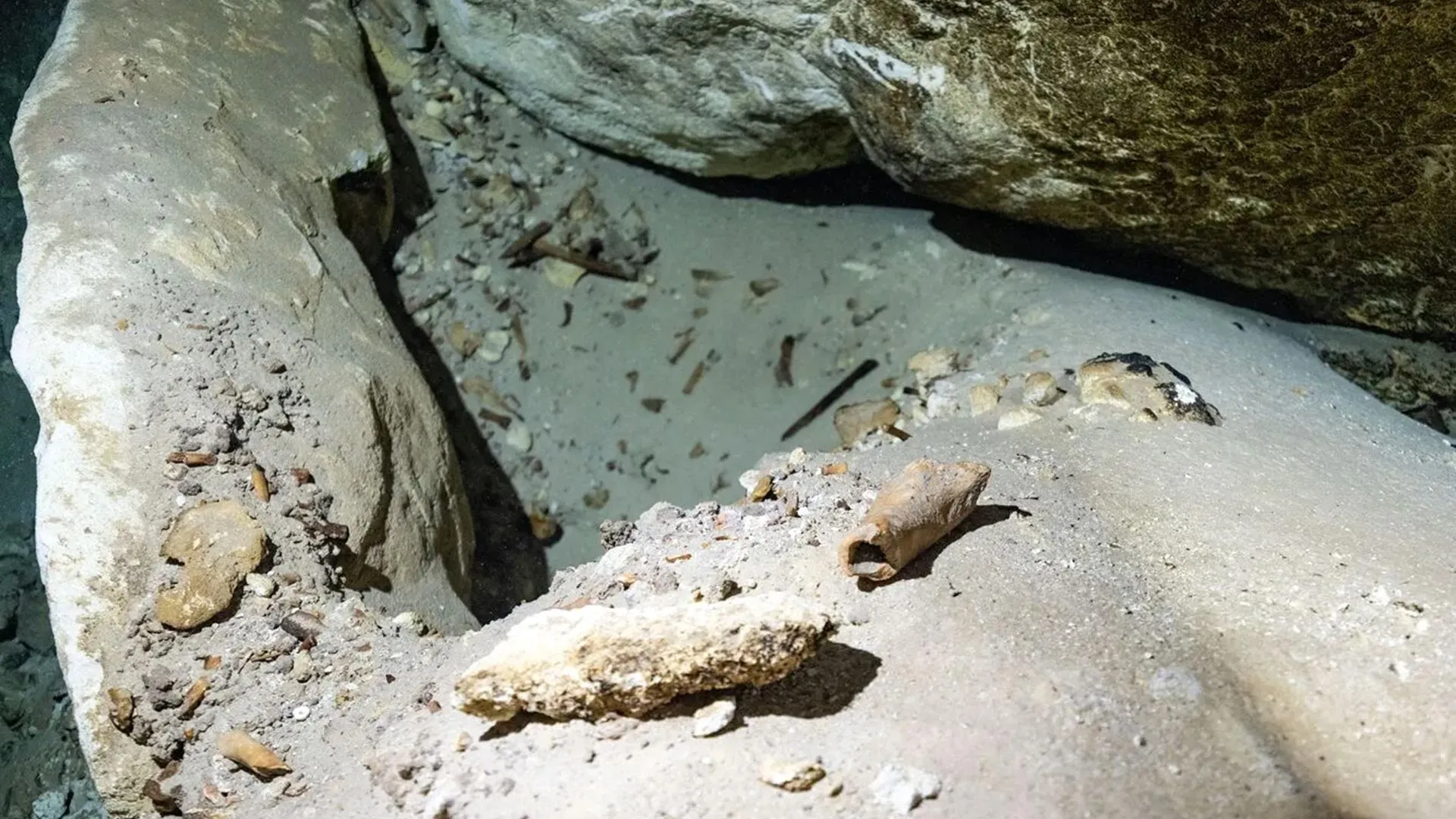
For centuries, underwater caves have served as aquatic tombs, swallowing and preserving the skeletal remains of Earth’s ancient inhabitants. These submerged caverns—often pitch-black, treacherous to navigate, and chemically unique—hold extraordinary archives of the distant past. Until recently, however, science lacked a reliable, standardized methodology to decode these watery graveyards. Researchers could extract the bones of extinct megafauna and other historical fauna, but they struggled to explain how those remains arrived, survived, and transformed beneath the surface.
A transformative new study led by Griffith University has shattered this scientific barrier. Published in the peer-reviewed journal PLOS One under the title "Neotaphonomic characteristics of vertebrate site formation in underwater caves," the research provides archaeologists and paleontologists with a definitive diagnostic framework. By meticulously analyzing modern and historical animal remains from two complex underwater cave systems in South Australia—Green Waterhole and Gouldens Sinkhole—the research team discovered that distinct aquatic environments leave unmistakable preservation "fingerprints" on skeletal remains.
The study combines multi-scale analytical techniques, ranging from macro-level spatial distributions to micro-level elemental compositions and proteins trapped within ancient cellular structures. The findings reveal that underwater caves can act as exceptional preservation chambers, frequently maintaining the original structural integrity and minute surface details of bones far better than their dry-cave counterparts. However, the submerged environments also impart unique biological and chemical signatures. Factors such as light penetration, water depth, and localized aquatic organisms dictate the specific alterations found on each specimen.
Ultimately, this breakthrough arms researchers worldwide with a vital tool to differentiate between natural fossil accumulation and human interference, unlocking a more accurate picture of paleo-environments and the fate of prehistoric ecosystems.
Chronology
To understand how modern animal bones transform in underwater environments over decades and centuries, the research team structured a meticulous, multi-phase investigation.
Phase 1: Site Selection and Specialized Recovery
The project focused on two prominent underwater cave systems near Mount Gambier in the Limestone Coast region of South Australia: Green Waterhole and Gouldens Sinkhole. Recognizing the extreme hazards of subterranean diving, the academic researchers partnered with elite specialist cave divers from the Cave Divers Association of Australia (CDAA). These technical divers safely descended into the submerged labyrinths to retrieve a diverse collection of vertebrate skeletal remains.
Phase 2: Cataloging the Assemblage
Upon bringing the specimens to the surface, the team cataloged a broad spectrum of remains from both native and introduced animal species. The assemblage included cows, kangaroos, emus, sheep, pigs, dingoes, rabbits, possums, quolls, and swamp rats. Radiocarbon dating and historical context placed many of these specimens within a timeframe spanning the arrival of European settlers and the establishment of local European infrastructure during the 1840s.
Phase 3: Multi-Scale Taphonomic Analysis
With the specimens securely in laboratory settings, lead researcher Meg Walker and her colleagues applied a suite of advanced analytical tools. The team examined:
- Macroscopic features: The spatial distribution of bones within the caves and macro-surface modifications.
- Microscopic features: High-resolution imaging of bone surfaces to identify microbial or botanical growth.
- Molecular and elemental compositions: Chemical testing to track mineral leaching, substitution, and the preservation of proteins trapped inside ancient cellular matrices.
Phase 4: Comparative Modeling
In the final analytical phase, the researchers compared the physical and chemical signatures of the underwater bones against a baseline of vertebrate remains recovered from dry Australian caves. This comparative approach allowed the team to isolate the exact weathering pathways unique to submerged subterranean environments, setting the stage for future applications involving Pleistocene megafauna.
Supporting Data
The Griffith University study relies on rigorous empirical observations drawn from the contrasting zones of the South Australian sinkholes and subterranean conduits. The data reveals how physical and biological parameters shape bone taphonomy—the study of how organisms decay and become fossilized.
Light, Algae, and the Phototrophic Zone
Near the entrances of Green Waterhole and Gouldens Sinkhole, ambient sunlight penetrates the water column. This sunlit phototrophic zone fosters the growth of specialized aquatic flora, including various strains of algae and aquatic plants.
Data from the study shows that bones deposited in these well-lit threshold areas frequently exhibit distinct biological colonization. Algae and other microscopic aquatic organisms attach themselves to the porous surfaces of the bones, leaving organic etchings, localized discoloration, and micro-borings. These signatures act as a proxy for shallow, illuminated deposition environments.
The Midnight Zone and Total Darkness
Deeper within the cave systems, sunlight is entirely absent. In these perpetual "midnight regions," physical and biological conditions change dramatically:
- Absence of Flora: Because photosynthetic organisms cannot survive without light, plant-based colonization of bones is entirely absent.
- Pristine Preservation: Submerged bones located deep within the dark zones frequently displayed remarkably high structural retention. Without light-driven biological activity or drying-and-wetting cycles, the original bone architecture, delicate sutures, and fine surface textures remained intact over extended periods.
The Terrestrial Contrast: Dry Caves
When contrasted with bones recovered from dry cave environments, the submerged specimens told a radically different story. Dry-cave bones lacked the aquatic signatures, algal coatings, and uniform water-driven mineral stabilization seen underwater. Instead, they bore the hallmarks of terrestrial decay:
- Microbial Degradation: Land-based bacteria and fungi actively consumed the organic components (such as collagen) within the dry bones, leading to structural weakening and flaking.
- Botanical Intrusion: Plant roots seeking moisture frequently penetrated dry caves, carving long, linear grooves and root-etching patterns across the cortical surfaces of the skeletal remains.
Official Responses
The study has generated substantial enthusiasm within the global archaeological and paleontological communities, validating years of painstaking subterranean fieldwork.
"By analyzing animal bones from two underwater cave systems in South Australia, we have revealed how different cave environments leave distinct preservation ‘fingerprints’ on skeletal remains," said Meg Walker, a PhD Candidate at Griffith University. Walker conducted the research under the supervision of Professor Julien Louys, Director of the Australian Research Centre for Human Evolution (ARCHE).
"Backed by radiocarbon-dated bones, we tracked how skeletons accumulated and were modified over decades and centuries in underwater caves, then compared them to those buried in dry caves," Walker continued. "Using a range of methods, from the macro to the micro, we looked at features associated with wet and dry caves—things like spatial distributions of the bones and their surfaces, down to elemental compositions and proteins trapped in ancient cells."
Highlighting the overarching significance of the findings, Walker emphasized the predictive power of the new methodology: "This study has delivered the first framework for interpreting how megafauna fossils formed, survived, and changed in underwater caves. It will provide archaeologists and paleontologists worldwide with a powerful new tool for reconstructing past environments and histories in these challenging conditions."
Professor Julien Louys praised the collaborative effort between academic researchers and technical diving specialists, noting that accessing these subterranean vaults requires a rare convergence of archaeological science and extreme-environment diving expertise. The Cave Divers Association of Australia also welcomed the study, viewing it as a testament to the scientific value locked within the state’s protected sinkhole ecosystems.
Implications
The publication of this research in PLOS One marks a paradigm shift in how scientists approach submerged fossil deposits. For decades, underwater caves have yielded breathtaking discoveries of extinct megafauna—such as giant short-faced kangaroos, marsupial lions (Thylacoleo carnifex), and colossal wombats—yet researchers struggled to interpret the exact formation processes of these bone beds.
Reconstructing Ancient Ecosystems and Climates
By establishing a reliable baseline of how modern and historical bones (dating back to the 1840s introduction of European fauna) react to submerged conditions, scientists can now work backward in time. The diagnostic "fingerprints" identified by Walker and her team provide a decoder ring for Pleistocene fossils. Researchers can now determine whether ancient megafauna fell into sinkholes, washed in via subterranean floods, or were dragged in by predators, all by analyzing the microscopic and chemical modifications on the bones.
Furthermore, because elemental compositions and trapped cellular proteins react sensitively to local hydrochemistry, these bones serve as chemical archives. They store data regarding past hydrological fluctuations, shifts in local climate, and ecological transitions that occurred tens of thousands of years ago.
Global Applications for Submerged Archaeology
Submerged caves are found across every continent, from the cenotes of the Yucatán Peninsula in Mexico to the blue holes of the Bahamas and the karst systems of Australia. Until now, the interpretation of skeletal remains within these global sites has often relied on subjective assumptions.
This new framework provides a standardized, empirical methodology that can be applied universally. As marine archaeologists and terrestrial paleontologists face the challenges of working in cramped, dark, and sub-surface aquatic environments, the Griffith University study offers a reliable compass. It ensures that the silent testimonies locked inside Earth’s watery caves can finally be read, understood, and preserved for future generations of scientific inquiry.
