

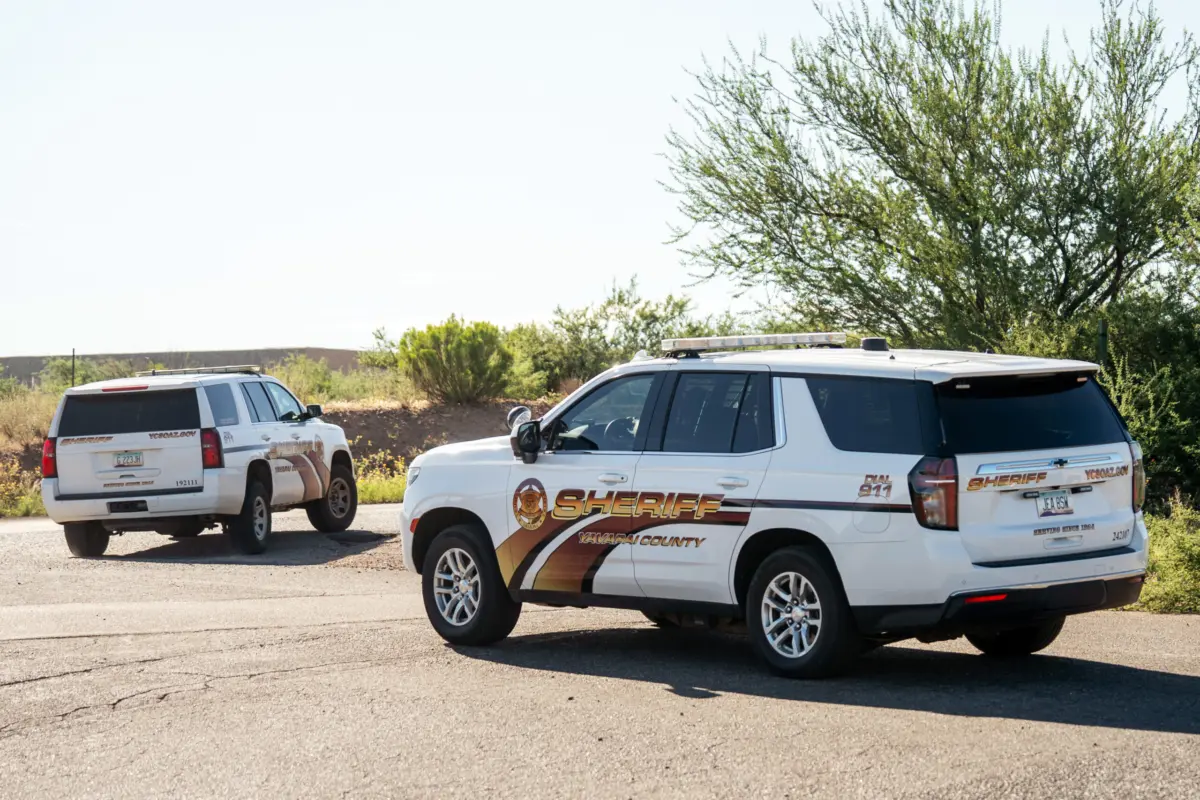
COTTONWOOD, Ariz. — In a decisive move reflecting heightened community anxiety over digital surveillance and constitutional privacy rights, the Yavapai County Board of Supervisors voted unanimously to reject two key law enforcement contracts. The contracts would have expanded the Yavapai County Sheriff’s Office (YCSO) mobile automated license plate reader (ALPR) capabilities and integrated a sophisticated data-fusion software package.
The vote, which took place during the board’s meeting in Cottonwood, highlights a growing friction between local law enforcement’s desire for advanced investigative technologies and the public’s demand for transparency, strict oversight, and the preservation of civil liberties.
Main Facts: The Vote and the Disputed Technology
During its meeting, the Yavapai County Board of Supervisors unanimously denied two consent agenda items originally intended to bolster the YCSO’s technological toolkit. The decision was notable not only for its unanimity but also for how the items were handled prior to the public vote.
The Rejected Contracts
The board flatly rejected two interconnected procurement proposals:
- Ekin Patrol G2 Mobile ALPR Units: YCSO was seeking $39,348 to purchase three vehicle-mounted Ekin Patrol G2 mobile ALPR systems. The proposed contract was for an initial one-year term, with provisions for a potential three-year extension. These units are designed to be mounted on patrol vehicles, automatically scanning license plates, capturing images, and cross-referencing vehicle data in real-time against law enforcement databases.
- LeadsOnline NightHawk Subscription Services Agreement: Alongside the physical cameras, YCSO sought approval for a $13,847 contract with LeadsOnline LLC. The NightHawk platform is designed to aggregate and synthesize massive amounts of disparate data. According to county agenda documents, the software "fuses multiple data sources—including call records, GPS data, social media, and license plate recognition hits—to build actionable investigative leads." The platform is built to assist detectives in mapping subject interactions, drafting search warrants, and coordinating multi-jurisdictional investigations.
Removal from the Consent Agenda
In the days leading up to the meeting, Board Chairman Brooks Compton (R-District 1) and Vice Chairwoman Nikki Check (D-District 3) pulled both items from the board’s consent agenda. Typically, consent agendas are reserved for routine, non-controversial administrative matters voted on in a single, block motion without individual discussion.
By removing the ALPR and NightHawk contracts from this category, county leadership signaled that the acquisition of surveillance technology required individual scrutiny. At the start of the meeting, the board voted to deny both contracts outright, bypassing a formal floor debate but setting the stage for significant public comment later in the proceedings.
Chronology: From Border Initiatives to Local Backlash
The rejection of the Ekin Patrol cameras and the NightHawk software represents a sudden course correction for Yavapai County, which had previously approved several funding measures aimed at expanding local law enforcement’s investigative capabilities.
[June 7, 2023] Board approves $74,620 for initial mobile ALPR units to target border-related crimes.
       │
[Nov 5, 2025]  Board accepts $2 million in state seed money (SB 1735) for YCSO Intelligence Center.
       │
[July-Aug 2026] Public records requests filed; regional surveillance data sharing comes to light.
       │
[Aug 19, 2026]  Board of Supervisors pulls items from consent agenda; unanimously denies contracts.
The Origins of the Program
The county’s push for license plate reader technology began in earnest on June 7, 2023, when the Board of Supervisors approved $74,620 for mobile plate readers for the YCSO. According to the agenda packets from that period, the stated objective of the acquisition was "reducing criminal activities associated with human smuggling and border-related crimes."
The State-Funded Intelligence Center
The technological expansion was designed to feed into a larger, more ambitious project: the YCSO’s Criminal Information Intelligence Analysis Coordination Center (often referred to as the "Intel Center").
On November 5, 2025, the Board of Supervisors accepted $2 million in state seed money to establish the Intel Center. These funds were appropriated through Arizona Senate Bill 1735, Section 118-30, a legislative effort championed by State Senator Mark Finchem (R-District 1). The NightHawk software, had it been approved, would have been funded through this $2 million state appropriation, while the physical Ekin Patrol G2 cameras were to be financed directly out of the YCSO’s operating budget.
The Turn in Public Sentiment
As plans for the Intel Center and expanded surveillance networks progressed into mid-2026, local residents and media outlets began scrutinizing the scale of data collection within Yavapai County and neighboring jurisdictions. By the time the August 19, 2026 meeting arrived, public opposition had crystallized.
During the public comment period at the end of the meeting, seven local residents spoke on the record against the contracts. The citizens argued that automated, pervasive surveillance tools violate the Fourth Amendment’s protections against unreasonable searches. They also expressed deep concern over the county’s attempt to pass the measures quietly via the consent agenda rather than introducing them as high-profile discussion items.
Supporting Data: Regional Interoperability and Surveillance Footprints
While the YCSO does not currently operate its own network of stationary, permanent roadside cameras—such as those manufactured by industry leader Flock Safety—supporting data reveals that the agency is already deeply integrated into regional surveillance networks.
Cross-County Data Sharing
An investigation by Larson Newspapers into regional surveillance databases revealed the extent of the YCSO’s reliance on third-party networks. A review of 3.2 million searches executed on the Coconino County Sheriff’s Office (CCSO) Flock camera network showed significant cross-jurisdictional usage:
- Direct Searches: Year-to-date, YCSO personnel conducted 106 direct searches of the Coconino County Flock network.
- Indirect Searches: An additional 173 searches were run by outside law enforcement agencies citing the YCSO as the requesting or sponsoring entity.
Sheriff David Rhodes confirmed that while he does not personally oversee every query, he has authorized deputies and dispatchers to access these networks. He noted that search requests are often initiated by emergency dispatchers responding to active 911 calls, such as road rage incidents or fleeing suspects, utilizing an internal policy that requires a valid case number or documented law enforcement reason.
Local Transparency and Public Records Delays
The debate over ALPR technology has also highlighted varying degrees of transparency among local municipal police departments in the region:

- Prescott Police Department: On August 19, 2026, the department complied with public records requests, releasing its Flock network audit logs to the media for independent analysis.
- Cottonwood Police Department: Despite a public records request filed on July 17, 2026, the department failed to produce its Flock network audit logs by the August 21 deadline.
- Prescott Valley Police Department: The agency has not yet provided its data since records were requested on July 30, 2026.
Other Approved Law Enforcement Expenditures
While the board blocked the ALPR and NightHawk contracts, it did approve several other YCSO funding items during the same session, illustrating a willingness to support law enforcement through non-surveillance avenues:
- Staffing and Retention: A $200,000 contract was awarded to Hundred Public Safety Inc. (operating as Performance Protocol) focusing on staff recruitment and retention services.
- Anti-Trafficking Marketing: The board approved $80,000 for digital advertising with the Arizona Media Association through the end of 2026, funded by the county’s anti-human trafficking program.
- Public Relations and Media Consulting: A $30,000 contract was approved for Cole Pro Media, Corp, a consulting firm hired to provide transparency engagement and advisory services.
Official Responses: Balances of Power and Public Trust
The fallout from the vote has prompted detailed responses from both the Board of Supervisors and the Sheriff’s Office, revealing a shared desire to combat crime but sharp differences on the implementation of surveillance technologies.
The Board of Supervisors’ Stance
Vice Chairwoman Nikki Check emphasized that the decision to deny the contracts was rooted in a lack of clear policy, data-sharing limitations, and operational definitions.
"I read the contracts, and what was lacking in my mind is sort of the definitions that were in the contracts… such as who are our authorized users or partners that could also utilize the technology or the data, and what internal policies do we have in place?" Check stated. "How do we actually utilize the technology, and what stopgaps are there to make sure that there’s no abuse? I really do believe that this technology can be used in a responsible and productive manner. I just think that it’s so important that our policies make sure that people’s privacy isn’t overtly impacted."
Chairman Brooks Compton echoed these concerns, noting that the pushback on the ALPR contracts has prompted the board to reconsider its approach to the upcoming Intel Center. Compton clarified that the board is not reconsidering whether to build the center, but rather "to more closely scrutinize what would be going into the building. How would it be [used], what is the plan?"
The Sheriff’s Defense and Cooperation
Sheriff David Rhodes defended the utility of mobile ALPRs, while acknowledging that public anxiety regarding stationary "surveillance states" is understandable. He clarified that his request was not for permanent, stationary cameras, but rather an incremental expansion of the department’s existing mobile fleet.
"People have a lot of questions about it… the idea that you’re going to have these stationary license plate readers all over the county, and that nobody can drive by without having their images taken, is one thing that community members are very concerned about, and I understand," Rhodes said. "But I was not asking for that. We were attempting to increase the number of cars from six to nine that had ALPR on them."
Rhodes also noted that he met with the board prior to the meeting and agreed that pulling the items from the consent agenda was the correct course of action given the public’s reaction.
"We worked together on that when we saw the community reaction, and so that was not a surprise to me," Rhodes said. "I did not want the board to attempt to pass that… because ultimately the community needs to have a voice, and we need to listen to it."
Rhodes maintained that he supports integrating ALPR data into the future Intel Center, but agreed it must be done "with guardrails."
Implications: The Future of Policing and Privacy in Yavapai County
The unanimous rejection of the ALPR and NightHawk contracts in Yavapai County is a microcosm of a larger national debate surrounding data-fusion centers and localized surveillance networks.
The Rise of Data Fusion and "NightHawk"
The inclusion of LeadsOnline’s NightHawk software in the rejected package points to a shift in modern policing. Law enforcement agencies are increasingly moving away from isolated databases toward "data fusion"—the practice of combining automated license plate reader data, social media activity, cell phone records, and GPS tracking into a single, searchable profile.
While proponents argue this capability is vital for disrupting complex drug cartels and human trafficking networks, privacy advocates warn that without strict judicial oversight, such systems allow for warrantless tracking of citizens who are not suspected of any crime.
The Fate of the Intel Center
The board’s decision represents a temporary legislative roadblock for the YCSO’s Intel Center. While the $2 million in state seed money remains accepted, the actual procurement of the software and hardware destined for the center will now face a much higher level of public and political scrutiny. Future requests for surveillance tools will likely require dedicated public hearings, detailed policy drafts outlining data retention limits, and strict definitions regarding which outside agencies can access Yavapai County’s data.
By rejecting these contracts, the Yavapai County Board of Supervisors has established a clear local precedent: the acquisition of surveillance technology is no longer a routine administrative matter. Instead, it is a highly sensitive policy decision that requires public debate, clear administrative boundaries, and a demonstrable balance between public safety and constitutional privacy rights.
