

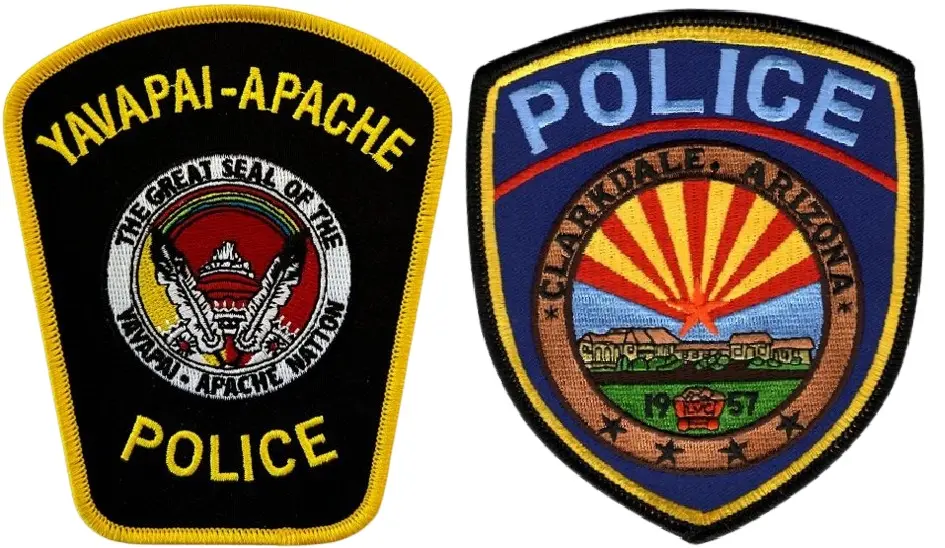
CLARKDALE, Ariz. — A domestic violence call on the Yavapai-Apache Nation’s Clarkdale Reservation escalated into an officer-involved shooting on Monday evening, August 17. The incident, which drew a joint response from tribal and municipal law enforcement, left an armed suspect hospitalized and has triggered an investigation by the Federal Bureau of Investigation (FBI).
The shooting highlights the volatile nature of domestic disturbance calls and underscores the complex jurisdictional partnerships required to police tribal lands in rural Arizona. No law enforcement officers from either the Yavapai-Apache Police Department (YAPD) or the neighboring Clarkdale Police Department (CPD) were injured during the confrontation.
Main Facts of the Incident
The incident occurred on tribal land within the Clarkdale jurisdiction of the Yavapai-Apache Nation. Law enforcement officials confirmed that the encounter began as a response to a domestic violence call and rapidly escalated when a male suspect brandishing a weapon refused to comply with officer commands.
Key parameters of the event include:
- Date and Time: Monday, August 17, beginning at approximately 7:30 p.m.
- Location: Yavapai-Apache Reservation lands, Clarkdale, Arizona.
- Agencies Involved: Yavapai-Apache Police Department (primary) and the Clarkdale Police Department (mutual aid/backup).
- Suspect Status: Wounded by a single gunshot to the shoulder after a less-lethal Taser deployment failed to stop his advance. Transported to a local hospital; his current medical condition has not been publicly released.
- Officer Status: Uninjured.
- Investigating Agency: Federal Bureau of Investigation (FBI), Phoenix Field Office, due to federal jurisdiction over major crimes committed on Native American reservation land.
Chronology of the Confrontation
The sequence of events unfolded over the course of roughly thirty minutes, transitioning from a localized domestic dispute to a multi-agency tactical confrontation.
[7:30 PM] YAPD dispatched to domestic violence report on Clarkdale Reservation
   │
   ▼
[Arrival] First YAPD officer encounters adult male armed with a large knife
   │
   ▼
[Retreat] Suspect ignores orders to drop weapon, retreats into residence
   │
   ▼
[Backup Arrives] Additional YAPD officers and Clarkdale PD units secure the perimeter
   │
   ▼
[Re-emergence] Suspect exits residence, armed, and advances toward officers
   │
   ▼
[Taser Deployment] Clarkdale PD officer deploys Taser; device is ineffective
   │
   ▼
[Lethal Force] YAPD officer fires two rounds; suspect struck in the shoulder
   │
   ▼
[Post-Incident] Officers render immediate first aid; Verde Valley Fire & Medical transports suspect
The Initial Dispatch and Contact
At approximately 7:30 p.m., a sole Yavapai-Apache Police Department officer was dispatched to a residence on the Clarkdale Reservation following a report of an active domestic violence incident. Upon arriving at the scene, the officer immediately encountered an adult male who was armed with a large knife.
The officer drew their service weapon and issued verbal commands, ordering the suspect to drop the knife. The suspect refused to comply with the directives but did not immediately charge the officer; instead, he withdrew backward into the residence, closing the door behind him.
Escalation and Mutual Aid Call
Recognizing the potential for a barricaded suspect or a hostage situation, the responding officer requested immediate emergency backup. Because of the close geographic proximity of municipal land and existing mutual aid agreements, officers from the Clarkdale Police Department rushed to the scene alongside additional YAPD units.
Within minutes, a perimeter was established around the home. Officers continued to attempt to communicate with the suspect, urging him to surrender peacefully and disarm himself.
The Armed Advance and Use of Force
The standoff escalated when the suspect re-emerged from the residence. He was still armed with the large knife and began to actively advance toward the gathered officers. Law enforcement personnel on the scene issued repeated, clear commands for the individual to drop the weapon and halt his advance.
When the suspect continued to close the distance, a Clarkdale Police Department officer deployed a Taser in an attempt to neutralize the threat using non-lethal force. However, the Taser deployment was ineffective—a common occurrence when probes fail to make proper skin contact, are impeded by thick clothing, or fail to achieve neuromuscular incapacitation due to the suspect’s psychological or physiological state.
With the less-lethal option exhausted and the suspect continuing to advance while armed, a Yavapai-Apache Police Department officer discharged their service weapon. The officer fired two rounds. One of the rounds struck the suspect in the shoulder, immediately halting his advance and neutralizing the threat.
Medical Intervention and Scene Security
Immediately after the shots were fired and the suspect was disarmed, officers transitioned from a tactical posture to life-saving mode. Utilizing their patrol trauma kits, officers rendered immediate first aid to stem the bleeding from the shoulder wound.
Verde Valley Fire and Medical personnel, who had been staged nearby as a standard precaution, were called to the scene. Paramedics stabilized the suspect before transporting him to a local medical center for definitive treatment.
Supporting Data: Jurisdictional and Operational Context
To fully understand the dynamics of this incident, it is necessary to examine the unique legal and geographical landscape of policing in the Verde Valley, where tribal and municipal boundaries overlap.
Tribal Jurisdiction and the Role of the FBI
Because the shooting occurred on the trust land of the Yavapai-Apache Nation, standard municipal or county sheriff jurisdiction does not automatically apply. Under the Major Crimes Act (18 U.S.C. § 1153), the federal government possesses exclusive jurisdiction over certain serious crimes committed by or against Native Americans in Indian Country, including aggravated assault and officer-involved shootings.
| Jurisdiction Type | Responsible Agency | Role in This Incident |
|---|---|---|
| Tribal Lands | Yavapai-Apache Police Department | Primary responding agency, local law enforcement. |
| Municipal/County | Clarkdale Police Department / Yavapai County Sheriff’s Office | Mutual aid partners, backup, outer perimeter security. |
| Federal | Federal Bureau of Investigation (FBI) | Lead investigative authority for the use of lethal force on reservation land. |
Consequently, the investigation was immediately turned over to the FBI. This protocol ensures an independent, third-party review of the use of force, separating the local departments involved in the shooting from the investigative process.

The Geography of the Yavapai-Apache Nation
The Yavapai-Apache Nation is unique in its geographic distribution. Unlike consolidated reservations, the Nation consists of five distinct, non-contiguous parcels of land located throughout the Verde Valley:
- Clarkdale
- Camp Verde
- Middle Verde
- Rimrock
- Tunlii
The Clarkdale Reservation parcel sits adjacent to the town of Clarkdale, a historic community in Yavapai County. Because these lands are interspersed with municipal and county territories, the YAPD and local agencies like the Clarkdale Police Department maintain close working relationships, often relying on one another for rapid backup during high-priority emergency calls.
Official Responses and Statements
Following the incident, leadership from the involved agencies issued statements to clarify the status of the officers and the progression of the investigation.
Clarkdale Police Department
Clarkdale Police Chief Randy Taylor confirmed his officers’ involvement as a supporting unit and expressed relief that no law enforcement personnel were harmed.
"I can tell you all officers are safe," Chief Taylor stated on the night of the incident. "Clarkdale police officers were providing backup to YAPD officers. Because the incident took place on tribal land, the FBI is investigating."
When asked about the condition of the wounded suspect, Chief Taylor noted that because the primary jurisdiction belonged to the Yavapai-Apache Nation and the federal government, his department was not the custodian of the suspect’s medical status. "The person that was shot — I don’t know what his condition is," Taylor added.
Yavapai-Apache Nation
The tribal administration acknowledged the gravity of the incident and emphasized their commitment to transparency as the federal investigation gets underway.
Treyson Fulmer, the Yavapai-Apache Nation’s Director of Strategic Initiatives and Communications, issued a brief statement the morning after the shooting:
"We are currently in the process of compiling information to share about the incident. YAPD will provide additional information as it becomes available and can appropriately be released."
The Yavapai-Apache Police Department reiterated that the officer who fired the service weapon would be placed on standard administrative leave pending the outcome of the FBI’s investigation, which is standard procedure in all officer-involved shootings.
Implications and Broader Context
This incident highlights several critical challenges faced by modern law enforcement, particularly those operating in rural, tribal, and multi-jurisdictional environments.
The High Danger of Domestic Violence Calls
According to data compiled by the National Institute of Justice (NIJ) and the FBI’s Law Enforcement Officers Killed and Assaulted (LEOKA) program, domestic violence calls are statistically among the most dangerous encounters for patrol officers.
- High Emotion: These incidents involve intense personal emotions, often compounded by substance abuse or mental health crises.
- Unpredictability: Suspects in domestic disputes are highly volatile and frequently turn their aggression toward arriving officers.
- Presence of Weapons: A significant percentage of domestic violence calls involve household weapons, such as knives or firearms, increasing the likelihood of a lethal-force encounter.
The Limits of Less-Lethal Force
The failure of the Taser during this confrontation illustrates a persistent tactical challenge. While less-lethal devices are vital tools in the use-of-force continuum, they are not foolproof.
[Officer Encounters Armed Suspect]
       │
       ├─► Verbal Commands (Attempt to De-escalate)
       │
       ├─► Less-Lethal Option (Taser deployed -> Failed due to clothing/probe miss)
       │
       └─► Lethal Option (Service weapon fired as a last resort to protect life)
Studies show that Tasers have an operational failure rate ranging from 15% to 30% in field conditions. Factors such as the suspect’s movement, loose clothing, thick jackets, or drug-induced delirium can prevent the electrical current from completing a circuit between the two fired probes. When these devices fail, officers are often left with mere seconds to transition to lethal force to defend themselves and others from imminent physical harm.
Collaborative Policing and Mutual Aid
The rapid response of the Clarkdale Police Department to assist YAPD officers highlights the value of mutual aid agreements in rural Arizona. In areas where police resources are spread thin over large geographic distances, these agreements ensure that an officer in distress will receive backup from nearby agencies, regardless of jurisdictional boundaries.
As the FBI continues its investigation, the Yavapai-Apache Nation and the town of Clarkdale will monitor the findings to determine if any adjustments are needed for joint training, communication protocols, or use-of-force policies. For now, both communities remain focused on the recovery of the wounded individual and supporting the officers involved in this traumatic event.
