

By Editorial Staff
Published in Conjunction with In5D.com
Main Facts
In the modern discourse surrounding spirituality, metaphysics, and personal growth, the term "lightworker" frequently conjures specific, esoteric imagery. Society has long conditioned people to associate the role with spiritual teachers, reiki practitioners, tarot readers, meditators, or those deeply immersed in ascension philosophies. However, a compelling new perspective shared by In5D founder Gregg Prescott challenges this narrow definition, suggesting that true lightwork is often far simpler, deeply grounded, and found in the most ordinary moments of human connection.
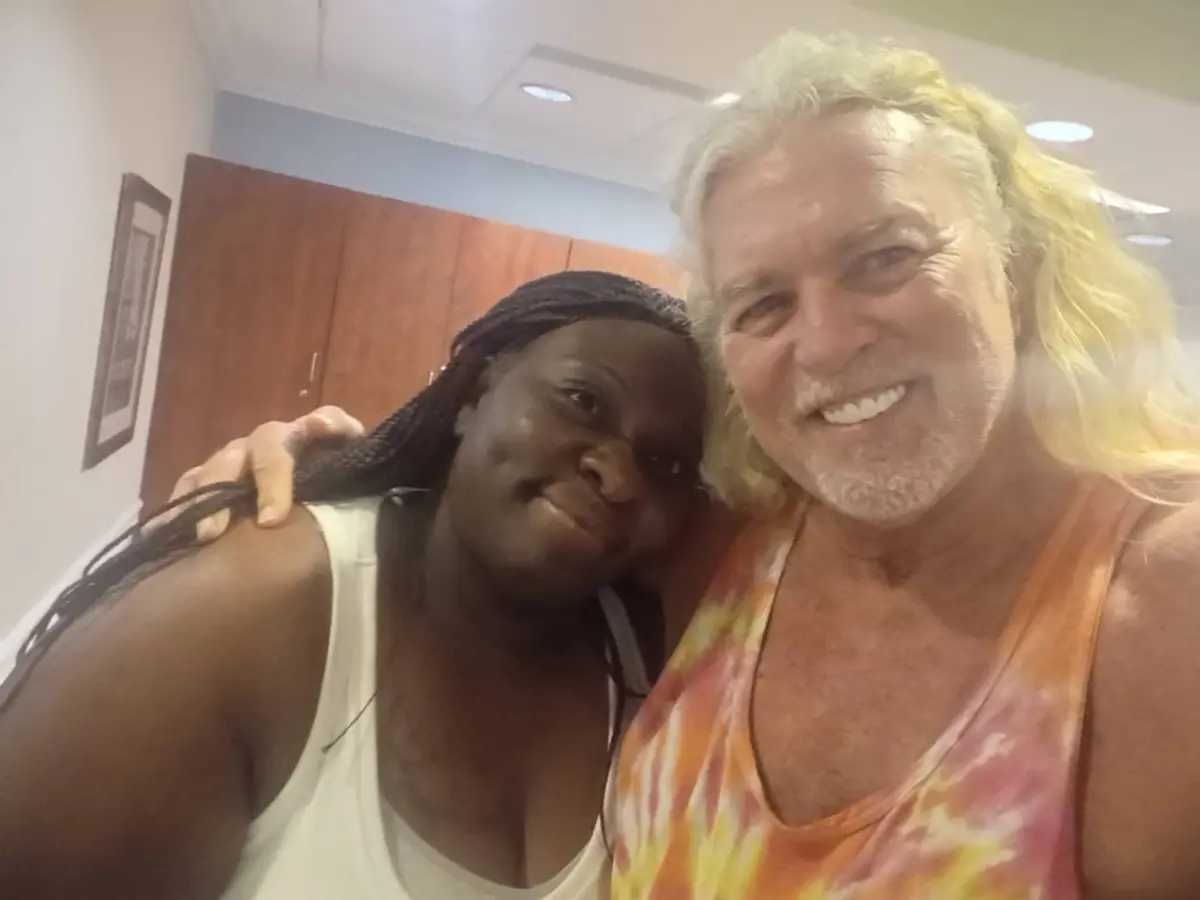
Recently recounting experiences during a visit to care for his parents at an independent living facility in Fort Myers, Florida, Prescott highlighted two individuals—Andrew and Kentisha—whose daily actions redefine how unseen spiritual service manifests. Rather than standing on lecture stages or hosting metaphysical workshops, these individuals demonstrate that being a lightworker can be as straightforward as making a lonely stranger feel seen, maintaining a positive attitude amidst mundane administrative chaos, or navigating profound, unexplainable spiritual transformations.
The core narrative addresses a broader cultural phenomenon: millions of everyday people engage in profound acts of emotional and energetic upliftment without ever adopting the label of "lightworker." Furthermore, the article explores the intersection of everyday altruism with unusual metaphysical occurrences, such as vivid out-of-body dreams, recurring angel numbers like 3:33 AM, and the fundamental human need for community among those experiencing spiritual awakenings.
Chronology of Events and Encounters
The Fort Myers Visit: Uncovering Everyday Grace
The narrative unfolds during Prescott’s routine visit to assist his aging parents at their independent living community in Fort Myers, Florida. Independent living facilities, while designed to foster community, frequently harbor pockets of isolation among elderly residents. It was within this environment that Prescott observed two distinct expressions of service and spiritual awakening.
Encounter One: Andrew’s Daily Ritual of Recognition
The first encounter took place in the facility’s dining room, where a server named Andrew defies the standard expectations of hospitality work. Instead of merely taking orders, Andrew routinely performs micro-acts of deep human validation.

Prescott noted multiple instances where Andrew dropped to one knee beside a lonely elderly resident eating by herself. By taking the time to compliment her appearance, inquire genuinely about her well-being, and engage in warm conversation, Andrew transforms what would otherwise be a solitary, melancholic meal into a moment of human warmth. When Prescott remarked on his capability to work in high-end, lucrative restaurants, Andrew revealed that his choice of workplace is entirely intentional: he works there specifically to bring light and joy to the elderly.
Encounter Two: Kentisha’s Administrative Grace and Nocturnal Awakening
Simultaneously, Prescott interacted with Kentisha, who manages the front desk at the facility. A temporary breakdown of one of the building’s elevators forced Kentisha into a high-stress role: manually managing passenger flow on the single remaining elevator. In an environment where residents can quickly become impatient, Kentisha maintained a steady, radiant positive attitude.
Shortly after these interactions, Kentisha shared a startling personal experience with Prescott. In a single night, she had experienced three consecutive, vivid dreams in which she felt herself lifting out of her physical body.
- In the first dream, she observed herself behind the facility’s front desk.
- In the second, she was working at an alternate location.
- In the third, she was in the presence of her five-year-old son.
Upon waking from this sequence of out-of-body experiences, she checked the clock and noted the time: exactly 3:33 AM. Disturbed and initially frightened by the intensity of the occurrences—fearing they might portend a negative premonition—she sought perspective. Prescott reframed the experience not as a warning of doom, but as a profound metaphor for spiritual metamorphosis, comparing her internal shift to a caterpillar entering a cocoon unaware that it is preparing for flight.
Supporting Data and Metaphysical Context
The encounters in Fort Myers serve as a microcosm for broader trends documented within the modern metaphysical community. Understanding these events requires examining the underlying patterns of synchronization, nocturnal awakenings, and the psychology of altruism.
The 3:33 AM Phenomenon and Circadian Synchronization
Waking up consistently between 3:00 AM and 4:00 AM is a frequently reported phenomenon within spiritual and holistic wellness circles. Often referred to colloquially as the "witching hour" or the "spiritual hour," researchers in holistic health note that this window aligns with traditional Chinese medicine meridians (specifically the liver meridian, associated with emotional processing and detoxification). In numerology and synchromesh studies, sequences like 3:33, 11:11, or 444 are interpreted as markers of heightened energetic alignment, subconscious processing, or communication from spiritual guides and higher consciousness.

Out-of-Body Experiences (OBEs) and Prophetic Dreams
Out-of-body experiences, whether occurring during sleep paralysis, deep meditation, or spontaneous hypnagogic states, involve a sensation of consciousness separating from the physical vessel. While clinical psychology often categorizes these phenomena as sleep anomalies or lucid dreaming stages, esoteric frameworks view them as indicators of expanding awareness.
Prescott’s utilization of the tarot’s "Death" card archetype—traditionally signifying transformation, the shedding of old identities, and rebirth rather than physical mortality—underscores a common therapeutic approach in spiritual counseling: reframing fear-based interpretations of altered states into empowering narratives of personal growth.
The Science of Micro-Altruism
From a psychological perspective, Andrew’s behavior aligns with established research on the health benefits of prosocial behavior. Studies in positive psychology demonstrate that small, intentional acts of kindness not only improve the psychological well-being and perceived loneliness of the recipient (in this case, elderly residents) but also trigger dopamine and oxytocin releases in the giver, fostering long-term emotional resilience and a profound sense of purpose.
Official Responses and Expert Perspectives
While conventional institutions—such as medical establishments, geriatric care facilities, and academic psychology—view events like those at the Fort Myers facility through operational and behavioral lenses, the alternative metaphysical community offers a vastly different interpretive framework.
- Operational and Care Facility Perspective: Management within senior living environments typically evaluates staff through metrics of efficiency, customer satisfaction, and reliability. Employees like Andrew and Kentisha are prized for reducing resident complaints, maintaining operational flow during equipment failures (such as elevator repairs), and fostering a calm community atmosphere.
- Metaphysical and Holistic Perspective: Thought leaders in the consciousness space, such as Gregg Prescott, argue that standard institutional metrics miss the invisible, energetic fabric holding communities together. From this viewpoint, individuals functioning as operational linchpins are often anchoring high-frequency emotional energy into dense or challenging environments. The validation of staff members who intuitively practice compassion elevates the dialogue surrounding workplace wellness, moving it from mere job performance to spiritual vocation.
- Technological and Community Response: Recognizing the isolation often felt by individuals undergoing intense spiritual awakenings, unusual dreams, or synchronous experiences (such as recurring 3:33 wake-up calls), digital platforms have emerged to bridge the gap. Initiatives like the In5D Infinite application aim to provide structured environments where individuals can log dreams, track synchronicities, and connect with peer support networks ("Star Family"). This digital infrastructure responds directly to the psychological need for validation among those whose anomalous experiences are frequently marginalized by mainstream society.
Implications
The redefinition of lightwork championed by these observations carries significant implications for both individual spiritual practice and collective social structures.
1. Decentralization of Spirituality
Historically, spiritual validation required ordination, lineage, or mastery of complex esoteric systems (astrology, ceremonial magic, advanced energy healing). By shifting the definition of a lightworker to encompass anyone who brings comfort to the lonely, lightens the mood of a tense room, or listens patiently, the concept becomes radically egalitarian. Anyone working in retail, food service, healthcare, or administrative support can practice lightwork simply through intentional, compassionate presence.

2. Normalizing Altered States and Spiritual Fear
Experiences like Kentisha’s triple out-of-body dream sequence coupled with exact 3:33 AM awakenings often induce anxiety because mainstream culture lacks a constructive vocabulary for non-ordinary states of consciousness. By reframing these experiences through natural metaphors—such as the caterpillar entering a cocoon—society can transition from pathologizing or fearing spontaneous spiritual awakenings to supporting them as psychological and energetic maturation.
3. Fostering Connection in an Isolated World
Modern societies face documented epidemics of loneliness, particularly among aging populations in care facilities and digitally isolated younger generations. When individuals recognize that their daily interactions carry energetic weight, interpersonal engagement transforms. The simple act of slowing down to acknowledge an invisible person ceases to be a polite social chore and becomes an active contribution to collective healing.
Ultimately, the accounts of Andrew and Kentisha remind observers that the most profound agents of change are frequently unheralded. They leave no academic papers, command no massive digital followings, and seek no official titles. Yet, by the simple virtue of their presence, the rooms they inhabit—and the lives they touch—are left noticeably brighter.
