

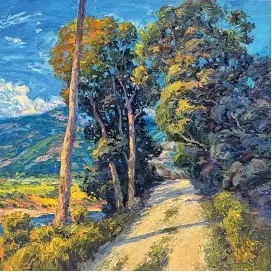
SPECIAL ADVERTISING FEATURE — Nature has long served as humanity’s ultimate muse. From the sweeping, dramatic vistas of the Hudson River School to the intimate, light-drenched brushwork of the Impressionists, the natural world demands to be witnessed, felt, and interpreted. In a special showcase highlighting the intersection of fine art and the environment, contemporary creators are proving that the wilderness remains an inexhaustible source of visual poetry.
At the center of this exploration is a featured oil on canvas by artist Brad Teare, titled Country Lane. Measuring 40 by 40 inches, Teare’s work encapsulates the quiet majesty found just beyond the threshold of our daily lives. Through rich textures, evocative lighting, and a profound respect for rural topography, works like Country Lane remind viewers of the transformative power inherent in outdoor observation.
Main Facts: The Allure of Landscape and Wildlife Art
The contemporary art market continues to see robust engagement with plein air and wildlife painting. Artists working in these genres bridge the gap between documentary realism and deeply personal emotional expressions.
- Featured Artwork: Country Lane by Brad Teare.
- Medium & Dimensions: Oil on canvas, 40 x 40 inches.
- Primary Theme: The natural world, encompassing rural landscapes, untamed wilderness, and the quiet moments found in everyday environments.
- Core Artistic Process: A dual approach involving en plein air (painting on location) and studio translation, where raw initial impressions are refined into finished compositions.
Art critics note that the appeal of landscape and wildlife art lies in its ability to offer escapism while simultaneously grounding the viewer in ecological appreciation. Whether capturing the stark geometry of a rural fence line or the fluid grace of native wildlife, these creators translate fleeting atmospheric conditions into permanent statements on canvas.
Chronology: The Evolution of Outdoor Inspiration
To understand the weight and significance of modern landscape painting, it is essential to trace how artists have engaged with the great outdoors throughout history and into the modern studio era.
The Foundation of Open-Air Painting (Late 18th to 19th Century)
Historically, landscape painting was often relegated to the background of historical or religious narratives. However, the invention of collapsible paint tubes in the mid-19th century revolutionized the craft. For the first time, artists could easily venture outside their studios. The French Barbizon School and later the Impressionists championed painting directly from nature (sur le motif), capturing changing light and weather conditions in real-time.
The American Tradition (19th to Early 20th Century)
In North America, painters such as Albert Bierstadt and Frederic Church captured the monumental scale of the American frontier, fostering a national identity tied to the preservation of wild spaces. Later, groups like the Taos Society of Artists and the California Impressionists focused on the unique light and topography of the American West, establishing a regional visual language that continues to influence modern creators like Brad Teare.
The Modern Synthesis (Late 20th Century to Present)
Today’s landscape and wildlife artists synthesize historical techniques with contemporary sensibilities. The modern process is rarely confined to a single method. Instead, artists like Teare utilize a hybrid approach: gathering raw data, color studies, and emotional impressions out in the field, and then returning to the controlled environment of the studio to execute large-scale, highly considered compositions like Country Lane.
Supporting Data: The Market and Cultural Impact of Nature Art
The enduring popularity of outdoor-themed art is supported by ongoing trends in the fine art sector, cultural tourism, and environmental advocacy.

- Collector Demographics: Market analyses consistently rank landscape and wildlife art among the most stable and widely collected genres in traditional fine art markets, appealing to both seasoned investors and first-time buyers.
- The Plein Air Movement: Over the last two decades, the number of national plein air painting festivals, competitions, and dedicated membership organizations has grown exponentially across North America. Events drawing hundreds of artists and thousands of spectators generate millions of dollars annually for regional economies.
- Engagement with the Outdoors: According to outdoor recreation and conservation data, public interest in national parks and wilderness preservation directly correlates with an increased appreciation for nature-focused visual arts. Art serves as a cultural proxy for environmental stewardship.
Official Responses and Artistic Perspectives
The creative philosophy behind capturing the natural world involves a delicate balance of observation, technical skill, and psychological resonance. Creators who focus on the outdoors frequently emphasize that painting nature is less about replication and more about translation.
"Just around any corner, artists can find a scene that captivates them," notes the curatorial overview of the current showcase. "Translating it into a painted composition—whether executed on location amidst the elements or synthesized back in the quiet of the studio—is that great artistic adventure."
Artists working in this tradition often speak of a profound dialogue between themselves and the landscape. Brad Teare’s Country Lane serves as a prime example of this dialogue. Rather than presenting a hyper-realistic photograph of a rural path, the 40-by-40-inch oil painting invites the viewer to experience the tactile quality of the earth, the rustle of foliage, and the specific quality of light that defines the hour.
Art historians and critics argue that this subjective interpretation is what elevates landscape art from mere illustration to high art. By filtering nature through human emotion and technical mastery, painters provide a fresh lens through which the public can view familiar environments.
Implications: Conservation, Connection, and the Future of Fine Art
The celebration of the natural world in contemporary painting carries significant implications for both the art world and broader cultural conversations surrounding the environment.
Fostering Ecological Awareness
Art has a unique capacity to evoke empathy and urgency. When viewers engage with detailed, affectionate depictions of rural lanes, dense forests, and untamed wildlife, they are subtly encouraged to value the preservation of these spaces. Landscape art acts as a visual reminder of what is at stake in an era marked by rapid industrialization and climate change.
The Antidote to Digital Fatigue
In an increasingly digitized world defined by screens, fast-paced media, and virtual interactions, physical paintings offering slow, contemplative encounters with nature provide a vital psychological refuge. Works of art that celebrate the physical world encourage viewers to step away from their devices, look up, and notice the subtle shifts of light and shadow in their own backyards.
The Ongoing Vitality of Traditional Media
Despite the rise of digital art forms, traditional mediums—particularly oil on canvas—remain deeply resonant. The physical weight of the paint, the texture of the canvas, and the historical lineage of techniques connect contemporary viewers to centuries of human creativity. As demonstrated by the works featured in this special showcase, the marriage of oil paint and the great outdoors remains as vibrant, relevant, and captivating as ever.
To explore more works that celebrate the beauty of the natural world, view the complete special advertising section and immerse yourself in the diverse interpretations brought forth by today’s leading landscape and wildlife artists.
