

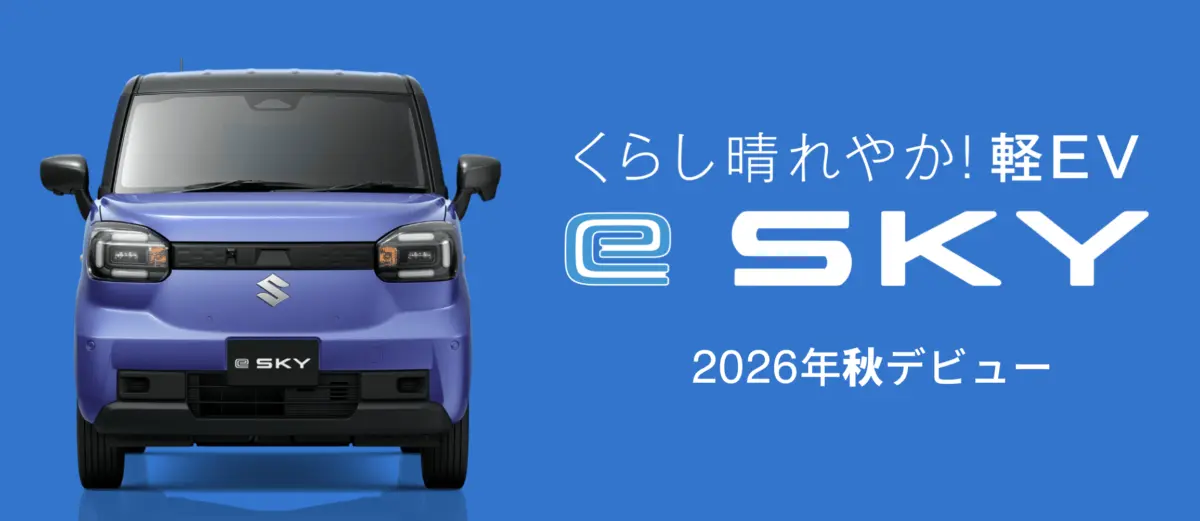
TOKYO — Japanese automotive giant Suzuki Motor Corporation has officially pulled the curtain back on its first-ever battery-electric passenger kei car: the Suzuki e-SKY. Featuring a targeted reference driving range of 310 kilometers, the e-SKY represents a critical milestone in Suzuki’s electrification strategy. Designed specifically for the tightly regulated and intensely competitive Japanese micro-car segment, the e-SKY bridges the gap between everyday practicality and forward-thinking electric vehicle (EV) engineering.
While final production specifications and pricing remain under wraps ahead of its official market launch, Suzuki’s preliminary disclosures paint a picture of a vehicle built not by forcing heavy batteries into a small frame, but by squeezing every ounce of efficiency out of a lightweight, highly optimized platform.
Main Facts
The Suzuki e-SKY is a purpose-built, light passenger battery-electric vehicle (BEV) engineered to operate within Japan’s strict municipal and domestic regulatory frameworks.
- Dimensions & Form Factor: Retaining the exact footprint of its concept predecessor, the e-SKY measures 3,395 millimeters in length, 1,475 millimeters in width, and 1,625 millimeters in height, with a 2,460-millimeter wheelbase.
- Weight: Tipping the scales at approximately 1,030 kilograms, the e-SKY achieves a remarkably low curb weight for a modern passenger EV.
- Battery & Powertrain: The vehicle utilizes a compact 26-kilowatt-hour (kWh) lithium iron phosphate (LFP) battery pack positioned beneath the floor. It is built upon Suzuki’s dedicated HEARTECT-e EV architecture and features an integrated e-Axle that combines the electric motor, inverter, and reduction gears into a single, space-saving unit.
- Efficiency & Range: Suzuki cites a reference energy-consumption figure of just 97 watt-hours per kilometer (Wh/km), which translates to a projected reference driving range of 310 kilometers. However, these figures are internal estimates and have yet to undergo official certification under Japan’s WLTC testing cycle.
- Charging Capabilities: The e-SKY supports up to 50 kW of DC fast charging, allowing the battery to replenish from a low state up to 80% in roughly 25 minutes. AC charging takes approximately 4.5 hours on a 6-kW connection or about 8 hours on a standard 3-kW home setup. Additionally, it features a 100-volt, 1,500-watt external power supply outlet, making it capable of acting as a mobile generator.
Chronology: From Concept to Production Reality
The journey of the e-SKY follows a deliberate, highly calculated timeline that underscores Suzuki’s methodical approach to electrification.

October 2025: The Vision e-Sky Debut
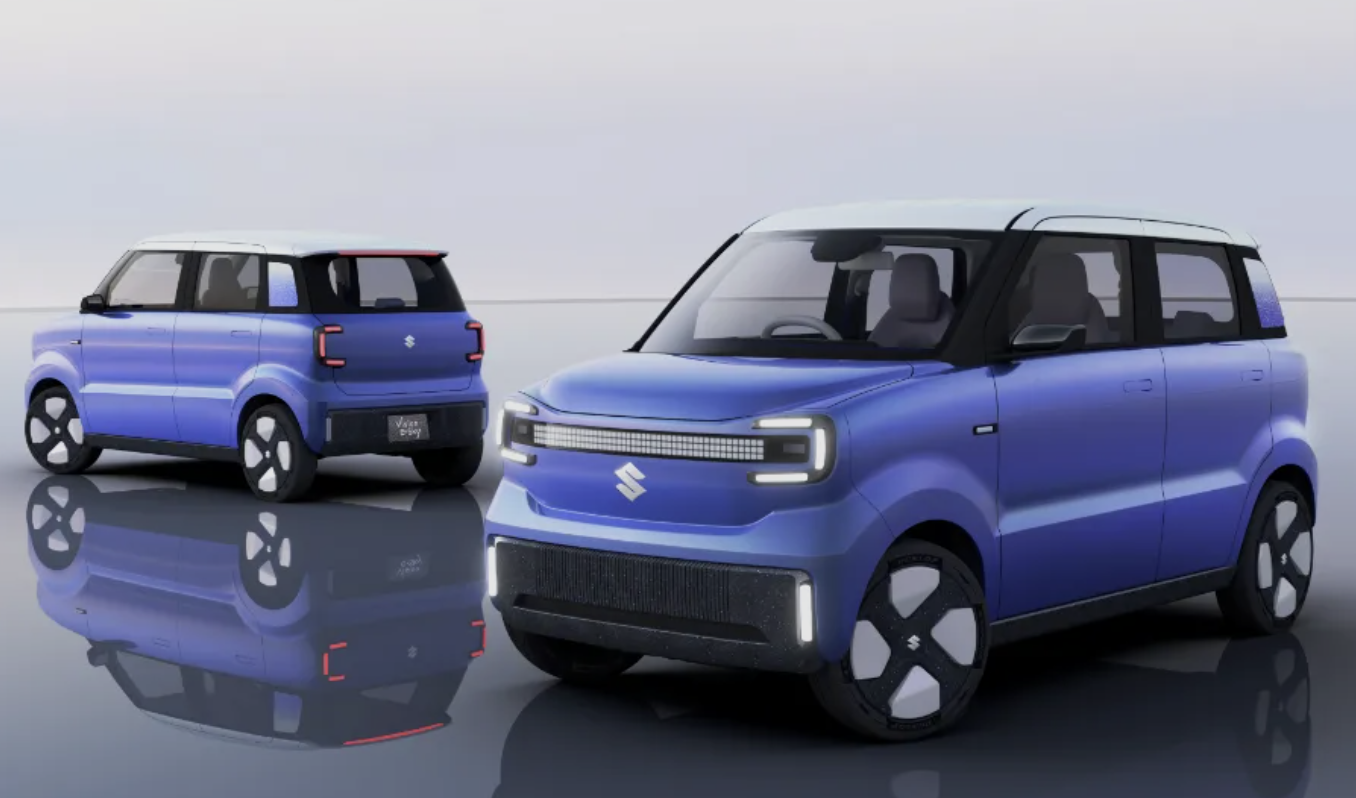
Suzuki first signaled its intent to electrify the passenger kei car market at the Japan Mobility Show 2025 in Tokyo. There, the company showcased the Vision e-Sky concept, a light passenger BEV explicitly tailored to the driving habits of Japanese urban commuters. At its debut, the concept featured identical exterior dimensions to what would become the production model, but carried a more modest projected driving range of "more than 270 kilometers." Suzuki set an aggressive internal target to bring the vehicle to commercialization during fiscal 2026.
August 2026: Preliminary Production Unveiling
Fast forward to August 24, 2026, when Suzuki released preliminary details and imagery of the production-bound e-SKY. Over the course of a single year, Suzuki’s engineering team managed to boost the vehicle’s reference driving range from 270 km to 310 km—all without altering the exterior dimensions or expanding the physical size of the battery pack.
Autumn 2026: Anticipated Market Launch
Suzuki has announced plans to officially launch the e-SKY in the Japanese domestic market in the autumn of 2026. Final pricing, trim levels, and certified range figures are expected to be revealed closer to the commercial release date.
Supporting Data & Engineering Deep Dive
To understand the engineering achievement behind the e-SKY, one must look closely at the constraints and solutions governing Japan’s kei car category. Kei cars are strictly limited by law regarding their physical dimensions and maximum power output. Unlike western automakers who can simply elongate a chassis to accommodate larger, heavier battery modules, Suzuki was legally boxed into a micro-footprint.

The Power of Low Mass
Rather than fighting physics with brute-force battery capacity, Suzuki leaned into lightness. At 1,030 kg, the e-SKY avoids the bloated weight figures plaguing many contemporary passenger EVs. This reduced mass drastically cuts the energy required for constant urban acceleration and deceleration.
LFP Chemistry and Thermal Management
The choice of a 26-kWh LFP battery is strategic. LFP chemistry is increasingly favored for affordable urban EVs due to its exceptional thermal stability, long-term cycle durability, and reduced reliance on costly, ethically fraught materials like nickel and cobalt.
Furthermore, to combat range loss during extreme weather conditions—a notorious hurdle for small EVs—Suzuki incorporated an advanced heat-pump climate-control system. This system significantly curbs the electrical load associated with cabin heating and cooling, directly protecting the vehicle’s 97 Wh/km efficiency rating.
Official Responses and Strategic Positioning
Suzuki’s leadership has framed the e-SKY around the corporate ethos of the "Easy to Switch" concept. The fundamental goal is to remove consumer friction, making the transition from a traditional gasoline-powered kei car to an electric vehicle feel completely natural to everyday users.
Suzuki has been transparent about the vehicle’s intended ecosystem. Company representatives emphasize that the e-SKY is not designed to be a long-haul highway cruiser. Instead, its primary use cases are centered squarely around daily necessities: commuting to work, school runs, grocery shopping, and regional family transportation.
Because the vehicle operates primarily within dense urban and suburban networks, drivers can easily cover their daily mileage requirements and replenish the battery while parked overnight or during routine stops.
Navigating a Crowded Competitive Landscape
The e-SKY does not enter a vacuum. Suzuki is stepping into a rapidly maturing electric kei car arena that already features established rivals. Nissan and Mitsubishi entered the fray early with the Sakura and eK X EV, respectively, while Honda has introduced the N-ONE e:. Additionally, foreign contenders like BYD have staked a claim in Japan’s micro-segment with offerings like the Racco.
To stand out, Suzuki is banking on its legacy reputation for reliability, space efficiency, and its unique hyper-focus on system-wide energy management.

Implications for the Broader EV Industry
The arrival of the Suzuki e-SKY carries significant implications that ripple far beyond the borders of Japan. It serves as a philosophical counter-narrative to the prevailing global EV trend of building ever-larger, heavier, and more expensive long-range vehicles.
Efficiency Over Excess
By extracting 310 kilometers of reference range from a humble 26-kWh battery, Suzuki is demonstrating a compelling blueprint for sustainable mobility: efficiency must precede battery bloat.
- Material Conservation: A smaller battery demands fewer raw materials, easing strain on global supply chains and lowering production costs—a critical factor as automakers worldwide struggle to achieve price parity with internal combustion engines.
- Grid Relief: Vehicles designed around urban "quick hops" require smaller chargers and place significantly less cumulative demand on electrical grids compared to massive, large-battery long-haul SUVs parked in every driveway.
Limitations of the Formula
Analysts note, however, that Suzuki’s hyper-efficient micro-car formula is not a universal panacea. The physics that allow a 1,030-kg kei car to thrive on a 26-kWh battery would fail entirely if applied to commercial freight haulers, heavy-duty towing vehicles, or long-distance highway cruisers that must maintain high speeds for hours on end.
Nonetheless, for the dense megacities of Asia and urban landscapes globally, the e-SKY proves that less can genuinely be more.

Conclusion
As the automotive industry grapples with the dual pressures of economic headwinds and carbon reduction mandates, Suzuki’s e-SKY offers a refreshing masterclass in disciplined design. By refining aerodynamics, perfecting underbody integration, optimizing the HEARTECT-e architecture, and trusting in light weight over heavy energy reserves, Suzuki has crafted a micro-EV that punches well above its weight class.
All eyes will now turn to Japan as the e-SKY approaches its autumn 2026 launch, where final pricing and consumer reception will test whether efficiency truly is king in the electric micro-car era.
