

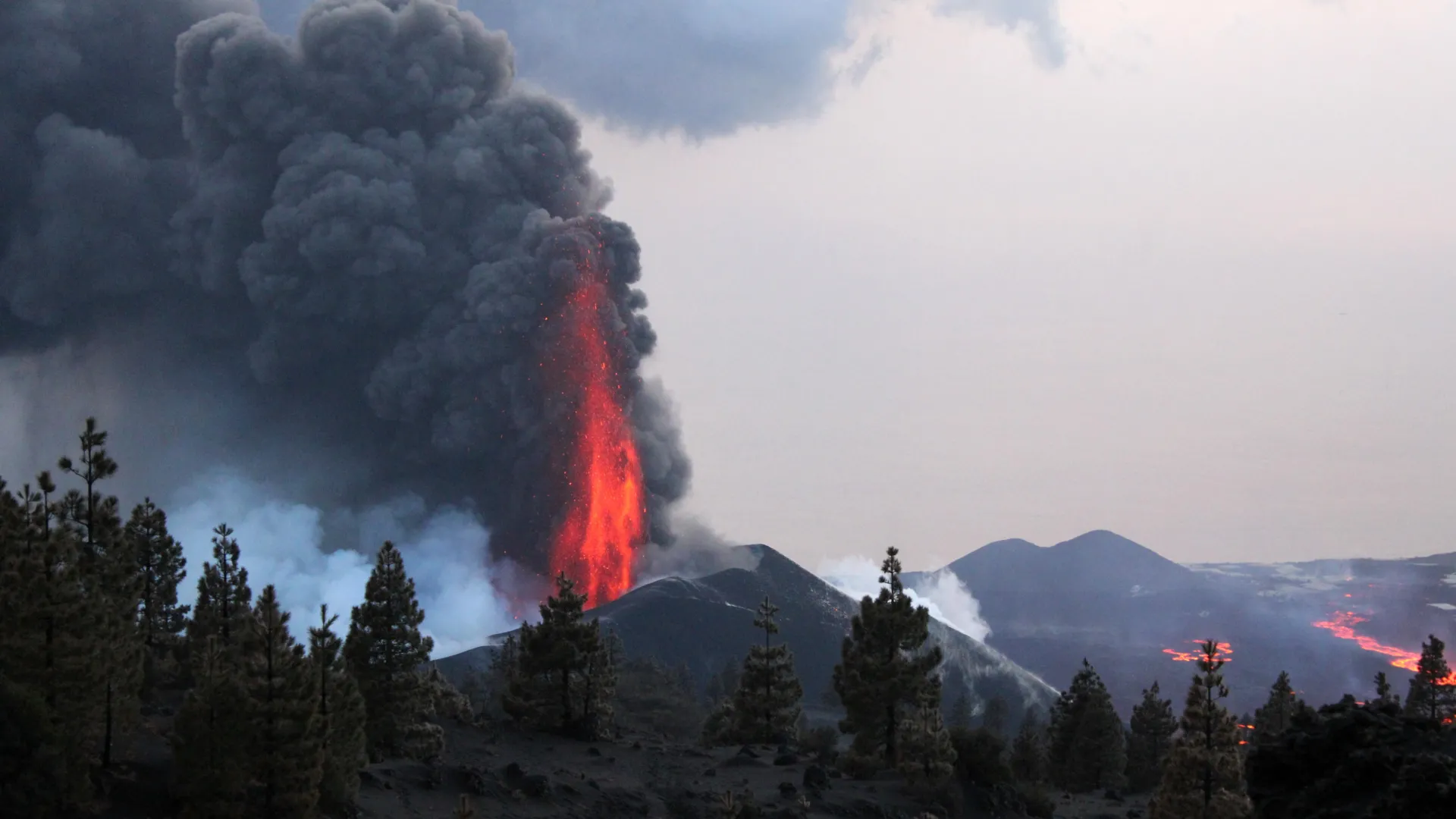
MANCHESTER, UK — For centuries, volcanologists have faced a perplexing geological paradox: two neighboring volcanoes—sharing nearly identical chemical compositions, gas contents, and tectonic settings—can exhibit radically different eruption styles. While one might detonate into towering, incandescent lava fountains that rain molten rock across the landscape, the other may merely ooze a sluggish, slow-moving river of lava with little explosive fanfare.
For decades, the standard diagnostic tools of hazard assessment pointed primarily to bulk chemistry, volatile pressures, and regional tectonic stress to explain these behavioral divergences. However, a groundbreaking international study led by researchers at The University of Manchester has illuminated a previously overlooked catalyst hidden deep within the Earth’s plumbing: a heat-driven mechanism known as "superheating."
Published in the journal Nature Communications, the new research reveals that when magma is subjected to intense, transient thermal spikes before its journey to the surface, it undergoes profound microscopic transformations. By dissolving microscopic crystal "seeds" and fundamentally altering the internal structure of the molten rock, superheating can delay crystallization for hours. This delay keeps magma remarkably fluid, accelerates its ascent, and fundamentally tips the scales between a docile effusive ooze and a dramatic, fountain-fed eruption.
Main Facts: The Superheating Mechanism and Crystal Dynamics
At the heart of the Manchester-led study is the realization that magma is not a static fluid, but a dynamic, evolving suspension of liquid silicate, gas bubbles, and solid mineral crystals. As magma rises through the Earth’s crust toward the surface, dropping pressure and cooling temperatures normally trigger the rapid nucleation and growth of new crystals. This crystallization process acts much like thickening soup; as solid crystals multiply and interlock, the magma’s viscosity—its internal resistance to flow—spikes dramatically.
However, the research team discovered that if magma experiences "superheating"—a state where the liquid becomes significantly hotter than the stability threshold of its existing crystals—the physical rules of the system change entirely.
- Annihilation of Crystal Seeds: Intense thermal spikes completely dissolve tiny pre-existing mineral crystals that would otherwise serve as scaffolding or "seeds" for the rapid growth of new crystals during ascent.
- Microscopic Reorganization: Beyond simply melting old crystals, superheating reorganizes the melt at a microscopic level. It creates a more uniform, homogeneous internal structure that is inherently unfavorable for the spontaneous nucleation of new crystals.
- Viscosity Control: By suppressing crystallization, superheating maintains a lower, more fluid magma viscosity. This fluidity allows the molten rock to surge upward at accelerated speeds, altering how volcanic gases separate and escape, which ultimately dictates whether an eruption produces high-energy lava fountains or a gentle, measured flow.
These findings solve a long-running conundrum in igneous petrology regarding how thermal history governs crystallization kinetics. Until now, scientists lacked a real-time observational window into how sudden injections of heat into a magma chamber immediately prior to eruption impact the mechanics of ascent.
Chronology: Recreating Volcanic Fury in the Laboratory
To unravel a process occurring kilometers beneath the Earth’s crust, the international research team had to combine forensic geology with cutting-edge, real-time experimental physics. The investigation followed a meticulous methodological timeline, bridging field collection, high-tech synchrotron observation, and advanced numerical modeling.
Phase 1: Field Sampling on La Palma
The genesis of the study began with physical samples collected from the 2021 Tajogaite eruption on La Palma in the Canary Islands, Spain. The Tajogaite eruption provided a pristine natural laboratory, characterized by complex eruptive phases that offered clear geological markers of its ascent history. The research team suspected that the magma feeding this eruption might have experienced localized superheating both prior to breaking the surface and during its transit through the crust.
Phase 2: Real-Time Synchrotron Experiments in Oxfordshire
To test their hypothesis, the scientists transported the Tajogaite magma samples to the Diamond Light Source facility in Oxfordshire, UK—the UK’s national synchrotron science facility. Utilizing an innovative, X-ray transparent pressure vessel developed specifically for this type of extreme research, the team paired the apparatus with synchrotron X-ray microtomography.
This technological marriage allowed the researchers to look directly in situ and in real time inside the miniature magma chamber as it was subjected to intense, volcanic-level pressures and thermal spikes. They could literally watch, frame by frame, how the internal mineral architecture dissolved and reacted to heat.
Phase 3: Complementary Long-Term Thermal Tracking in Prague
While the synchrotron provided high-resolution, real-time snapshots of rapid kinetic changes, the team also conducted complementary ex-situ experiments in Prague, Czech Republic. These parallel trials enabled the scientists to observe larger sample sets over extended periods, ensuring that the microscopic phenomena observed at Diamond Light Source were consistent across broader time horizons and thermodynamic states.
Supporting Data: The Eight-Hour Crystallization Delay
The quantitative results yielded by these laboratory simulations were both striking and definitive, highlighting a dramatic divergence in physical behavior between thermally altered and unaltered magma samples.
When the researchers subjected baseline magma samples—those that had not undergone superheating—to standard cooling and decompression conditions designed to mimic normal ascent, crystals began to form within a mere 20 minutes. In a natural setting, this rapid crystal proliferation would quickly increase the magma’s viscosity, slowing its movement and allowing gases to bleed off gradually.
In stark contrast, the samples that had been subjected to strong superheating displayed a profound kinetic inertia. Crystal formation was delayed for more than eight hours.
To understand the broader implications of this eight-hour delay, the research team integrated their experimentally derived nucleation-delay measurements into sophisticated numerical models of magma ascent. These simulations mapped how molten rock behaves and morphs as it travels vertically through kilometers of dense continental or oceanic crust.
The models confirmed that a prolonged window of delayed crystallization keeps the ascending magma in a super-fluid state. Unhindered by a thickening matrix of crystals, the magma shoots upward at unprecedented speeds. As this fast-moving, gas-rich column breaches the surface, the sudden decompression drives explosive expansion, producing dramatic lava fountains. Conversely, when crystals nucleate early, the sluggish, thickened magma rises at a measured pace, giving trapped gases ample time to diffuse and escape peacefully, resulting in a low-risk effusive flow.
Official Responses: Insights from the Research Team
The implications of the study have reverberated across the global volcanological community, prompting calls for a paradigm shift in how volcanic hazards are monitored and assessed.
Dr. Barbara Bonechi, a Research Associate at The University of Manchester and lead author of the study, emphasized the technological leap that made these discoveries possible.
"The history of crystal and bubble growth can dramatically control how a magma erupts; in particular, as more crystals grow, they eventually have a dramatic effect on magma viscosity," Dr. Bonechi explained. "Until now, we did not fully understand the dynamics of crystal growth for magmas that received an injection of superheat just before ascent. But using our exciting and newly developed X-ray transparent pressure vessel combined with synchrotron X-ray microtomography, we can actually observe these processes ‘in situ’."
The ability to move away from purely theoretical post-mortem analyses of cooled volcanic rocks—and toward direct observation of melting and crystallization under simulated crustal conditions—represents a major methodological breakthrough for experimental petrology.
Dr. Margherita Polacci, Senior Lecturer in Volcanology at The University of Manchester and co-author of the study, underscored the critical impact these findings have for public safety and disaster management.
"Current volcanic hazard models typically focus on magma chemistry, gas content, and pressure changes," Dr. Polacci noted. "This work suggests that pre-eruptive thermal history and crystallization kinetics may also play an important role in controlling magma ascent and eruptive behavior, with implications for volcanic hazard assessment."
Implications: Rewriting Volcanic Hazard Assessments
The revelation that pre-eruptive thermal history is a master controller of volcanic style carries profound consequences for observatories and civil protection agencies worldwide.
1. Upgrading Monitoring Metrics
Traditional volcanic monitoring relies heavily on seismicity (tracking earthquakes caused by magma fracturing rock), gas emissions (measured via satellite or ground spectrometers), and ground deformation (measured via GPS and InSAR). While these methods are exceptional for detecting when magma is moving, they offer limited insight into the microscopic physical state of the magma body itself. Integrating thermal history models will allow scientists to better interpret ambiguous geophysical signals.
2. Refining Eruption Forecasting
When a volcano awakens, emergency managers need to know quickly whether an impending eruption will be effusive—allowing for orderly evacuations of slow-moving lava paths—or explosive, requiring immediate evacuation zones due to fast-moving lava fountains, pyroclastic surges, or tephra falls. By accounting for whether a magma chamber has experienced a recent thermal injection, hazard models can more accurately predict the violence and style of the surface breakout.
3. A New Framework for Igneous Petrology
Beyond immediate hazard mitigation, the study opens new avenues in fundamental Earth sciences. It demonstrates that thermal anomalies deep within the crust do not merely melt surrounding rock; they fundamentally reprogram the physical properties of the ascending melt itself.
As volcanologists continue to refine their computer simulations and incorporate crystallization kinetics into global monitoring protocols, the fiery mysteries of the subsurface are slowly coming into focus. Thanks to the marriage of La Palma’s geological archive and Oxfordshire’s synchrotron beamlines, humanity is now one step closer to reading the hidden thermal diary of the Earth before it writes its next violent chapter on the surface.
