

Published August 23, 2026
For a long time, the concept of acceptance was weighed down by a cultural misconception: that to accept a difficult circumstance was to surrender, to admit defeat, or to abandon hope for a better future. To many, accepting a harsh reality felt synonymous with agreeing with it, liking it, or giving up the fight for change.
However, modern contemplative practices—and accessible yoga in particular—offer an entirely different perspective. Acceptance is not passive resignation; rather, it is the active, grounded foundation upon which genuine growth, resilience, and transformation are built.
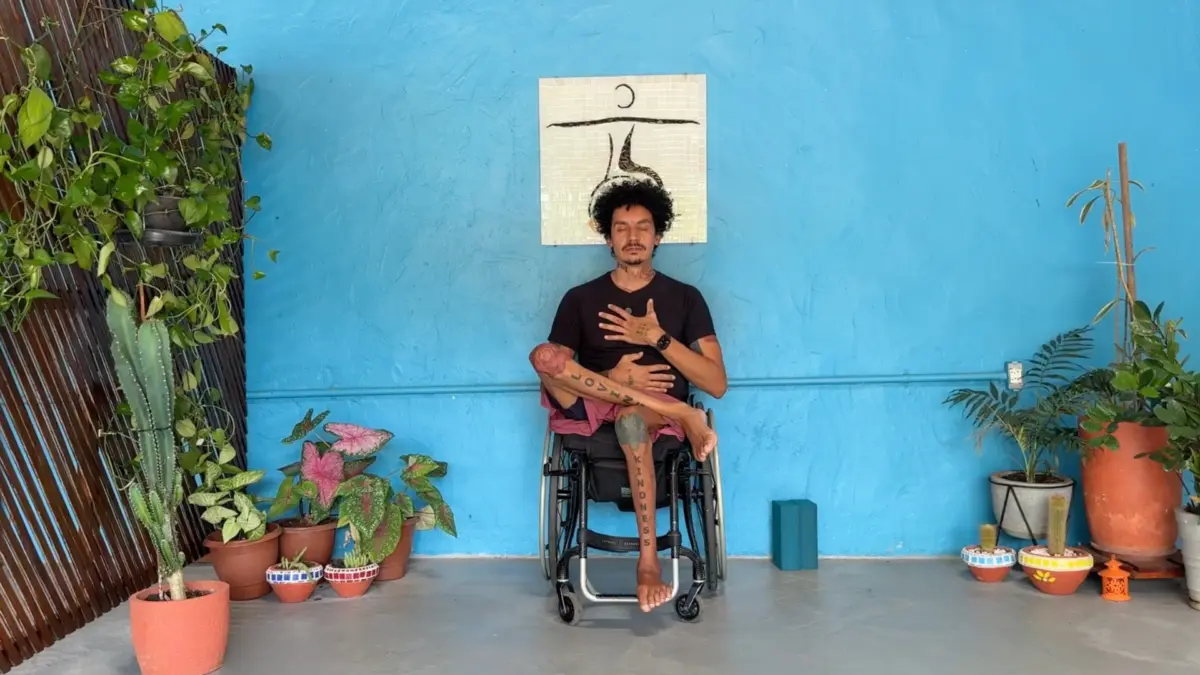
Led by prominent accessible yoga and wheelchair yoga teacher Rodrigo Souza, a growing movement within the wellness community is shifting the narrative. Through mindful movement, chair-based modifications, and intentional sequencing, practitioners are learning that acceptance does not trap us in our current reality—it gives hope somewhere to stand.
Main Facts: Redefining Acceptance Through the Lens of Accessible Yoga
The core philosophy championed by accessible yoga instructors is that the practice should meet the practitioner exactly where they are, rather than forcing every body into a rigid, predetermined shape.
- The Paradox of Acceptance: Stopping the constant internal fight against current circumstances frees up vital mental and physical energy, redirecting it toward exploring future possibilities.
- The Role of Props: Accessible yoga utilizes everyday tools—such as sturdy chairs, yoga blocks, and intentional seating adjustments—to democratize the practice, ensuring that physical limitations never preclude mindfulness and strength-building.
- Deconstructing Poses: Traditional postures like Tree Pose (Vrksasana) can be broken down into fundamental elements—grounding, strengthening, and balancing—making them fully adaptable for practitioners of all mobility levels.
"Acceptance does not take hope away. It gives hope somewhere to stand," notes the foundational teaching behind Souza’s accessible sequences. "Acceptance is not resignation, and it doesn’t mean that we stop growing, changing, or dreaming. It means we become rooted in reality without becoming imprisoned by it."
Chronology: The Evolution of Modern Accessible Yoga
The journey toward inclusive, accessible yoga has evolved significantly over the past two decades, moving from a niche subset of alternative therapy to a mainstream pillar of mindful movement.
Phase 1: The Rigid Ideal (Pre-2010s)
Historically, Western yoga culture heavily favored hyper-flexible, able-bodied practitioners. Instruction frequently centered on external aesthetics—how a pose looked rather than how it felt. Practitioners experiencing chronic pain, limited mobility, or temporary injuries often found themselves alienated or pressured into unsafe physical expressions.
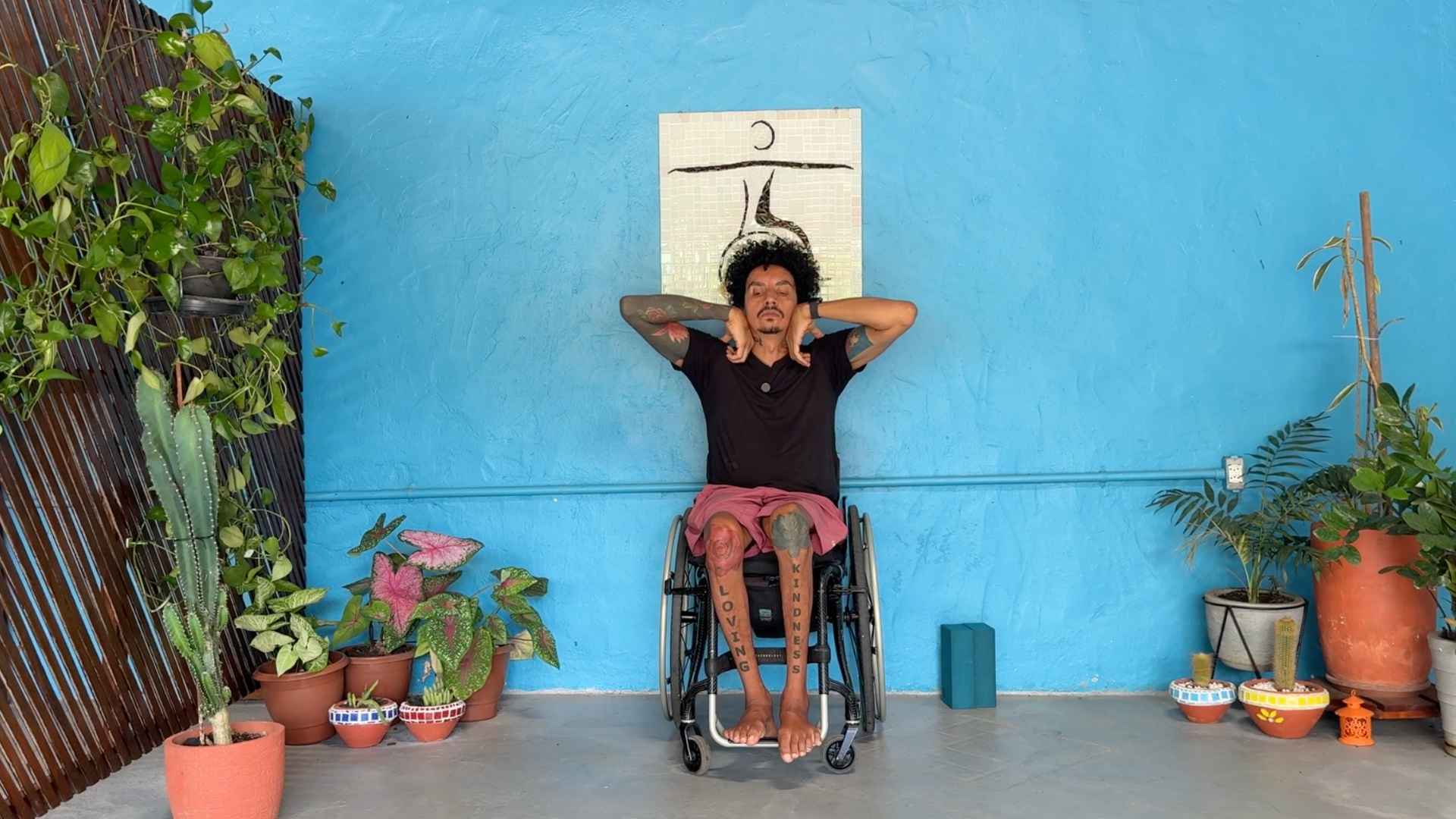
Phase 2: The Rise of Adaptive Modalities (2010s–2020)
As the wellness industry matured, instructors began developing specialized tracks, including chair yoga, restorative practices, and trauma-informed instruction. Teachers like Rodrigo Souza pioneered inclusive frameworks, emphasizing that yoga is an internal state of awareness rather than an acrobatic display.
Phase 3: Mainstreaming Accessibility and Radical Inclusion (2020–Present)
Today, accessible yoga is recognized as a vital component of holistic health. Instructors focus heavily on psychological safety, body neutrality, and radical acceptance. The practice has shifted from a philosophy of "how can I make this person do the pose?" to "what is the intention of the practice, and how can we explore it together?"
Supporting Data: The Mechanics of a 20-Minute Grounding Practice
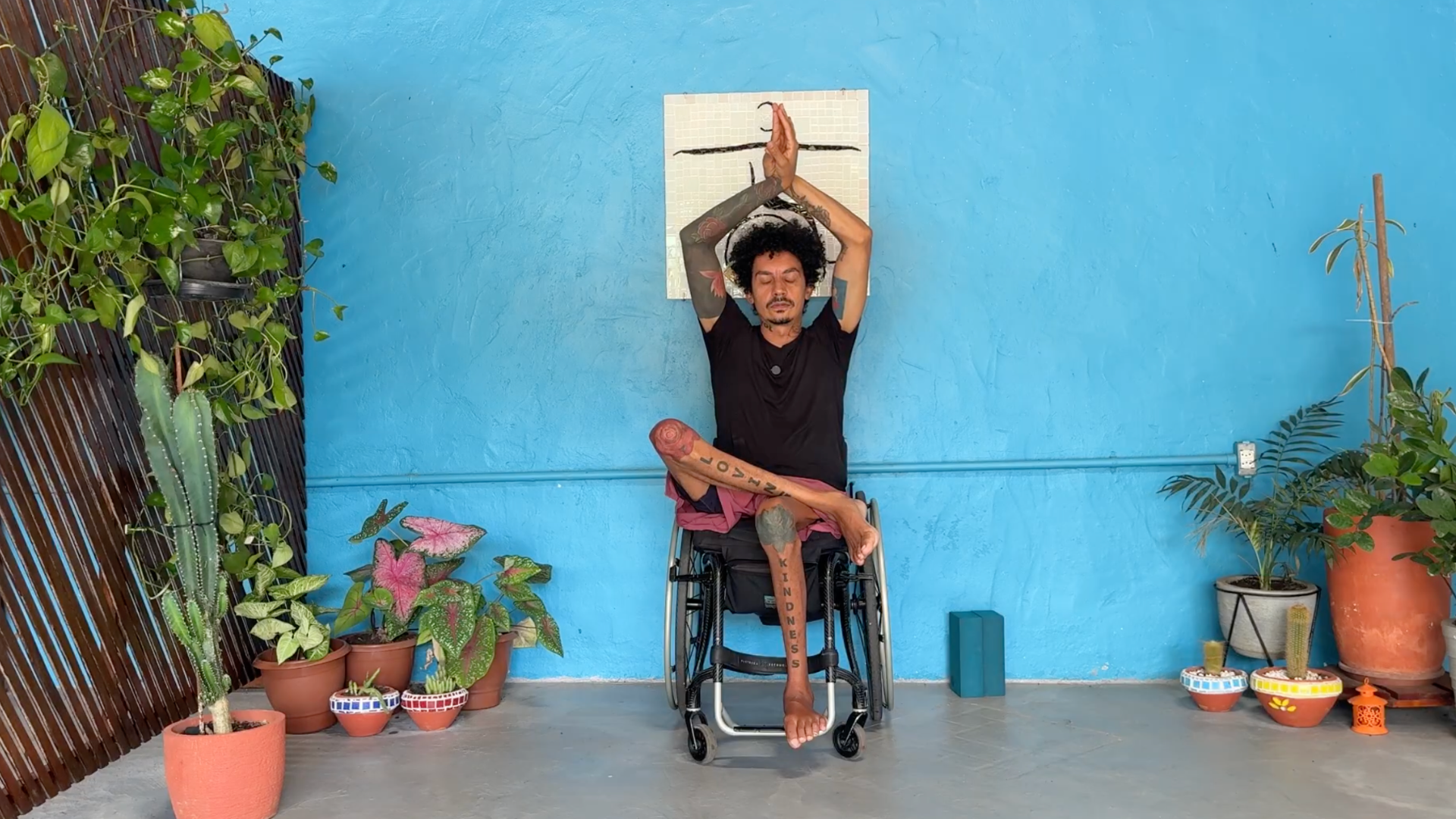
To demonstrate how abstract philosophies translate into physical action, Souza outlines a structured, 20-minute chair yoga sequence designed for grounding and emotional regulation. The practice relies on deconstructed biomechanics, utilizing chairs and blocks to explore three core pillars: grounding, strengthening, and balancing.
1. Establishing the Foundation: Mountain Pose (Tadasana)
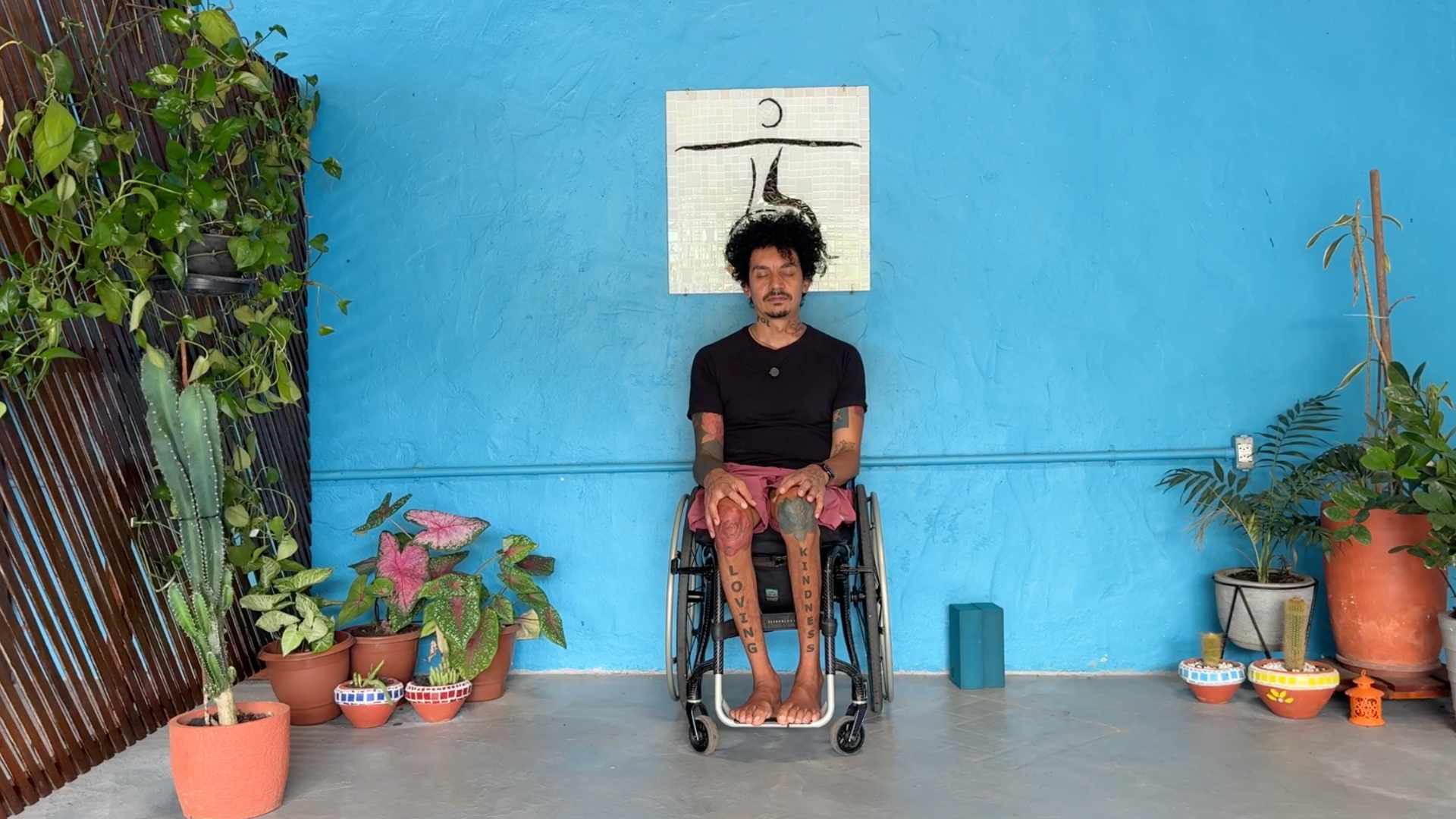
- The Execution: Sit straight and tall in a sturdy chair. Elevate the crown of the head slightly to naturally lengthen the spine. Soften the shoulders and release muscular tension. Close the eyes or adopt a soft gaze toward the floor.
- The Mental Focus: Visualize roots extending downward from the sitting bones and feet into the earth, fostering an internal sense of peace and stability.
- Breathwork: Three deep, conscious cycles—inhaling through the nose, followed by a long, soft exhalation through the mouth with an audible sigh.
2. Mobilizing the Spine: Neck Rolls and Elbow Circles
- Neck Rolls: Visualizing a paintbrush on the tip of the nose and a blank canvas ahead, practitioners consciously trace the number 8 (or an infinity sign) horizontally and vertically. This introduces conscious awareness and curiosity about physical sensations, performed three times in each direction.
- Elbow Circles: Seated tall, arms lift slightly before lowering with palms facing down. Elbows trace circular paths three times forward and backward, encouraging practitioners to test their comfortable range of motion before finishing with a light arm shake.
3. Deconstructing Tree Pose (Vrksasana) from a Chair
Tree pose is traditionally a standing balance challenge, but accessible yoga breaks it down into accessible, scalable layers:
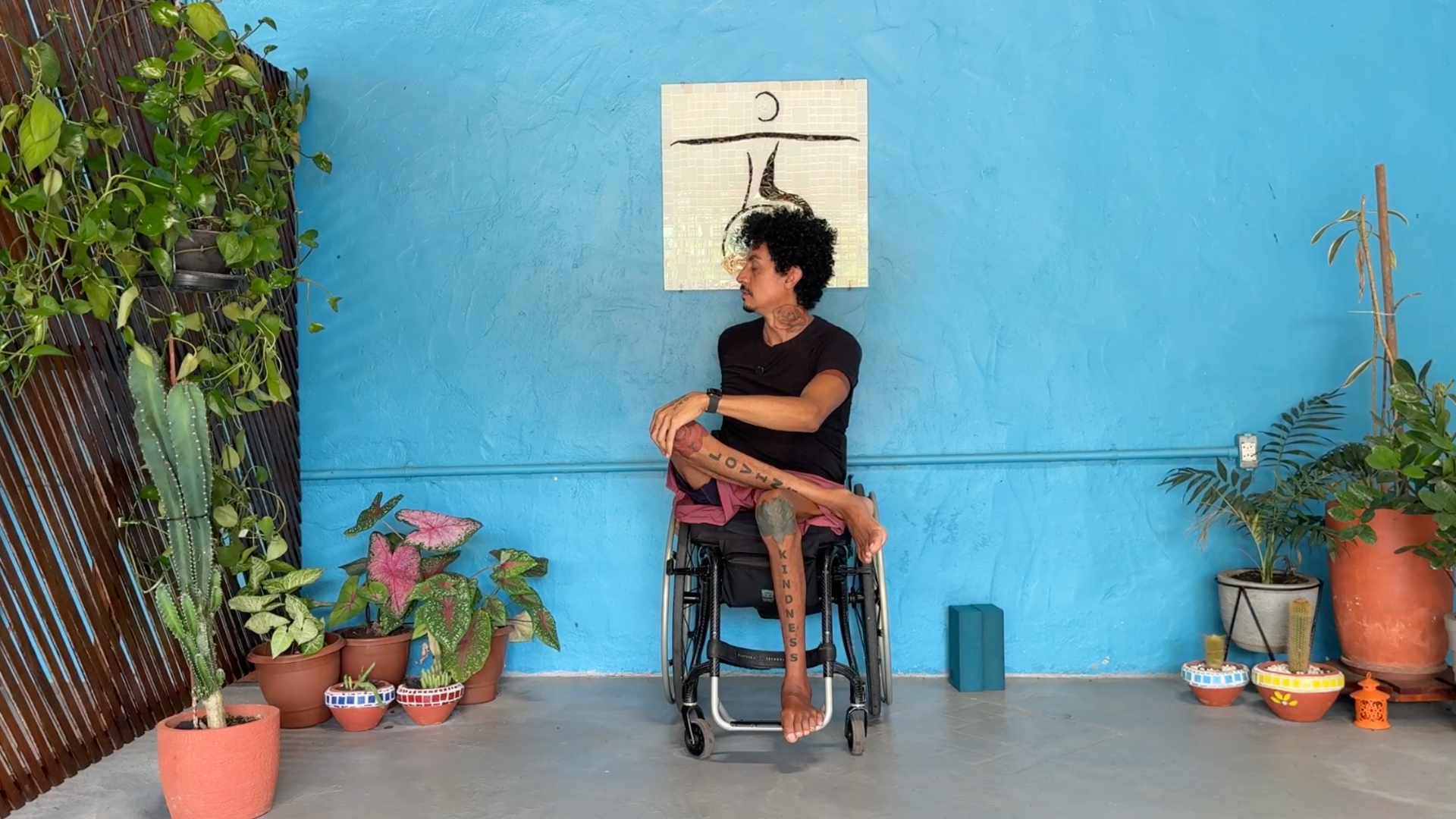
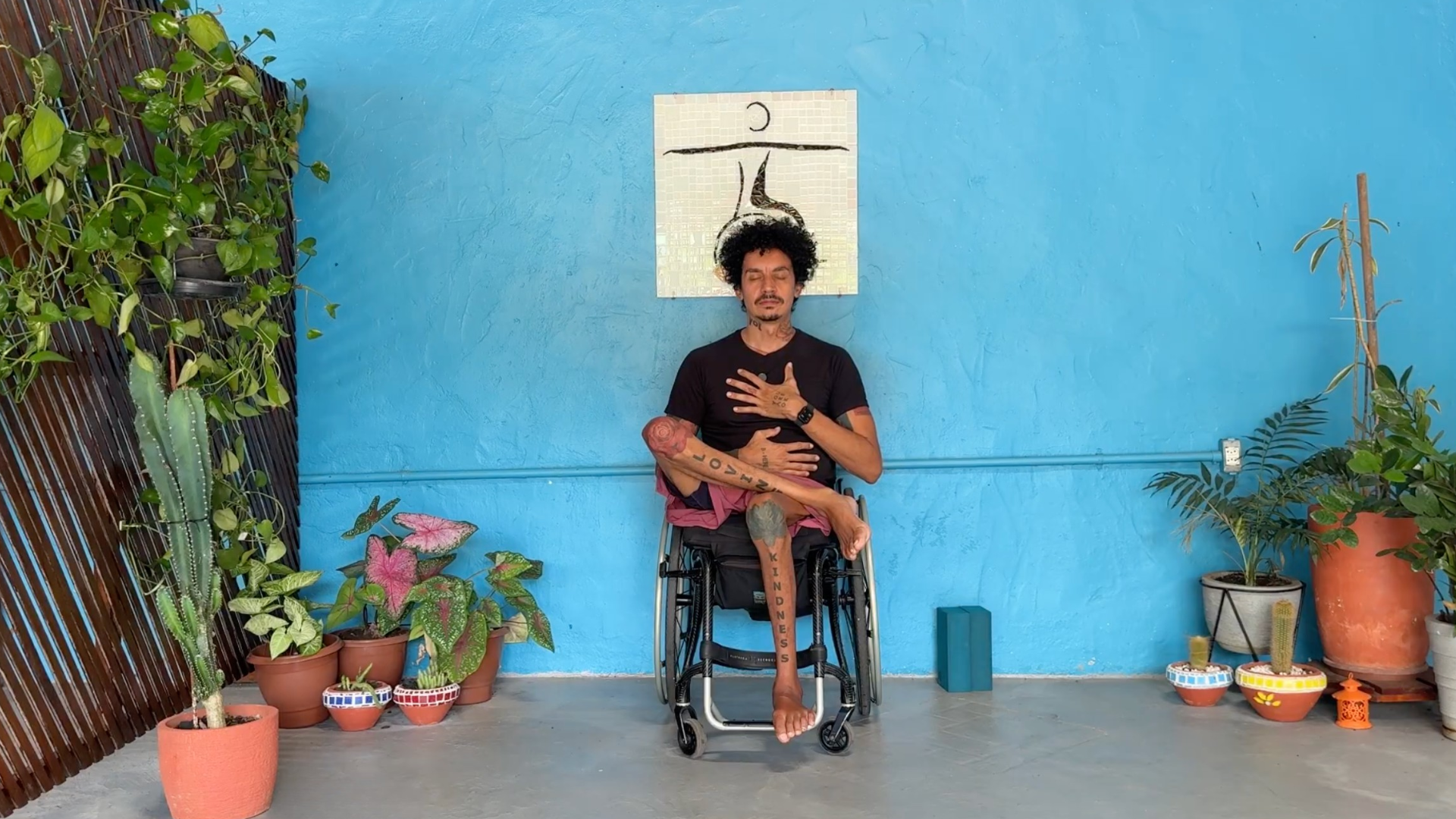
- Grounding: Crossing the left leg over the right while keeping the right foot firmly rooted. One hand rests on the belly, the other on the heart center, cultivating height and breath awareness.
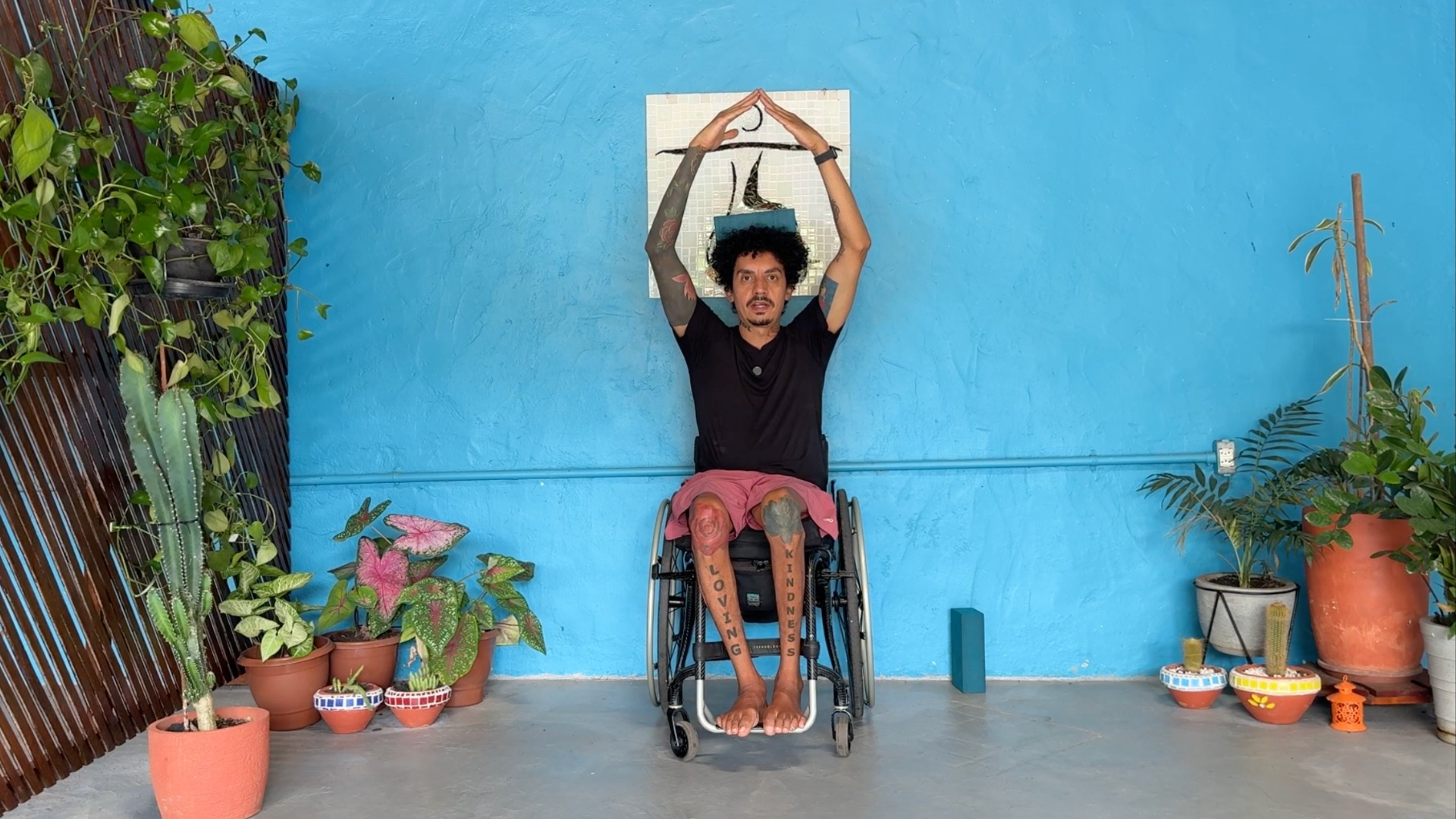
- Strengthening: Inhaling to raise the arms (or "branches") any comfortable amount, bringing palms together to build upper-body strength and presence.
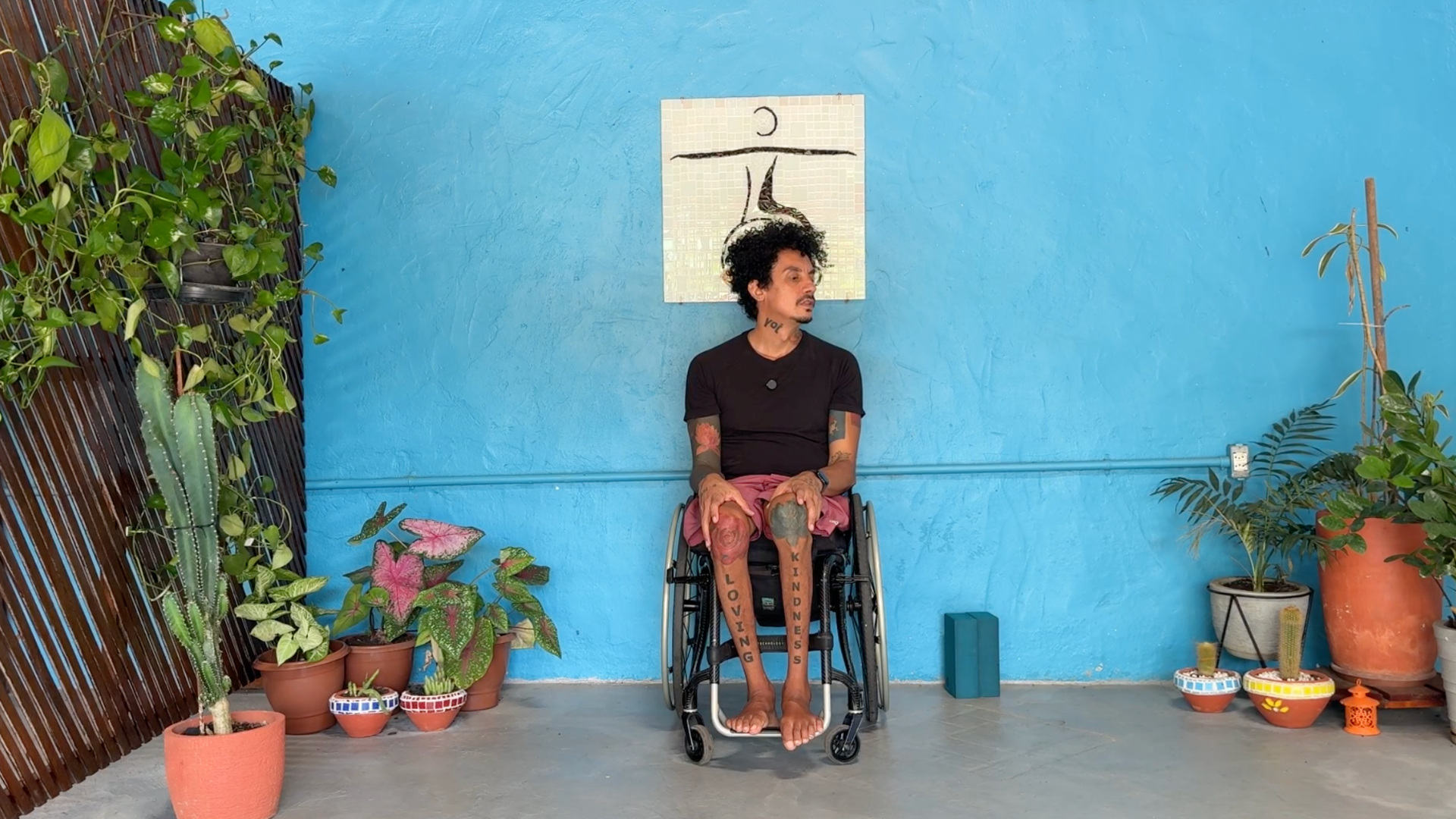
- Twisting Variations: Incorporating seated twists (Ardha Matsyasana variation) by taking the right hand to the left knee, gazing left, and breathing before repeating on the opposite side.
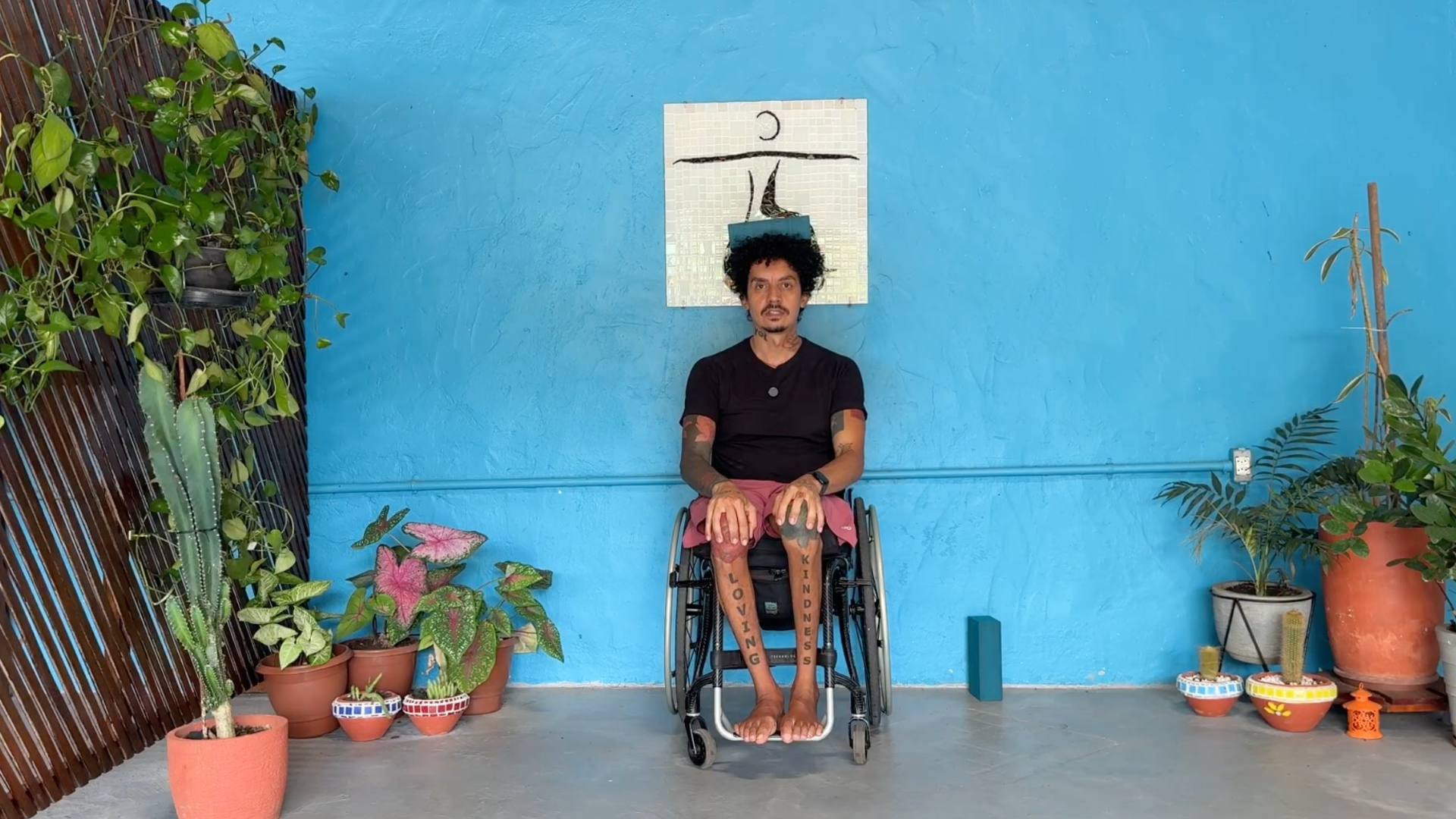
- The Balancing Challenge (Blocks on Head/Hands): Placing a yoga block on the head or holding a block in each palm introduces playful instability, teaching practitioners to embrace swaying and wobbling as a natural part of balance.
- Side Stretching: Placing blocks on the floor on either side of the chair and reaching one arm overhead toward the sun creates open side-stretching, relieving tension in the obliques.
4. Opening in All Directions: Seated Cat & Cow
- The Execution: With hands resting on the knees and sitting bones grounded, practitioners alternate between rounding the spine into Cat Pose on an exhalation and arching the back to broaden the chest into Cow Pose on an inhalation.
- The Purpose: Completing the sequence opens the spine safely across all six directions of movement.
5. Integration and Final Centering
The practice concludes with a Palm Tree variation (interlacing fingers and reaching upward) followed by a final centering meditation. Practitioners soften their gaze, release facial tension, and reflect on a teaching inspired by Ram Dass: humans often judge themselves and each other far more harshly than they would ever judge trees in a forest. Every individual is unique, beautiful, and inherently worthy of peace.
Official Responses and Expert Perspectives
The philosophy of radical acceptance integrated with physical accessibility has drawn praise from physical therapists, mental health professionals, and yoga educators alike.
"When we stop spending all our energy fighting where we are, we have more energy to explore where we can go," explains the core ethos of modern accessible yoga pedagogy. "Acceptance is not a cage. It is the soil from which sustainable transformation grows."
Medical experts emphasize that integrating mental reframing with low-impact physical movement significantly lowers cortisol levels, improves proprioception, and reduces chronic pain flare-ups among populations with limited mobility. By eliminating the competitive drive historically associated with fitness cultures, accessible yoga fosters a neurological sense of safety that is essential for healing and nervous system regulation.
Implications: The Future of Inclusive Wellness
The broader implications of this accessible, acceptance-based approach extend far beyond the yoga mat. As studios, community centers, and digital platforms increasingly adopt inclusive methodologies, the definition of wellness is undergoing a democratization process.
- Accessibility as a Standard, Not an Accommodation: The shift led by instructors like Rodrigo Souza proves that adaptive yoga is not a "lesser" version of a practice, but a deeply intelligent, highly adaptable art form suitable for every human body.
- Mental Health Integration: Blending somatic movement with psychological reframing provides everyday practitioners with actionable tools to combat anxiety, burnout, and resistance to life’s inevitable challenges.
- A Culture of Compassion: By learning to view our bodies—and the bodies of those around us—with the same non-judgmental appreciation we reserve for a forest of diverse trees, society moves closer to a culture of radical empathy and inclusion.
Ultimately, whether practicing in a wheelchair, a standard chair, or on a traditional mat, the fundamental truth remains unchanged: This is where I am today. Not where I thought I would be, not necessarily where I will always be. But here. And here is enough to begin.
