

By Investigative Cultural Desk
For over seven decades, millions of tarot enthusiasts worldwide have sought guidance, introspection, and artistic inspiration from the iconic imagery of the Rider-Waite-Smith tarot deck. Yet, while her vibrant creations remain a cornerstone of modern esoteric practice, the woman behind the brush—Pamela Colman Smith—faded into relative obscurity after her passing in 1951. For generations, the exact location of her final resting place remained a historical enigma, lost to the ravages of time, tragedy, and administrative misfortune.
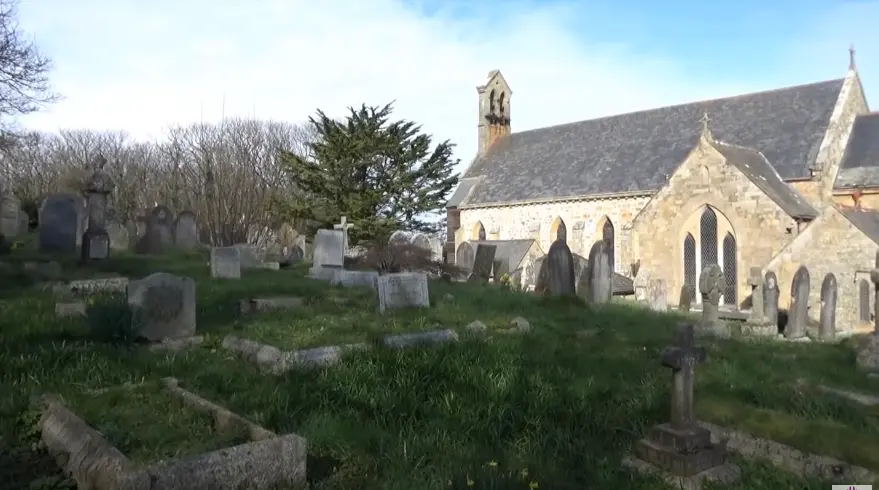
Recent investigative efforts, however, have brought researchers closer than ever to identifying where "Pixie," as she was affectionately known, was laid to rest. Situated within the tranquil confines of the St. Michael & All Angels Churchyard, her probable burial site offers a poignant, if melancholic, reflection of a brilliant artist who died in near-obscurity. This comprehensive report explores the main facts of her burial, the chronology of the investigation, the supporting geographical and archival data, insights from local historians, and the broader implications this discovery holds for cultural historians and tarot scholars alike.
1. Main Facts: Piecing Together the Burial of "Pixie"
Pamela Colman Smith (1878–1951) lived a life rich in artistic expression, theater, and association with the leading literary and mystical figures of the early 20th century. However, her final days were marked by financial hardship and isolation. When she passed away on September 18, 1951, her contributions to art and cartomancy were largely unrecognized by the mainstream public.
On September 25, 1951, Smith was laid to rest in the churchyard of St. Michael & All Angels. Her funeral service was conducted by a well-regarded Roman Catholic priest, Father Joseph Henry du Moulin-Browne. Despite the dignity of her farewell, physical markers of her grave were fleeting. Like many indigent or quiet burials of the era, her initial marker was likely a temporary wooden cross or perhaps left entirely unmarked. Over the decades, environmental weathering, landscaping changes, and the complete loss of original parish plot registers eradicated the physical signposts pointing directly to her plot.
Nevertheless, persistence from modern researchers has pierced the veil of history. By cross-referencing surviving parish burial registers with the chronological layout of the graveyard and surrounding marked graves dating from 1950 to 1951, investigators have successfully zeroed in on a specific corner of the churchyard. This secluded, picturesque plot—nestled near the shoreline and enveloped by whispering woodlands—now stands as the most historically sound candidate for the final resting place of one of the 20th century’s most influential commercial artists.
2. Chronology: From Obscurity to Rediscovery
To understand how Smith’s burial site was essentially lost and subsequently re-identified, it is necessary to examine the chronological timeline of events surrounding her death, administrative losses, and modern fieldwork.
- September 18, 1951: Pamela Colman Smith passes away at the age of 73 in Cornwall, England.
- September 25, 1951: Father Joseph Henry du Moulin-Browne officiates Smith’s burial at St. Michael & All Angels Churchyard. At this time, a standard entry is made into the handwritten parish burial register, though the precise plot coordinates are not systematically detailed in a surviving master map.
- Mid-20th Century (Exact Date Unrecorded): During a period of structural renovation work at St. Michael & All Angels, temporary builders’ huts are established on or near the church grounds. Parish records, plot maps, and administrative documents are temporarily stored within one of these huts.
- The Tragic Fire: A destructive fire breaks out inside the builders’ hut. The blaze consumes historical parish records, including the definitive map detailing the exact coordinates of plots from the mid-20th century. For decades, this event creates an impenetrable roadblock for anyone attempting to locate Smith’s grave.
- Decades of Silence: Smith’s grave is completely forgotten by the broader public. Her estate is auctioned off, her name fades from public consciousness, and the Rider-Waite-Smith deck—frequently credited solely to Arthur Edward Waite—gains global traction without widespread awareness of its true artistic creator.
- Recent Site Investigations (Modern Era): Researchers and tarot historians conduct an intensive on-site investigation at St. Michael & All Angels Churchyard. By utilizing surviving textual records and analyzing the physical layout of the graveyard, they propose a highly probable location for Smith’s plot.
- Independent Validation: The day following the initial site survey, a local historian—who originally researched the churchyard’s history and layout thirty years prior—independently reviews the findings and validates the research team’s conclusions regarding the location of the 1951 plots.
3. Supporting Data: Navigating the Physical and Archival Evidence
In the absence of a surviving master plot map, locating Pamela Colman Smith’s grave required a forensic approach combining historical demography, architectural analysis of the graveyard, and surviving parchment records.
The Chronological Layout of the Graveyard
Graveyards from this region and period were rarely filled at random. Instead, sextons and parish caretakers buried the deceased in strict chronological order, moving row by row or section by section. By extracting the names and exact dates of individuals buried immediately before and after September 25, 1951, from the surviving Parish registers, researchers established a chronological perimeter.
The Cluster of 1950–1951 Markers
In the far corner of the churchyard, distinct from the ancient medieval sections, lies a cluster of three marked graves bearing dates spanning 1950 and 1951. Surrounding these marked stones are at least three additional unmarked plots. Because graveyard management during this post-war period strictly adhered to sequential plot assignment, Smith—who was interred in late September 1951—must lie directly within this specific cluster.
The Environmental Context
The proposed site is located in a quiet, far corner of the churchyard, flanked by mature woodlands and positioned close to the coastal shoreline. Throughout her life, Pamela Colman Smith held a deep, profound affinity for the sea, coastal landscapes, and the natural world, which heavily influenced her artistic style and her time living in Jamaica and Cornwall. Strikingly, during the recent video documentation of the site visit, the bells of St. Michael & All Angels began to ring organically, creating an atmosphere that many researchers described as deeply moving and symbolically resonant.
4. Expert Insights and Independent Validation
Historical research cannot rely on circumstantial alignment alone; it demands peer review and corroboration from local custodians of history. In the case of Pamela Colman Smith’s resting place, the investigative team’s field hypothesis underwent rigorous external scrutiny.
During their initial site visit, investigators mapped the typography, measured the spacing between headstones from 1950–1951, and correlated these physical metrics against the salvaged names in the surviving text registers. They deduced that Smith’s plot resided within the unattended cluster in the churchyard’s periphery.
Crucially, the following day, this hypothesis was independently presented to a veteran local historian—an expert who has spent over three decades cataloging, researching, and preserving the history of St. Michael & All Angels and its surrounding parish records. Without prior briefing on the investigators’ exact conclusions, the historian evaluated the architectural sequencing, the fire’s historical footprint, and the demographic records. Their independent analysis arrived at the exact same conclusion: the isolated corner featuring the 1950–1951 interments represents the definitive final resting place of Pamela Colman Smith.
5. Implications: Restoring the Legacy of Pamela Colman Smith
The identification of Smith’s probable resting place is far more than an exercise in historical geography; it represents a vital cultural reclamation. For decades, the narrative surrounding the most popular tarot deck in the world sidelined its artist. Arthur Edward Waite, an occult scholar and prominent member of the Hermetic Order of the Golden Dawn, commissioned Smith to create the 78 illustrations that would breathe life into his esoteric system. Historically, publishers and occult historians frequently referred to the deck merely as the "Rider Tarot" or the "Waite Deck," entirely omitting Smith’s surname.
Over the last twenty years, a dedicated wave of scholarship has worked to correct this historical oversight. Seminal works, such as Secrets of the Waite-Smith Tarot (Llewellyn, 2015) by Marcus Katz and Tali Goodwin, have provided deep dives into Smith’s artistic background, her theatrical life in London, and her profound influence on the visual language of modern mysticism.
Furthermore, organizations such as the Tarot Association have expanded these efforts, releasing exclusive archival discoveries, rare photographs, and specialized essays—such as the member-only feature titled "The Kiss of the Sun for Pardon: A Memory of Pamela Colman Smith"—to ensure that modern practitioners understand the flesh-and-blood woman behind the masterpiece.
A Call for Continued Preservation
As researchers and admirers continue to visit St. Michael & All Angels Churchyard to pay their respects, discussions are underway regarding how best to honor a woman who gave so much to the esoteric community while receiving so little in return during her lifetime. Whether through a commemorative plaque, a dedicated memorial stone in the confirmed vicinity, or ongoing academic exploration, recognizing her final resting place ensures that Pamela Colman Smith is no longer a footnote in occult history.
Instead, she stands restored to her rightful place: celebrated not only for the eternal symbols she painted, but as a recognized, honored artist whose visionary spirit continues to touch lives across the globe.
