

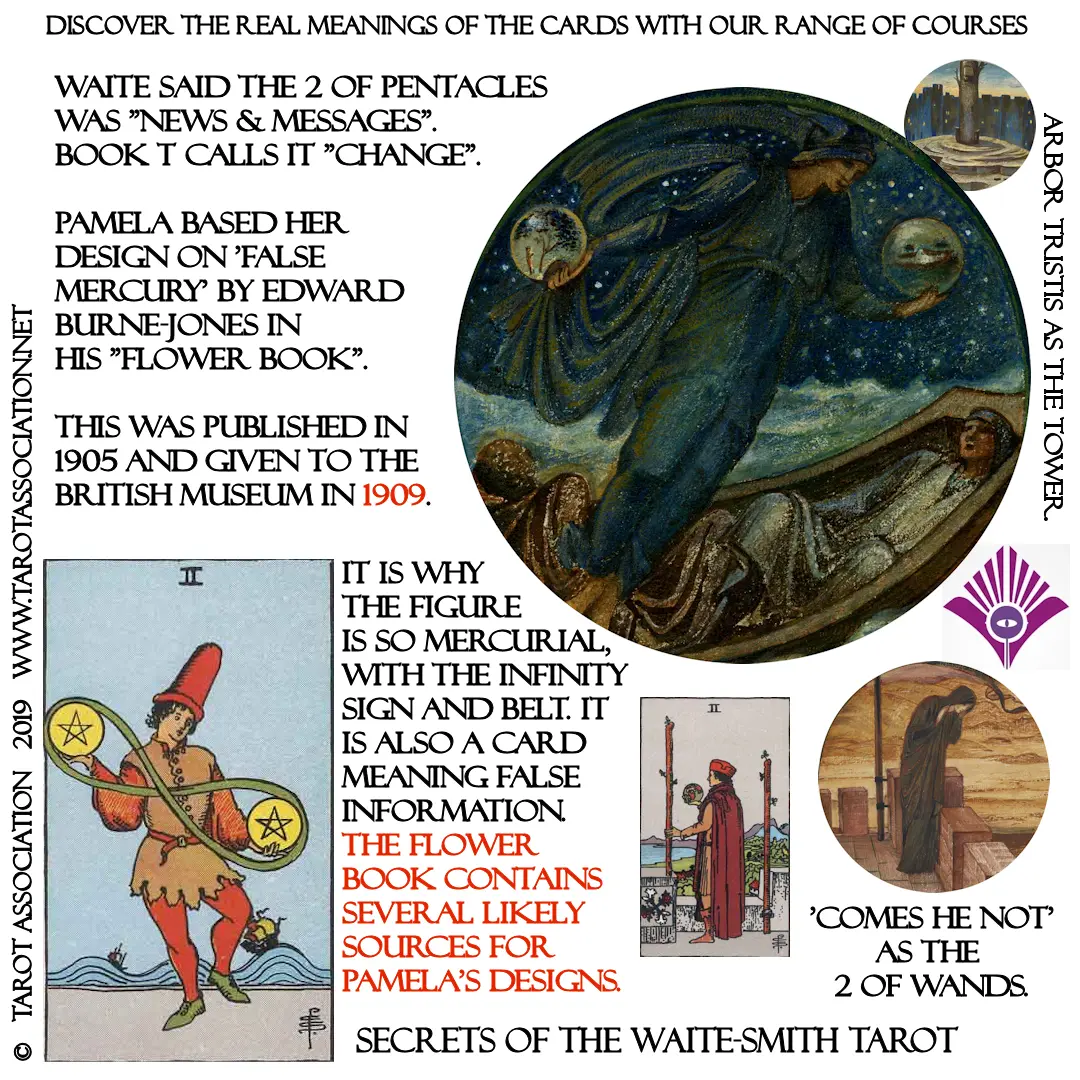
LONDON — For generations, tarot enthusiasts have pulled the Two of Pentacles and understood it as a simple, benign emblem of modern life’s frantic multitasking. Traditionally taught as a lesson in balancing time, checking account balances, and managing the daily push-and-pull of commitments, the card has long enjoyed a reputation as the patron saint of the busy bee.
However, recent historical research into the foundational texts of modern tarot reveals a startling truth: the Two of Pentacles has become profoundly disconnected from its original intent. Far from a mere snapshot of lifestyle management, historical archives and esoteric manuscripts suggest that this iconic card is, in fact, the original "gaslighting" card—steeped in themes of intentional miscommunication, mercurial deception, and psychological unsteadiness.
Main Facts: The Duality of the Two
At its surface, the Two of Pentacles depicts a figure—often jester-like—juggling two large coins wrapped in an endless, looping infinity band while standing against a backdrop of undulating ocean waves and bobbing ships. For decades, readers have applied this visual directly to modern scenarios: managing dual revenue streams, coordinating conflicting calendars, or riding the waves of a fluctuating economy.
Yet, a deeper dive into the roots of the Rider-Waite-Smith tarot deck uncovers an entirely different psychological architecture. The card’s true lineage ties it directly to the concepts of shifting currents, alternating gains and losses, and, most critically, unreliable communication.
According to historical occult frameworks, the Two of Pentacles does not merely represent a busy schedule; it highlights a psychological tightrope walk where reality itself is called into question. It points toward environments plagued by mixed messages, simulated realities, and subtle manipulation—earning it the modern moniker of the original gaslighting card.
Chronology: Tracing the Roots from the Golden Dawn to Burne-Jones
To understand how the Two of Pentacles evolved from a warning about deception into a cozy domestic card about time management, one must trace its historical timeline through the late 19th and early 20th centuries.
- The Esoteric Foundation: The earliest modern blueprints for tarot meanings emerged from the Hermetic Order of the Golden Dawn. In their foundational texts, notably Book T—which heavily influenced both A.E. Waite and Aleister Crowley—the card was tied to the Kabbalistic concept of Chockmah of Assiah (Wisdom of Action) and the astrological decan of Jupiter in Capricorn. The Golden Dawn designated it as "The Lord of Harmonious Change," linking it to an alternation of gain and loss, wandering, inconsistency, and a disposition that is "industrious, yet unreliable."
- The 1909 British Museum Revelation: The critical turning point for the card’s visual identity occurred in 1909. That year, artist Pamela Colman Smith and occultist A.E. Waite visited the British Museum for inspiration while designing their legendary tarot deck. During this visit, Colman Smith drew heavily upon a privately printed, illustrated botanical and poetic notebook created by artist Edward Burne-Jones.
- The "False Mercury" Inspiration: Burne-Jones’s notebook utilized popular translations of Latin plant names to inspire symbolic artwork. For the Two of Pentacles, Colman Smith adapted Burne-Jones’s depiction of Mercurialis perennis—commonly known as "Dog’s Mercury" or "False Mercury." Unlike other mercury plants, Mercurialis perennis is dangerously poisonous. In Burne-Jones’s original drawing, a mercurial figure stands before a storm-tossed boat, projecting false visions of safety and home to delirious, stranded sailors.
- Codification by Waite (1910): In his Pictorial Key to the Tarot, A.E. Waite struggled to explicitly reveal the secret Golden Dawn correspondences, instead framing the card around gaiety offset by unexpected "news and messages in writing, as obstacles, agitation, trouble, embroilment." Notably, Waite added a telling caveat: "Troubles are more imaginary than real." Reversed, the card took on meanings of enforced enjoyment, bad omens, and deceptive communication.
Supporting Data: Esoteric Correspondences and Symbolism
The architectural framework of the Two of Pentacles is anchored in ancient esoteric systems that explain its dual-natured personality.
| Esoteric Layer | Traditional Correspondence | Manifestation in the Two of Pentacles |
|---|---|---|
| Kabbalah | Chockmah of Assiah (Wisdom of Action) | The topmost pillar of force meeting the lowest of the four worlds, generating dynamic, rolling change rather than a fixed axis. |
| Astrology | Jupiter in Capricorn | "Expansion in Steadiness"—a pairing that introduces tension between growth and restriction, optimism and caution. |
| Mythology | Mercury (The Messenger) | Ruler of communication, intellect, and commerce; in its "false" aspect, it governs trickery, deceit, and psychological manipulation. |
| Botanical Lore | Mercurialis perennis (Dog’s Mercury) | A toxic woodland herb symbolizing a deceptively appealing appearance that masks underlying danger and poison. |
This rich web of data proves that the card’s creators intended to depict a state of flux where information cannot be trusted at face value. The "false mercury" archetype acts as a guide who promises safe harbor while actively leading the traveler astray—the exact operational definition of modern psychological gaslighting.
Contemporary Perspectives: Reinterpreting the Card Across Life Domains
When applied to modern tarot readings, recovering the original gaslighting and miscommunication meanings of the Two of Pentacles transforms how readers interpret everyday spreads.
Romance and Relationships
While surface readings suggest normal relationship juggling, a deeper lens exposes deliberate emotional manipulation. The card warns against gaslighting behaviors—where one partner makes the other doubt their perception of reality. It serves as a prompt to test the ground beneath shared assumptions and demand absolute clarity.
Finance and Resources
Beyond balancing checkbooks and managing multiple income streams, the Two of Pentacles flags potential financial deception. It cautions against investments or business proposals where critical details are obscured, advising querents to independently verify all financial promises rather than trusting smooth-talking messengers.
Career and the Workplace
In a professional setting, the card moves past simple time management. It highlights toxic corporate environments characterized by mixed messaging, shifting goalposts, and gaslighting management styles. Workers are advised to get every directive, deadline, and agreement strictly in writing.
Home, Education, and Spiritual Paths
Across domestic life, academia, and esoteric initiation, the card demands alignment between the material and the mystical. In spiritual contexts, it represents the Chockmah in Assiah archetype: the practical worker who accepts the chaotic duality of the physical world while striving to master it without losing touch with objective reality.
Implications: A Qualified "Yes" and a Call for Grounded Truth
When utilized in a binary "Yes/No" divination format, the Two of Pentacles delivers a qualified YES. The underlying trajectory of the situation is fundamentally positive, but it requires navigating a labyrinth of temporary setbacks, fluctuating approaches, and deceptive communications before true resolution is achieved.
Ultimately, the recovered history of the Two of Pentacles offers a vital modern lesson. As summarized by contemporary esoteric scholars:
"Balance your resources and keep it real during a period of positive change."
By stripping away decades of sanitized misinterpretations, tarot practitioners can reclaim the Two of Pentacles for what it has always truly been: a profound psychological warning to trust your instincts, demand transparent communication, and refuse to let false messengers alter your perception of reality.
