

You don’t have to be a certified tea aficionado to appreciate the subtle, transformative difference between a properly steeped cup and one ruined by thermal mishandling. To the untrained palate, hot water is simply hot water. But to anyone who has ever winced at the acrid, bitter astringency of delicate green tea scorched by a rolling 212°F boil—or sighed in disappointment over the flavorless, tepid water that fails to coax any character out of black tea leaves—the distinction is unmistakable.
Water temperature is the hidden, decisive variable in tea brewing. Yet, for decades, kitchen counters have been dominated by basic, blunt-instrument kettles that offer only an on/off switch and a single destination: a rolling boil.
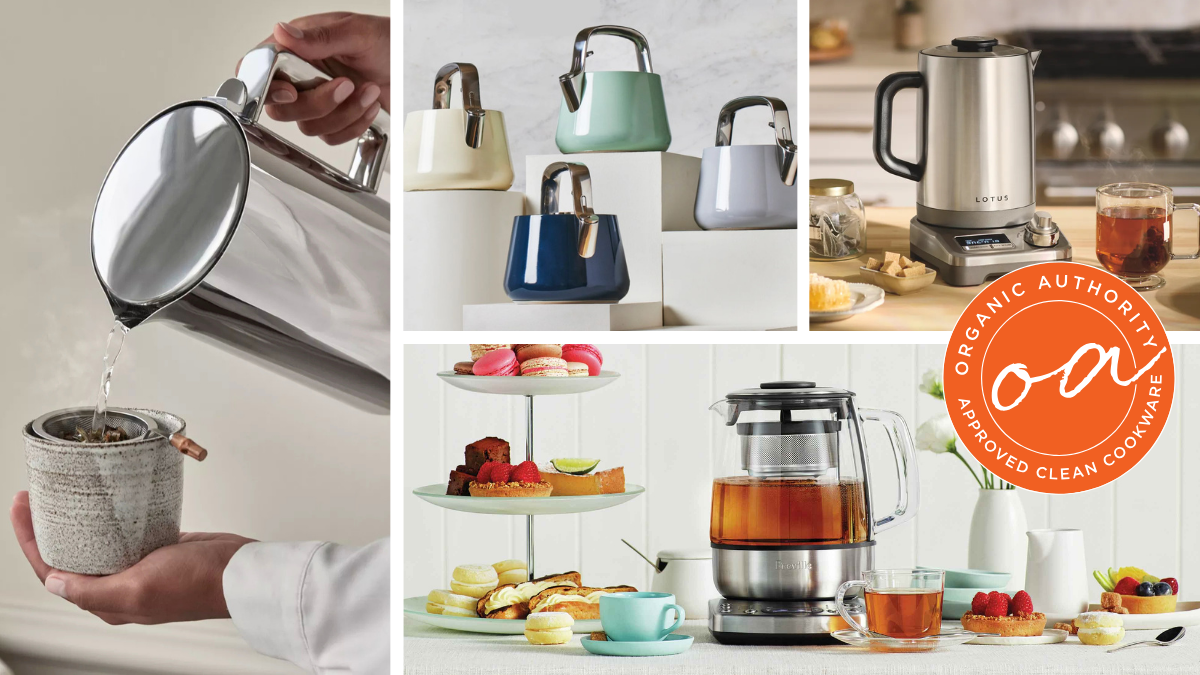
As consumer awareness shifts toward culinary precision, material health, and microplastic exposure, the humble tea kettle is undergoing a renaissance. Modern advanced kettles now offer granular temperature controls, specialized automatic brew cycles, and non-toxic interior pathways. To help consumers navigate this evolving market, we tested and reviewed the top tea kettles available today, evaluating them for material safety, temperature accuracy, ease of use, and design.
The Science of Steep: Why Water Temperature Dictates Flavor
Many people think of brewing tea as a straightforward, three-step routine: boil water, drop in a bag or loose leaves, and wait. In reality, successful brewing relies on chemical precision.
Each variety of tea contains a delicate balance of compounds—including catechins, tannins, and amino acids—that extract and release their aromatic profiles at different thermal thresholds.
- Delicate Teas (White and Green): These require lower brewing temperatures, typically between 160°F and 185°F. Steeping green tea below 185°F yields a clean, bright, slightly grassy sweetness. Plunge those same leaves into 212°F boiling water, and the tea turns astringent and bitter within seconds.
- Robust Teas (Black and Herbal): These require a full or near-full boil (200°F to 212°F) to unlock their deep, complex flavor notes.
With a standard boil-only kettle, achieving these precise windows involves constant guesswork. You are forced to either race against time to capture a falling temperature or wait nervously for boiling water to cool. Precision temperature kettles eliminate this friction entirely, allowing users to dial in exact degrees for optimal flavor extraction.
Hidden Hazards: What Materials Are Hiding in Your Kettle?
Because water spends relatively little time inside a kettle, consumers rarely scrutinize the materials making direct contact with their liquids. However, repeatedly heating water in the presence of synthetic components can carry unintended consequences.
Many budget-friendly electric kettles incorporate plastic parts within their internal water filters, inner lids, spout linings, or structural chassis. Every time water is brought to a boil, thermal energy accelerates the potential leaching of synthetic compounds, particularly if the plastic is older, scratched, or not food-grade.
Scientific research increasingly highlights the ubiquity of microplastics in drinking water. Furthermore, recent studies suggest that high-heat environments—such as boiling water inside plastic-lined appliances—can accelerate the release of micro- and nanoplastic particles into consumables.
Beyond chemical leaching, interior materials directly affect taste. Plastic components can impart a lingering chemical flavor, particularly during the first few uses. While glass and stainless steel offer a more neutral flavor profile, it remains vital for consumers to invest in appliances constructed from durable, non-toxic, and heavy metal-tested materials.
How We Tested and Chose the Best Tea Kettles
Selecting the ideal tea kettle depends entirely on individual lifestyle habits, beverage preferences, and household dynamics. Pour-over coffee enthusiasts require pinpoint precision and specific spout geometries, while busy families prioritize safety features like auto-shutoff and cool-touch exteriors.
To curate this guide, our evaluation focused on six core criteria:
- Material Safety: Absence of toxic coatings, BPA, PTFE, PFOA, and plastic water contact.
- Temperature Accuracy: Reliability of presets and variable digital controls.
- Ease of Use: Intuitive interfaces, cleaning accessibility, and pouring ergonomics.
- Capacity: Volume metrics for single-serving users versus large households.
- Speed: Time-to-boil performance across various wattages and mediums.
- Overall Value: Balancing price point against build quality and feature sets.
The Top Tea Kettles on the Market
1. Caraway Tea Kettle (Best Non-Toxic Stovetop Option)
- Type: Stovetop
- Price: $195
- Overall Rating: 4.1 / 5
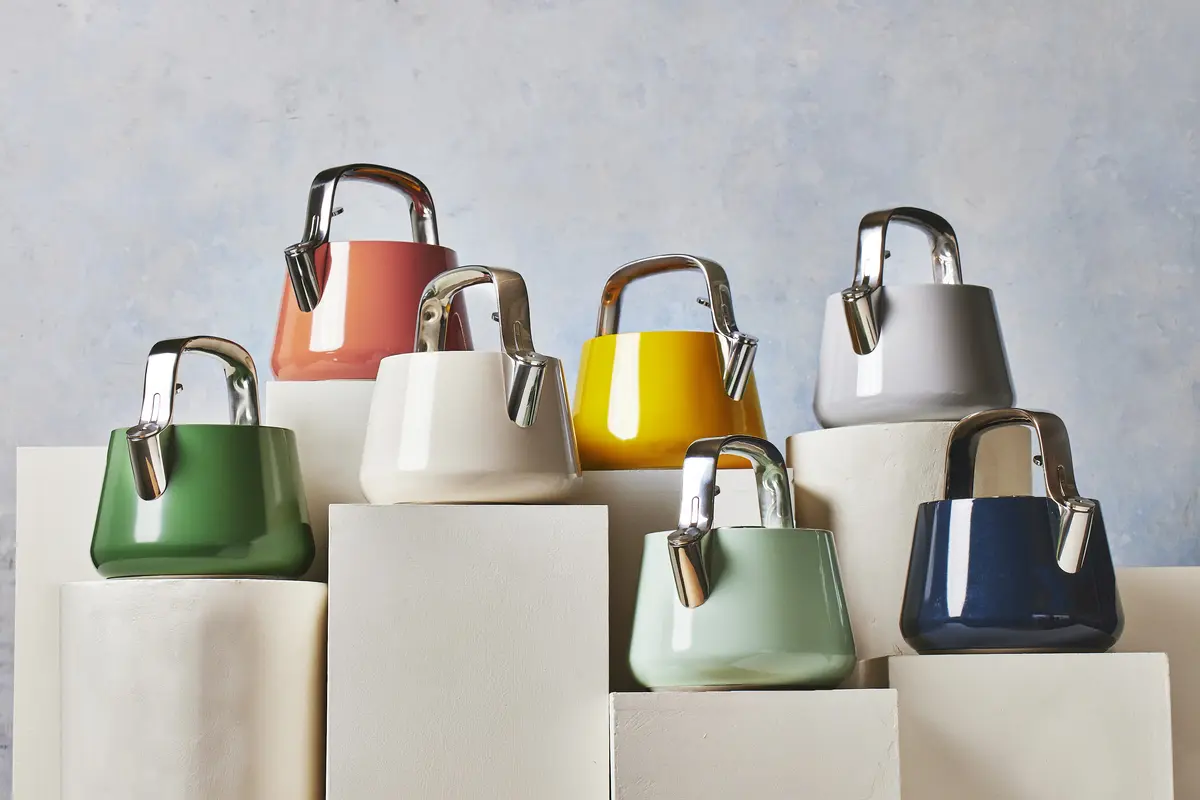
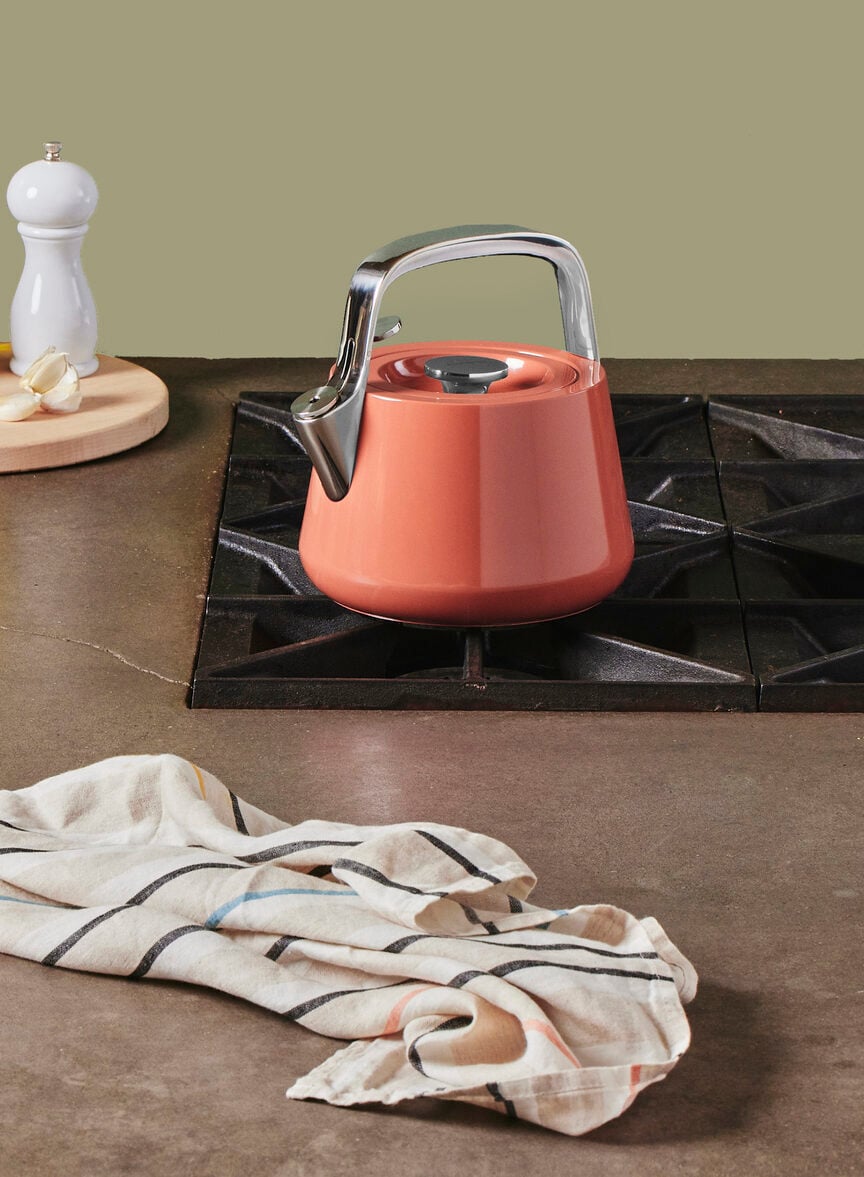
For those who prefer a classic stovetop approach without digital complications, the Caraway Tea Kettle is a striking statement piece. Featuring a minimalist silhouette, it boasts a fully stainless steel interior free from BPA, PTFE, and PFOA, ensuring water never touches plastic.
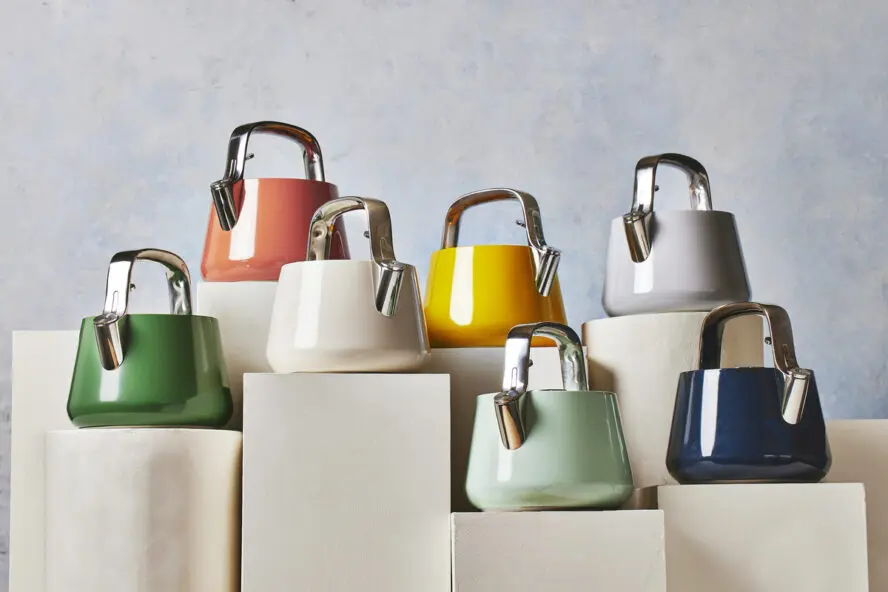
Compatible with all stovetops—including induction—the kettle is available in nine ceramic colorways, from classic cream to bold marigold. When water hits a rolling boil, it releases a mild, single-tone whistle that alerts the household without causing alarm. With a large two-quart capacity, it easily brews up to eight cups of tea or speeds up pasta water prep.
- Pros: Ceramic-coated stainless steel construction; induction-compatible; stunning modern aesthetic; pleasant single-tone whistle.
- Cons: Higher price point for a traditional stovetop kettle; lacks precise variable temperature controls.
2. Lotus Purist Precision Temperature Kettle (Best for Professional Tea Drinkers)
- Type: Electric
- Price: $299.95
- Overall Rating: 4.6 / 5
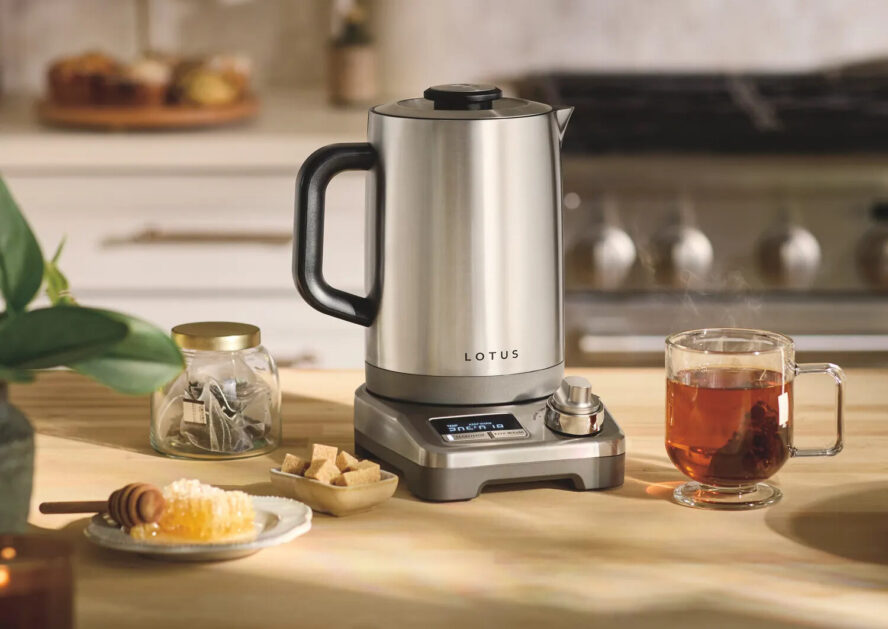
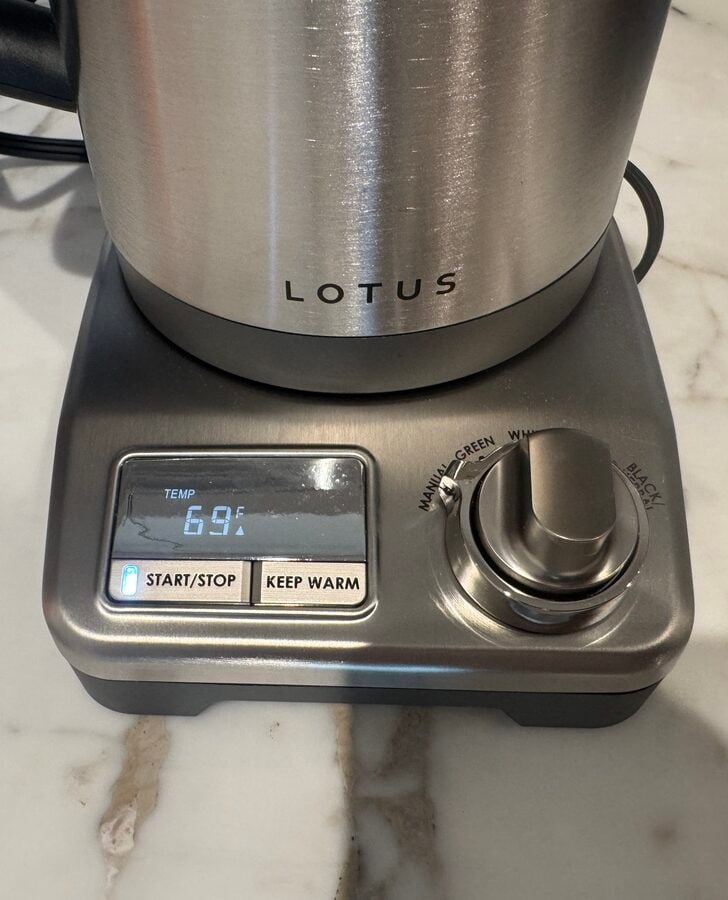
The Lotus Purist represents a major technological leap from basic electric kettles. It offers granular control over water temperature alongside helpful preset programs for green, white, oolong, and black or herbal teas. Users can also manually dial in any temperature between 95°F and 212°F.
The all-stainless, double-walled carafe maintains stable internal temperatures while keeping the exterior cool to the touch. A Keep Warm mode preserves heat for extended periods, and the lid fully detaches for easy cleaning with a bottle brush.
- Pros: Precise temperature controls; double-wall insulation; Keep Warm function; auto-shutoff safety features.
- Cons: Premium price tag; industrial aesthetic may not suit all kitchen decors; short power cord.
3. Breville Tea Maker (Best Full Automation)
- Type: Electric Automated Tea Maker
- Price: $329.95
- Overall Rating: 4.4 / 5
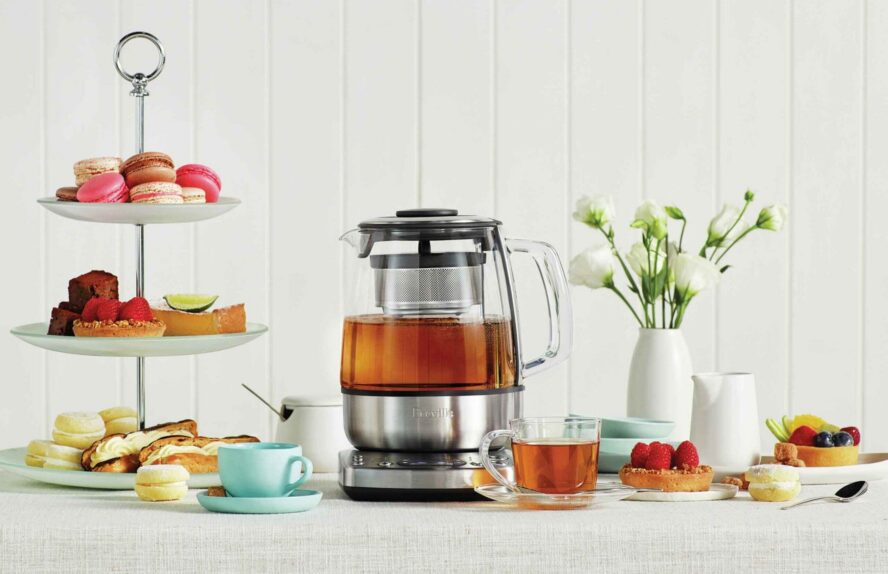
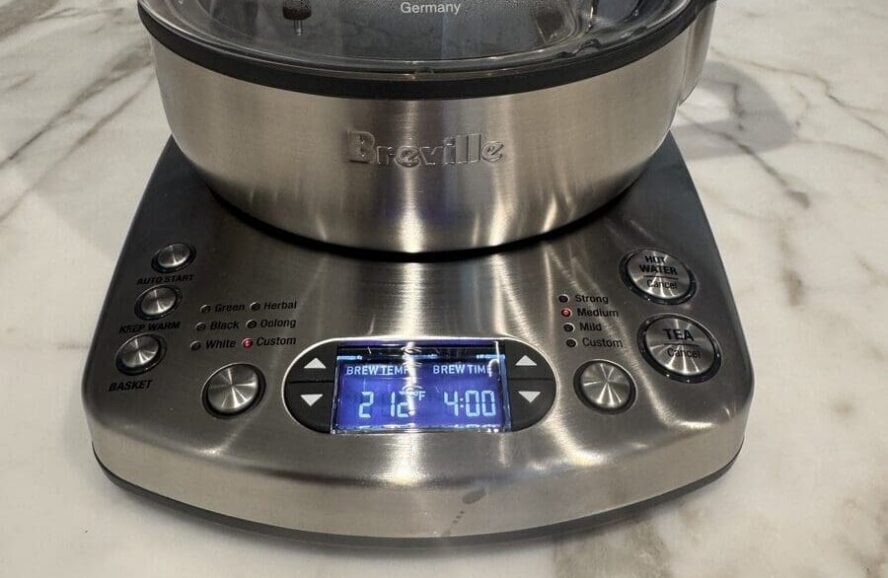
For dedicated tea connoisseurs, the Breville Tea Maker offers unmatched efficiency. Beyond heating water, this advanced appliance features a motorized, removable tea basket suspended inside a glass pitcher. Users load loose-leaf tea into the basket, select a preset program, and let the machine handle the rest.
Once the optimal steeping time is reached, the basket automatically elevates the leaves out of the water to prevent over-steeping. This prevents bitterness and allows users to step away completely. The clear glass pitcher also lets users watch tea leaves unfurl—a striking visual experience with herbal and flowering teas.
- Pros: Fully automated brewing and steeping; adjustable brew strength; auto-lowering/raising basket; delay-start scheduling.
- Cons: Premium investment cost; includes minor plastic components within the tea basket assembly.
4. Aarke Kettle (Best Overall Design)
- Type: Electric
- Price: $250
- Overall Rating: 4 / 5
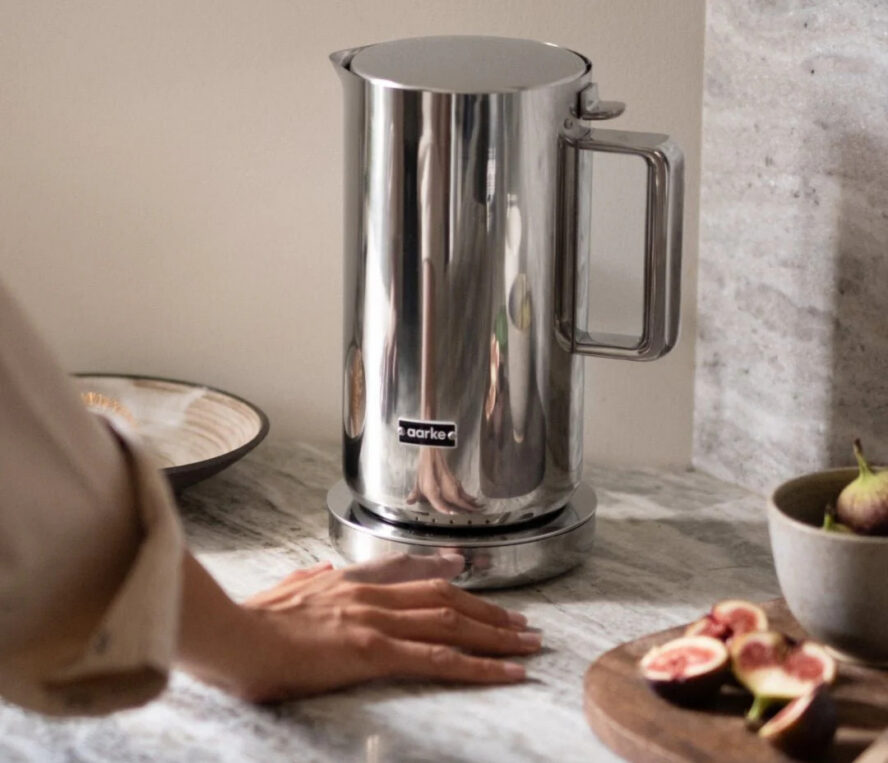
The Aarke Kettle bridges the gap between basic boil-only models and ultra-precise digital units. Sporting a sophisticated, Scandinavian-inspired aesthetic, its double-wall stainless steel pitcher retains heat effectively while remaining cool during operation.
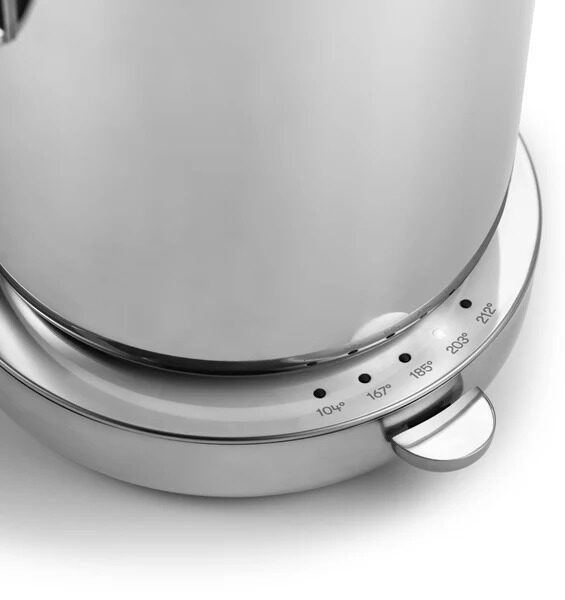
It features five targeted temperature settings: 104°F, 170°F, 185°F, 200°F, and 212°F. With a compact footprint and a maximum capacity of 1.2 liters, it brings water to a full boil in approximately three minutes while maintaining a quiet operation.
- Pros: Premium double-wall stainless steel interior with zero plastic water contact; quiet boil; elegant Scandinavian design.
- Cons: Limited to five preset temperatures rather than fully customizable manual dialing.
Comparison of the Best Tea Kettles
| Kettle | Type | Material Safety | Capacity | Temperature Control | Price |
|---|---|---|---|---|---|
| Aarke Stainless Steel Kettle | Electric | All-stainless interior; zero plastic contact | 1.2 Liters | Preset temperature settings | $250 |
| Caraway Tea Kettle | Stovetop | Ceramic-coated stainless steel; zero PFAS/PTFE | 2 Quarts | None (Stovetop boil) | $195 |
| Lotus Purist Precision Kettle | Electric | Double-wall stainless; zero plastic contact | 1.5 Liters | Presets & manual (95°F–212°F) | $299.95 |
| Breville Tea Maker | Electric | Glass & stainless steel (minor basket plastic) | 51 oz (Water) / 41 oz (Brew) | Auto presets & manual control | $329.95 |
Electric vs. Stovetop: Which Is Better for Your Routine?
Choosing between an electric kettle and a stovetop model comes down to lifestyle priorities and brewing habits.
- Stovetop Kettles: These models are durable, straightforward to operate, and practically immortal in terms of longevity. If you primarily drink black or herbal teas that require a rolling boil, or if you prefer a classic aesthetic without counter clutter, a stovetop kettle is a reliable choice.
- Electric Kettles: If your rotation includes delicate green and white teas, or if you enjoy precision pour-over coffee, an electric kettle with variable temperature settings is virtually indispensable. Though they carry a higher upfront cost, their consistency pays dividends in flavor quality and operational convenience.
Ultimately, whether you lean toward the artisanal charm of a ceramic stovetop kettle or the digital precision of an automated electric brewer, investing in a high-quality, non-toxic vessel ensures that every cup of tea reaches its absolute full potential.
