

Whether you have been nurturing a sourdough starter for a decade or recently caught the home-baking bug during a weekend baking frenzy, you have likely experienced the frustration of comparing your homemade loaves to those from your favorite local artisan bakery. It is not a reflection of your baking skills; professional bakeries rely on specialized commercial equipment designed to achieve those deeply golden, blistered, crackling crusts and airy, open crumbs.
However, achieving professional-grade results in a standard home kitchen is no longer an impossible dream. With one simple upgrade to your baking routine—a heavy, high-performance cast-iron bread oven—home bakers can dramatically elevate the structure, color, crust, and crumb of their daily loaves.
The Main Facts: Bridging the Gap Between Home and Commercial Baking
For decades, home bakers have attempted to replicate the magic of professional bread through various hacks: baking inside standard Dutch ovens, placing cast-iron skillets filled with water at the bottom of the oven for steam, or utilizing baking stones. While these methods yield decent results, they often fall short of the perfection found at commercial establishments.
The core reason for this discrepancy lies in the equipment. Bakeries utilize heavy-duty, commercial-grade deck ovens equipped with rotating stone shelves. These stone decks retain heat exceptionally well and distribute it far more evenly than the standard wire racks and thin metal baking sheets found in most residential kitchens. Furthermore, commercial ovens are engineered to trap or inject precise amounts of steam, a critical element in developing a loaf’s initial rise—known as "oven spring."
A dedicated cast-iron bread oven solves both of these engineering challenges for the home baker:
- Intense Thermal Mass: When cold, proofed dough makes contact with piping-hot cast iron, thermal energy transfers immediately and aggressively to the loaf. This rapid heat shock sets the structure of the crust and encourages the desired blistering texture.
- Superior Steam Retention: Unlike standard home ovens, which are purposely designed to vent moisture, a dedicated bread oven features a snug, domed lid that seals in the steam released by the baking dough. This keeps the exterior of the loaf soft and pliable for the first crucial minutes of baking, allowing the bread to expand fully into a magnificent dome before the crust hardens.
Cast iron outperforms metal, silicone, glass, and ceramic vessels because it heats slowly, stores thermal energy efficiently, and radiates it consistently. The result is a uniformly shaped loaf with superior crust coloration, an open crumb structure, and that unmistakable, satisfying crunch when the knife first cuts through the crust.
Chronology of a Culinary Evolution: From DIY Hacks to Dedicated Pans
The recent boom in home bread baking—accelerated significantly by global cultural shifts toward scratch-cooking and sourdough in the 2020s—spawned a massive market for specialty cookware. Historically, bakers relied on traditional Dutch ovens, turning them upside down or utilizing heavy pots with lids. While effective, standard round Dutch ovens severely limit the shape of the bread, making it nearly impossible to bake oblong batards, baguettes, or uniquely shaped artisan loaves.
Recognizing this limitation, experienced home bakers and cookware manufacturers began designing purpose-built vessels. Jim Challenger, an avid home baker frustrated by the lack of proper equipment, engineered the first dedicated wide-format cast-iron bread pan, sparking a wave of innovation. Soon after, legacy cookware brands like Le Creuset and budget-friendly powerhouses like Tramontina introduced their own variations—transitioning from generic multi-use Dutch ovens to inverted, low-profile, and high-domed bread-specific ovens designed to optimize steam circulation and ergonomics.
Supporting Data and Comparative Analysis: The Top Contenders Tested
To determine the best cast-iron bread ovens on the market, extensive testing was conducted across key performance metrics: heat retention, heat distribution, steam-trapping efficiency, size and shape versatility, weight, handle ergonomics, and overall value.
Quick Picks at a Glance
| Best For | Oven | Material | Price | Overall Rating |
|---|---|---|---|---|
| Best for Serious Bakers | Challenger Breadware Bread Pan | Bare Black Cast Iron | $299.00 | 4.6 / 5 |
| Best Budget Option | Tramontina Cast Iron Bread Oven | Enameled Cast Iron | $59.95 | 4.2 / 5 |
| Best Premium Option | Le Creuset Bread Oven | Enameled Cast Iron | $324.95 | 4.4 / 5 |
1. Challenger Breadware Bread Pan: Best for Serious Bakers
- Price: $299.00
- Material: Bare Black Cast Iron
- Dimensions: 15.5 x 10.5-inch base
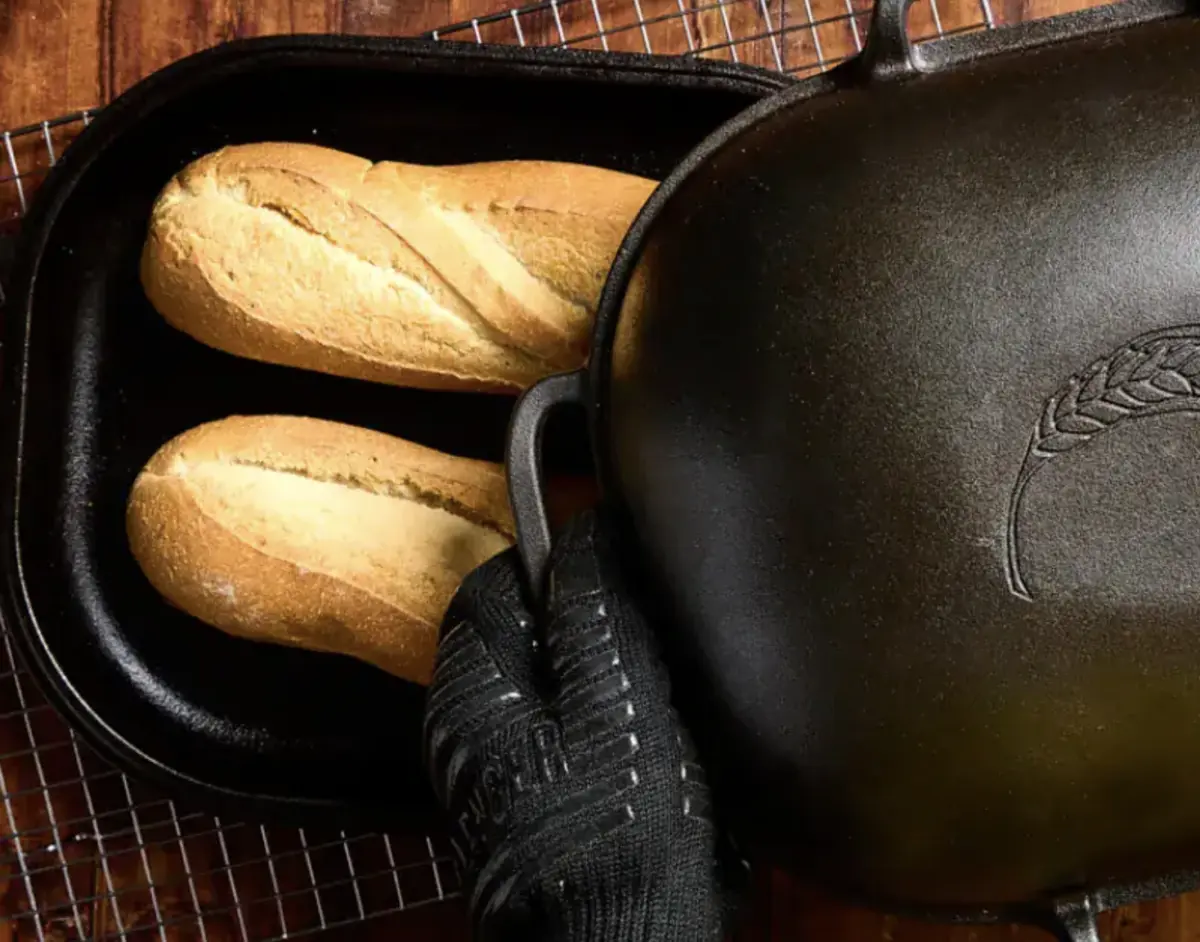
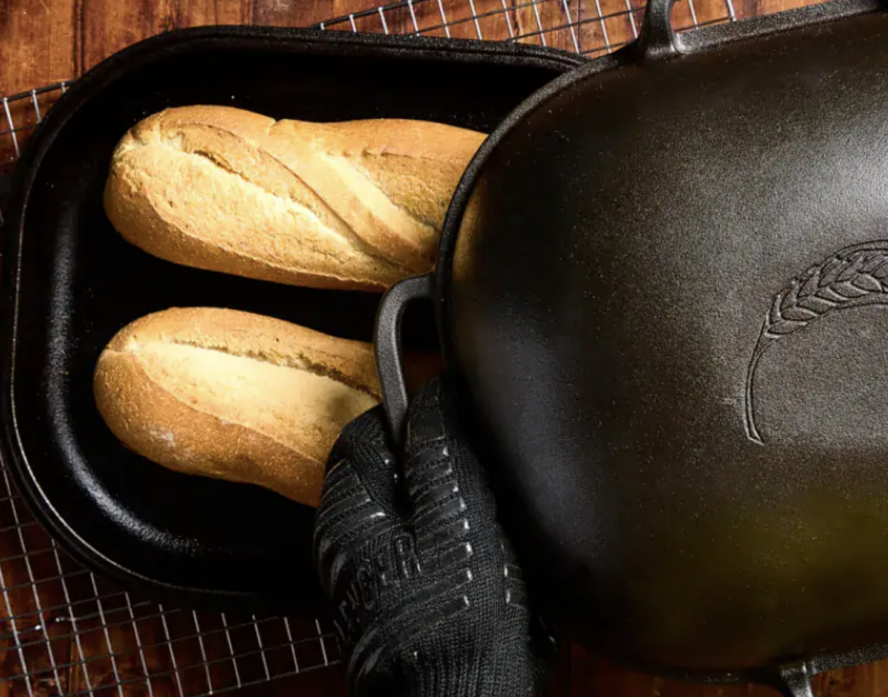
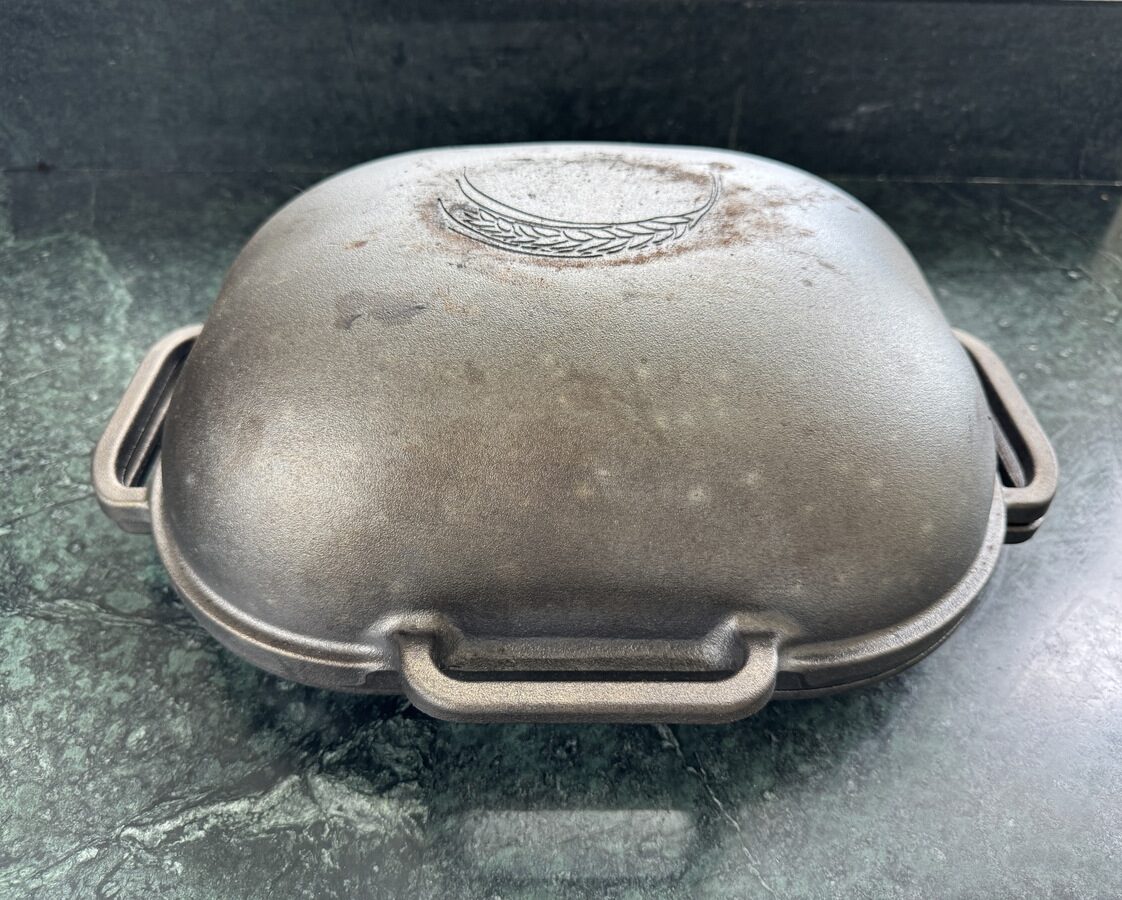
Designed explicitly by a frustrated artisan baker, the Challenger Bread Pan features a uniquely generous, low-profile rectangular base that accommodates full-sized oval batards, large boules, baguettes, and even non-bread items like focaccia, pull-apart breads, and roasted proteins.
Constructed from thick, heavy-duty bare cast iron weighing approximately 20 pounds, it delivers maximum thermal radiation. During testing, loaves baked in the Challenger consistently produced a deep, rich brown bottom crust and an aggressive, crackling exterior. The gently domed rectangular lid forms an airtight seal, and when flipped upside down, the lid itself doubles as a functional baking dish.
- Pros: Exceptionally large base fits multiple loaf shapes; bare cast iron produces the darkest, crispest crusts; tight seal optimizes oven spring; pre-seasoned and oven-safe up to 500°F.
- Cons: Heaviest option on the market (20 lbs); bare cast iron requires mindful maintenance to prevent rust; premium price point.
2. Tramontina Cast Iron Bread Oven: Best Budget Option
- Price: $59.95
- Material: Enameled Cast Iron
- Dimensions: 9.5-inch round base
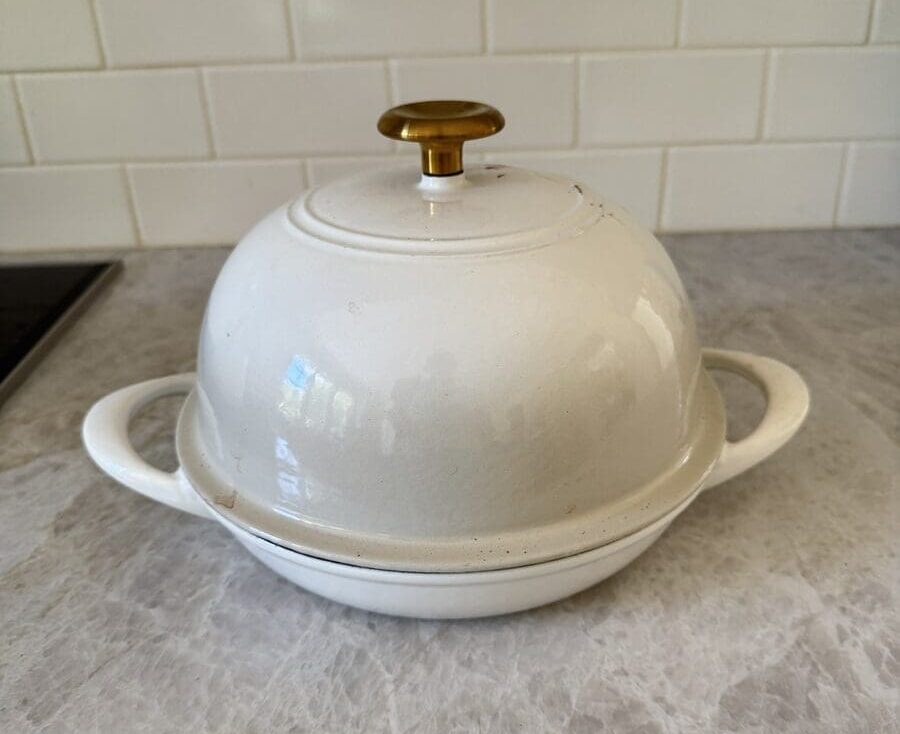
For bakers seeking professional performance without a steep financial investment, the Tramontina Cast Iron Bread Oven offers incredible value. Utilizing dense enameled cast iron, it features a high-domed lid that sits firmly on a 9.5-inch round base to trap steam effectively.
Available in multiple vibrant colors, it features an off-white porcelain enamel interior that releases dough effortlessly and simplifies cleanup. While the enamel finish results in a slightly lighter bottom crust compared to bare cast iron, the overall rise, texture, and flavor development surpass traditional baking sheets and standard baking stones by a wide margin.
- Pros: Highly affordable price point; no seasoning required; porcelain enamel interior makes cleanup simple; backed by a lifetime warranty.
- Cons: 9.5-inch diameter limits baking strictly to round boules; enameled surface slightly moderates direct radiant heat.
3. Le Creuset Bread Oven: Best Premium Option
- Price: $324.95
- Material: Enameled Cast Iron
- Dimensions: 9.5-inch round base
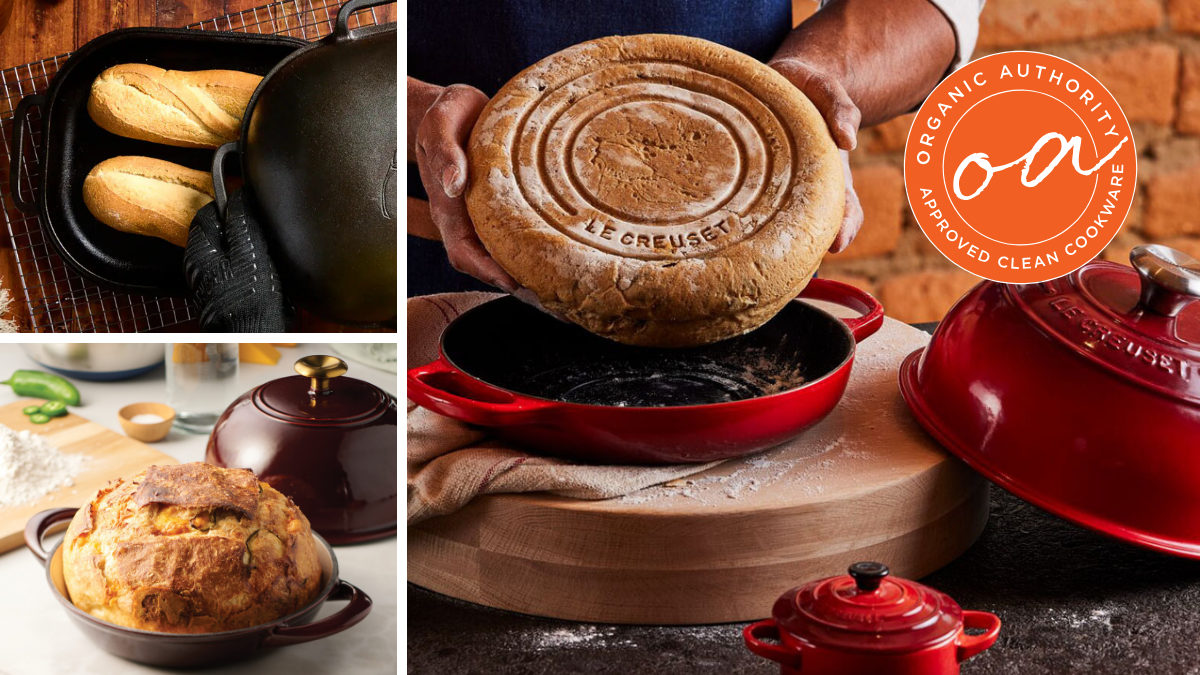
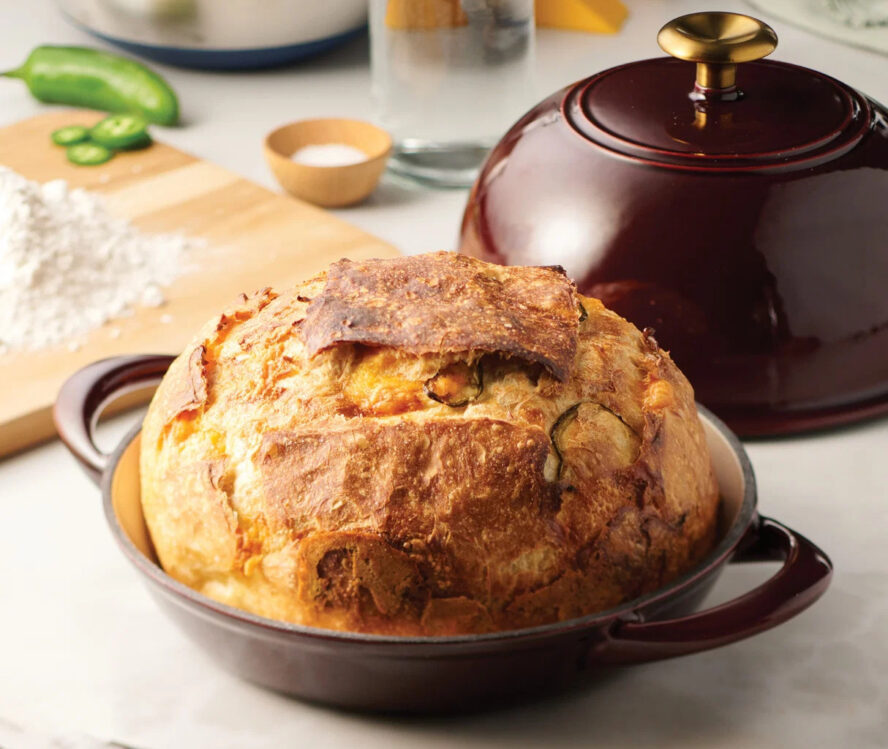
An exceptional addition for existing collectors of premium enameled cookware, the Le Creuset Bread Oven matches the brand’s legendary durability and aesthetic appeal. Featuring an inverted design where the deeper component acts as the lid, it is meticulously engineered to trap and circulate steam directly over the loaf.
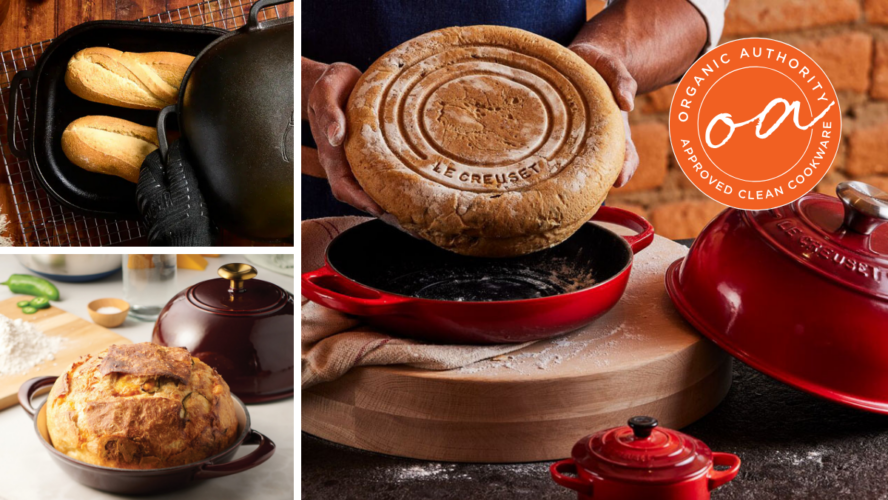
The 9.5-inch round base incorporates three concentric ridge circles that promote uniform heat distribution while leaving a subtle, signature Le Creuset brand stamp on the bottom of the baked loaf. The matte black interior absorbs and radiates heat efficiently, resulting in a dark, beautifully developed bottom crust.
- Pros: Premium enameled cast iron construction; excellent steam-trapping ergonomics; lightweight maneuverability compared to bare cast iron; zero seasoning required.
- Cons: Highest price point in its category; round footprint limits loaf shaping flexibility.
Official Perspectives: Bare Cast Iron vs. Enameled Surfaces
A central debate among culinary experts and master bakers revolves around the choice between bare cast iron and enameled surfaces.
According to culinary product testers, bare cast iron radiates thermal energy directly into the baking dough without any intermediate barrier. This direct transfer yields a darker bottom crust, a more dramatic surface crackle, and deeper overall coloration. However, it requires traditional maintenance—washing without harsh soaps, immediate drying, and occasional re-seasoning with oil to prevent oxidation.
Conversely, enameled cast iron removes the maintenance hurdle entirely. Manufacturers apply a porcelain enamel coating that resists rust and eliminates the need for seasoning. While the enamel layer slightly dampens the intensity of direct radiant heat—resulting in a slightly lighter crust color—the difference is minimal for the average home baker, and the ease of cleanup makes it an attractive daily-use tool.
Implications for the Home Kitchen and Beyond
Investing in a dedicated cast-iron bread oven alters more than just the physical quality of homemade bread; it fundamentally changes the home-baking experience. By removing the guesswork associated with steam management and thermal inconsistency, these specialized vessels bridge the gap between amateur hobbyism and professional craftsmanship.
Whether choosing the professional-grade capacity of the Challenger Bread Pan, the accessible economy of the Tramontina, or the luxurious durability of Le Creuset, home bakers can reliably produce bakery-quality boules, batards, and flatbreads. Ultimately, this simple kitchen upgrade democratizes artisan bread-making, ensuring that the comforting aroma of a perfectly baked, crackling loaf is always within reach.
