

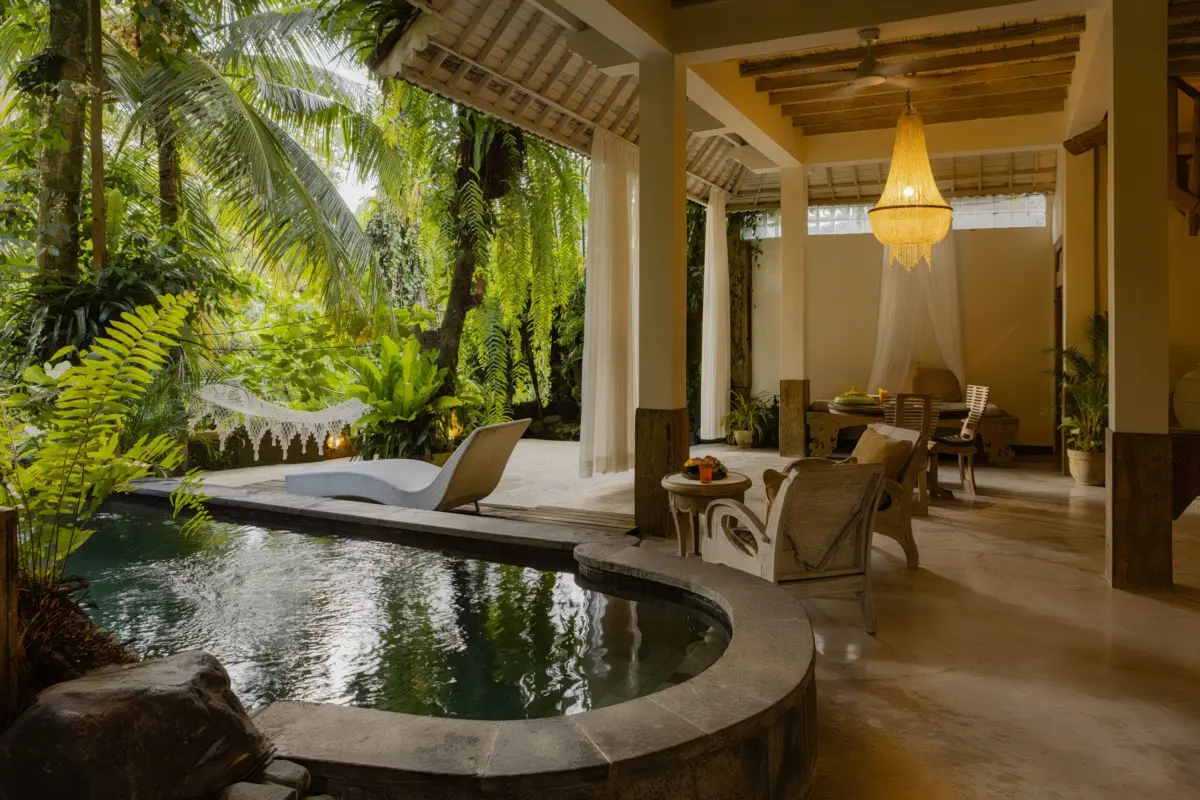
BALI, INDONESIA — Long typecast in the global imagination as a postcard-perfect expanse of infinity pools, floating breakfasts, and manicured rice-paddy views, Bali is undergoing a quiet, profound spatial evolution. Beneath the ubiquitous tourism marketing lies a living, breathing laboratory of Southeast Asian design innovation—one where ancient Hindu cosmological principles seamlessly fuse with cutting-edge structural engineering and sustainable architecture.
Far from being a mere playground for digital nomads and beachgoers, the island remains a deeply traditional sanctuary. Working agricultural terraces are still meticulously farmed by hand; daily canang sari temple offerings perfume the morning air; and intricate craft traditions, from stonemasonry to wood carving, are passed down through generations.
Yet, the way visitors experience these traditions is changing. Bali has increasingly positioned itself as a global base for avant-garde architecture. From the mist-shrouded highlands of Munduk to the deep river valleys of Sayan and the wild, untamed black-sand coasts of the north, the island offers a striking patchwork of micro-destinations. Ubud pulses with jungle energy and design flair; Canggu and Seseh cater to the surf-and-cafe culture; while the north trades crowds for solitude.
With Denpasar’s Ngurah Rai International Airport anchoring the south, most of these diverse architectural enclaves are accessible within a two-hour drive. For travelers looking to move beyond standard resort accommodations, a new wave of design-forward stays offers a window into Bali’s architectural renaissance.
Main Facts: The Architectural Landscape of Modern Bali
Bali’s architectural renaissance is not happening in a vacuum. It is a direct response to a changing demographic of travelers who demand more than luxury—they seek authenticity, ecological harmony, and structural artistry.
The island’s architectural ecosystem is broadly defined by three major movements:
- Eco-Futurism: Pioneered heavily in valleys like the Ayung River basin, this movement uses organic materials—chiefly locally sourced bamboo—to construct soaring, multi-story habitations that completely bypass traditional concrete-and-steel paradigms.
- Tropical Modernism: Championed by both local icons like Popo Danes and international visionaries like Alexis Dornier, this style focuses on blurring the lines between indoor and outdoor spaces, framing natural topography, and utilizing indigenous stone and reclaimed timber.
- Highland Sanctuary Design: Concentrated in the cooler, mistier central mountains, these structures trade open-air tropical living for insulated, cozy, weather-resistant spaces that maximize sweeping valley and mountain views.
Chronology: From Vernacular Roots to Global Design Capital
To understand modern Balinese architecture, one must trace its development across decades of rapid globalization and cultural exchange.
The Traditional Era (Pre-1970s)
For centuries, Balinese architecture was strictly governed by Asta Kosala Kosali, a sacred architectural canon akin to Feng Shui. Rooted in Hindu philosophy, these rules dictated the spatial orientation of buildings, the sacred hierarchy of spaces (from the holy mountain direction of Kaja down to the sea direction of Kelod), and the choice of natural materials like bamboo, thatch, and local timber. Compounds were built as multi-pavilion family enclosures designed to keep communities close to nature and the gods.
The Resort Boom (1980s–2000s)
As international tourism took root, the island saw an influx of luxury resorts. Many early developments imported Western architectural styles that ignored local climate realities, leading to heavily air-conditioned, sealed environments. However, visionary local architects like Popo Danes began pushing back, proving that contemporary luxury could coexist with traditional Balinese spatial logic and open-air ventilation.
The Sustainable and Experimental Wave (2010s–Present)
The last decade has marked an explosion of experimental design. Studios like IBUKU transformed bamboo from a "poor man’s timber" into a high-end engineering material, creating entire communities like Green Village. Simultaneously, international architects drawn to Bali’s lax regulatory constraints began experimenting with sculptural forms, wave-shaped roofs, and dynamic indoor-outdoor layouts that challenge the very definition of a "house."
Supporting Data: A Curated Guide to Bali’s Architectural Stays
For travelers eager to experience this architectural shift firsthand, a curated selection of properties highlights the breadth of the island’s design landscape, ranging from historic collaborations to high-end sustainable communities.
1. The Architect-Designed Heritage Home (Sayan)
- Location: Sayan Ridge, Ubud
- Price: From $1,457 per night
Originally constructed 25 years ago by renowned Balinese architect Popo Danes, this residence on one of Sayan’s most exclusive streets has been meticulously refreshed. Its current owners—a pair of Hungarian documentary filmmakers—collaborated with Belgian-Moroccan interior designer Zohra Boukhari to reconfigure the layout, ensuring the dramatic landscape remains the focal point.
Standout Perks: Private infinity pool facing the Sayan Ridge, outdoor showers, private balconies, and dedicated building staff with daily housekeeping. Inside, two oversized master suites sit on opposite sides of the pool, each featuring a private terrace and soaking tub, complemented by a children’s room outfitted with an antique Balinese daybed.
2. The Jungle Tree Villa (Penestanan)
- Location: Penestanan, Ubud
- Price: From $189 per night
Tucked discreetly behind a magnificent 200-year-old banyan tree, this one-bedroom hideaway embraces the raw textures of reclaimed teak and hand-picked antiques. True to its jungle setting, it champions uncompromised indoor-outdoor living: only the bedroom is enclosed and semi-air-conditioned.
Standout Perks: Private spring-fed pool (with optional floating breakfasts), terrazzo bathtub for petal-infused evening soaks, and direct culinary support from Yellow Flower, the organic cafe run by property owners Budi and Anna. While an easy walk to central Ubud, the return journey along winding paths after dark offers an authentic, rustic adventure.
3. The North Bali Coastal Retreat (Singaraja)
- Location: Near Singaraja, North Bali
- Price: From $156 per night
Far removed from the bustling surf crowds of the south, North Bali offers a meditative, slow-paced atmosphere. This villa outside Singaraja capitalizes on that tranquility, featuring an open-plan living area flanked by two ensuite bedrooms and an infinity pool that seems to drop directly into the Bali Sea.
Standout Perks: Ocean views, private backyard, central air conditioning, and close proximity to the region’s marine life. Dolphin-watching and world-class snorkeling are a mere 15-minute drive away, while the cultural heart of Ubud is accessible via a one-hour mountain transit. (Note: The final approach road is rugged; advance transport arrangements are strongly recommended.)
4. The Eco-Designed Bamboo House (Ayung River)
- Location: Green Village, Ayung River Valley
- Price: From $286 per night
Aura House stands as a testament to the possibilities of sustainable engineering. Located within Green Village—a residential enclave designed by the trailblazing studio IBUKU—this two-bedroom structure is built entirely from locally harvested bamboo.
Standout Perks: A private pool suspended over the Ayung River, unique bamboo architecture, and one bedroom entered through an iconic egg-shaped door that has become a signature of IBUKU’s design language. Guests also enjoy access to Green Village’s shared amenities, including a 25-meter communal pool, a yoga shala, and an organic restaurant. It is ideally positioned 35 minutes from Ubud and 30 minutes from Canggu for those wishing to balance isolation with occasional social day-trips.
5. The Highland Treehouse with Sauna (Munduk)
- Location: Munduk Highlands
- Price: From $286 per night
High up in the misty mountain climate of Munduk, nights can be brisk enough to warrant a sweater. This two-story adults-only treehouse reimagines tropical accommodation for cooler elevations.
Standout Perks: A cloud-level king bed facing panoramic sunset views through floor-to-ceiling sliding doors, a built-in projector for cozy evenings, a private sauna, and a round soaking tub overlooking the fog-shrouded valley. Four major waterfalls—including Red Coral—are within walking distance, and an on-site kitchen delivers meals directly to the door. (Traveler advisory: The five-minute uphill walk from the car park requires moderate fitness.)
6. The Sculptural Stone House (Mas)
- Location: Mas Village, near Ubud
- Price: From $638 per night
Designed by Alexis Dornier, one of Bali’s most celebrated contemporary architects, this striking residence is anchored by a dramatic wave-shaped roof constructed from local Kerobokan stone.
Standout Perks: Four upstairs king suites hovering above an open-plan ground floor, where a stone-clad infinity pool runs the entire length of the living space. Located in Mas Village—historically renowned for wood carving—the property includes a full-time concierge team and free access to the nearby Titi Batu club facilities and gym. (Privacy note: The proximity of a neighboring villa means one bedroom faces outward toward adjacent terraces.)
Official Responses and Industry Perspectives
Local authorities, conservationists, and architectural bodies have increasingly weighed in on the rapid physical transformation of Bali’s landscape.
Urban planners in Denpasar have noted a sharp rise in zoning applications for alternative and eco-materials over the past five years. "The narrative that luxury in Bali must look like a sterile, glass-and-concrete Mediterranean box is dead," notes an urban development consultant based in South Bali. "Travelers and developers alike realize that true luxury here is contextual. It respects the topography, utilizes local craft, and honors the environment."
However, conservation groups have issued warnings regarding unchecked expansion, particularly in sensitive agricultural zones like Sayan and Canggu. The Indonesian Institute of Architects (IAI) Bali chapter has repeatedly emphasized the necessity of strict ecological guidelines. In recent policy forums, IAI representatives stressed that while architectural innovation drives economic vitality, local water tables, waste management infrastructure, and traditional zoning laws (subak systems) must be fiercely protected against over-development.
Implications: What This Means for the Future of Balinese Tourism
The intersection of tourism, real estate, and avant-garde architecture carries significant implications for Bali’s economic and cultural horizon.
- Geographic Diversification: As properties like the Singaraja coastal retreat and the Munduk treehouse gain traction, tourist spending is slowly beginning to decentralize away from the heavily congested southern triangle (Seminyak, Canggu, Kuta, and Uluwatu). This spreads economic benefits to North and Central Bali while easing ecological pressures on saturated areas.
- A Shift in Traveler Expectations: The popularity of bamboo communities like Green Village and handcrafted jungle villas signals a permanent shift in consumer values. Sustainability is no longer a marketing buzzword; it is a structural expectation. Visitors are increasingly willing to trade sterile, bug-free environments for authentic, immersive, open-air ecological living.
- Preservation of Indigenous Craft: The demand for specialized architects, master bamboo builders (tukang), and traditional stonemasons ensures that ancient Balinese building arts remain financially viable careers for younger generations. Rather than erasing local culture, modern design innovation is providing a renewed platform for its survival.
Ultimately, Bali proves that progress does not require erasing the past. By weaving Hindu spatial philosophy, sustainable materials, and radical modern engineering into a single fabric, the Island of the Gods continues to write a compelling new chapter in global architectural history.
