

Published August 18, 2026
In an era defined by remote work, long commutes, and endless hours spent scrolling on comfortable couches, the human body is paying a heavy structural price. While society is well-versed in the dangers of slouching, even those who pride themselves on maintaining an upright, rigid posture are quietly suffering. The culprit? Prolonged compression.
When humans sit for hours on end, major muscle groups remain shortened and largely immobile. Over time, this lack of dynamic movement breeds deep-seated muscular stiffness, particularly along the lateral lines of the torso—the side body. Enter the antidote: a dedicated, slow-flow yoga practice engineered specifically to elongate the lateral muscles, restore thoracic mobility, and melt away chronic tension in just 12 minutes.
Led by yoga instructor Taylor Lorenz, this sequence prioritizes length through intuitive movement and extended, accessible holds rather than punishing intensity. Designed to fit into a busy workday, the routine can be practiced in its entirety or broken down into individual poses taken at strategic intervals throughout the day.
Main Facts: The Anatomy of Modern Stiffness and the Side-Stretch Solution
The primary objective of Lorenz’s 12-minute sequence is to target the side body—encompassing the latissimus dorsi, intercostals, obliques, and the quadratus lumborum (QL). These muscle groups are frequently neglected in traditional linear exercise regimens like running or cycling, which primarily occur in the sagittal plane (forward and backward).
- The Sedentary Trap: Sitting compresses the spine and keeps the hips and lateral torso in a fixed, shortened state. This restriction limits diaphragmatic breathing, as the intercostal muscles between the ribs become stiff and unable to expand fully.
- The Remedy: Lateral stretching decompresses the spine, opens the ribcage to facilitate deeper breathing, and relieves pressure on the lower back.
- The Format: The 12-minute routine requires only one yoga block (or a household prop like a sturdy book or cushion) and utilizes floor-based postures that minimize balancing fatigue, allowing the nervous system to truly relax.
- Accessibility: Unlike power yoga or vinyasa flows that demand high cardiovascular exertion, this practice leans into restorative holds, making it ideal for practitioners of all levels, from office workers to seasoned yogis.
Chronology: Step-by-Step Guide to the 12-Minute Sequence
To maximize the therapeutic benefits of the practice, practitioners are encouraged to move slowly, synchronize their breath with their transitions, and honor the body’s natural limits. Below is the chronological breakdown of the sequence as designed by Taylor Lorenz.
Phase 1: Grounding and Centering
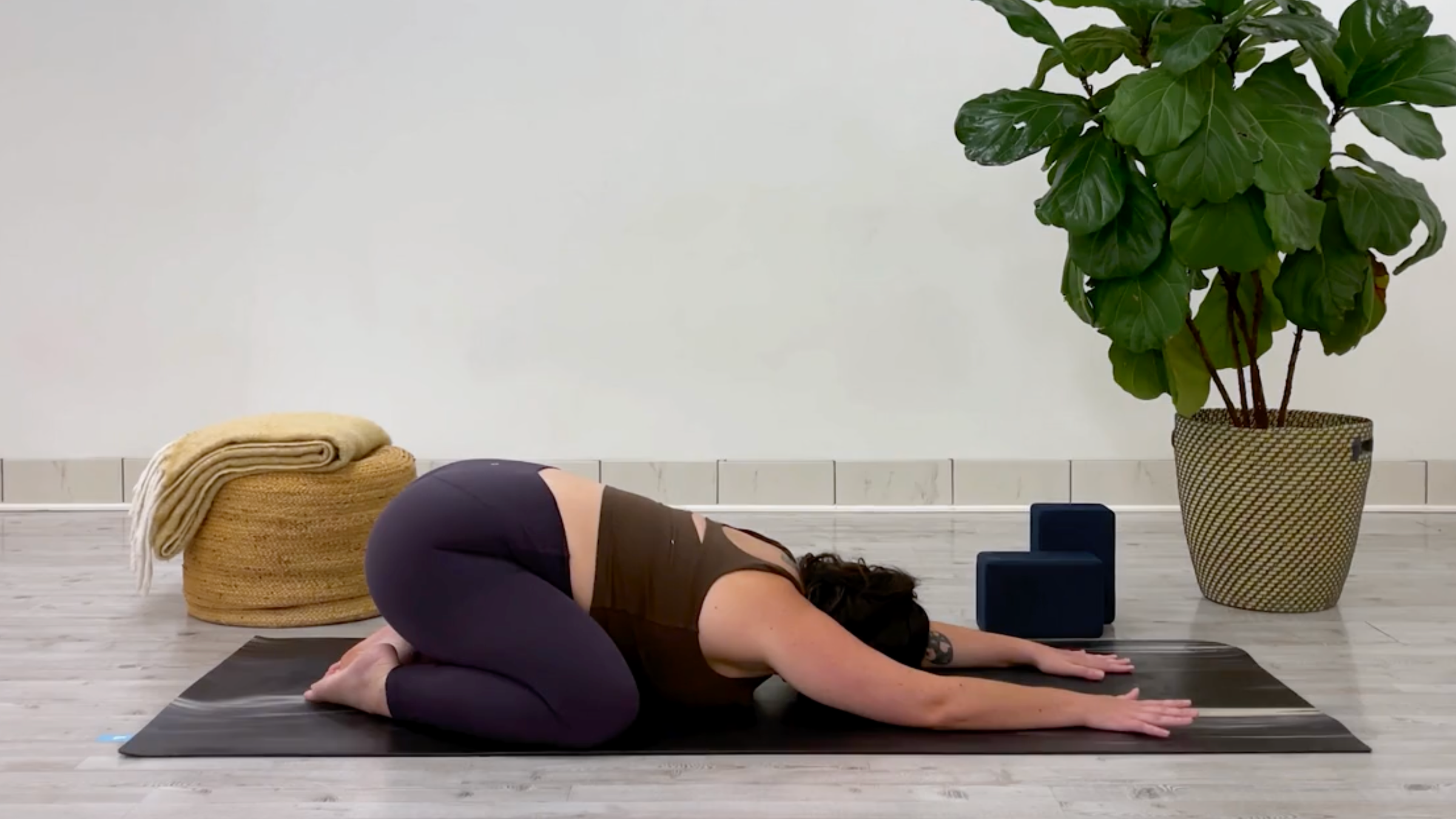
1. Child’s Pose (1 Minute)
Begin the practice by settling into Child’s Pose to quiet the mind and signal to the nervous system that it is time to decompress.
- Widen your knees toward the outer edges of your yoga mat.
- Sink your hips back and down toward your heels.
- Walk your hands forward toward the top of the mat. You can keep your palms flat or tent your hands to rest on your fingertips for an active shoulder stretch.
- Breathe deeply into the back of your ribs for 60 seconds.
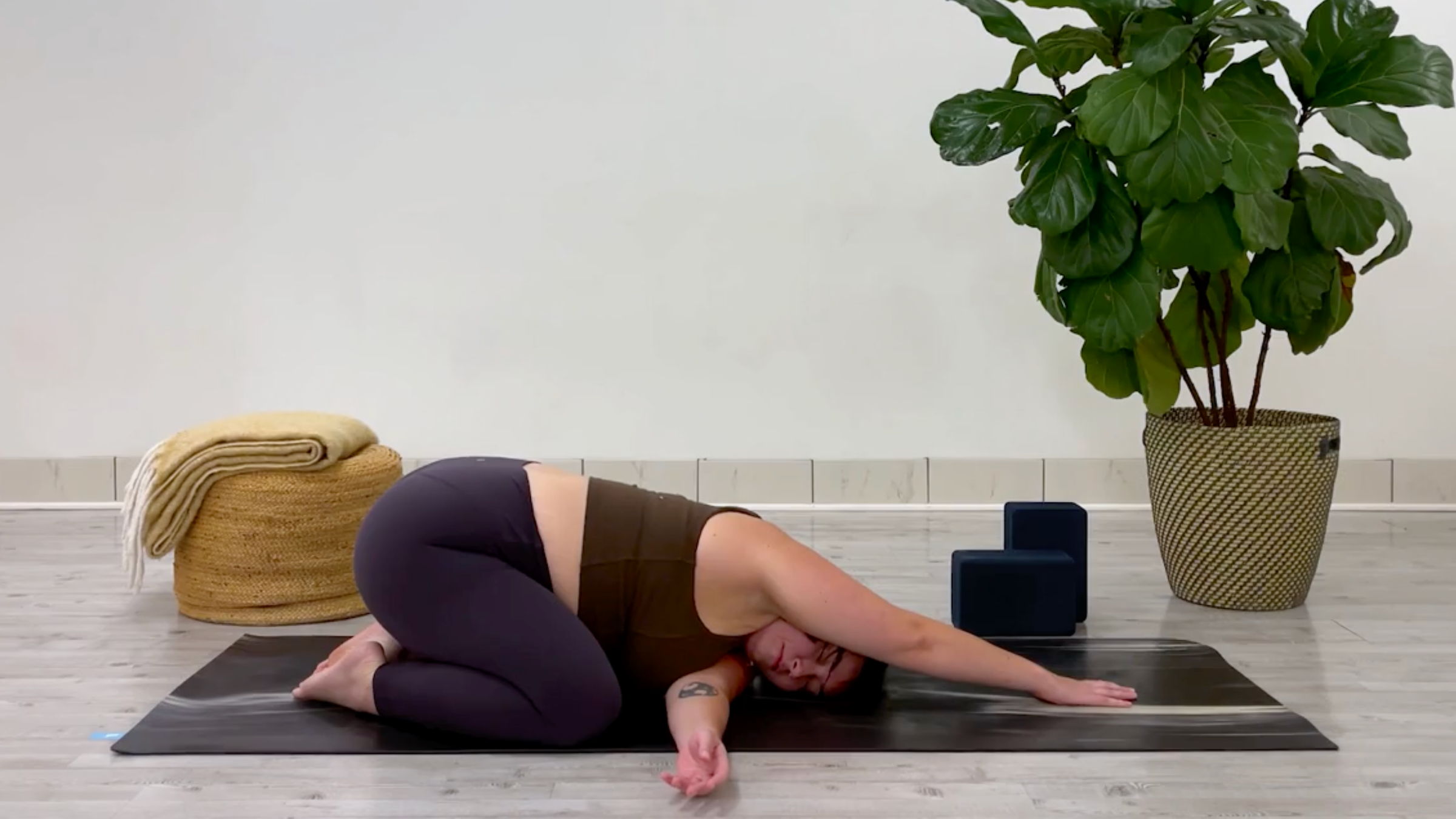
2. Thread the Needle (1–2 Minutes)
From Child’s Pose, transition fluidly to incorporate an initial twist and lateral opening.
- On an inhalation, lift your torso slightly through the heart space.
- On an exhalation, thread your left arm underneath your chest, reaching it toward the right side of the room.
- Extend your right arm straight toward the front of the mat.
- To deepen the stretch along the right side body, gently walk your right fingertips toward the left side of the mat.
- Hold for one to two minutes, breathe into the sensation, and unwind back to Child’s Pose before preparing to shift.
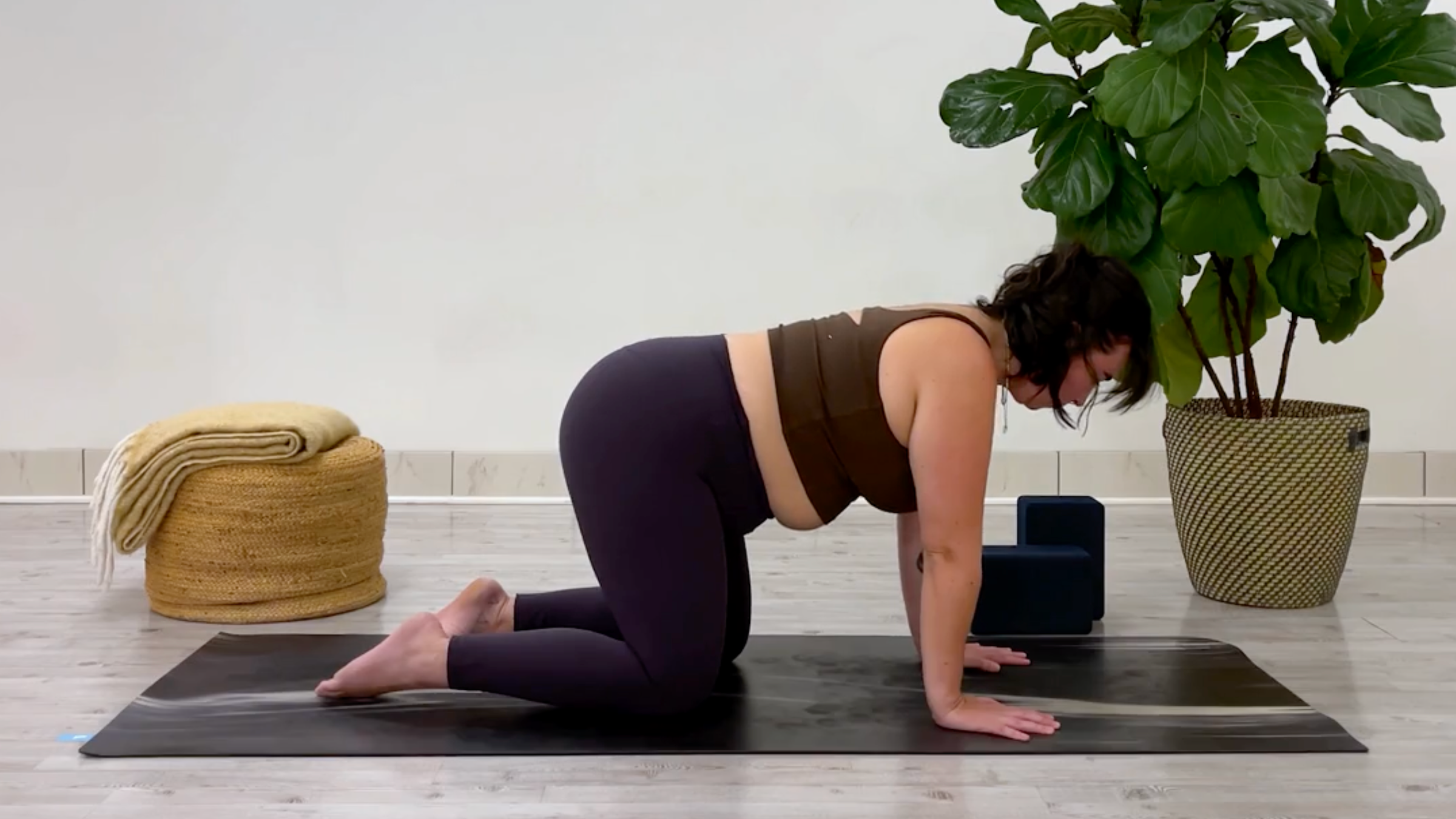
3. Tabletop (1 Breath)
- Shift your weight forward, pressing up into a standard Tabletop position.
- Align your shoulders directly over your wrists and your hips over your knees.
- Take one grounding breath here, ensuring your yoga block is within arm’s reach for the next posture.
Phase 2: The Core Lateral Focus
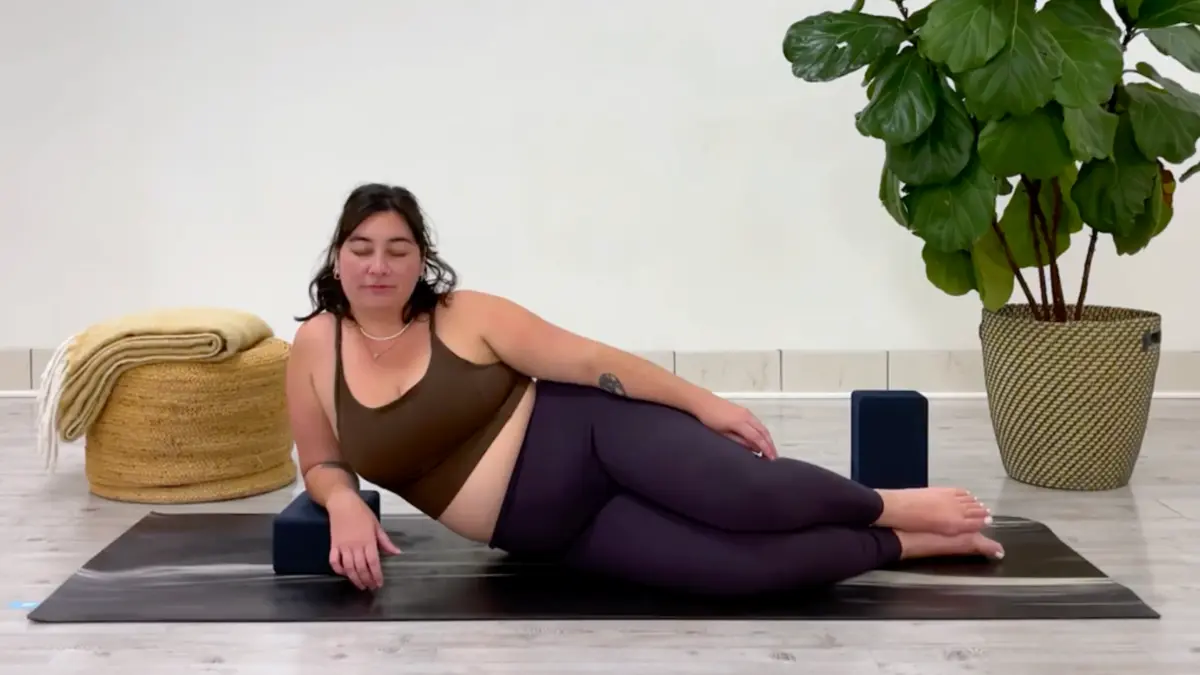
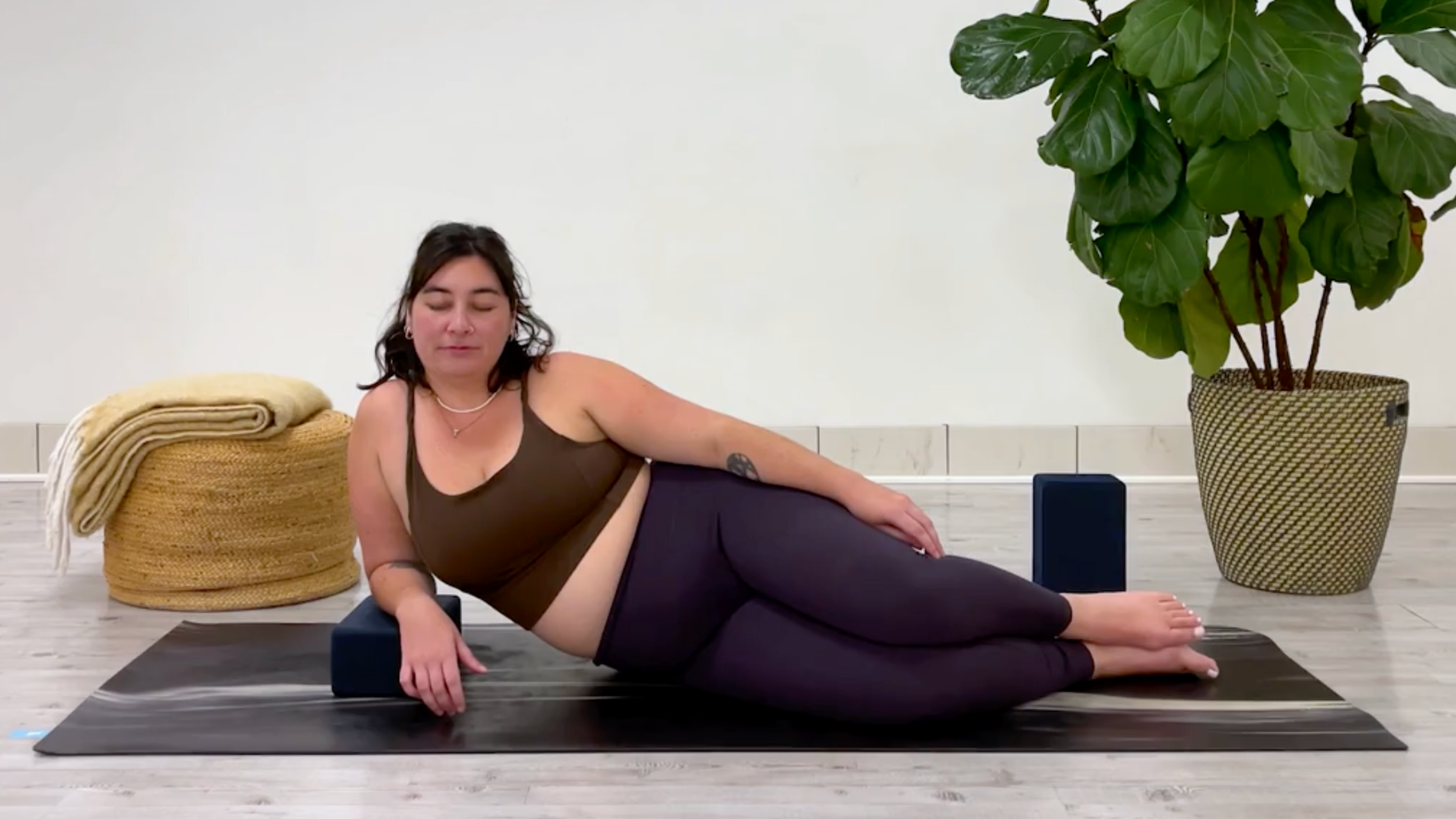
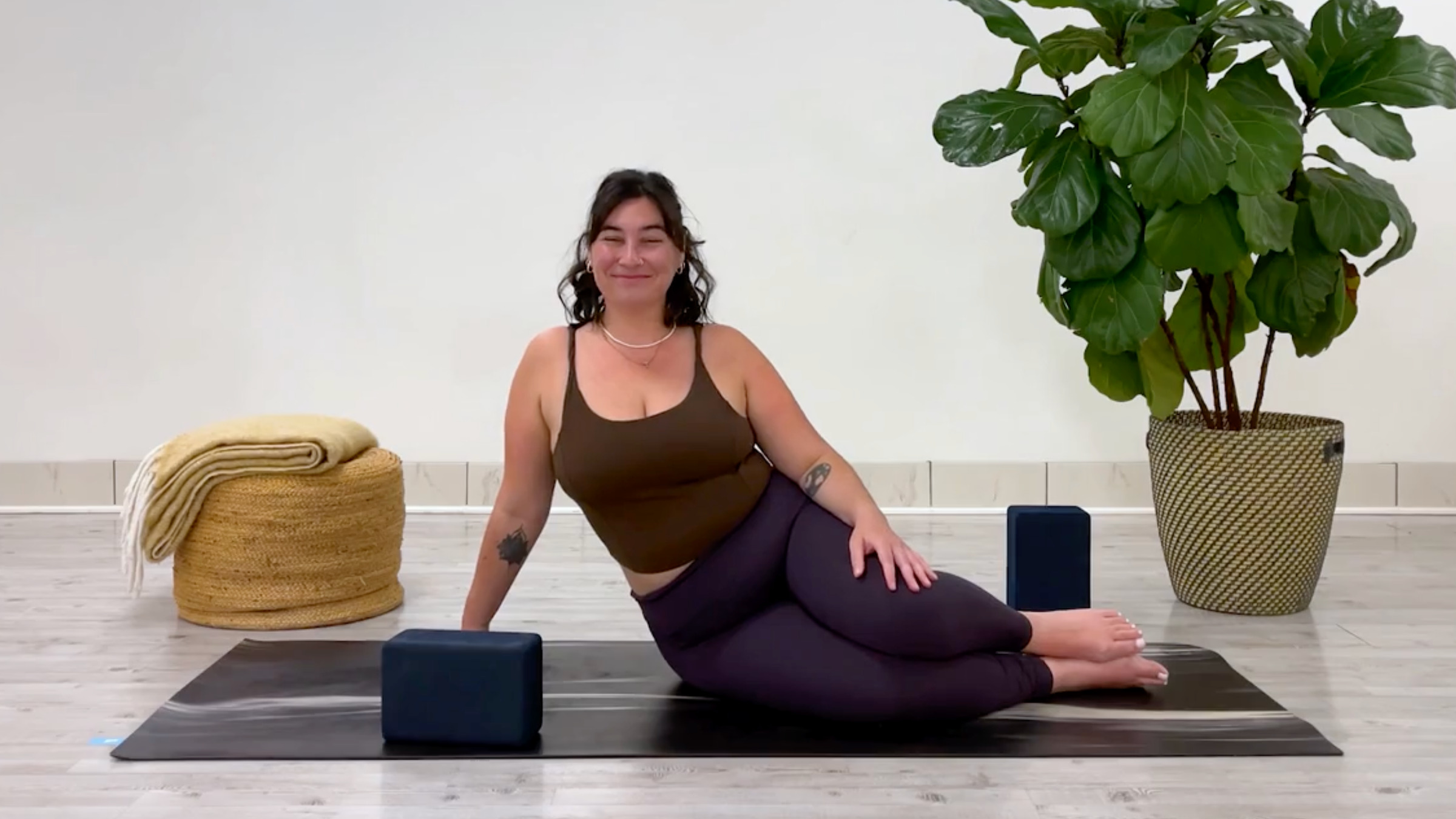
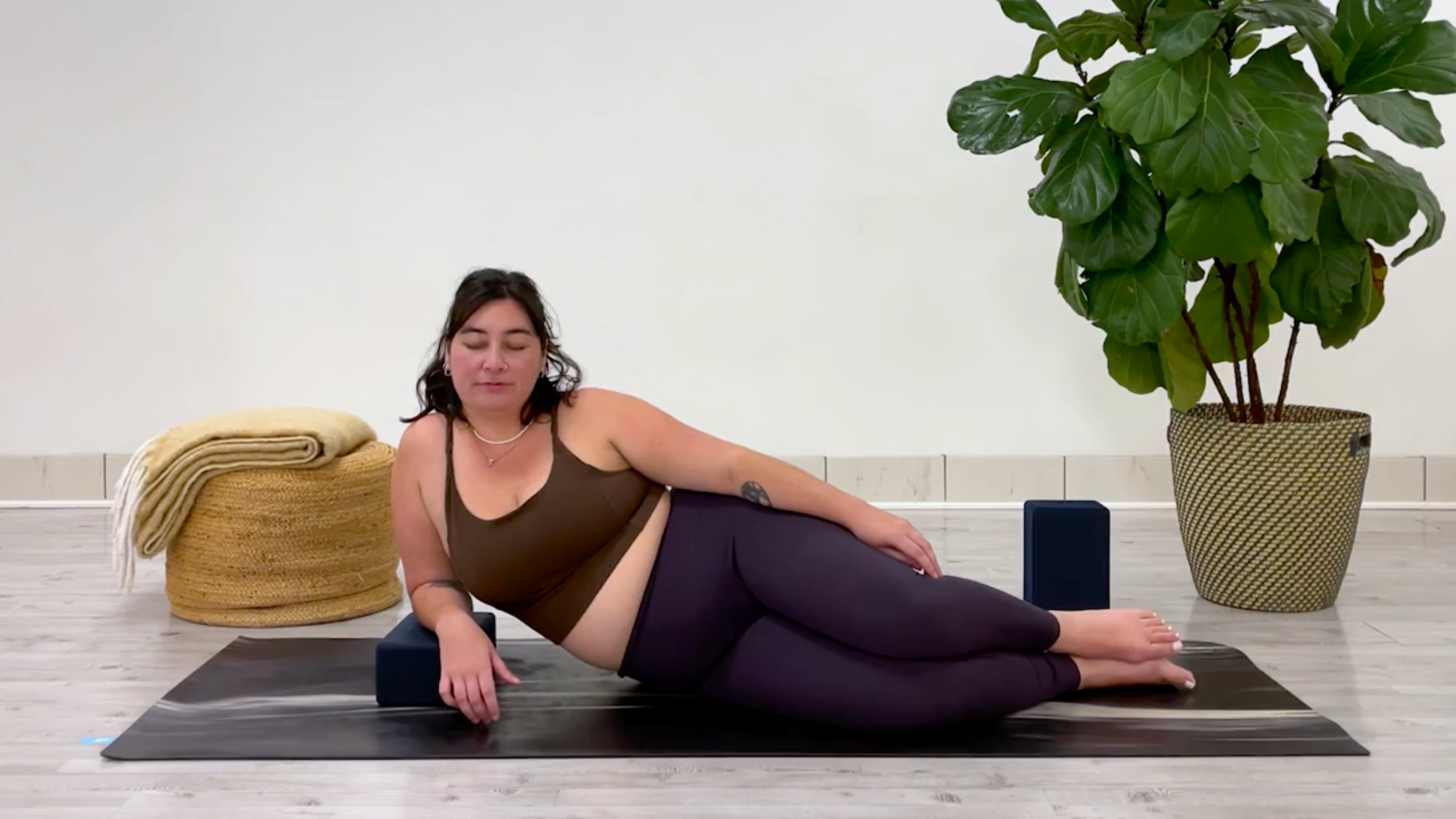
4. Side-Lying Lounge Pose (1–3 Minutes per Side)
This is the anchor of the sequence, designed specifically to mimic the "slouching" posture of a couch—but with intentional structural support.
- Sit down on the side of your left hip, keeping your legs tucked or extended long depending on your flexibility.
- For a stronger, active variation: Walk your left hand slightly away from your body so it is not directly beneath your shoulder. Use this hand to prop yourself up, engaging the side body.
- For a restorative variation: Rest your left forearm on a yoga block or flat on the mat. Embrace the counterintuitive advice: slouch intentionally into the side bend, allowing gravity to do the work.
- Hold for one to three minutes. On an inhalation, lift gently out of the bend and return to Tabletop.
Phase 3: Spinal Integration and Balancing
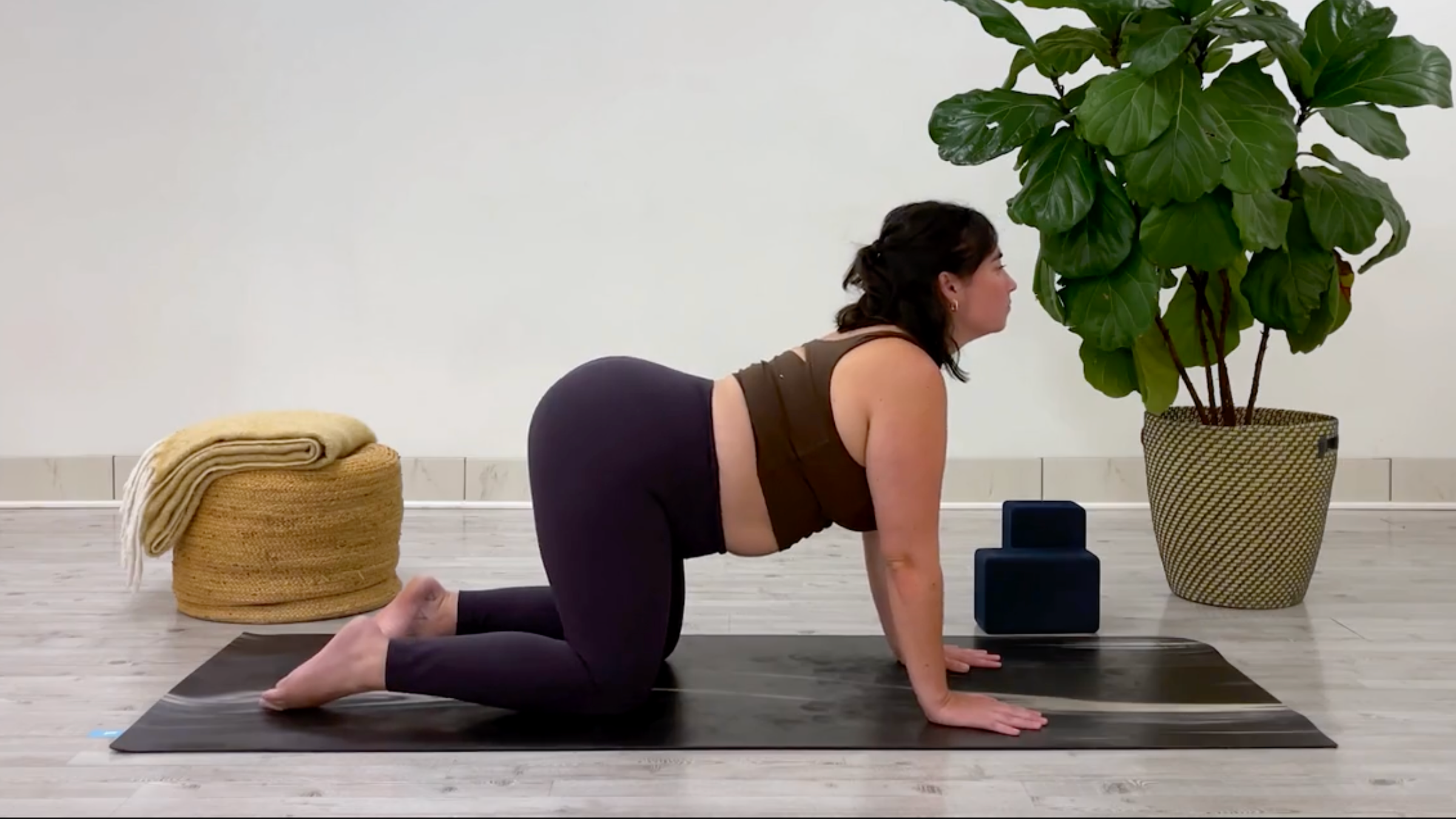
5. Cat-Cow Flow (5 Breaths / Intuitive Movement)
To neutralize the spine after deep lateral holding, transition through traditional spinal waves.
- Cow Pose: Inhale as you drop your belly toward the mat, lift your chin and chest, and arch your back.
- Cat Pose: Exhale as you round your spine toward the ceiling and tuck your chin to your chest.
- Repeat this dynamic alternating pattern for five full breaths. Feel free to break linear movement by making large, intuitive circles with your hips or swaying side to side to release lingering tension.
6. Repetition on the Opposite Side
- Sit back into Child’s Pose to reset.
- Repeat the sequence—specifically Thread the Needle and Side-Lying Lounge Pose—on your right side to maintain muscular and structural symmetry.
Phase 4: Integration
7. Easy Pose or Savasana (As Long As Needed)
- To conclude your 12-minute practice, press yourself up into a comfortable cross-legged seat (Easy Pose) or lie flat on your back in Corpse Pose (Savasana).
- Close your eyes and breathe naturally. Allow your body time to integrate the physical spaciousness and newfound length you have just cultivated.
Supporting Data: The Hidden Toll of Sitting and the Science of Stretching
Understanding why the side body gets stuck helps reinforce the necessity of daily stretching routines. Modern ergonomics research and physiological studies highlight several key factors:
- The Compression Epidemic: According to occupational health data, the average desk worker spends between 7 to 10 hours a day seated. This leads to chronic hip flexor tightness and pectoral shortening, which indirectly pulls the lateral torso out of alignment.
- Intercostal Stiffness: The intercostal muscles run between the ribs and assist with chest expansion during breathing. When a person slumps forward, these muscles compress. Clinical observations show that regular side-stretching can improve thoracic compliance, leading to deeper, more efficient oxygen intake.
- Fascial Health: Fascia is the connective tissue web surrounding muscles. Prolonged immobility causes fascia to become dense and sticky. Slow, sustained holds—such as the 1-to-3-minute holds in Side-Lying Lounge Pose—help rehydrate the fascial matrix, restoring elasticity and slide between tissue layers.
Official Perspectives: The Philosophy of Intentional Rest
While high-intensity interval training (HIIT) and powerlifting dominate modern fitness discourse, restorative movement specialists argue that intentional, low-impact practices are vital for long-term musculoskeletal health.
Kinesiologists and physical therapists increasingly recommend "movement snacks"—short, targeted movement breaks taken throughout the work day—to combat the cumulative damage of sedentary routines. Taylor Lorenz’s approach aligns directly with this philosophy, subverting the traditional fitness narrative by encouraging practitioners to embrace a supportive, relaxed posture ("slouching like you’re on a couch") to safely access deeper layers of muscular release.
"We often approach yoga with a sense of striving—pushing deeper, gripping harder, and forcing flexibility," notes holistic movement advocate Dr. Elena Vance. "What makes sequences like this remarkable is the permission slip to soften. By utilizing props and leaning into supported side bends, the nervous system drops its guard, allowing chronic holding patterns to finally let go."
Implications: How to Integrate Side Stretching Into Daily Life
The introduction of quick, targeted routines like the 12-Minute Side Stretch has broad implications for corporate wellness, remote work habits, and individual physical longevity.
- Micro-Interventions Over Marathon Workouts: For many individuals, finding an hour to go to a yoga studio is an insurmountable barrier. By breaking this sequence into individual poses—such as taking a one-minute Child’s Pose break or a quick Side-Lying Lounge stretch during a mid-day coffee break—desk workers can radically alter their physical trajectory without disrupting their schedules.
- Injury Prevention: Relieving tension in the QL and obliques can significantly mitigate lower back pain, a leading cause of disability worldwide. When the side body is pliable, it shares the load of postural stabilization with the spine and core.
- Mental Clarity: Physical compression restricts breath; restricted breath signals stress to the brain. By expanding the ribcage and elongating the lateral torso, practitioners unlock deeper breathing mechanics, which instantly down-regulates the sympathetic nervous system (fight-or-flight), returning a sense of calm and focus to the workday.
Ultimately, reclaiming physical space within one’s own body is not merely an aesthetic or athletic goal—it is a fundamental act of biological maintenance. As the modern workplace continues to tether humans to chairs, intentional side-stretching stands out as an accessible, vital lifeline back to physical freedom.
