

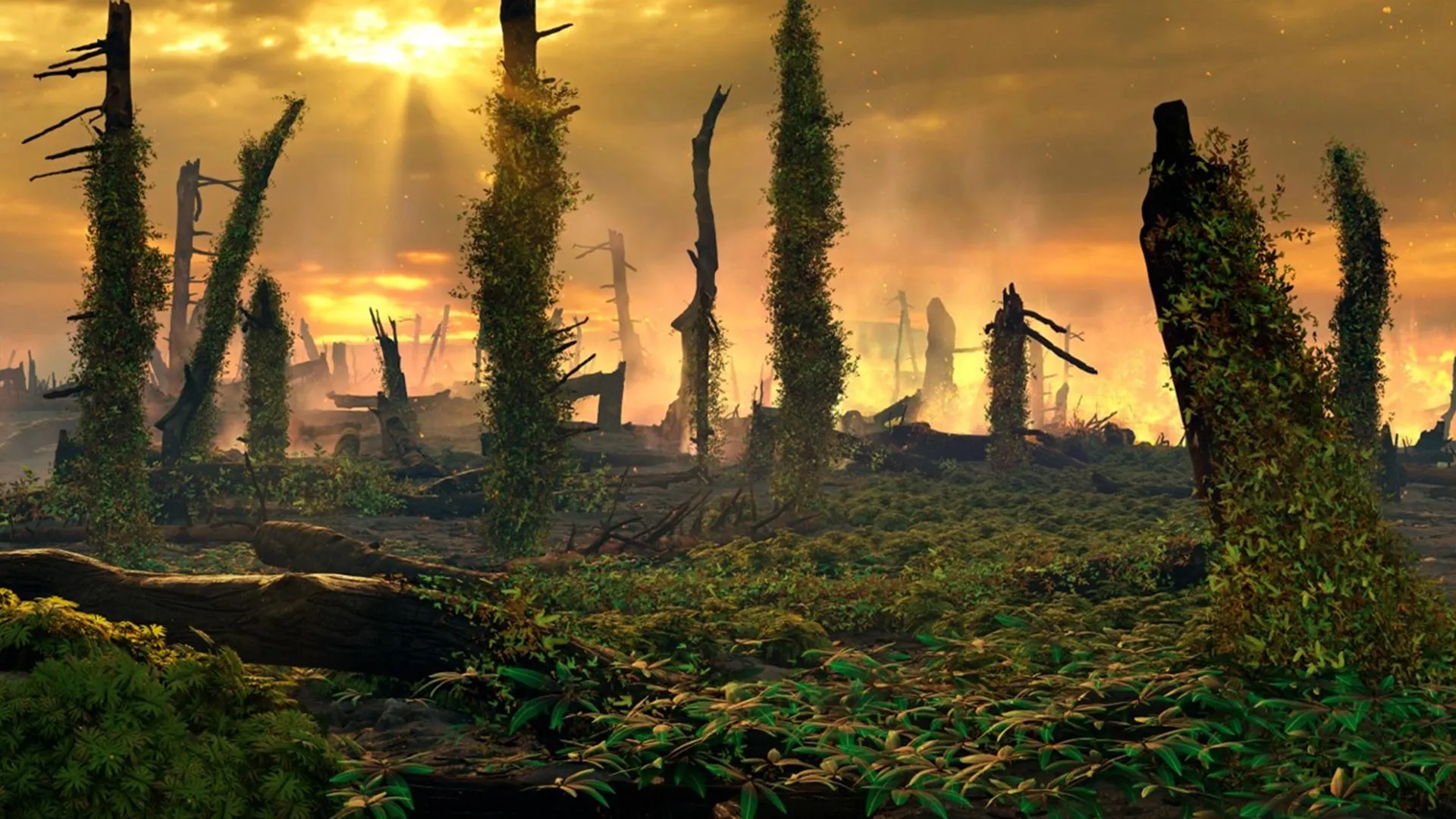
LONDON & UTRECHT — Approximately 201 million years ago, Earth suffered one of the most devastating biological crises in its history. The end-Triassic mass extinction eradicated a massive share of marine and terrestrial species, clearing the global stage for the subsequent rise of the dinosaurs. For decades, scientists have known the prime suspect behind this planetary catastrophe: colossal volcanic eruptions tied to the fragmentation of the supercontinent Pangea. These cataclysmic fissures belched monumental quantities of carbon dioxide into the atmosphere, triggering a runaway greenhouse effect that spiked global temperatures by an estimated 5 to 10 degrees Celsius.
However, a groundbreaking study published on July 21, 2026, in the journal Nature Geoscience reveals that the aftermath of the initial warming was driven by a terrifying, self-sustaining feedback loop. An international team of geologists, spearheaded by researchers at Utrecht University, has discovered that as ancient forests collapsed under extreme heat, opportunistic ferns invaded the ravaged landscapes. These vast, savannah-like expanses of ferns did not merely endure the crisis—they actively accelerated it, acting as both the product and the primary fuel for a prolonged, multi-millennial epoch of catastrophic wildfires.
The findings offer a chilling look into a prehistoric "dark zone" of global burning, providing vital clues about how destabilized ecosystems can lock themselves into destructive trajectories.
Chronology of a Planetary Crisis: From Volcanic Fire to Fern Savanna
To understand how the end-Triassic world unraveled, scientists must reconstruct a timeline spanning hundreds of thousands of years. The sequence of events began deep within the Earth’s crust as the supercontinent Pangea began to pull apart.
Phase 1: The Volcanic Trigger
Around 201 million years ago, the Central Atlantic Magmatic Province (CAMP)—one of the largest large igneous provinces in Earth’s history—began erupting. Over a geological blink of an eye, floods of basaltic lava poured across modern-day North America, South America, Africa, and Europe. These eruptions released cataclysmic volumes of greenhouse gases, rapidly overwhelming the global carbon cycle.
Phase 2: Forest Collapse and the "Fern Spike"
As global temperatures soared by up to 10 degrees Celsius, terrestrial ecosystems experienced immediate stress. Ancient, deeply rooted forest ecosystems—dominated by gymnosperms and tree-like plants—could not adapt to the sudden heat, severe droughts, and widespread soil erosion. The forests collapsed.
Into this ecological vacuum rushed ferns. Able to reproduce via microscopic spores carried great distances by the wind, ferns proved uniquely suited to colonize the damaged, barren landscapes. As the old forests died off, Northwest Europe and other regions transformed into broad, open, fern-dominated savannahs.
Phase 3: The Fiery Epoch
The new research indicates that this transition marked the beginning of a prolonged fiery interval. Lasting anywhere from 40,000 to perhaps as long as 300,000 years, this epoch was characterized by continuous, planet-wide wildfire activity. The ferns, having rapidly established dense ground cover, dried out easily during seasonal droughts. Their dense mats provided the exact fuel needed to keep massive fires sweeping endlessly across the continents, preventing any long-term recovery of woody vegetation.
Supporting Data: Decoding Deep-Time Wildfires
Reconstructing wildfire activity from two centuries of millions of years of Earth history is a monumental task. Traditionally, geologists have relied on two primary proxies: fossilized charcoal fragments and polycyclic aromatic hydrocarbons (PAHs)—organic compounds produced by the incomplete combustion of organic matter that settle in lake and marine sediments.
While valuable, both traditional methods come with distinct methodological flaws. Large charcoal pieces can fracture and fragment over millions of years of geological pressure, artificially inflating the apparent volume of fire. Meanwhile, PAHs are volatile and can be carried massive distances by atmospheric winds before deposition, occasionally muddying local fire reconstructions. Furthermore, certain molecular markers simply fail to survive the ravages of deep-time diagenesis.
To circumvent these limitations, the Utrecht University-led team introduced an innovative, cost-effective technique: the Palynomorph Darkness Index (PDI).
The Palynomorph Darkness Index
Led by senior author Dr. Bas van de Schootbrugge and his colleagues, the research team analyzed exceptionally well-preserved sedimentary sequences extracted from four distinct drill cores. Notably, this included a newly acquired, 640-meter-long core retrieved from the United Kingdom.
In total, the researchers completed 15,000 individual color measurements on fossilized pollen and spores spanning the pre-extinction, extinction, and post-extinction intervals.
Ordinarily, organic microfossils darken over time due to thermal maturation. As sediments are buried deeper into the Earth’s crust, the escalating heat and lithostatic pressure "cook" the organic matter, turning pale yellow spores into dark brown and black carbonized remnants. Under normal geological conditions, depth equates directly to darkness.
However, the team uncovered a startling anomaly.
"We found a very different pattern," notes Dr. van de Schootbrugge. "The oldest and deepest pollen and spores in the cores remained lightly colored. Yet fossils from the extinction interval became progressively darker, eventually reaching an extremely dark brown. Once the extinction period ended, the fossils returned to a pale yellow color."
Because this precise darkening pattern appeared simultaneously across all four geographic basins—despite their vastly different burial and tectonic histories—it could not be attributed to standard sediment burial. By correlating these color shifts with the RGB spectrum using a camera-mounted light microscope, the team mapped out an ancient fire "Dark Zone."
When cross-referenced with charcoal and PAH concentrations, the puzzle pieces fell into place: the optical darkening of the pollen and spores was a direct record of intense, airborne soot deposition generated by an unprecedented wave of global wildfires. Crucially, control tests comparing tree pollen against fern spores demonstrated that all plant groups exhibited the identical darkening effect, confirming it was driven by an external, atmospheric force rather than biological quirks.
Official Responses and Expert Insights
The study has sent ripples through the paleontology and paleoclimate communities, offering a fresh perspective on how terrestrial ecosystems respond to abrupt climate shocks.
Dr. van de Schootbrugge emphasizes the uncanny resilience—and destructive ecological role—of the fern. "Ferns are truly remarkable plants that have withstood many crises throughout Earth history, and some species can adapt to some of the most extreme environments. They can be considered to be true disaster species."
When other vegetation is wiped out by environmental collapse, ferns seize the initiative. Their underground root systems, or rhizomes, are often insulated from surface heat. While a fire destroys the fronds above ground, the roots survive, allowing the plants to rapidly regenerate and outpace competing flora.
This survival mechanism, however, created a disastrous ecological trap.
"When the ferns dry out, the thick mats act as the ideal fuel to trigger massive wildfires," Dr. van de Schootbrugge explains. By acting as ecological "fire ladders," the dense fern carpets carried flames across landscapes that might otherwise have served as natural firebreaks.
Other researchers note that the study highlights a profound blind spot in how ancient ecosystems transition during mass extinctions. The interaction between climate-driven deforestation and opportunistic plant species creates a feedback loop that has rarely been documented with such high-resolution geochemical and optical data. The combination of high temperatures, exposed soils, and an endless supply of dry, flammable biomass locked the end-Triassic Earth into a multi-millennial state of environmental trauma.
Broader Implications: Lessons from the Deep Past
While the end-Triassic extinction occurred 201 million years ago, the implications of the Utrecht University study resonate strongly with modern Earth science.
The researchers point out that the prehistoric catastrophe serves as an ominous analog for contemporary environmental crises. The core ingredients of the end-Triassic "perfect storm"—rapid anthropogenic-style greenhouse gas emissions, widespread global warming, large-scale deforestation, and the proliferation of opportunistic, fire-prone pioneer species—mirror current trends facing modern ecosystems.
Today, as climate change intensifies droughts and human activity fractures natural habitats, fire regimes across the globe are shifting. Forests that have stood for millennia are increasingly vulnerable to die-off, frequently replaced by highly flammable scrublands or invasive, fire-adapted vegetation.
"The lesson we can learn from this," Dr. van de Schootbrugge concludes, "is that the combination of climate change, deforestation, and the spread of opportunistic species can provide all the ingredients for a perfect storm."
By unlocking the secrets held within the microscopic coloration of fossilized spores, scientists have not only clarified a murky chapter of deep-time history but have also issued a stark warning from the deep past. The end-Triassic world demonstrated how a green and vibrant planet can be rapidly transformed into a recurring, fire-choked wasteland when the delicate balances of the Earth system are pushed past their breaking point.
